Kitchen hygiene without running water
When tap water fails, the risk of stomach and gut infections rises. A simple washing station with a container and soap, boiled or treated water for anything that touches food, a washing-up system with bowls and clean, separate surfaces keep the kitchen safe – even with little water.
- 20 minutes to set up
Explained simply
Germs are like invisible dust. They travel on hands, chopping boards, spoons and plates and end up in food. Normally running water simply rinses them away. When nothing comes out of the tap any more, you need other ways.
The most important helpers are soap and rubbing. Soap loosens the grease and dirt that germs stick to, and thorough rubbing removes them from the skin. With a container with a tap or a jug and a bowl underneath, you can build a small washing station that needs little water.
For everything that touches food – hands, dishes, fruit – you need safe or boiled water. And anyone with diarrhoea or vomiting does not cook for others.
How it works
Pathogens get into food in three ways: via hands, surfaces and dishes. Running water normally helps twice over – it rinses dirt away and dilutes whatever remains. Without tap water both effects are lost. So soap, mechanical rubbing, separating dirty from clean and safe rinse water must take over this job.
Soap works because its molecules bind to fat on one side and to water on the other. This lets it loosen the greasy film in which germs cling, and the rinse water can carry it away. Time is what matters: rub hands thoroughly, including thumbs, between the fingers and the nails, then rinse with clean water.
Hand sanitisers are handy when water is short, but do not replace washing when hands are visibly dirty or greasy. They also do not work equally well against all pathogens. So before cooking and after using the toilet, always wash with soap.
Gear and materials
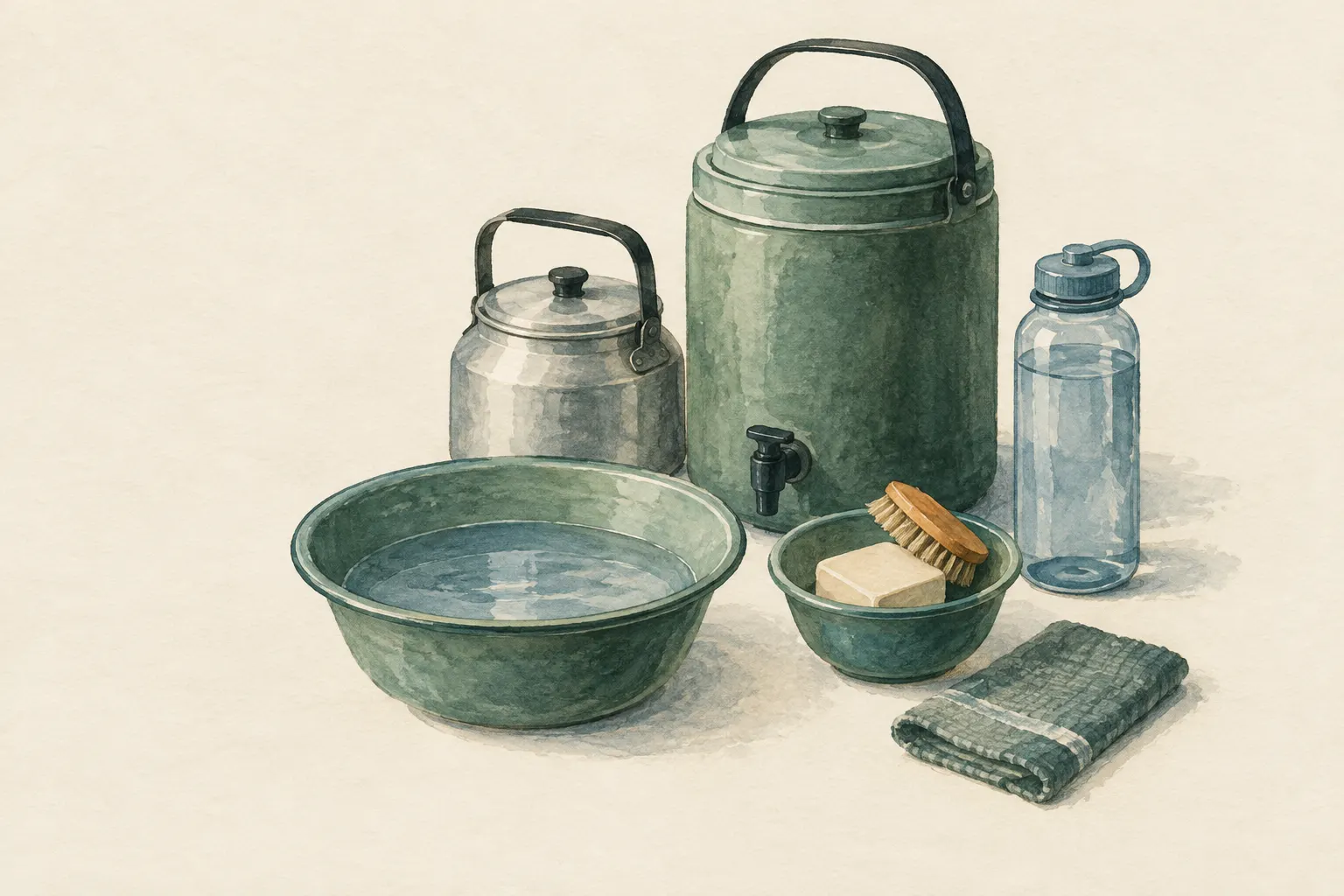
For a washing station you need a container with a tap or a jug, soap, a catch bowl and paper towels or clean cloths, all in a fixed place. Waste water is disposed of, not reused. This way nobody dips their hands into a shared bowl where everyone's germs collect.
A particularly economical variant is the so-called tippy tap: a hanging container is tipped with a foot loop and releases a thin stream of water. Hands do not touch the container.
For washing up you need two or three bowls, detergent and clean cloths. A dishcloth used for days spreads germs rather than removing them – change it often and let it dry in between.
What really matters
Washing up with bowls works like this: first scrape off or wipe leftovers thoroughly with paper. Bowl 1 holds warm water with detergent, bowl 2 clean rinse water. If you like, use a third bowl for disinfection according to the manufacturer's instructions. Then let the dishes air-dry rather than rubbing them with a possibly dirty cloth.
Clear the work surface and wipe it before and after cooking. Keep raw and ready-to-eat food apart and use separate boards, for example one for raw meat and one for bread and vegetables. Do not leave leftovers uncovered for hours.
Fewer dishes mean less washing-up: serve from the pot, and give each person a marked plate and mug that are reused. Disposable tableware only sparingly and as an exception – it quickly becomes a waste problem.
Safety: what to watch out for
For hands, dishes and anything that touches food, use only safe, boiled or treated water. Utility water, for example collected rainwater, is not suitable for this unless it has been treated. Dispose of waste water away from water sources and food.
Disinfectants are only diluted according to the manufacturer's instructions and never mixed with each other. In particular, chlorine bleach must never come into contact with acids, such as vinegar cleaners, or with ammonia, because toxic gases are produced. This entry deliberately gives no concentrations.
Anyone with diarrhoea or vomiting should not cook for others. With severe or persistent symptoms, especially in children, older or weakened people, get medical help or call the local emergency number (112 in the EU).
Good to know
The WHO's “Five Keys to Safer Food” begin with cleanliness: keep hands, surfaces and utensils clean, separate raw and cooked, and use safe water. Without running water these rules stay the same – only the means change.
A well-organised washing station takes about twenty minutes to set up but keeps the whole household healthier. It is best to set it up as soon as the water fails and make sure everyone knows where it is and how to use it – the children too.
Step by step
Set up a washing station
A container with tap or a jug, soap, a catch bowl and paper towels in a fixed place. Waste water is disposed of, not reused.
- 1
Set up a washing station
A container with tap or a jug, soap, a catch bowl and paper towels in a fixed place. Waste water is disposed of, not reused.
- 2
Wash hands
Wet hands, lather thoroughly with soap including thumbs, between fingers and nails, then rinse with clean water and dry on a clean towel.
- 3
Keep surfaces clean
Clear the work surface and wipe it before and after cooking. Keep raw and ready-to-eat food apart and use separate boards.
- 4
Wash up with bowls
Scrape off leftovers. Bowl 1: warm water with detergent. Bowl 2: clean rinse water. Optional bowl 3: disinfection according to the manufacturer. Air-dry.
- 5
Reduce washing-up
Serve from the pot, mark a plate per person and reuse it. Use disposable tableware sparingly and only as an exception.
Common mistakes
- Dipping hands in a shared bowl
- Using the same dishcloth for days
- Using utility water for dishes
- Leaving leftovers uncovered for hours
Quick view
Materials
Food-grade water container
Only use containers that never held chemicals or fuel.
Soap / detergent
Rinse drinking-water containers thoroughly after cleaning.
Hygiene supplies
Disposable gloves
Consider latex allergies – prefer latex-free gloves (e.g. nitrile).
Suitable for
- Water supply failure
- Boil-water notice
- Camping and emergency shelters
Not suitable for
- Preparing perishable dishes for many people without refrigeration
Prerequisites
- A water supply or a way to treat water
- Soap, two or three bowls, clean cloths
Safety
- Hand sanitiser does not replace hand-washing when hands are visibly dirty. Always wash with soap before cooking and after using the toilet.
- Dilute disinfectants only as the manufacturer says and do not mix them – in particular never mix chlorine bleach with acids or ammonia.
- Anyone with diarrhoea or vomiting should not cook for others.
How it works
Pathogens get into food via hands, surfaces and dishes. Without running water there is no rinsing and no dilution – so soap, rubbing, separating dirty from clean and safe rinse water must take over this job.
Advantages
- Clearly reduces the risk of illness
- Works with little water
Disadvantages
- Needs discipline from everyone in the household
- Soap and water must be in stock
Deep knowledge
Background
The WHO's "Five Keys to Safer Food" begin with cleanliness: keep hands, surfaces and utensils clean, separate raw and cooked, and use safe water.
Without running water these rules stay the same; only the means change.
Variants
- Tippy tap
- A hanging container tipped with a foot loop gives a thin stream and saves water; hands do not touch the container.
Common mistakes
- Dipping hands in a shared bowl
- Using the same dishcloth for days
- Using utility water for dishes
- Leaving leftovers uncovered for hours
Limits and risks
- No concentrations for disinfectants
- No treatment of gastrointestinal illness
Material alternatives
Derived from material properties: a substitute must have all relevant properties. Observe the notes on the substitute.
- Food-grade water container
- Single-wall stainless steel bottle (Heat only single-wall bottles without paint/plastic; remove the lid before heating.), Double-wall insulated bottle (Never heat directly.), PET bottle (clear, max. 2 litres) (Do not heat or place in a fire.), Airtight food-grade storage container (Fill only when clean and completely dry; never use containers that previously held chemicals.), Collapsible water container or bag (Protect from sharp objects.), Food-grade water bag (Use only for drinking water, never for chemicals or fuel.), Fermentation jar or crock (Use only food-grade containers of glass, food-safe glazed stoneware or food-grade plastic – no metal containers for acidic food.), Resealable food bags (Use only bags intended for food; do not use with boiling water unless the manufacturer explicitly allows it.)
Results come exclusively from structured entries. No improvised instructions are generated.
Sources
World Health Organization (WHO) (2006): Five Keys to Safer Food Manual
Cleanliness, separating raw and cooked, safe water
Centers for Disease Control and Prevention: Making Water Safe in an Emergency
Safe water for hygiene in emergencies