Cooking with little water
When drinking water is scarce, every litre counts. One-pot dishes, foods that absorb all their cooking water, reusing cooking water for soup and clever washing-up save a lot. For everything that is eaten or drunk: use only safe or treated water. Salty liquid from tins does not replace drinking water.
- No extra time, some planning
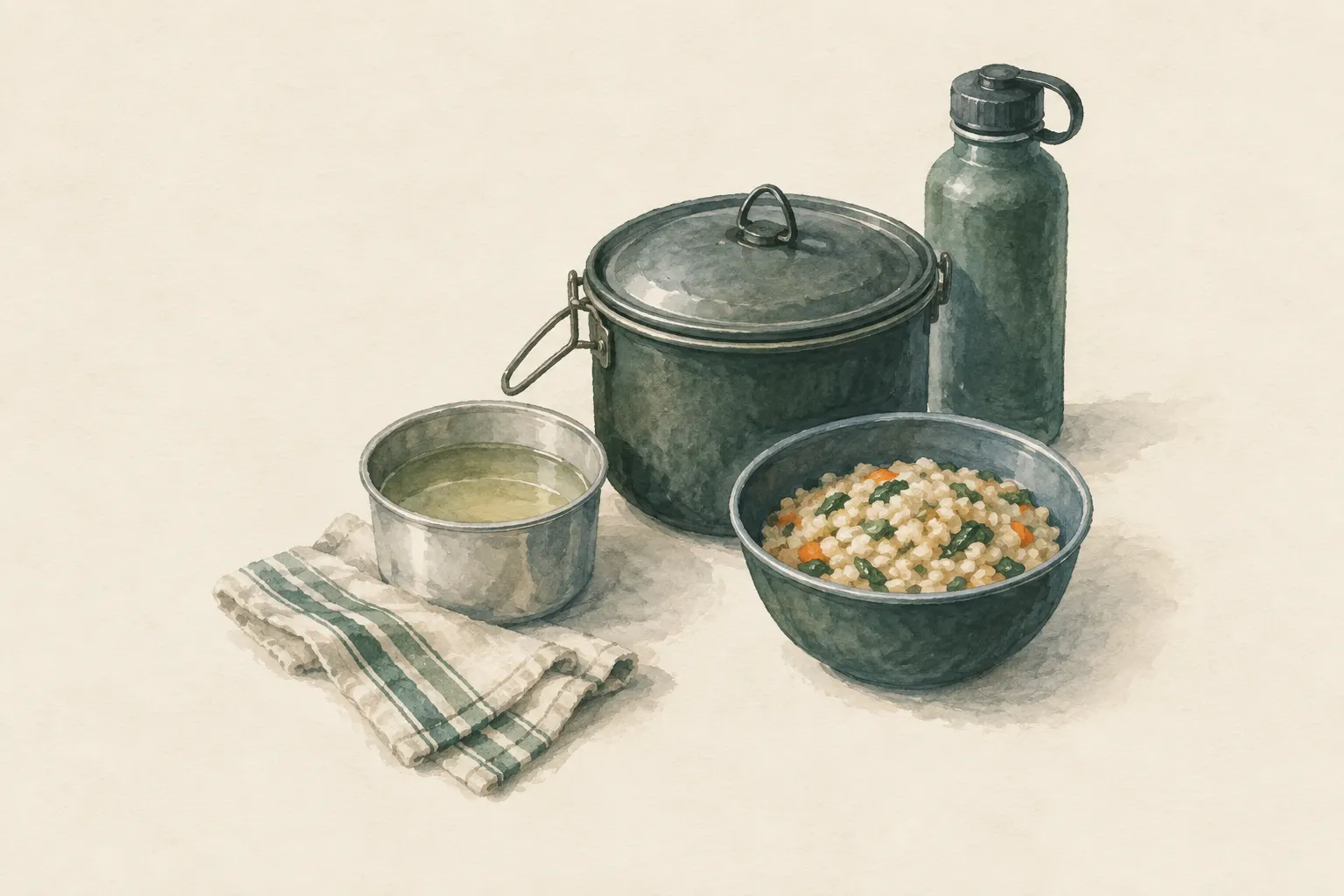
Explained simply
When no more water comes out of the tap, every bottle is precious. In normal cooking we waste a lot of it without noticing: pasta swims in a big pot, the water is then poured away, and the tap runs while washing up.
It can be done much more economically. Some foods soak up all their water, like a sponge – for example oats, couscous or rice when you use only as much water as it needs. A lid on the pot keeps the steam in. And pasta water can become the base for a soup instead of going down the drain.
One rule is very important: drinking comes before cooking. And for everything you eat or drink, use only safe or boiled water. Salty liquid from tins is no substitute for drinking water.
How it works
In cooking, water is lost in three ways: it is poured off, it evaporates, or it is used for rinsing. Tackling all three gets you by with a fraction of the usual amount. The biggest gain comes from choosing foods where nothing is poured off at all.
Grains such as oats, couscous, bulgur or rice cooked by the absorption method take up all the water. Couscous and bulgur often do not even need cooking, just pouring over hot water and leaving to stand. Instant mashed potato works similarly. Pasta can be cooked directly in the sauce, with only as much liquid as it absorbs.
A lid noticeably reduces evaporation and saves fuel at the same time, because less heat escapes with the steam. Turning the heat down after boiling or putting the pot into a hay box loses even less.
What really matters
Measure instead of guessing. Package directions or a measuring jug show how much water a food needs. Better to use a little less at first and add more if needed than to have to pour some off at the end.
Whatever is left over gets reused. Pasta or vegetable cooking water can be the base for soup or sauce. The liquid from tinned vegetables can be cooked along with the dish if it suits – but it is often salty and therefore not suitable as drinking water.
Washing up can be economical too: wipe off leftovers with paper first, scrape or soak pots with a little water immediately before anything dries on, and wash in a bowl rather than under running water. Serving from the pot and marking a plate for each person saves even more washing-up.
Safety: what to watch out for
For cooking, brushing teeth and washing dishes that touch food, use only safe or treated water. Rainwater or utility water is unsuitable for this unless it has been treated. If a boil-water notice is in force, follow the authority's advice exactly.
Drinking water is not cut back in favour of cooking. If water is so short that drinking would be at risk, choose foods that need little or no water – tins, bread, nuts – instead of cooking. Remember too that very salty food makes you thirsty and so increases water needs.
Typical situations
During a water supply failure or a boil-water notice, every litre that does not have to be bought, fetched or boiled counts. A menu of absorption dishes, stews and tins reduces the need considerably – and fuel consumption at the same time.
On trips with limited water the same applies. Oats, couscous or instant meals that soak in a bag or mug with hot water need no real washing-up. A pot with a lid, a spoon and some paper to wipe it out are often enough.
Good to know
Health authorities such as the US CDC stress using only safe water for drinking, cooking and brushing teeth in an emergency. Ready.gov explicitly advises not to ration drinking water but to save on everything else.
The tips described here come from cooking practice and have not been scientifically measured; this entry therefore gives no fixed water quantities per dish. It is best to try them in everyday life – many of them save water, energy and washing-up even without an emergency.
Step by step
Choose foods
No-cook foods (tins, bread, nuts) or foods that absorb their water: oats, couscous, bulgur, rice by the absorption method, instant potatoes.
- 1
Choose foods
No-cook foods (tins, bread, nuts) or foods that absorb their water: oats, couscous, bulgur, rice by the absorption method, instant potatoes.
- 2
Measure
Use only as much water as the food absorbs. Package directions or a measuring jug help.
- 3
Cook with a lid
Lid on, turn the heat down, little evaporation. A hay box can be used for soaking and finishing.
- 4
Reuse cooking water
Use pasta or vegetable cooking water as a base for soup or sauce; cook vegetable liquid from tins along with the dish if it suits.
- 5
Wash up sparingly
Scrape or soak pots immediately with a little water and wipe off leftovers with paper first; wash in a bowl rather than under running water.
Common mistakes
- Boiling pasta in lots of water and draining it
- Cooking without a lid
- Cooking with untreated water
- Salty brine as a substitute for drinking water
Quick view
Materials
Metal pot (stainless steel, aluminium, titanium)
Hot – scalding risk.
Measuring jug
Suitable for
- Water supply failure
- Boil-water notice
- Trips with limited water
Not suitable for
- Situations where drinking water would have to be rationed – drinking has priority over cooking
Prerequisites
- An overview of the water supply
- A pot with a lid
Safety
- Use only safe or treated water for cooking, brushing teeth and washing dishes that touch food. Rainwater or utility water is unsuitable for this unless treated.
- Do not cut back drinking water in favour of cooking. Prefer foods that need little or no water.
How it works
A lot of water is lost in cooking when it is drained, evaporates or is used for rinsing. Choosing foods that absorb all their water, cooking with a lid and reusing leftover water gets by with a fraction of it.
Advantages
- Saves water and fuel
- Less washing-up
Disadvantages
- Limited choice of dishes
- Planning needed
Deep knowledge
Background
Health authorities such as the CDC stress using only safe water for drinking, cooking and brushing teeth in an emergency. Ready.gov advises not to ration drinking water.
The tips described come from cooking practice and have not been scientifically measured.
Variants
- One-pot pasta
- Cook pasta directly in the sauce with only as much liquid as it absorbs.
Common mistakes
- Boiling pasta in lots of water and draining it
- Cooking without a lid
- Cooking with untreated water
- Salty brine as a substitute for drinking water
Limits and risks
- No water quantities per dish
Material alternatives
Derived from material properties: a substitute must have all relevant properties. Observe the notes on the substitute.
- Metal pot (stainless steel, aluminium, titanium)
- Single-wall stainless steel bottle (Heat only single-wall bottles without paint/plastic; remove the lid before heating.)
- Measuring jug
- Metal pot (stainless steel, aluminium, titanium) (Hot – scalding risk.), Single-wall stainless steel bottle (Heat only single-wall bottles without paint/plastic; remove the lid before heating.), Double-wall insulated bottle (Never heat directly.), PET bottle (clear, max. 2 litres) (Do not heat or place in a fire.), Food-grade water container (Only use containers that never held chemicals or fuel.), Airtight food-grade storage container (Fill only when clean and completely dry; never use containers that previously held chemicals.), Collapsible water container or bag (Protect from sharp objects.), Food-grade water bag (Use only for drinking water, never for chemicals or fuel.), Fermentation jar or crock (Use only food-grade containers of glass, food-safe glazed stoneware or food-grade plastic – no metal containers for acidic food.), Resealable food bags (Use only bags intended for food; do not use with boiling water unless the manufacturer explicitly allows it.)
Results come exclusively from structured entries. No improvised instructions are generated.
Sources
Centers for Disease Control and Prevention: Making Water Safe in an Emergency
Only safe water for drinking, cooking and brushing teeth
Ready.gov – U.S. Federal Emergency Management Agency (FEMA): Water (emergency water supply guidance)
Do not ration drinking water