Measuring and sharing water within a group
When water is short, a clear plan helps: measure the stock, secure drinking water before everything else, share fairly by need and reduce losses. Cutting drinking water itself below what is needed is dangerous – better to reduce sweat, exertion and waste and organise help or resupply early.
- 20–30 minutes of planning once, then daily checks
Explained simply
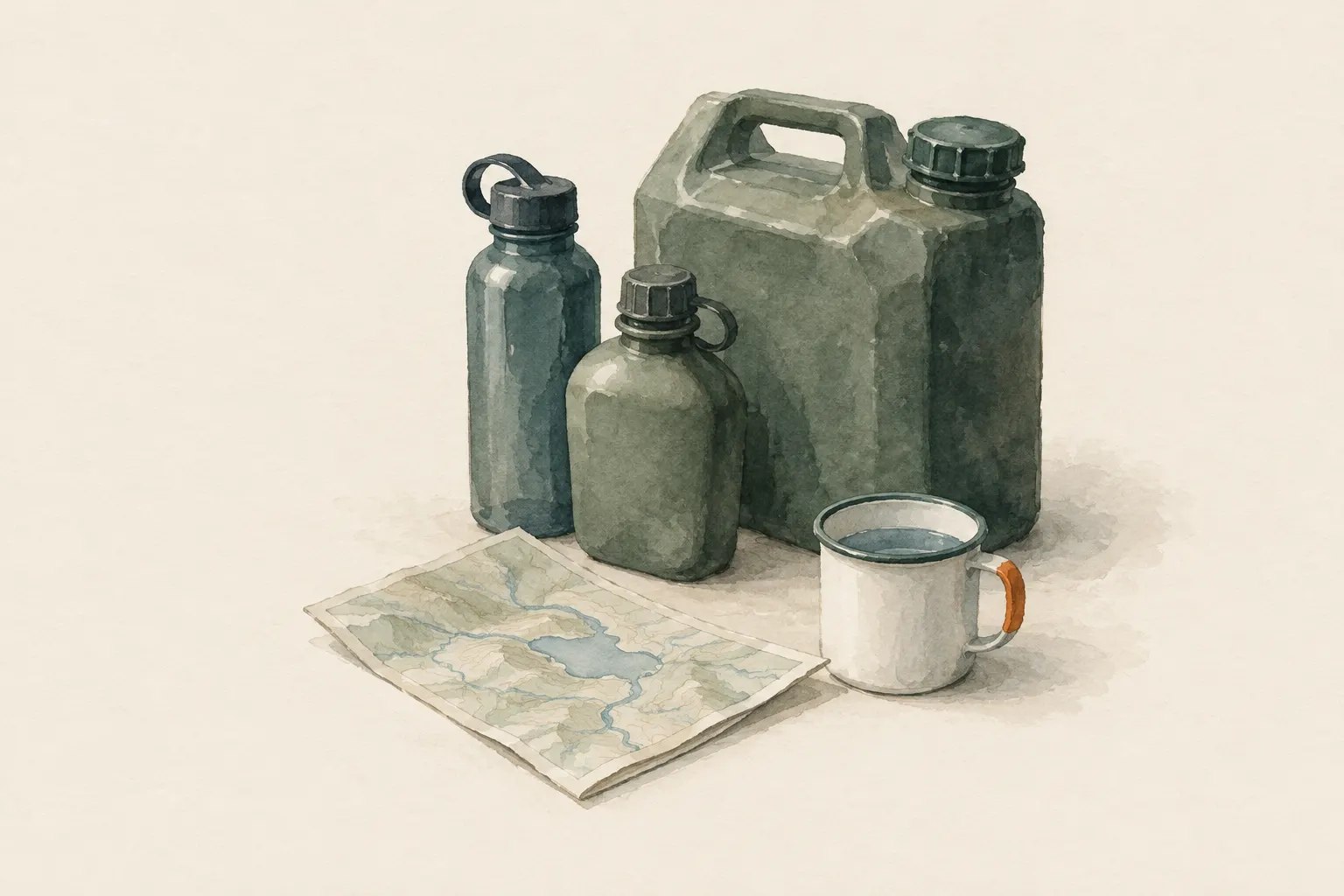
Imagine your family has only a few jerrycans of water left, and it will be a while before more arrives. Then a plan matters: how much do we have? Who needs how much? What do we use it for? A good plan makes sure nobody goes short and nothing is wasted.
Very important: saving water does not mean drinking too little. Your body is like a car with a radiator – without enough water it gets ill. You can save on washing, on rinsing dishes and on sweating: stay in the shade, take things slowly, avoid hard work in the heat.
Anyone with dark urine, a headache, dizziness or great tiredness needs water straight away. If someone is confused or hard to wake, call the emergency number (112 in the EU).
How it works
The body is constantly losing water: through sweat, through moist breath and through urine and stool. This water has to be replaced, or performance drops and later it becomes dangerous. How much someone needs depends heavily on heat, exertion, body size and health – there is no single figure for everyone.
The core principle of sharing water is therefore: reduce losses instead of cutting drinking water. Someone resting in the shade instead of working in the midday sun sweats much less and makes the same supply last far longer without taking anything away from the body. A principle from survival manuals puts it roughly like this: water belongs in your body, not in your bottle.
Savings are made where they do no harm: on washing up, on personal washing and on cooking. A pot of pasta needs a lot of water; a ready meal that is only heated needs little. Washing also works with a damp cloth and a bowl instead of running water.
What really matters
The first step is honest counting. Every container is recorded with its volume, split into treated drinking water and raw water, and the total is written down. Guessing is not enough, because a half-full jerrycan often looks fuller than it is. Then you think about when resupply or help can realistically arrive, and plan a reserve.
Next you set a clear order: drinking water first, then water for infant formula and medication, then cooking, hygiene last. Labelled containers (‘drinking’, ‘cooking’, ‘washing’) stop drinking water from being used up on the washing-up.
Sharing fairly means by need – not equal for everyone and not by who is loudest. People doing physical work, the sick, those who are pregnant or breastfeeding and small children need special attention. Each person gets a marked bottle that is refilled at fixed times. That way everyone sees what they have, and secret extra drinking stops.
When it makes sense – and when not
A water plan is worthwhile wherever resupply is uncertain: during a long water-supply outage at home, on trips without safe sources, or when a vehicle breaks down in a remote area. The earlier you plan, the more room you have.
No plan replaces resupply. If the stock will not last despite all the saving, the main goal is to get help in time, go to a distribution point or open up a new source and treat its water. Drinking untreated water because water is short is no solution: diarrhoea costs more water than you saved.
Safety: what to watch out for
Dehydration creeps up. Early signs are thirst, dark and infrequent urine, headache, dizziness and unusual tiredness. Anyone showing these signs gets water – even if the plan says something else at that moment. The plan exists for the people, not the other way round.
In heat and with exertion things can move very fast. Confusion, severe weakness, impaired consciousness or no urine at all are emergency signs: call the local emergency number (112 in the EU) immediately. Avoid alcohol, because it puts extra strain on the fluid balance, and very salty foods increase thirst.
Keep an eye on mood and conflict too. Shortage makes people irritable. One person keeping track, numbers that everyone can see and clear rules take a lot of pressure out of the situation. Anyone who feels treated unfairly says so openly instead of taking water in secret.
Good to know
Humanitarian minimum standards such as the Sphere Handbook give planning figures for drinking, cooking and hygiene. They are guide values for planning for large groups, not a rule for how much one person should drink on a hot day.
A simple tally on the fridge door or a notebook is enough as a tool. Noting daily what has been used shows early whether the supply will last, so you can act in time.
Step by step
Measure the stock
Record all containers with volume and contents (raw or treated) and note the total.
- 1
Measure the stock
Record all containers with volume and contents (raw or treated) and note the total.
- 2
Estimate the time frame
Estimate when resupply or help is realistic, and plan with a reserve.
- 3
Set priorities
Drinking water first, then water for infant formula and medication, then cooking, then hygiene. Save deliberately on hygiene (e.g. handwashing with little water).
- 4
Share measurably
Give everyone a marked bottle and refill at fixed times – by need, not by who is loudest.
- 5
Reduce losses
Shade, rest in the heat, move work to cool hours, avoid alcohol, reduce salty foods when water is short.
- 6
Watch for warning signs
Dark urine, headache, dizziness and severe fatigue are warning signs: let those affected drink and prioritise resupply or help.
Common mistakes
- Sharply cutting drinking water instead of reducing losses
- Not separating hygiene and drinking water
- Only estimating the stock
- Tolerating secret extra portions
- Organising help too late
Quick view
Materials
PET bottle (clear, max. 2 litres)
Marked bottles per person
Do not heat or place in a fire.
Labels and waterproof marker
Field notebook and pencil
Suitable for
- Families and households during supply failures
- Groups on trips with uncertain resupply
- Vehicle breakdowns in remote areas
Not suitable for
- Justifying sharp cuts to drinking water in heat
- Treating dehydration or heat illness
Prerequisites
- Known volume of all containers
- One person keeping track
- Open communication within the group
Safety
- Children, older people, the sick, pregnant and breastfeeding people and those doing physical work need special attention and often more.
- Shortage is no reason to drink untreated water – diarrhoea worsens water loss.
How it works
The body loses water mainly through sweat, breathing and excretion. Reducing losses makes the same stock last longer without under-supplying the body. Measurable portions and transparency prevent conflict and secret extra drinking. Hygiene and cooking water can be saved more easily than drinking water.
Advantages
- Prevents conflict and waste
- Makes shortages visible early
- Protects the vulnerable
Disadvantages
- Requires discipline
- Needs vary greatly with heat and work
Deep knowledge
Background
Humanitarian minimum standards such as the Sphere Handbook give planning figures for drinking, cooking and hygiene and stress that actual needs depend on climate, work and health. There is no fixed figure for the individual.
Survival manuals contribute the principle of limiting losses rather than hoarding drinking water: leaving water in the container while the body dries out gains nothing.
Variants
- Household
- At home, labels on containers (‘drinking’, ‘cooking’, ‘washing’) and a simple tally on the fridge door help.
Common mistakes
- Sharply cutting drinking water instead of reducing losses
- Not separating hygiene and drinking water
- Only estimating the stock
- Tolerating secret extra portions
- Organising help too late
Limits and risks
- Does not replace resupply
- No medical treatment
- Planning figures are not individual recommendations
Sources
Sphere Association (2018): The Sphere Handbook: Humanitarian Charter and Minimum Standards in Humanitarian Response
Planning figures for drinking, cooking and hygiene; needs depend on climate and health
Headquarters, Department of the Army (USA) (2002): FM 3-05.70 Survival
Limiting water loss rather than over-rationing drinking water
Wilderness & Environmental Medicine (Wilderness Medical Society) (2019): Wilderness Medical Society Clinical Practice Guidelines for the Prevention and Treatment of Heat Illness: 2019 Update
Fluid intake to prevent heat illness