Sharing out supplies fairly within a group
When a family, household or group has to manage on limited supplies for some time, a simple, transparent plan prevents conflict and waste. Take stock, eat perishables first, share by need rather than by who is loudest – and do not ration water below what is needed.
- About 1 hour for the first inventory; then a few minutes a day
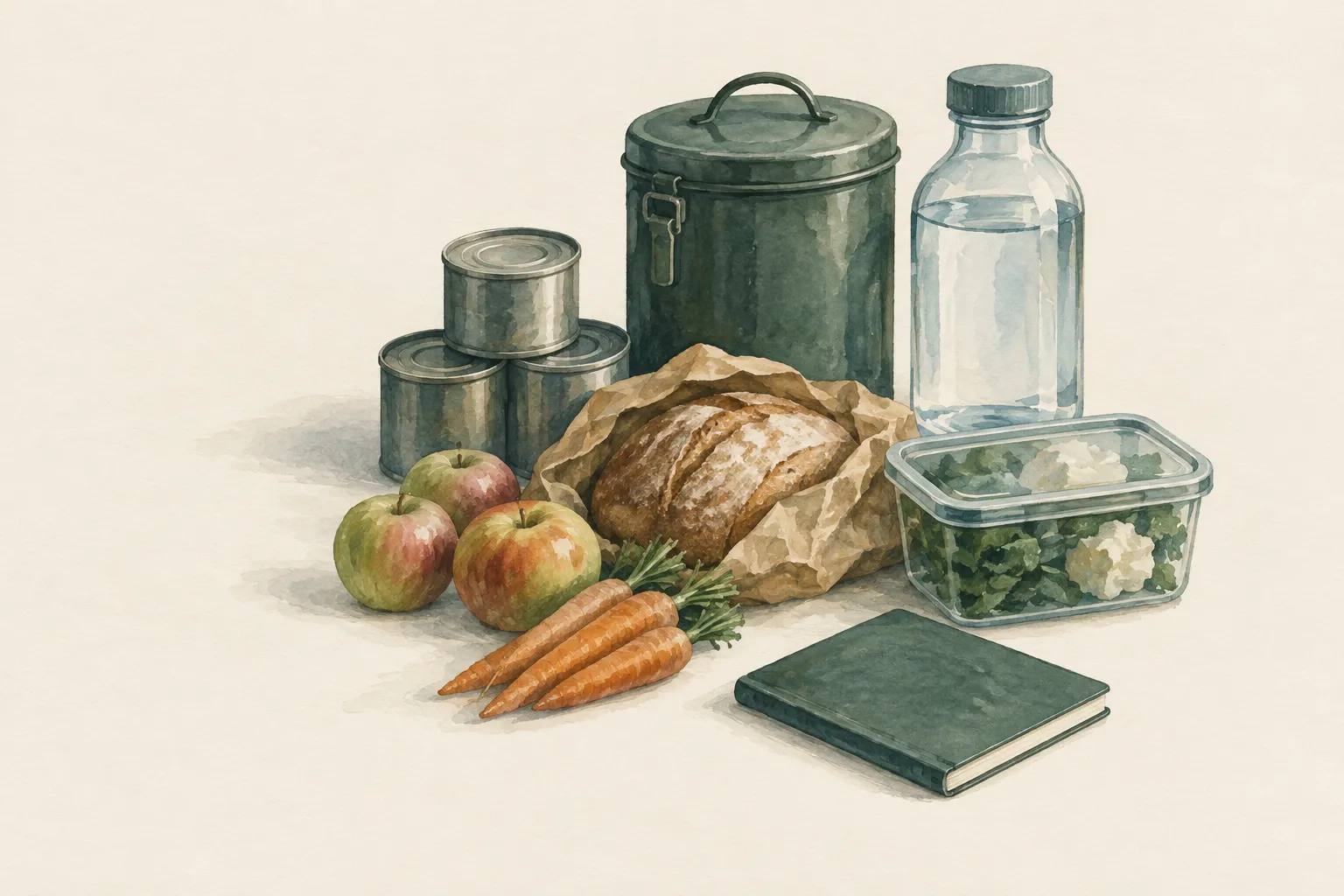
Explained simply
Imagine a family or a whole building has to manage for a few days with what is in the cupboard. Then it is like a big cake that has to last a whole week: you have to think beforehand about how to divide it, or there will be nothing left on the second day.
A good plan is simple and visible to everyone. First you write down what is there. Then you eat first what goes off quickly, for example fresh food from the fridge. Shelf-stable food, like tins and pasta, comes last. And you share by need: someone who is ill, small or pregnant does not get less just because they are quieter.
One thing is never rationed tightly: drinking water. People who drink too little quickly become weak and can no longer think clearly. If water gets short, it is better to save it on washing and to look for help early.
How it works
Rationing does not mean starving; it means planning. You divide the available stock by the number of days it is expected to last and agree on fixed meals. Regular, somewhat smaller meals are better than uncontrolled snacking, where nobody knows what is left.
The order follows shelf life: first fresh and opened food, then chilled and frozen food while it is still safe, and finally tins and dry goods. That way nothing spoils, and the shelf-stable part stays as a reserve for later. FEMA/Ready.gov recommends exactly this order.
Just as important as the quantity is the need. People who move little, stay warm and drink enough need noticeably less energy. When supplies are scarce, avoiding exertion often helps more than cutting portions drastically.
What really matters
Groups cope better with scarcity when everyone knows what is there, how it is shared and why. So the inventory list belongs where everyone can see it. Rations are handed out visibly, decisions are made together. Secret extra rations destroy trust faster than any hunger.
One person should keep track of the stock, but not decide alone. A short daily round helps: what has been used, what is left, is everyone all right, does the plan need adjusting? Humanitarian standards such as the Sphere Handbook stress that distribution should be fair, transparent and oriented to the needs of the most vulnerable – that applies on a small scale too.
Needs come before equality. Infants, children, pregnant and breastfeeding people, the sick and older people must not be under-supplied. Also think about allergies, diabetes and medication that has to be taken with a meal.
Safety: what to watch out for
Drinking water is not rationed below need unless authorities instruct otherwise. Drinking too little makes people incapable faster than eating too little. Instead save water on everything else – washing, rinsing, cooking with little water – and look for safe water sources or help in good time.
If it becomes clear that supplies will not last, or if someone becomes ill, ask for help early: from the authorities, neighbours or via the local emergency number (112 in the EU). Waiting until the very last moment only makes the situation harder. This entry deliberately gives no minimum rations and describes no starvation phases.
Typical situations
A snowed-in hut, a village cut off after a storm or an apartment building during a long power cut: in all these cases the same simple order helps. Take stock, record needs, set the order, make a daily plan, share openly, review daily.
In shared buildings, cooking together outdoors can save fuel and include neighbours who live alone. Hygiene rules then apply especially strictly, because many people eat from the same pot. Anyone with diarrhoea or vomiting does not cook for others.
Children can help too: they can keep the list, count water bottles or help hand out food. This gives them a task and the feeling that the situation is under control.
Good to know
Disputes over food rarely arise from the quantity alone, but from uncertainty and the feeling of being treated unfairly. A written, visible plan removes much of this pressure. It cannot prevent conflict entirely, but it makes it easier to resolve.
A plan also shows early when help will be needed. If you do a quick count every day, you see in good time that supplies will not last until the expected end – and can act while everyone still has strength.
Step by step
Take stock
Gather all food and water and list them: type, quantity, shelf life. For perishables, note what must be eaten first.
- 1
Take stock
Gather all food and water and list them: type, quantity, shelf life. For perishables, note what must be eaten first.
- 2
Record needs
Who is in the group? Children, pregnant people, sick people, people with allergies, diabetes or medication? Their needs take priority.
- 3
Set the order
First fresh and opened food, then chilled and frozen food while it is still safe, and finally tins and dry goods.
- 4
Make a daily plan
Divide the stock by the expected duration and agree on fixed meals. Regular smaller meals are better than uncontrolled snacking.
- 5
Share openly
Hand out rations visibly, keep the list open for everyone to see and make decisions together. This prevents mistrust.
- 6
Review daily
Check stock and health daily, adjust the plan and get help early if it becomes clear that supplies will not last.
Common mistakes
- Strictly rationing drinking water
- Eating shelf-stable food first and letting fresh food spoil
- Secret extra rations
- Overlooking the needs of children and sick people
- Asking for help too late
Quick view
Materials
Labels and permanent marker
For the inventory and daily rations
Airtight food-grade storage container
Fill only when clean and completely dry; never use containers that previously held chemicals.
Suitable for
- Longer supply interruptions
- Shared households, huts, snowed-in or cut-off groups
Not suitable for
- Rationing drinking water below need unless authorities instruct otherwise
- Cutting the food of infants, children, pregnant or sick people
Prerequisites
- An overview of the people and their special needs
- Agreement on who keeps track of the stock
Safety
- Infants, children, pregnant and breastfeeding people, sick and older people must not be under-supplied. Account for medication that must be taken with meals.
- If supplies run low or someone becomes ill, ask for help early – through the authorities, neighbours or the local emergency number (112 in the EU) – rather than waiting until the last moment.
How it works
A ration only helps if it is realistic, understandable and fair. Groups cope better with scarcity when everyone knows what is there, how it is shared and why. The order of use follows shelf life: perishables first, then chilled food, then shelf-stable food. When supplies are scarce it helps more to lower energy needs (rest, warmth) than to cut portions drastically.
Advantages
- Prevents waste
- Strengthens trust and cohesion
- Makes visible when help is needed
Disadvantages
- Requires agreement and a responsible person
- Cannot fully prevent conflicts
Deep knowledge
Background
Humanitarian standards such as the Sphere Handbook stress that food distribution should be fair, transparent and oriented to the needs of particularly vulnerable people. These principles can be transferred to families and small groups.
FEMA/Ready.gov recommends using perishable food from the fridge and freezer first in an emergency, before opening the shelf-stable stock. How long chilled food stays safe is described in the entry on the fridge during a power outage.
Variants
- Shared building
- In apartment buildings, cooking together (outdoors) can save fuel and include isolated neighbours. Hygiene rules then apply especially strictly.
Common mistakes
- Strictly rationing drinking water
- Eating shelf-stable food first and letting fresh food spoil
- Secret extra rations
- Overlooking the needs of children and sick people
- Asking for help too late
Limits and risks
- No figures on minimum rations or starvation phases
- No medical nutrition for the sick or infants
Material alternatives
Derived from material properties: a substitute must have all relevant properties. Observe the notes on the substitute.
- Airtight food-grade storage container
- Single-wall stainless steel bottle (Heat only single-wall bottles without paint/plastic; remove the lid before heating.), Double-wall insulated bottle (Never heat directly.), PET bottle (clear, max. 2 litres) (Do not heat or place in a fire.), Food-grade water container (Only use containers that never held chemicals or fuel.), Collapsible water container or bag (Protect from sharp objects.), Food-grade water bag (Use only for drinking water, never for chemicals or fuel.), Fermentation jar or crock (Use only food-grade containers of glass, food-safe glazed stoneware or food-grade plastic – no metal containers for acidic food.), Resealable food bags (Use only bags intended for food; do not use with boiling water unless the manufacturer explicitly allows it.)
Results come exclusively from structured entries. No improvised instructions are generated.
Sources
Sphere Association (2018): The Sphere Handbook: Humanitarian Charter and Minimum Standards in Humanitarian Response
Fair, transparent and needs-based food distribution
Ready.gov – U.S. Federal Emergency Management Agency (FEMA): Build A Kit
Use perishable food first, then the shelf-stable supply