Water in arid regions: planning and limits
In deserts and arid regions, water is above all a matter of planning: anyone hoping to find sources along the way takes a high risk. Improvised methods such as solar stills or plant bags usually yield very little. Limiting water loss is often more effective than finding new water.
- Planning before the trip; constant discipline on the way
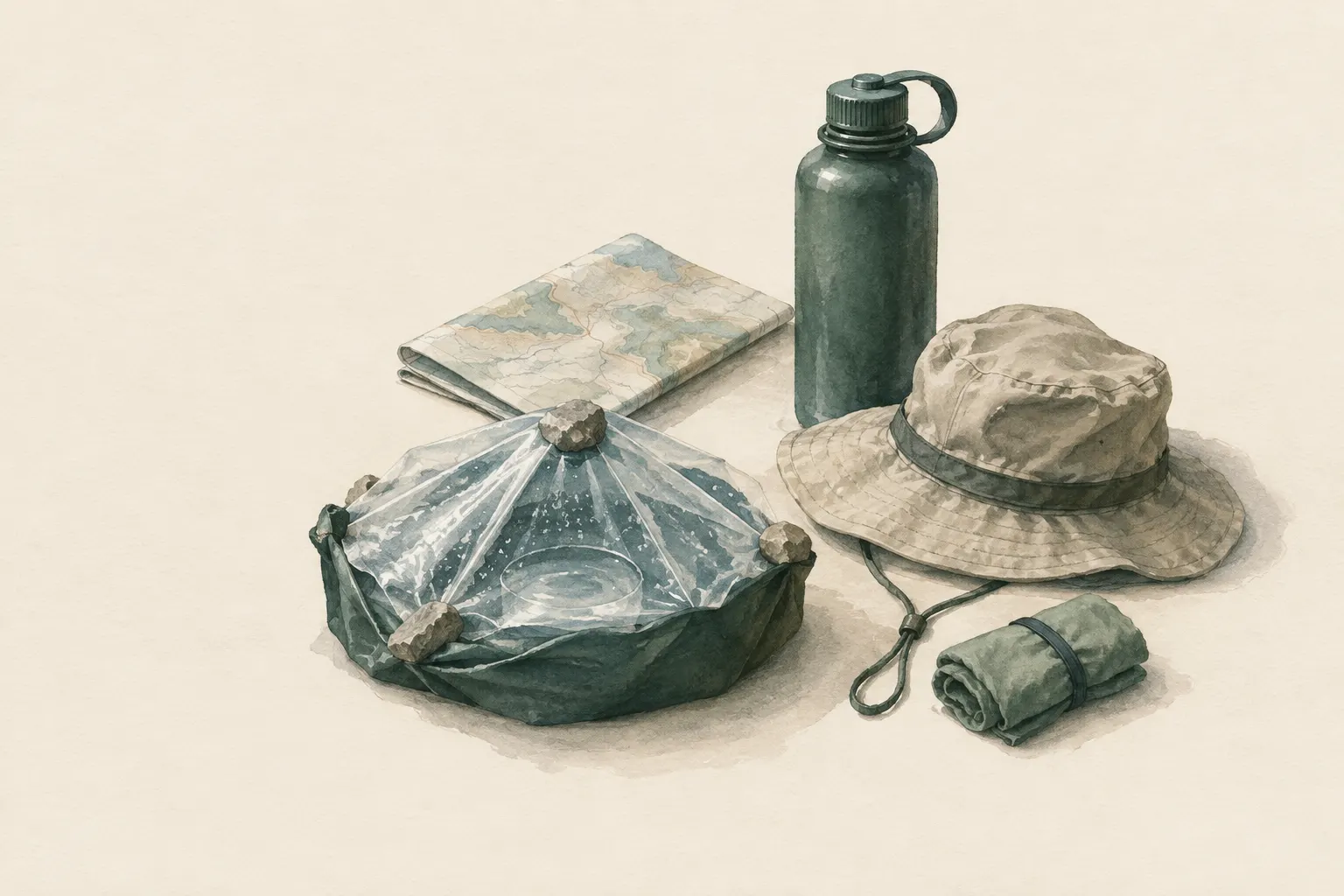
Explained simply
In a desert it is hot and dry, and water is rare. Your body sweats to cool down and loses a lot of water doing so – often more than you would think. So the most important question is not “Where will I find water on the way?” but “How much water do I carry, and where is there definitely some?”
Tricks from films, like a plastic bag over a bush or a hole with a sheet over it, usually yield only a few sips. It is far more effective to lose less water: stay in the shade, rest in the midday heat, walk in the morning and evening, cover your skin and head with airy clothing. That is why people say: save your sweat, not your water.
And if your car breaks down in a remote area, you should normally stay with the car. A car is much easier to find than a person, and it gives shade.
How it works: sweat is the biggest water bill
The body cools itself mainly by sweating. Sweat evaporates on the skin and carries heat away – just as wet laundry stays cool in the sun until it is dry. In hot, dry air sweat evaporates so quickly that you often do not even notice how much you are losing.
How much water you need in the heat depends strongly on temperature, exertion, getting used to the heat (acclimatisation) and your body. This atlas therefore deliberately gives no fixed number of litres. The only certain thing is: needs can be several times what authorities give as a planning figure for moderate conditions.
By comparison, improvised methods such as solar stills, dew or plant bags usually yield only small and uncertain amounts. If you dig a solar still in the heat, you can sweat out more water than the still will ever deliver. So in arid regions everything turns on two levers: carry enough, and reduce losses.
What really matters: planning before the trip
Plan your daily stages around the water, not the other way round. Identify reliable water points from current sources, for example authorities, park administrations or local people. In arid regions, springs, pools and wells often dry up or become inaccessible – a map that shows a well does not prove it has water today.
Always carry enough water to reach your destination or a reliably known water point, plus a reserve for delays. Leave your route and planned return time with a reliable person. In remote areas you need a means of communication that actually works there, as there is often no mobile signal.
An important point about drinking: do not hold back the water you have out of thrift until you are exhausted. If you drink too little, you think less clearly, make worse decisions and grow weaker. It makes more sense to reduce losses with shade and rest.
Safety: what to watch out for
Heat can become life-threatening. Confusion, vomiting, collapse or markedly abnormal skin temperature can indicate a serious heat illness. Then call the local emergency number (112 in the EU) immediately or get help via your means of communication, and move the person into the shade. This entry does not replace first-aid training.
Some supposed emergency fixes do more harm than good. Do not drink urine, seawater, alcohol, vehicle coolant, or juices from unknown plants or cacti. Salt, waste products and toxins make the water shortage worse or can poison you.
Do not strip off to cool down. Covering, airy clothing and a hat protect against direct sun and keep some moisture on the skin. Do not sit or lie directly on hot ground, as it passes a lot of heat into the body.
Typical situations
Vehicle breakdown: a stranded vehicle is much easier to spot from the air and from tracks than a person, and it provides shade. Do not leave it on foot unless you have a sound plan and a known, nearby water point. Use the waiting time to avoid heat and exertion.
Searching for water on the way: if you do have to search, water is most likely to collect on the outside of bends in dry valleys, at the foot of cliffs and in shaded rock hollows. Search during the cool times of day, not in the midday heat. Any water you find must be treated before you drink it.
Good to know
Military survival manuals such as FM 3-05.70 describe water loss through sweat as the central problem in desert situations. They advise shifting activity to cool hours, resting in the shade and keeping the body covered. Improvised methods such as the solar still are described there, but classed as supplements with low and uncertain yield.
A common myth is that you can “get used to” little water or last longer by being thrifty. In the heat the body loses water whether you drink or not. Water in your stomach is more useful than water in a bottle you do not touch out of fear – provided you have planned so that the supply is enough.
Step by step
Plan water in advance
Before the trip, identify reliable water points from current sources (authorities, park administration, local people). Plan daily stages around the water, not the other way round, and carry a reserve.
- 1
Plan water in advance
Before the trip, identify reliable water points from current sources (authorities, park administration, local people). Plan daily stages around the water, not the other way round, and carry a reserve.
- 2
Leave your route
Leave your route and return time with a reliable person. In remote areas carry a means of communication that works there.
- 3
Reduce loss
Move in the cooler morning and evening hours, rest in the shade during the midday heat and wear covering, airy clothing and a hat. Do not sit or lie directly on hot ground.
- 4
Stay with a broken-down vehicle
A vehicle is easier to find than a person and provides shade. Do not leave the vehicle on foot without a sound plan and a known nearby water point.
- 5
Search for water with realistic expectations
Water is most likely to collect on the outside of bends in dry riverbeds, at the foot of cliffs and in shaded rock hollows. Treat any water you find.
Common mistakes
- Relying on unconfirmed water points
- Planning on a solar still or plant bags as the water supply
- Walking or digging in the midday heat
- Removing clothing to cool down and so losing more water
- Leaving a broken-down vehicle without a plan
- Hoarding water until exhausted
Quick view
Suitable for
- Planning trips in deserts, steppes and hot arid regions
- Vehicle breakdowns in remote arid areas
Not suitable for
- Spontaneous trips without knowledge of water points
- Medical treatment of heat illness or dehydration
Prerequisites
- Reliable, current information about water points
- Map reading
Safety
- Do not hold back available water to the point of exhaustion out of thrift. Reduce water loss with shade and rest instead of cutting drinking so far that judgement and performance suffer.
How it works
In arid regions, water lost through sweat easily exceeds anything improvised methods can provide. So everything turns on two levers: carry enough water and plan on water only where it is known to exist – and on the way, reduce losses by shifting exertion to cool times of day, using shade and keeping the body covered.
Deep knowledge
Background
Survival manuals such as FM 3-05.70 stress for desert situations that water loss through sweat is the central problem and advise conserving sweat rather than water: shift activity to cool hours, rest in the shade, cover the body. The same manuals describe improvised methods such as the solar still, but treat them as supplements with low and uncertain yield.
How much water is needed in heat depends strongly on temperature, exertion, acclimatisation and the individual. This entry therefore deliberately gives no number of litres; needs can be several times the official planning figures for moderate conditions.
Common mistakes
- Relying on unconfirmed water points
- Planning on a solar still or plant bags as the water supply
- Walking or digging in the midday heat
- Removing clothing to cool down and so losing more water
- Leaving a broken-down vehicle without a plan
- Hoarding water until exhausted
Limits and risks
- No litre figures for heat – highly individual
- No substitute for local knowledge and current information
- Not medical guidance on heat illness
Sources
Headquarters, Department of the Army (USA) (2002): FM 3-05.70 Survival
Water loss in desert situations, conserving sweat, water in arid areas, limits of improvised methods
Bundesamt für Bevölkerungsschutz und Katastrophenhilfe (BBK), Deutschland: Ratgeber für Notfallvorsorge und richtiges Handeln in Notsituationen
Official planning figures apply to moderate conditions