Collecting deadwood – permitted, safe and gentle
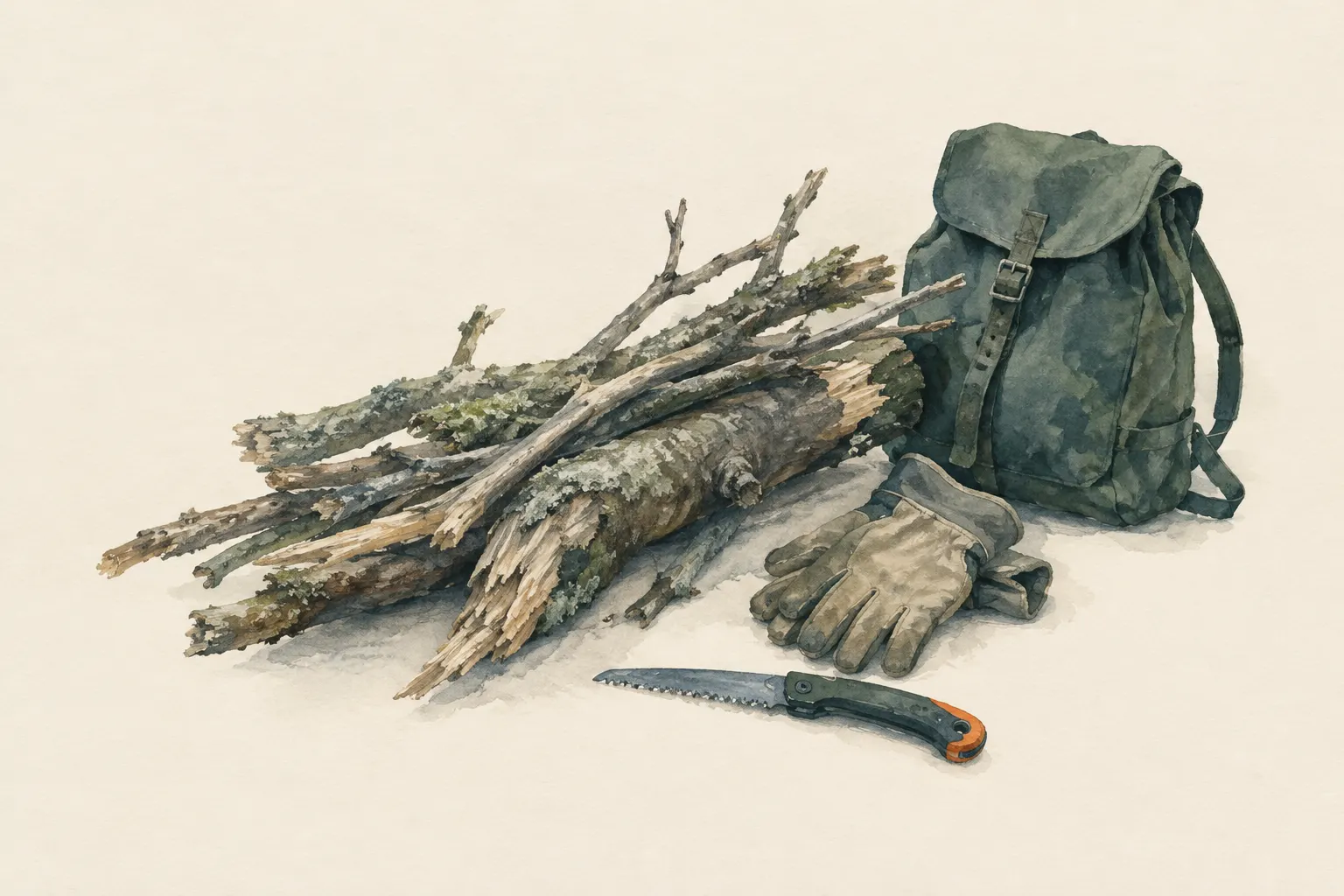
In bushcraft only deadwood is used for fires and camp structures, and only where that is permitted. Fallen, thin wood that can be broken by hand is usually the most suitable. Dead trees stay standing, hung-up branches are not pulled down, and part of the deadwood always remains as habitat.
- Depends on need
Explained simply
Deadwood is wood that has already died – fallen branches and twigs, for example. It is drier and burns much better than fresh wood from living trees. So you always leave living trees and branches alone. They burn poorly, smoke a lot and are injured when you break them.
But deadwood does not belong to nobody either. It is a home for beetles, fungi, mosses and birds – a kind of hotel in the forest. So you take only as much as you need, collect it spread over a wider area and always leave plenty behind. And above all you ask first: am I allowed to collect wood and light a fire here at all? That differs from place to place.
Most important for your safety: look up! Dead trees and broken branches still hanging in other trees can fall suddenly, especially in wind. You never pull or shake such trees, and you do not collect underneath them.
How it works
Fresh wood contains a lot of water. When it burns, this water must first evaporate, and that costs energy – the fire burns cooler, smokes and goes out more easily. Dead wood that has lain dry has already lost much of its water. It catches more easily, burns hotter and makes less smoke. So deadwood is not only the gentler choice but also the better one.
At the same time, deadwood is an important part of the forest. Many insects, fungi and other organisms live in it and slowly break it down into new soil. Woodpeckers and other birds look for food there. Clearing a spot completely takes away these creatures' habitat. So the rule is: collect widely spread, do not take everything, and leave rotten, wet wood lying – it burns poorly anyway.
The proven rule of thumb from Leave No Trace is: dead and down wood that can be broken by hand. Thin wood burns down cleanly and leaves fewer half-charred remains. You can cut thicker pieces to length with a folding saw; splitting is only needed when it really has to be.
Rules and permission
Whether you may collect wood, camp and light fires is governed very differently by landowners and local rules. In some areas collecting fallen wood is allowed, in others you need permission, and in protected areas it is often banned completely. Check local rules before the trip, and if in doubt ask the landowner or the responsible authority. This entry is not legal advice.
Even where collecting wood is allowed, fires may be banned at the moment – for example in dry spells with high wildfire danger. Find out about current warnings and fire bans. Where collecting is not allowed, take a stove or bring firewood. Note: in many places firewood should not be moved over long distances because pests can travel in it – local guidance applies here too.
Safety: what to watch out for
The biggest danger when collecting wood comes from above. Dead trees, broken branches still hanging in the canopy and leaning trunks can fall without warning – especially in wind, but on calm days too. So look up before you collect anywhere and avoid such spots. Dead trees or hung-up branches are never pulled or shaken.
After storms, fallen trees often lie criss-crossed on top of each other. Many of these trunks are under enormous tension, like a drawn bow. If such a trunk is sawn, it can suddenly spring up or roll away. Windthrow areas like this are for trained professionals – you avoid them.
While collecting, work gloves protect against splinters and thorns. Saw only from a firm stance, with the wood securely supported and at a distance from others. Felling trees is explicitly not part of this: it is dangerous and only permissible with training and permission.
What really matters
Good firewood snaps with a clear, dry crack. If it only bends, or feels soft and heavy, it is either still alive or already rotten and wet. Wood lying directly on damp ground is often wet inside; branches lying a little raised on others are usually drier.
Estimate beforehand how much you need and plan a small fire. A small fire is enough for cooking and warmth and uses much less wood. Collect away from the camp and spread over a larger area so that no bare patch is left. When you break camp, scatter any leftover wood naturally again.
Good to know
In popular areas there is often hardly any deadwood left around campsites, because many people have collected before you. That is a good sign that a stove is the better choice there. Leave No Trace generally recommends keeping fires small and using existing fire rings where they exist.
This entry does not identify tree or plant species. For collecting firewood that is not necessary either: what matters is that the wood is dead, dry, lying on the ground and thin enough – and that you are allowed to take it.
Step by step
Check the rules
Before the trip find out: may wood be collected and fires lit here? Is there a wildfire warning?
- 1
Check the rules
Before the trip find out: may wood be collected and fires lit here? Is there a wildfire warning?
- 2
Look up
Before collecting, check the trees above for dead branches and leaning trunks.
- 3
Fallen wood only
Take wood lying on the ground that snaps dry. Rotten, wet wood burns poorly and is better left as habitat.
- 4
Thin enough
Mainly wood that can be broken by hand. Cut thicker pieces to length with the saw only; do not split unless necessary.
- 5
Collect widely
Do not clear one spot but collect spread over a larger area, away from the camp.
- 6
Only as much as needed
Estimate the need, plan a small fire and scatter leftover wood when breaking camp.
Common mistakes
- Breaking branches off living trees
- Shaking dead trees
- Clearing all deadwood around the camp
- Collecting wood without knowing the rules
Quick view
Materials
Folding saw
Fold or cover the blade after use; saw teeth are very sharp.
Sturdy work gloves
When handling flood mud or chemicals, also wear waterproof gloves.
Suitable for
- Campfires where permitted
- Material for tripods, pegs, benches
- Groups that need a lot of wood
Not suitable for
- Protected areas and places where collecting is banned
- Times of fire bans or high wildfire danger
- Living trees and branches – never
Prerequisites
- Knowledge of local rules or the landowner's permission
- Knowing whether fires are currently allowed
Safety
- Whether collecting wood, camping and fires are allowed is governed very differently by landowners and local rules – check local rules and ask when in doubt.
- Trunks under tension (e.g. after a storm) can spring when sawn. Avoid such windthrow areas.
How it works
Deadwood is drier and lighter than fresh wood and burns better; at the same time it is habitat for insects, fungi and birds. Taking only thin, fallen wood from a wide area meets your need and leaves hardly any trace.
Advantages
- Dry, well-burning wood
- No harm to living trees
- On the safe side legally
Disadvantages
- Often little deadwood left in popular areas
- Not permitted everywhere
Deep knowledge
Background
Leave No Trace recommends keeping fires small and using only dead and down wood that can be broken by hand.
Felling trees is not part of this atlas – it is dangerous and only permissible with training and permission.
Variants
- Bring wood
- Where collecting is banned, bringing firewood or using a stove is the alternative – in many places firewood should not be moved far because of pests; follow local guidance.
Common mistakes
- Breaking branches off living trees
- Shaking dead trees
- Clearing all deadwood around the camp
- Collecting wood without knowing the rules
Limits and risks
- No legal advice – rules differ by country and landowner
- No tree species or plant identification
Sources
Leave No Trace Center for Outdoor Ethics: The Seven Principles of Leave No Trace (Principle 5: Minimize Campfire Impacts)
Keep fires small, use only dead and down wood that can be broken by hand
USDA Forest Service / Ad Council / National Association of State Foresters: Campfire Safety (Smokey Bear wildfire prevention campaign)
Observe fire restrictions and wildfire danger