In the forest: recognising hazards, keeping your bearings
The forest offers shelter from wind, firewood and often water – but also its own hazards: falling branches and toppling trees in storms, poor visibility for navigation, ticks and, in dry periods, wildfire danger. Choosing camp sites by looking up and avoiding the forest during storms prevents the most common problems.
- Knowledge to take along; a few minutes for each site choice
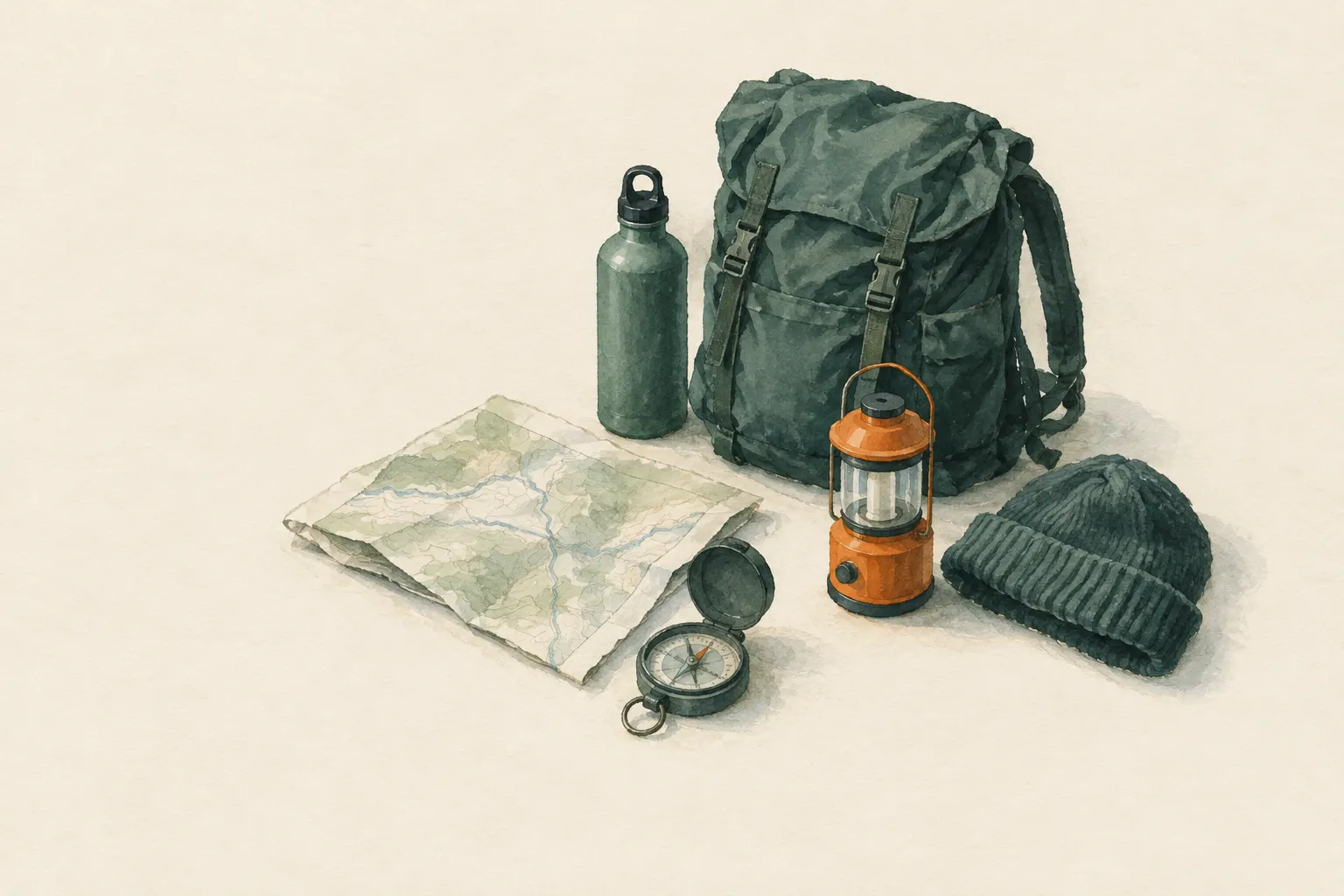
Explained simply
A forest is like a big house with a green roof. The trees keep off the wind, give shade and hold moisture. That is why you often feel sheltered in a forest. But this roof also has loose parts: dead branches that will fall at some point, and old or sick trees that can topple over in a storm.
In a forest you also cannot see very far. Many paths look the same, and behind every bend there are just more trees. So it is easier to lose your way in a forest than in an open meadow. It helps to look at the map regularly and to remember striking things, such as a big rock or a bridge.
The most important safety point: you do not go into the forest in a storm, and when you sit down or pitch a tent, you look up first. If dead branches are hanging there or a tree is leaning, you choose another spot.
How it works
The forest canopy slows the wind considerably and holds off rain for a while. Beneath it the air stays more humid and cooler by day, and often a little warmer at night than in an open field. These advantages make the forest a comparatively friendly place for breaks and overnight stays.
The typical hazards come from three directions. From above: dead wood – dead branches and trees – can fall without warning, especially in wind, after storms or when heavy wet snow lies on the branches. From navigation: because there is no long-distance view, you cannot aim for prominent hills or towers. From the season: drought raises the wildfire danger, and ticks are active in the warmer months.
After a storm the forest is not safe again straight away. Broken branches can still fall hours or days later, and fallen trees are sometimes under tension. The word “windthrow” describes areas where a storm has knocked down many trees at once – such areas are often closed, and for good reason.
What really matters
For every rest stop and camp, look up. Watch for branches without leaves or needles, trees with flaking bark, fungi on the trunk, cracks or a clear lean. A tree whose root plate is already lifting a little out of the ground can topple completely in the wind. Check the ground too: hollows and low stream banks can fill with water quickly in rain.
For navigation it helps not just to follow the path but to tick off points deliberately: this junction, this bridge, this stream. Forest roads are often newly built or abandoned and do not always match the map. If you notice you are unsure, stop, look at the map and the time and, if necessary, go back to the last point you were sure of instead of just walking on.
Plan around the light. Under dense trees it gets noticeably dark earlier than out in the open. So a headlamp belongs in the pack even for short forest walks.
Safety: what to watch out for
Storms are the biggest danger in the forest. Check the weather warnings before the trip. If there is a storm or thunderstorm warning, choose a route without forest or postpone the trip. If you are caught out, leave the forest quickly towards open ground without standing on the highest point there, and keep away from forest edges with tall trees.
Fire in the forest is only allowed where local rules permit it. In dry periods bans often apply, and in many countries the wildfire danger level is published. Check the local rules before every trip. A fire you are allowed to make is put out completely, until no embers are warm any more.
In many regions ticks can transmit diseases. Long trousers, closed shoes and checking yourself after the trip help. Remove a tick promptly, for example with fine tweezers or a tick card close to the skin. If the spot later turns red, a spreading ring appears or you get a fever, seek medical advice. Whether a vaccination makes sense for your region is something to discuss with a doctor.
Typical situations
Family walk in autumn: after a windy night, branches lie on the path. That is a sign that others could be loose too. Take breaks in open clearings rather than under old trees, and show children how to look up.
In the evening the forest gets dark and the way back is longer than expected. Now what you did beforehand pays off: a headlamp in the pack, junctions remembered, someone told where you are going. If you are lost, stop, calm down and think instead of going cross-country in the dark.
Good to know: whether you may camp, make a fire or leave the paths in a forest differs greatly between countries and regions. Some countries have broad rights of public access, others strict bans. This text cannot answer that for every place – the local rules apply.
Step by step
Check weather and warnings
Before the trip check storm, thunderstorm and wildfire warnings. During a storm warning choose a route without forest or postpone.
- 1
Check weather and warnings
Before the trip check storm, thunderstorm and wildfire warnings. During a storm warning choose a route without forest or postpone.
- 2
Navigate deliberately
The forest often lacks a long-distance view. Track your position on the map regularly, confirm junctions deliberately and memorise distinctive features.
- 3
Look up when stopping
For breaks and camps check for dead branches, leaning or broken trees, and trees with exposed root plates. Avoid such spots.
- 4
Check the ground
Hollows can fill with water in rain and stream banks can flood. Choose slightly raised, level ground.
- 5
Observe fire rules
Only make a fire where it is permitted and extinguish it completely. In dry periods do without an open fire.
- 6
Check after the trip
Check your body for ticks, especially the backs of the knees, groin, armpits and, with children, head and hairline.
Common mistakes
- Pitching a tent under a dead spruce
- Going into the forest despite a storm warning
- Relying on forest roads for navigation
- Making a fire during a dry spell
- Forgetting the tick check
Quick view
Materials
Topographic map
Paths and forest roads are often hard to tell apart
Check the publication date – paths and buildings may have changed.
Protect from wet (map case or bag).
Baseplate compass
Metal, magnets and electronics nearby deflect the needle.
Bubbles in the capsule or a sluggish needle indicate a defect.
Headlamp / flashlight
It gets dark earlier in the forest
Suitable for
- Hikes and overnight stays in the forest
- Planning camp sites
- Trips with children and groups
Not suitable for
- Staying in the forest during a storm warning
- Identifying plants or mushrooms
Prerequisites
- Basic map and compass skills
- Knowing local rules on fire, camping and access rights
Safety
- Never pitch a camp, tent or tarp beneath dead trees or hanging dead branches – look up first.
- During dry periods fire bans often apply in and near forests. Check the rules and wildfire danger levels beforehand.
- In many regions ticks transmit diseases. Wear long clothing, check yourself after being outdoors, remove ticks promptly and seek medical advice if a rash or fever develops. Ask a doctor about possible vaccinations.
How it works
The forest slows wind and holds moisture but limits visibility. Hazards come mainly from above (dead wood, windthrow), from navigation (little long-distance view, similar-looking paths) and from the season (drought, ticks). Checking these three directions deliberately lets you use the forest's advantages without its typical risks.
Advantages
- Shelter from wind
- Firewood and building material where permitted
- Shade in hot weather
Disadvantages
- Danger from falling branches and trees
- Limited visibility and navigation
- Wildfire danger in dry periods
Deep knowledge
Background
Outdoor and survival manuals such as the US Army's FM 3-05.70 treat forests as a comparatively well-supplied environment but stress choosing a safe camp site. Forestry authorities regularly warn against entering forests during and after storms.
The rules for fire, camping and access differ greatly between countries and regions – from broad rights of public access to strict bans. Check local rules before every trip.
Variants
- Dense forest and thicket
- Off the paths progress is slow and navigation difficult. Stay on paths where possible and allow considerably more time for cross-country sections.
Common mistakes
- Pitching a tent under a dead spruce
- Going into the forest despite a storm warning
- Relying on forest roads for navigation
- Making a fire during a dry spell
- Forgetting the tick check
Limits and risks
- No plant or mushroom identification
- No legal information on access and fire rules
Material alternatives
Derived from material properties: a substitute must have all relevant properties. Observe the notes on the substitute.
- Headlamp / flashlight
- Mobile phone (The battery drains quickly in cold and with continuous screen and GPS use.), Battery lantern / LED light
Results come exclusively from structured entries. No improvised instructions are generated.
Sources
Headquarters, Department of the Army (USA) (2002): FM 3-05.70 Survival
Camp site selection and conditions in forested areas
NOAA National Weather Service (USA): Lightning Safety
Behaviour during thunderstorms outdoors