Choosing and preparing a safe fire site
A campfire can start a wildfire through flying sparks, an unsuitable fire site or incomplete extinguishing. First establish whether a fire is allowed at all; then use an existing fire ring or choose a sheltered, open spot on non-flammable ground – well away from tents, trees and dry vegetation.
- 10–20 minutes
Explained simply
Before you make a fire, the first question is: am I even allowed to make a fire here? In many forests, nature reserves and during dry spells it is forbidden. That applies to very small fires too. If you are unsure, do not make a fire.
If fires are allowed, find a safe spot. Best of all is a fire pit that is already there. Otherwise you need an open spot on sand, gravel, rock or bare soil – with no branches above, no dry grass around it, and far away from the tent. Remember: the wind carries sparks a long way, like dandelion seeds.
Have water ready before you light it. And never make a fire inside a tent, a car or an enclosed room: it produces an invisible, odourless gas (carbon monoxide) that can kill.
How it works
A campfire endangers its surroundings in three ways: upwards through flames and hot air that can ignite overhanging branches; sideways through sparks and falling embers that reach dry grass, leaves, tents or gear; and downwards through heat that penetrates the ground. A good fire site protects in all three directions.
The wind decides where sparks fly. Even a light breeze can carry glowing particles many metres. That is why tent, tarp and woodpile never belong on the side the wind is blowing towards. If the wind picks up strongly, even a small fire is dangerous.
The ground is especially treacherous. On peat, bog, thick needle or leaf litter and root-laced soil, embers can creep unnoticed into the ground and smoulder there for hours or days. Later they can start a fire in a completely different spot. Such ground is avoided for fires – or cleared down to bare mineral soil.
Rules and permission
Which rules apply differs widely between countries, regions and landowners and changes with season and drought. Responsible parties include landowners, the municipality, the forestry authority or the management of a protected area. This atlas therefore gives no distance regulations or laws – always check the local rules.
Many countries publish information on the current wildfire danger; in Germany, for example, the German Weather Service with its wildfire danger index. Such information only gives a rough picture and does not replace your own judgement: if the ground is bone-dry and the grass crackles, restraint is wise even when no ban is in force.
If in doubt: no fire. A stove is often the better choice for heating water – but there are sometimes restrictions for those too. Fire pans protect the ground, but they are usually also covered by a fire ban.
What really matters
Where available, use an existing fire pit or fire ring. It is usually the intended spot, and the surroundings are not damaged in a new place. If you must choose a spot yourself, look for an open, somewhat sheltered place on sand, gravel, rock or mineral soil, with no overhanging branches and a large distance from tent, trees, deadwood and dry grass.
Clear away everything flammable all around – leaves, needles, twigs – until bare soil shows. On meadows you can lift the turf, set it aside and replace it after putting the fire out. Plan the fire small: it should only be as big as you need for cooking or warmth.
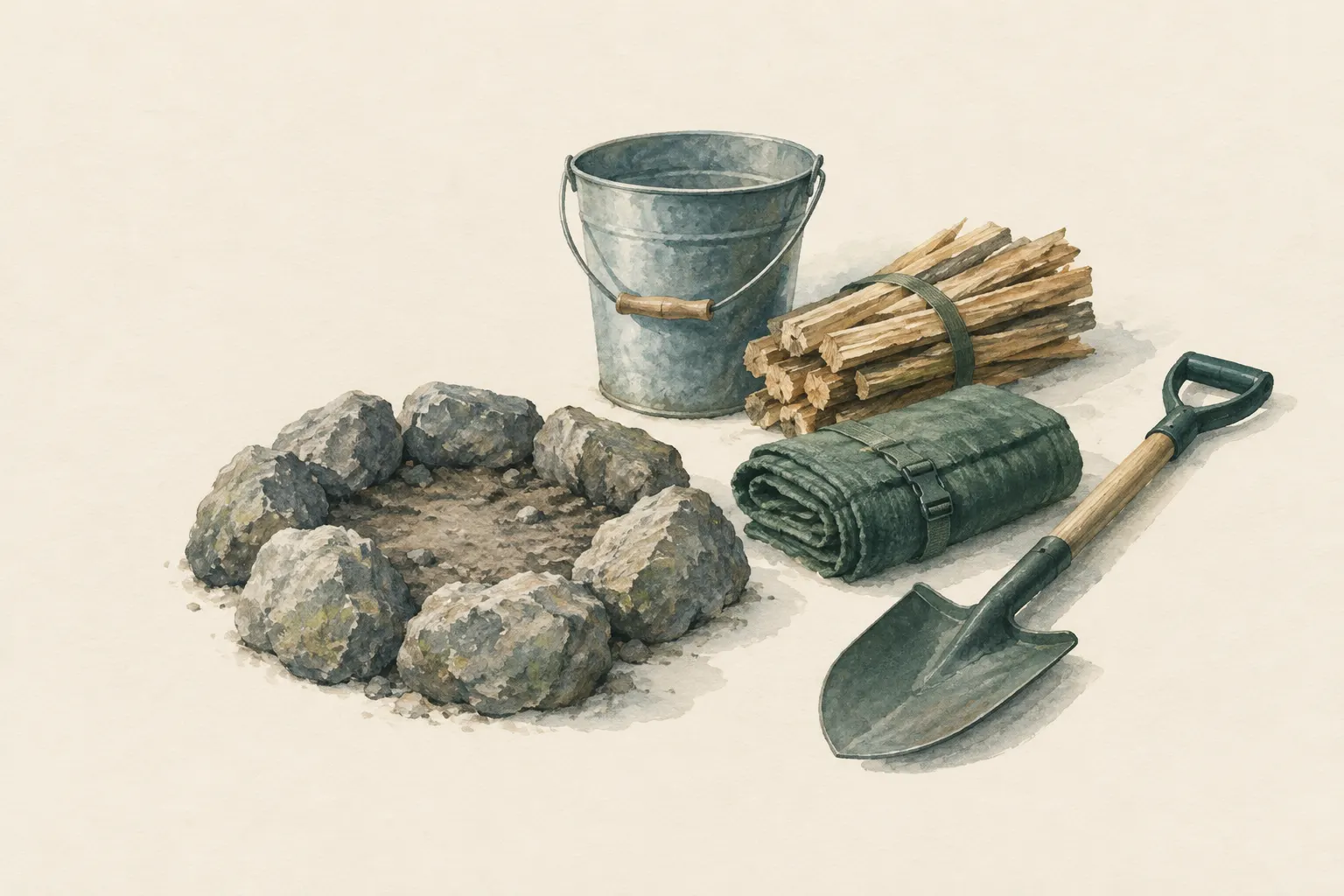
A ring of dry stones can hold embers together. But it does not replace supervision. And before you light anything, place water (pot, canister) and a small shovel or a sturdy stick within reach.
Safety: what to watch out for
Do not take stones from streams or waterlogged stones for the fire ring. Water in their pores can turn to steam when heated and make the stone crack or burst; fragments can fly. Use dry stones and never put wet stones directly into the fire.
Fires, embers, charcoal and stoves never belong inside a tent, vehicle, cave, snow shelter or enclosed room. Burning produces carbon monoxide. This gas is invisible and odourless and can cause unconsciousness and death without any warning.
If a fire still gets out of control and cannot be put out at once, do not try to fight it alone. Get yourself and others to safety, moving crosswise to the direction it is spreading and away from the wind, and call the local emergency number (112 in the EU).
Good to know
Many wildfires that start from campfires have simple causes: an unsuitable spot, sparks blown by the wind, or embers that were not completely put out. A carefully chosen fire site prevents the first two causes before the first match is even lit.
Leave No Trace principles recommend making fires only where appropriate, using existing fire rings and keeping fires small. When you leave, the spot should look as much as possible as it did before – with extinguished, cold ash and the turf put back.
Step by step
Check rules and danger level
Find out whether fires are allowed here (landowner, protected area, municipality, forestry authority) and whether a fire ban or high wildfire danger is in force. In Germany, for example, the German Weather Service publishes a wildfire danger index. If in doubt, no fire – a stove is often the better choice, where permitted.
- 1
Check rules and danger level
Find out whether fires are allowed here (landowner, protected area, municipality, forestry authority) and whether a fire ban or high wildfire danger is in force. In Germany, for example, the German Weather Service publishes a wildfire danger index. If in doubt, no fire – a stove is often the better choice, where permitted.
- 2
Prefer an existing fire ring
Where available, use an established fire pit or fire ring. It protects the surroundings and is usually the intended place.
- 3
Choose the spot
Open, sheltered spot on sand, gravel, rock or mineral soil; no overhanging branches; ample distance from tent, tarp, trees, deadwood and dry grass. Note the wind direction: sparks must not drift towards camp or vegetation.
- 4
Clear the ground
Remove flammable material such as leaves, needles and twigs all around until mineral soil shows. If needed, lift the turf and set it aside to replace later.
- 5
Plan it small
Make the fire only as big as needed for cooking or warmth. A ring of dry stones can contain embers but does not replace supervision.
- 6
Have extinguishing means ready
Before lighting, place water (pot, canister) and a small shovel or stick within reach.
Common mistakes
- Making a fire under trees or at the forest edge
- Ignoring a fire ban because the fire is ‘only small’
- Tent or tarp downwind of the fire
- Making a fire on peat or root-laced ground
- Having no water ready
Quick view
Materials
Water for extinguishing (bucket, canister or pot)
Have it ready before lighting
Have several litres ready before lighting.
Small shovel / folding spade
Suitable for
- Campfires and cooking fires where permitted
- Emergency fires for warmth
Not suitable for
- Times of fire bans or high wildfire danger
- Bog, peat and deep humus ground
- Spots under trees or near dry vegetation
- Indoors, tents, vehicles
Prerequisites
- Knowledge of local fire rules
Safety
- Stones from streams or waterlogged stones can crack or burst when heated. Do not put wet stones directly into the fire.
How it works
A safe fire site keeps flames, sparks and embers away from everything that can ignite: above (branches), to the side (tent, grass, gear) and below (roots, peat). Wind decides where sparks travel.
Advantages
- Prevents the most common causes of campfire wildfires
- Protects the surroundings
Disadvantages
- Suitable spots are not available everywhere
Deep knowledge
Background
Which rules apply differs widely between countries, regions and landowners and changes with season and drought. This atlas therefore states no distance regulations or laws but refers to the responsible authorities.
Leave No Trace principles recommend making fires only where appropriate, using existing fire rings and keeping fires small.
Variants
- Fire pan
- A fire pan or fire basket lifts the fire off the ground and protects the surface. Where fires are allowed it is a good choice; fire bans usually still apply to them – check local rules.
Common mistakes
- Making a fire under trees or at the forest edge
- Ignoring a fire ban because the fire is ‘only small’
- Tent or tarp downwind of the fire
- Making a fire on peat or root-laced ground
- Having no water ready
Limits and risks
- Not legal advice
- Danger indices give only a rough picture and do not replace your own judgement
Sources
USDA Forest Service / Ad Council / National Association of State Foresters: Campfire Safety (Smokey Bear wildfire prevention campaign)
Choosing a site, clearing the area, keeping water ready, checking rules
Leave No Trace Center for Outdoor Ethics: The Seven Principles of Leave No Trace (Principle 5: Minimize Campfire Impacts)
Use existing fire rings, keep fires small
Deutscher Wetterdienst (DWD): Waldbrandgefahrenindex (WBI)
Wildfire danger index as an information source in Germany
Headquarters, Department of the Army (USA) (2002): FM 3-05.70 Survival
Choosing and preparing the fire site