Keeping a fire going and under control
A small, steadily fed fire gives more usable heat and is safer than a large one. Add wood gradually, let air in, watch for sparks – and never leave the fire unattended.
- Ongoing attention for as long as the fire burns
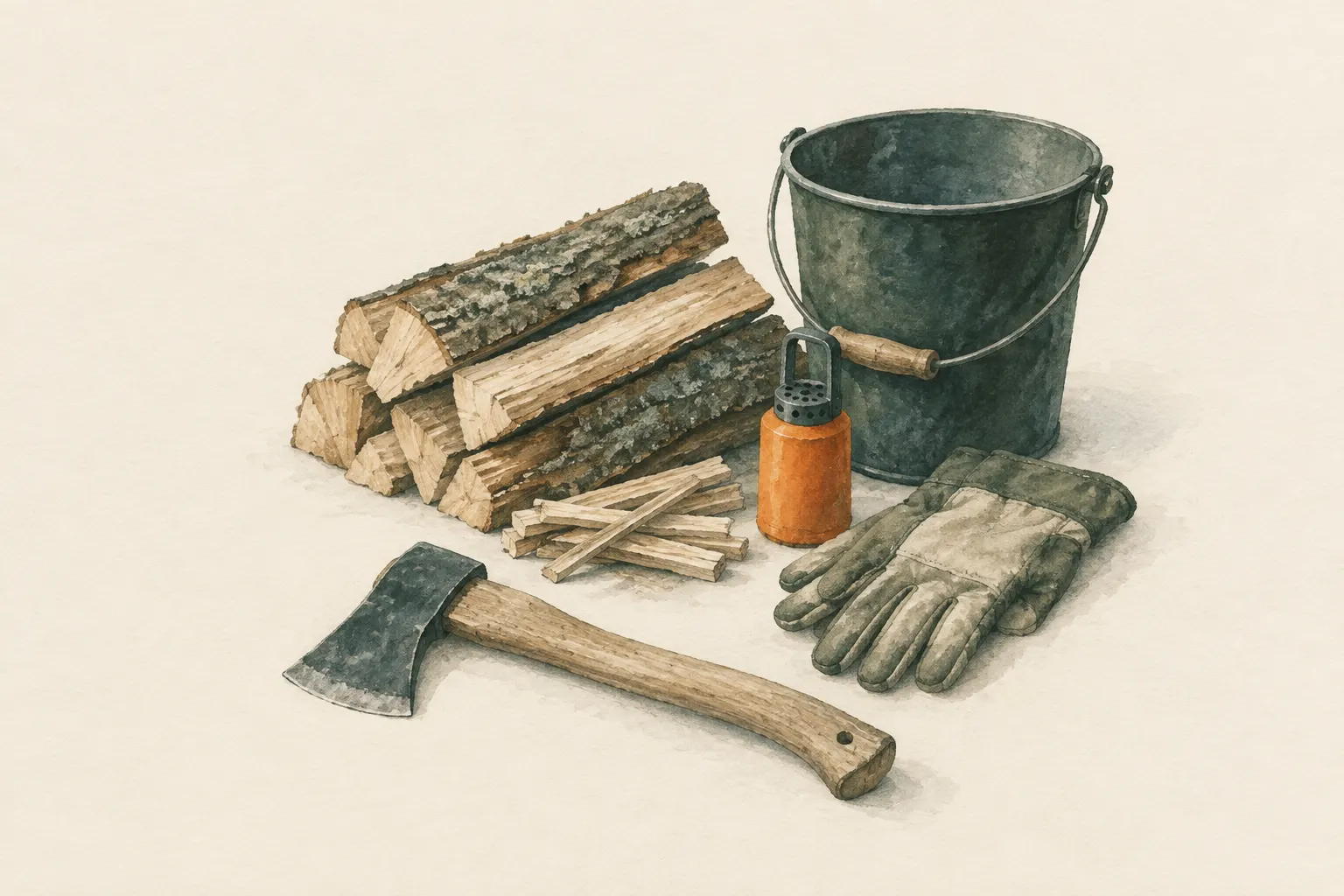
Explained simply
Keeping a fire going is a bit like feeding a pet: a little regularly, not everything at once. If you add too much wood at once, the fire chokes and smokes. If you add too little, it goes out.
A small fire is usually better than a big one. It warms and cooks well, throws fewer sparks and is easier to put out. The embers are especially valuable – the red-glowing pieces of wood without big flames. They hold heat for a long time and reliably light new wood.
The most important rule: a fire is never left alone, not even for a short time. Before you go to sleep or leave, it is completely put out. Children and pets keep their distance.
How it works
A fire burns steadily when three things are in balance: enough fuel, enough air and enough heat. If you add too much wood at once, it cools the fire and blocks the air. The flames get smaller and there is a lot of smoke. If you add wood too rarely, the embers get smaller and smaller until they can no longer ignite new wood.
The bed of embers is the heart of a good fire. Embers store a lot of heat and radiate it evenly. A log placed on good embers catches reliably, even if it is a bit thicker. A fire without an ember bed, on the other hand, is moody and quickly goes out.
Heavy smoke usually reveals a problem: the wood is too damp, packed too tightly, or too much was added at once. Good, dry wood in an airy fire burns with little smoke.
What really matters
Add only a few pieces at a time, and only once the previous ones are burning well. Place the pieces so air can flow between them – for example crosswise or leaning slightly against each other. You can let damp logs pre-dry at the edge of the fire, with a gap so they do not catch uncontrolled.
Keep the fire small. A small fire with strong embers warms and cooks better than a tall pile of wood, throws fewer sparks and can be put out faster. Keep the woodpile a few steps away, placed so the wind does not carry sparks to it.
If you use a fire for warmth, a wall of logs or rock behind the fire can direct radiant heat towards where you sit. It needs enough distance from shelter, tarp and sleeping bag. But good insulation from below and warm clothing often achieve more than a big fire.
Safety: what to watch out for
Never leave a fire unattended, not even “just briefly”. A gust of wind, a log falling over or embers rolling out are enough to ignite dry grass. Watch for sparks and changes in the wind, and push fallen embers back or put them out at once. Before sleeping or leaving, the fire is completely put out.
If the wind picks up or sparks fly into vegetation, make the fire smaller at once or put it out. If a fire is already out of control, do not fight it alone: get everyone to safety, crosswise to its spread and away from the wind, and call the local emergency number (112 in the EU). Never pour flammable liquids onto the fire.
Synthetic clothing can melt from sparks and stick to the skin. Near the fire, wool or cotton is better; loose clothing, long hair and shoes do not belong too close to the flames. Cool burns at once with cool, not ice-cold, running water; for large or deep burns, burns to the face or hands, and burns in children, call the emergency number.
Typical situations
With children at the fire: agree a clear distance beforehand, for example a line of stones or a stick on the ground that nobody crosses without an adult. Children can help sort wood and learn a lot doing it, but they go right up to the fire only under supervision.
Evening at camp: plan in good time how long the fire should burn, and collect the wood for it while it is light. A night needs much more wood than people estimate. Stop adding wood in good time so the fire can burn down before you put it out.
Good to know
Campfire safety guidance consistently stresses two points: keep fires small and never leave them unattended. It sounds simple, but in practice it is often the hardest rule – for example when everyone is tired or wants to pop down to the stream. So agree who is responsible for the fire at any moment.
Even a small fire is dangerous in strong wind. If conditions get worse, putting the fire out is not a defeat – it is the sensible decision.
Step by step
Add fuel gradually
Add only a few pieces at a time, once the previous ones are burning well. Place pieces so air circulates between them.
- 1
Add fuel gradually
Add only a few pieces at a time, once the previous ones are burning well. Place pieces so air circulates between them.
- 2
Limit the size
Keep the fire small: a small fire with embers warms and cooks better, throws fewer sparks and is easier to put out.
- 3
Store the woodpile safely
Keep the wood supply a few steps away and upwind so sparks cannot ignite it.
- 4
Watch
Keep an eye on sparks, changes in wind and embers outside the fire site. Push fallen embers back or extinguish them immediately.
- 5
Keep children and pets away
Agree a clear distance around the fire site; let children near the fire only under supervision.
Common mistakes
- Building a huge fire
- Leaving the fire unattended briefly
- Woodpile right next to the fire
- Adding lots of wet logs and smothering the fire
- Ignoring sparks in the wind
Quick view
Materials
Dry firewood
Collect only where permitted.
Water for extinguishing (bucket, canister or pot)
Have several litres ready before lighting.
Suitable for
- Warmth, cooking and light over longer periods
Not suitable for
- Strong wind or drought
- Situations where nobody can supervise the fire
Prerequisites
- Safe fire site
- Enough fuel wood prepared
Safety
- Cool burns immediately with cool, not ice-cold, running water. For large or deep burns, burns to the face, hands or joints, and burns in children, call the local emergency number (112 in the EU).
- Synthetic clothing can melt from sparks and stick to skin. Near the fire, wear wool or cotton where possible and keep loose clothing, hair and shoes away from the fire.
How it works
A fire burns steadily when fuel supply, air supply and heat are in balance. Too much wood at once smothers the flames and produces smoke; too little lets the fire die. A bed of embers stores heat and reliably ignites added wood.
Advantages
- Efficient heat with little wood
- Lower risk of sparks
Disadvantages
- Requires constant attention
- Wood needed for a night is often underestimated
Deep knowledge
Background
Campfire safety guidance consistently stresses two points: keep fires small and never leave them unattended. Heavy smoke usually indicates wood that is too damp or packed too tightly.
If you plan a fire for warmth overnight, remember that good insulation from below and clothing often achieve more than a big fire.
Variants
- Using heat better
- A wall of logs or rock behind the fire can direct radiant heat towards where you sit. Keep ample distance from shelter, tarp and sleeping bag, and never in enclosed spaces.
Common mistakes
- Building a huge fire
- Leaving the fire unattended briefly
- Woodpile right next to the fire
- Adding lots of wet logs and smothering the fire
- Ignoring sparks in the wind
Limits and risks
- In strong wind even a small fire is dangerous
Material alternatives
Derived from material properties: a substitute must have all relevant properties. Observe the notes on the substitute.
- Dry firewood
- Tinder (Carry in waterproof packaging.), Char cloth (charred cotton) (Store dry in a tin.), Finest-grade steel wool (Store separately from batteries – fire risk.), Fatwood (resin-rich wood) (Collect only dead wood where permitted.), Stove fuel (canister, liquid fuel, alcohol) (Store fuels apart from food and in original containers or bottles intended for them.), Petroleum jelly cotton balls (Use only pure cotton.)
Results come exclusively from structured entries. No improvised instructions are generated.
Sources
USDA Forest Service / Ad Council / National Association of State Foresters: Campfire Safety (Smokey Bear wildfire prevention campaign)
Keep fires small, never leave them unattended, keep water ready
Leave No Trace Center for Outdoor Ethics: The Seven Principles of Leave No Trace (Principle 5: Minimize Campfire Impacts)
Keep fires small
Headquarters, Department of the Army (USA) (2002): FM 3-05.70 Survival
Maintaining a fire and using its heat