Keeping a group calm and able to act in a crisis
Whether a family, neighbourhood, travel group or emergency shelter: a group stays calmer when it gets reliable information, everyone has a task, basic needs are organised and nobody is left alone. A calm coordinating person, fixed arrangements and open, honest communication do more than rallying slogans.
- Ongoing throughout the crisis
Explained simply
A group in a crisis is a bit like a boat in a storm. If everyone runs around and shouts, the boat rocks even more. But if one calm person says what is going on and everyone has a job – one bails out water, one holds the rope, one looks after the little ones – things in the boat get much calmer.
People get calmer when they know what is happening, when they can do something useful and when nobody is left alone. Hunger, thirst, cold and tiredness also make fear and quarrels bigger. That is why a good group first takes care of these basic needs: water, food, warmth, a toilet, a place to sleep.
The most important point: if police, fire service or other emergency services give instructions, those come first. And if someone becomes violent or wants to harm themselves or others: keep your distance and call the emergency number (112 in the EU).
How it works
In 2007, researchers led by Stevan Hobfoll summarised what helps people most after disasters. They named five elements: a sense of safety, calming, a sense of being able to make a difference yourself and together, connectedness with others, and hope. These five points are like a blueprint for a calm group.
In practice this means: honest information gives safety, because nobody has to imagine the worst. A calm voice and organised routines calm people down. Tasks give the feeling of being able to make a difference – helplessness amplifies fear. Staying together creates connection. And small, achievable goals (“by this evening everyone will be warm”) make hope tangible.
Fear is contagious, but so is calm. In uncertain situations people look at how others react. A person who speaks calmly, explains and listens sets the tone for everyone. They don't need to be the loudest or the highest in rank – what matters more is that they keep an overview and involve others.
What really matters
Clarify early who coordinates. This person gathers information, assigns tasks and makes decisions after brief consultation – they explain them instead of shouting orders. Count everyone and form pairs who look out for each other. Anyone leaving the group says so, so that nobody gets lost.
Inform honestly and briefly: what is known, what is not known and what happens next. “We don't know that yet” is better than a reassuring lie, because people who have been fibbed to once will later not believe the important news either. Agree fixed times for updates, for example listening to the radio every hour on the hour. This slows down rumours that would otherwise keep going round.
Hand out suitable tasks: rationing water, organising light, preparing food, keeping children busy, listening to the radio, checking on neighbours. Very anxious people in particular benefit from doing something meaningful. And name successes aloud (“Water is secured”, “Everyone is warm”) – that strengthens the whole group's confidence.
Looking out for the vulnerable
Every group has people who need more support: children, older people, the ill, people with disabilities, pregnant women or people who don't understand the language well. Keep a deliberate eye on them – they are the easiest to overlook in the commotion. Ask what they need instead of guessing.
Also watch for people who become very quiet or very agitated. Someone who withdraws may just need someone to sit down beside them. But don't push anyone to talk about what they have experienced. Listening when someone wants to talk is often enough.
The coordinating person needs breaks too. Coordination is exhausting, and someone who is overtired makes worse decisions. Choosing a deputy who takes over from time to time is not a sign of weakness but smart planning.
Safety: what to watch out for
Instructions from authorities and emergency services always take priority over agreements within the group. Do not pass on rumours; check them against official sources – for example via radio, warning apps or announcements from emergency services. In an emergency shelter there are usually staff from relief organisations in charge; work with them and tell them about the needs of particularly vulnerable people.
Tensions are best addressed early and calmly, before they grow. Share resources such as water and food fairly and visibly, explain decisions. But if someone threatens others or becomes violent, mediating at any cost is the wrong approach: keep your distance, protect others and call the emergency number (112 in the EU).
If someone talks about taking their own life or harming themselves, endangers others or loses control completely: immediately call the local emergency number or a local crisis line and do not leave the person alone.
Good to know
A common picture from films is that people in disasters immediately become selfish and panicky. In many real emergencies, however, people behave more helpfully and level-headedly than is often assumed: neighbours help each other, strangers share what they have. Clear structures help to make good use of that willingness.
The guidelines of the Inter-Agency Standing Committee (IASC) on mental health in emergencies stress that community self-help and securing basic needs are the foundation of all psychosocial support. So a group that organises itself well already provides much of what keeps people emotionally stable.
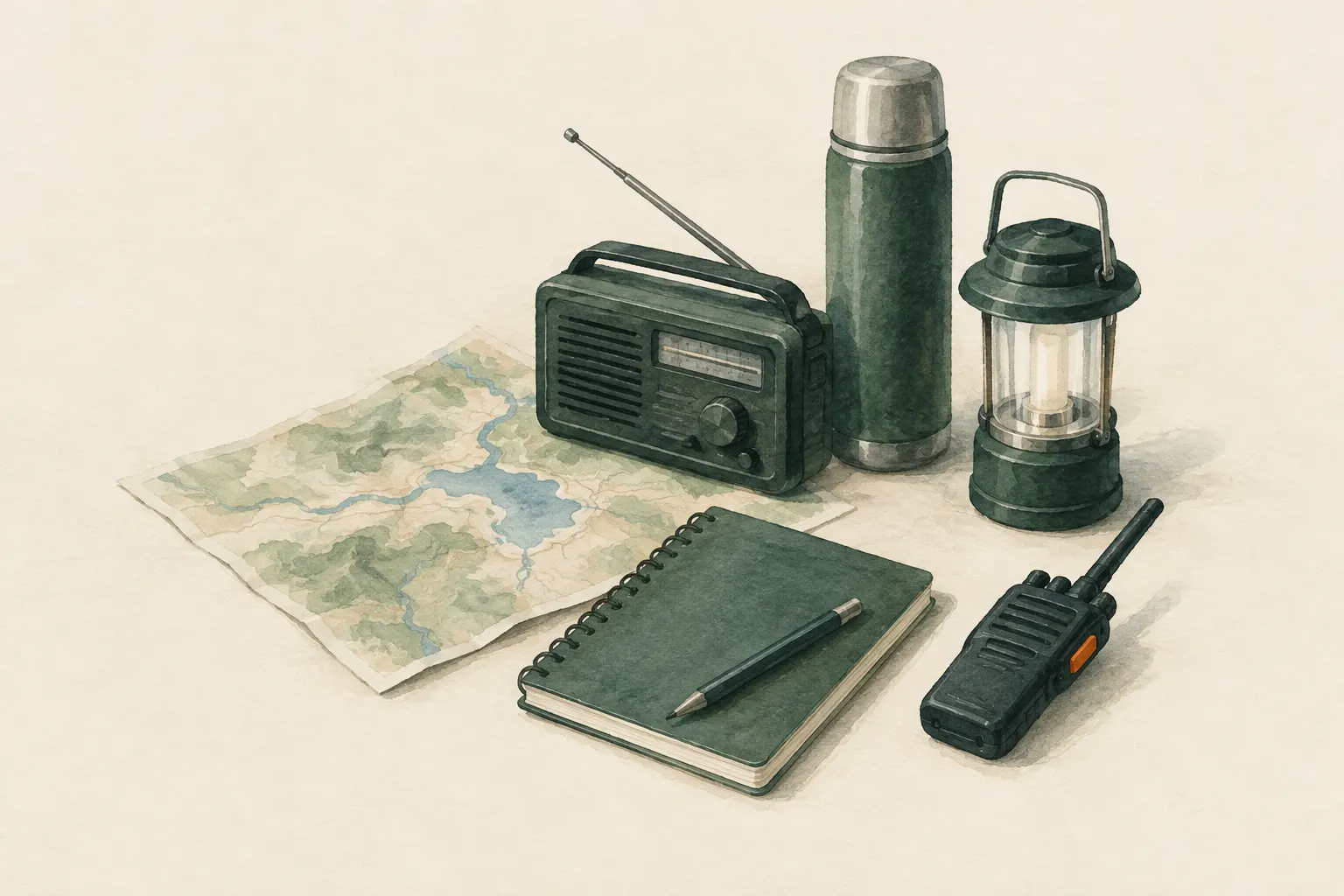
A battery radio, a head torch and a family or household plan agreed in advance make it much easier to keep a group calm. If you already know who does what, there is less to discuss in the crisis.
Step by step
Agree on coordination
A calm person takes on coordination – not necessarily the loudest. They gather information, assign tasks and make decisions after brief consultation.
- 1
Agree on coordination
A calm person takes on coordination – not necessarily the loudest. They gather information, assign tasks and make decisions after brief consultation.
- 2
Stay together and count
Keep everyone together, count heads, form pairs who look out for each other. Anyone leaving the group says so.
- 3
Inform honestly
Say briefly and calmly what is known, what is not known and what happens next. Agree fixed times for updates instead of constantly swapping rumours.
- 4
Assign tasks
Everyone gets a suitable task: water, light, food, keeping children busy, listening to the radio, checking on neighbours. Anxious people in particular benefit from something meaningful to do.
- 5
Secure basic needs
Organise warmth or cooling, water, food, toilets, places to rest and sleep. Hunger, thirst, cold and tiredness amplify fear and conflict.
- 6
Look out for the vulnerable
Keep a deliberate eye on children, older, ill and disabled people, and on people who are very quiet or very agitated.
- 7
Address conflicts early
Address tensions calmly and early, share resources fairly and visibly, explain decisions. With threats or violence keep your distance and call the emergency number.
- 8
Set small goals
Set achievable goals for the next few hours and name successes ("Water is secured", "Everyone is warm"). This strengthens confidence.
Common mistakes
- Withholding or sugar-coating information
- Shouting orders instead of explaining
- Passing on rumours uncritically
- Excluding or leaving individuals alone
- Neglecting basic needs such as sleep and food
Quick view
Materials
Battery or crank radio
Reliable information at fixed times
Check batteries regularly and keep spares.
Headlamp / flashlight
Suitable for
- Families and households during power cuts or severe weather
- Hiking and travel groups, emergency shelters, evacuations
Not suitable for
- A substitute for instructions from emergency services – these take priority
- Violent conflicts – then keep your distance and call the emergency number
Prerequisites
- Willingness of one person to take on coordination
- Access to official information where possible
Safety
- Instructions from authorities and emergency services take priority. Do not pass on rumours; check them against official sources.
- Do not push anyone to talk about what they have experienced. Listening when someone wants to talk is often enough.
How it works
Research on crisis intervention after disasters names five elements that help people: a sense of safety, calming, a sense of self- and collective efficacy, connectedness with others, and hope. In a group this means in practice: clear and honest information, meaningful tasks for everyone, staying together, caring for basic needs and achievable small goals.
Advantages
- Reduces fear, conflict and wrong decisions
- Uses everyone's abilities
- Protects the vulnerable
Disadvantages
- Coordination is exhausting – coordinators need breaks themselves
- Does not work in every group
Deep knowledge
Background
In a widely cited 2007 paper, Hobfoll and colleagues summarised five essential elements of effective support after mass disasters: safety, calming, self- and collective efficacy, connectedness and hope. The IASC guidelines on mental health and psychosocial support in emergencies likewise stress that community self-help and securing basic needs are the foundation of all psychosocial support.
In many disasters people behave more helpfully and level-headedly than is often assumed. Clear structures help to make use of that willingness.
Variants
- Emergency shelter
- Emergency shelters usually have staff from relief organisations in charge. Work with them, offer help and report the needs of particularly vulnerable people.
Common mistakes
- Withholding or sugar-coating information
- Shouting orders instead of explaining
- Passing on rumours uncritically
- Excluding or leaving individuals alone
- Neglecting basic needs such as sleep and food
Limits and risks
- Not a guide to incident command or security work
- With violence call the emergency number, do not mediate at any cost
Material alternatives
Derived from material properties: a substitute must have all relevant properties. Observe the notes on the substitute.
- Headlamp / flashlight
- Mobile phone (The battery drains quickly in cold and with continuous screen and GPS use.), Battery lantern / LED light
Results come exclusively from structured entries. No improvised instructions are generated.
Sources
Hobfoll, S. E. et al. – Psychiatry: Interpersonal and Biological Processes (2007): Five essential elements of immediate and mid-term mass trauma intervention: empirical evidence
Five elements: safety, calming, efficacy, connectedness, hope
Inter-Agency Standing Committee (IASC) (2007): IASC Guidelines on Mental Health and Psychosocial Support in Emergency Settings
Community self-help and basic needs as the foundation of psychosocial support
World Health Organization, War Trauma Foundation and World Vision International (2011): Psychological first aid: Guide for field workers
Not pressing anyone to talk; listening and practical support