Including older relatives and people in need of care
Older people are particularly at risk in heat, cold, power outages and evacuation – often because of medication, limited mobility or because they live alone. A joint plan with them, their care service and neighbours sets out who checks on them, which aids must come along and where to go in an emergency.
- One or two conversations; yearly review
Explained simply
Grandma, grandpa or older neighbours are often especially at risk in an emergency. Some cannot walk well any more, some hear or see less well, and many need medication every day. If they live alone, nobody may notice when they need help.
That is why you make a plan together with them: who drops by if the power goes out? Which tablets and aids absolutely have to come along? How do they get out of the building if the lift is not working? What matters is planning with them, not over their heads.
The most important thing: older people often feel heat and thirst less. If someone seems confused, very weak or dizzy, call the emergency number (112 in the EU).
How it works
The body changes with age. Many older people feel thirst and heat less clearly, cool down faster in the cold and cope less well with strain. Often there is also medication that has to be taken regularly, aids such as hearing aids or walkers, and sometimes devices that need power. In an emergency – a heatwave, a power cut, an evacuation – exactly these points become weak spots.
But the biggest risk is often being alone. In many disasters older people are over-represented among the victims, frequently because they were alone and nobody checked on them. A reliable network of people who care is therefore one of the most effective measures of all – more effective than any equipment.
Planning together
Good preparedness for older people is made with them, not for them. Sit down calmly together and ask: what worries you about an emergency? What do you need every day? Whom would you like to be informed? Write down the answers. The person's habits, aids and wishes shape the plan. That preserves self-determination and makes the plan more realistic.
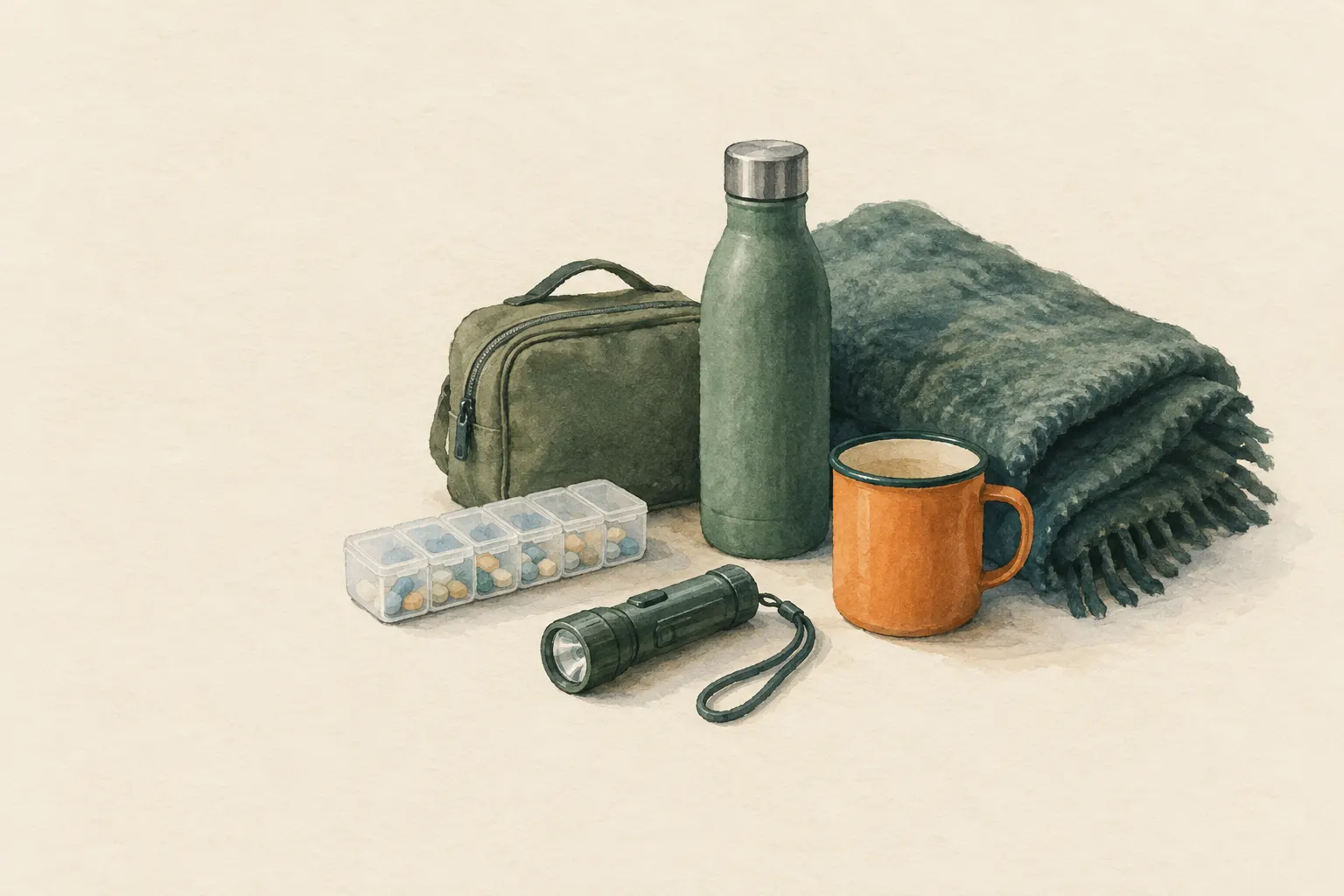
Important building blocks are a current copy of the medication list (in the document folder and in the go bag), spare hearing-aid batteries, spare glasses and room for walking aids. Battery lights by the bed and the door reduce the risk of falls when the lights go out. Phone numbers are written in large print on paper next to the phone, and emergency supplies are kept at a height that can be reached without a ladder.
Where care is needed, the care service or care home is part of it too. Ask what emergency plan they have, how relatives are informed and where people would be evacuated to.
The support network
At least two people nearby – family, neighbours or friends – should agree to drop by during a power cut, great heat or cold. Two are better than one, because one person may be unavailable, ill or away themselves. A spare key with a trusted person can help if nobody answers the door.
Do not rely on the phone alone. In a power cut, landlines and mobile networks often fail after a while. So agree that someone will come in person if you cannot reach each other. If you live far away, arrange contacts on site and keep their numbers on paper – both with you and with the older person.
Safety: what to watch out for
With confusion, weakness, dizziness or impaired consciousness, call the local emergency number (112 in the EU). In heat especially, such signs can be serious, even if the person says they are fine. Medication is not stopped or changed on one's own; agree on stock and storage, for example for medication that needs refrigeration, with the doctor or pharmacy.
When evacuation warnings come: leave early. People with limited mobility need more time, and lifts do not work in a fire or power cut. Think beforehand about how the person gets out of the building and who drives them.
Good to know
Such conversations can feel uncomfortable at first because they are a reminder of frailty and dependence. It helps to see them not as being told what to do but as a joint project: the older person contributes life experience, the younger ones contribute time and legwork. Many older people have lived through crises themselves and know very well what helps them.
The WHO points out that older people are especially at risk in heat. Questions about powers of attorney or advance directives are important, but the law differs by country; advice centres, notaries or lawyers can help with them.
Step by step
Discuss together
Ask calmly: what worries you about an emergency? What do you need every day? Whom would you like to be informed? Write down the answers.
- 1
Discuss together
Ask calmly: what worries you about an emergency? What do you need every day? Whom would you like to be informed? Write down the answers.
- 2
List medication and aids
Current medication plan, glasses, hearing aid with batteries, walking aid, continence products, dentures. A copy of the plan in the document folder and in the go bag.
- 3
Build a support network
At least two people nearby – family, neighbours, friends – agree to drop by during outages, heat or cold. A spare key with a trusted person can help.
- 4
Coordinate with the care service or facility
Ask what emergency plan the care service or care home has, how relatives are informed and where people would be evacuated to.
- 5
Make the home safer
Battery lights by the bed and the door, a radio, emergency supplies at a reachable height, phone numbers in large print on paper next to the phone.
- 6
Think through evacuation
How does the person get out of the building if the lift fails? Who drives them? Leave early when authorities warn – people with limited mobility need more time.
Common mistakes
- Making the plan without the person concerned
- Medication plan only in someone's head or at the surgery
- No spare batteries for hearing aids
- Relying on the phone as the only way to make contact
- Waiting too long when an evacuation warning comes
Quick view
Materials
Medication supply
Copy of the medication plan
Agree any stock of prescription medication with a doctor or pharmacist; observe storage instructions and expiry dates.
Document folder (waterproof)
Advance directives, contacts, diagnoses
Store securely – contains sensitive personal data.
Spare batteries
For hearing aids and aids
Store cool and dry, observe the expiry date; keep button cells out of children's reach.
Battery lantern / LED light
Reduce the risk of falls in the dark
Suitable for
- Older relatives living alone
- Home care
- Grandparents in another town
Not suitable for
- Decisions made over the person's head
- A substitute for professional care or medical treatment
Prerequisites
- Consent and participation of the person concerned
- Contact with the care service or GP
Safety
- Do not stop or change medication on your own. Agree on stock and storage (e.g. refrigeration) with the doctor or pharmacy.
- In the dark and in a rush, the risk of falls rises. Lights within reach at the bedside, keep paths clear.
How it works
Good preparedness for older people is made with them, not for them. Their habits, aids and wishes shape the plan. What matters is a reliable support network: who gets in touch during an outage, who drops by if the phone does not work, and who knows which medication and devices are essential?
Advantages
- Protects particularly vulnerable people
- Preserves self-determination
- Relieves relatives in an emergency
Disadvantages
- Conversations can be uncomfortable
- Depends on the availability of the network
Deep knowledge
Background
Ready.gov advises older adults to build a personal support network, plan for medication and aids and coordinate the plan with carers. The WHO also points out that older people are particularly at risk in heat.
In many disasters older people are over-represented among the victims – often because they were alone and nobody checked on them. A simple visiting plan is therefore one of the most effective measures.
Variants
- Relatives in another town
- If you live far away, arrange contacts on site and keep their numbers on paper on both sides.
Common mistakes
- Making the plan without the person concerned
- Medication plan only in someone's head or at the surgery
- No spare batteries for hearing aids
- Relying on the phone as the only way to make contact
- Waiting too long when an evacuation warning comes
Limits and risks
- No nursing or medical instructions
- No legal advice on powers of attorney or advance directives
Material alternatives
Derived from material properties: a substitute must have all relevant properties. Observe the notes on the substitute.
- Document folder (waterproof)
- Tarp, Plastic sheet / large bin bag (Tears easily; never pull over the head (suffocation risk).), Emergency blanket (Tears easily once punctured; short-term shelter only.), Rain poncho (When used as a shelter, it no longer protects your body from rain.), Bivy bag (Never fully close off the face.), Tent (Do not cook or heat inside the tent (fire and carbon monoxide danger).), Heavy-duty bin bag (large) (Suffocation risk: never pull plastic bags over the head or face and keep them away from small children.), Group shelter bag (Airtight – ventilate regularly.)
- Battery lantern / LED light
- Headlamp / flashlight, Mobile phone (The battery drains quickly in cold and with continuous screen and GPS use.)
Results come exclusively from structured entries. No improvised instructions are generated.
Sources
Ready.gov – U.S. Federal Emergency Management Agency (FEMA): Older Adults
Support network, medication and aids for older adults
World Health Organization: Heat and health (fact sheet)
Increased heat risk for older people
Bundesamt für Bevölkerungsschutz und Katastrophenhilfe (BBK), Deutschland: Ratgeber für Notfallvorsorge und richtiges Handeln in Notsituationen
Preparedness for people in need of care and neighbourhood help