Heatwave: protecting yourself and others
Heatwaves are dangerous, especially for older people, young children, the chronically ill, pregnant women and people who work outdoors. Staying cool, drinking regularly, avoiding exertion in the midday heat and regularly visiting or calling people at risk are the most important measures. At signs of heatstroke, call the emergency number immediately.
- Ongoing throughout the hot period
Explained simply
Your body has a built-in air conditioner: sweat. When you get warm, sweat comes onto your skin. When it dries, it takes heat away – just as you feel cold when you come out of the swimming pool wet. In a heatwave, though, it is so hot that this air conditioner can hardly keep up.
That is why it is important to help yourself: stay in the shade, drink throughout the day even when you are not thirsty, and do not run around at midday. You have to look out especially for babies, small children, old people and people who are ill. They often do not notice the heat in time or cannot protect themselves.
Very important: never leave a child or an animal in a parked car, not even briefly. And if someone seems confused in the heat, is very hot or collapses, call the local emergency number (112 in the EU) at once.
How it works
The body keeps its internal temperature within a narrow range. When it gets too warm, it widens the blood vessels in the skin so heat can escape, and it sweats. Evaporating sweat is the most effective cooling we have. But it has limits: in high humidity sweat evaporates poorly, and if you drink too little, you eventually have less fluid to sweat with.
When cooling is no longer enough, body temperature rises. First, warning signs appear, such as heavy sweating, weakness, dizziness, headache, nausea or muscle cramps. If the temperature keeps rising, heatstroke can develop – a life-threatening emergency in which confusion, altered consciousness or seizures can occur.
Several hot days in a row and warm nights are particularly stressful. At night the body normally recovers from the heat of the day. If it stays warm at night too, this break is missing, and the strain adds up from day to day.
What really matters
Your home is your most important refuge. Keep windows closed during the day and shade them from outside if possible, because sunlight that has already come through the glass heats up the room. Ventilate at night and early in the morning, when the air outside is cooler. Spend time in the coolest room. A fan moves the air but does not cool it; in very great heat it is often not enough on its own.
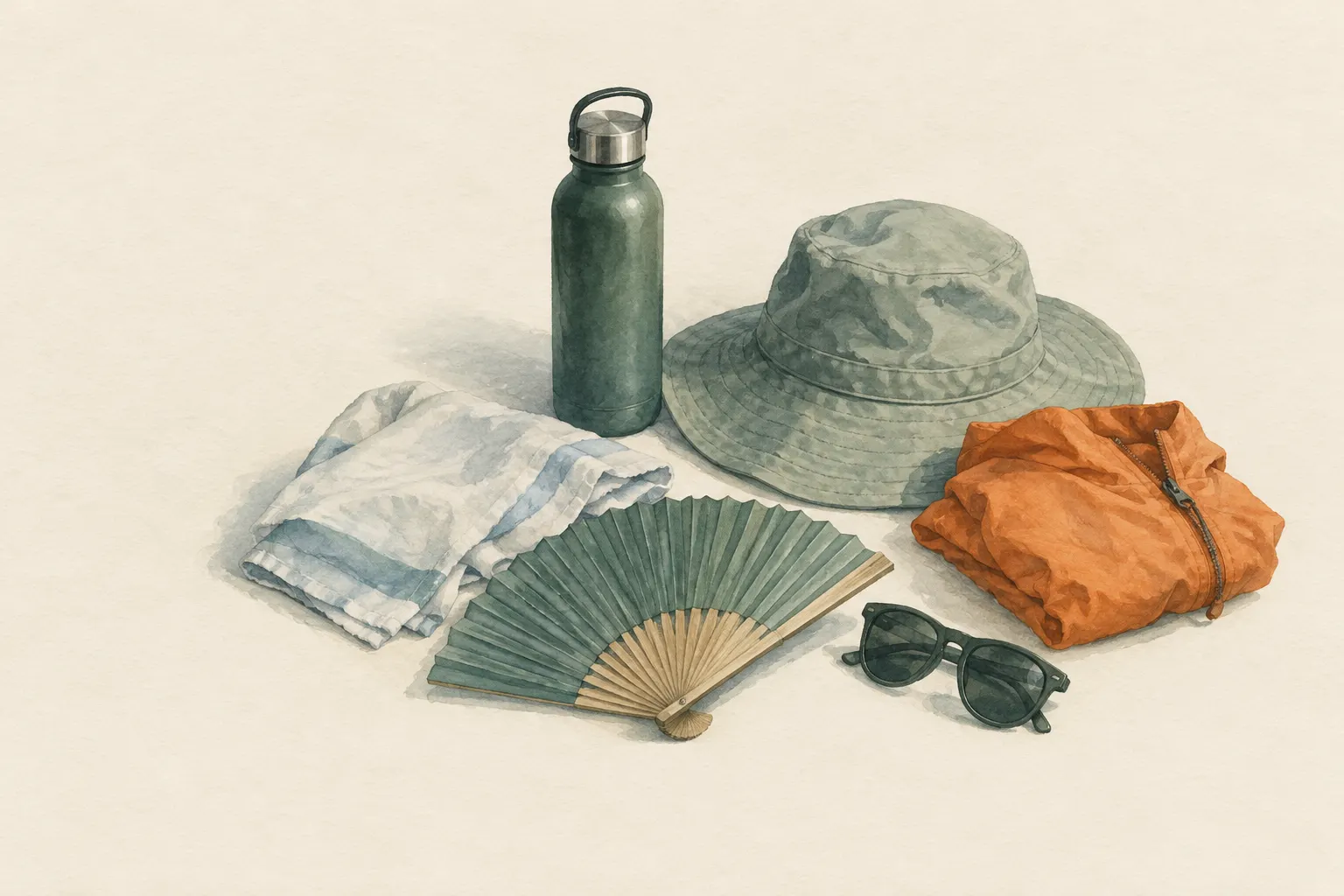
Drink regularly throughout the day, even without thirst. Alcohol and very sugary drinks are not a good choice. Anyone who may only drink a certain amount because of an illness should clarify this with their doctor – there is no single fluid amount for everyone. Move sport and heavy work to the cooler morning or evening hours and wear light, light-coloured clothing and a hat.
Cool showers, damp cloths on the neck and cool foot baths help the body get rid of heat. If your own home becomes too hot, cool public places can be a refuge – ask your municipality whether such options exist.
Safety: what to watch out for
With warning signs such as dizziness, weakness, nausea or cramps: go to a cool room, rest and drink. If it gets worse or does not improve, get medical help. At signs of heatstroke – high body temperature, confusion, altered consciousness, seizures or unconsciousness – call the local emergency number (112 in the EU) immediately, move the person into shade or a cool room and stay with them until help arrives.
A parked car heats up very quickly in the sun, because light comes in through the windows and the heat stays trapped inside. A window opened a crack changes little. Children, people in need of care and animals must therefore never stay in the vehicle, not even “just for a moment”.
Some medications affect how the body deals with heat or fluids. But never stop medication on your own; talk to a doctor or pharmacist about it before summer. That way you know what to watch for before the heat arrives.
Typical situations
The older neighbour who lives alone is a classic example of a hidden risk. Older people often feel thirst and heat less, may open their windows during the day or hesitate to ask for help. A daily visit or call can truly save lives here. Ask whether there is enough to drink and whether the flat is very hot.
Small children cannot protect themselves and often keep playing although they are already far too hot. Pay attention to shade, a sun hat, breaks and drinks. Pets also need shade and fresh water; dog walks belong in the cool hours, because hot asphalt can injure paws.
A power cut during a heatwave is also possible. Then fans and air conditioning stop working. All the more important are the simple measures that work without electricity: shading, ventilating at night, cool water and rest.
Step by step
Follow warnings
Watch for heat warnings from the weather service and plan very hot days accordingly.
- 1
Follow warnings
Watch for heat warnings from the weather service and plan very hot days accordingly.
- 2
Keep your home cool
Close windows and shade them from outside during the day; ventilate at night and early in the morning. Spend time in the coolest room.
- 3
Drink regularly
Drink throughout the day, even without thirst; avoid alcoholic and very sugary drinks. People with a medically prescribed fluid restriction should clarify the amount with their doctor.
- 4
Shift exertion
Move physical work and sport to the cooler morning or evening hours, take breaks in the shade, wear light, light-coloured clothing and a hat.
- 5
Cool the body
Cool showers, damp cloths and cool foot baths help. If your home becomes too hot, visit cool public places where available.
- 6
Check on others
Visit or call older, isolated or ill people at least once a day. Keep an eye on children and pets.
- 7
Act on warning signs
At warning signs, go to a cool place and rest; at signs of heatstroke, call the emergency number immediately.
Common mistakes
- Only drinking when thirsty
- Exercising or working hard at midday
- Opening the windows during the day
- Forgetting neighbours who live alone
- Leaving children or animals in the car briefly
Quick view
Materials
PET bottle (clear, max. 2 litres)
Always carry drinking water
Do not heat or place in a fire.
Suitable for
- All households during hot periods
- Neighbourhoods with older people living alone
Not suitable for
- Medical treatment of heat illness – call emergency services and professionals
- Adjusting medication without consulting a doctor
Prerequisites
- Follow heat warnings from weather services
- Knowing who around you is particularly at risk
Safety
- Heavy sweating, weakness, dizziness, headache, nausea or muscle cramps are warning signs. Go to a cool room, rest and drink; if symptoms worsen or do not improve, get medical help.
- Some medications affect heat tolerance or fluid balance. Clarify questions with a doctor or pharmacist in advance; do not stop medication on your own.
How it works
The body cools itself mainly by sweating. In great heat, high humidity, during exertion or with too little fluid, this is no longer enough and body temperature rises. Older people often feel thirst and heat less, and young children cannot protect themselves. Warm nights, in which the body does not recover, are particularly stressful.
Advantages
- Simple measures with great effect
- Neighbourly help saves lives
Disadvantages
- Of limited effect without any way to cool the home
- During power outages fans and air conditioning fail
Deep knowledge
Background
WHO describes heat as a significant health risk and names older people, young children, the chronically ill and people who work outdoors as particularly at risk. Ready.gov recommends finding cool places, drinking enough, avoiding exertion in the heat, checking on people at risk and never leaving children or pets in a car.
How heat warnings are issued and whether there are public cooling centres differs by region. The guidance of local health authorities takes precedence.
Variants
- Pets in the heat
- Animals need shade and fresh water. Walk dogs in the cool hours; hot asphalt can injure paws.
Common mistakes
- Only drinking when thirsty
- Exercising or working hard at midday
- Opening the windows during the day
- Forgetting neighbours who live alone
- Leaving children or animals in the car briefly
Limits and risks
- No fluid volumes – individual and set by a doctor for some conditions
- No treatment instructions for heat illness
- No occupational outdoor-work guidance
Sources
World Health Organization: Heat and health (fact sheet)
Health risks of heat and groups at particular risk
Ready.gov – U.S. Federal Emergency Management Agency (FEMA): Extreme Heat
Behaviour in heat, warning signs, never leave children or pets in cars
European Commission: 112 – the European emergency number
European emergency number 112