Protection from heat and sun
In heat, a shelter mainly protects from direct sun and hot ground. Shade with airflow, distance from heated ground and rest at midday reduce heat stress and water loss. A closed, dark tent in the sun, by contrast, can become dangerously hot.
- 15–45 minutes for a sunshade; best before the midday heat
Explained simply
When it is very hot, your body needs protection too – but this time not from cold, but from sun and heat. The sun heats you from above, and hot sand or rock heats you from below, like a hotplate.
A good sunshade is rigged high and open at the sides so air can flow through. Even better are two layers of fabric with air between them: the upper one catches the sun, the air in between carries the heat away. Do not lie directly on the hot ground but on a mat or your backpack, and rest during the hottest part of the day.
Very important: a closed tent or car in the sun quickly becomes dangerously hot. Never leave children or animals inside. If someone becomes confused or collapses in great heat, it is an emergency – call the emergency number immediately.
How it works
In heat, the body takes in warmth in three ways: through direct sunlight, through conduction from hot ground and from hot air. At the same time it has to get rid of the heat it produces itself – mainly by sweating. If more heat comes in than it can give off, body temperature rises.
A sunshade blocks direct radiation. Distance from the ground or a mat reduces conduction. Open sides let air circulate and carry heat and moisture away from the body. Light-coloured or reflective surfaces facing up reflect more sunlight than dark ones.
Two layers of fabric with an air gap screen better than one. The upper layer heats up in the sun, but the air in between carries that heat away before it warms the lower layer much. The lower layer stays cooler and radiates less heat down onto you.
What really matters
Act early. Set up shade before the midday heat sets in, not once you are already exhausted. Rest during the hottest part of the day and move exertion to the cooler morning and evening hours.
Rig the tarp high and angled so it casts shade on the resting spot and air can flow underneath. A tarp rigged flat and low traps the heat. Shade moves with the sun, so adjust the orientation or your resting spot during the day.
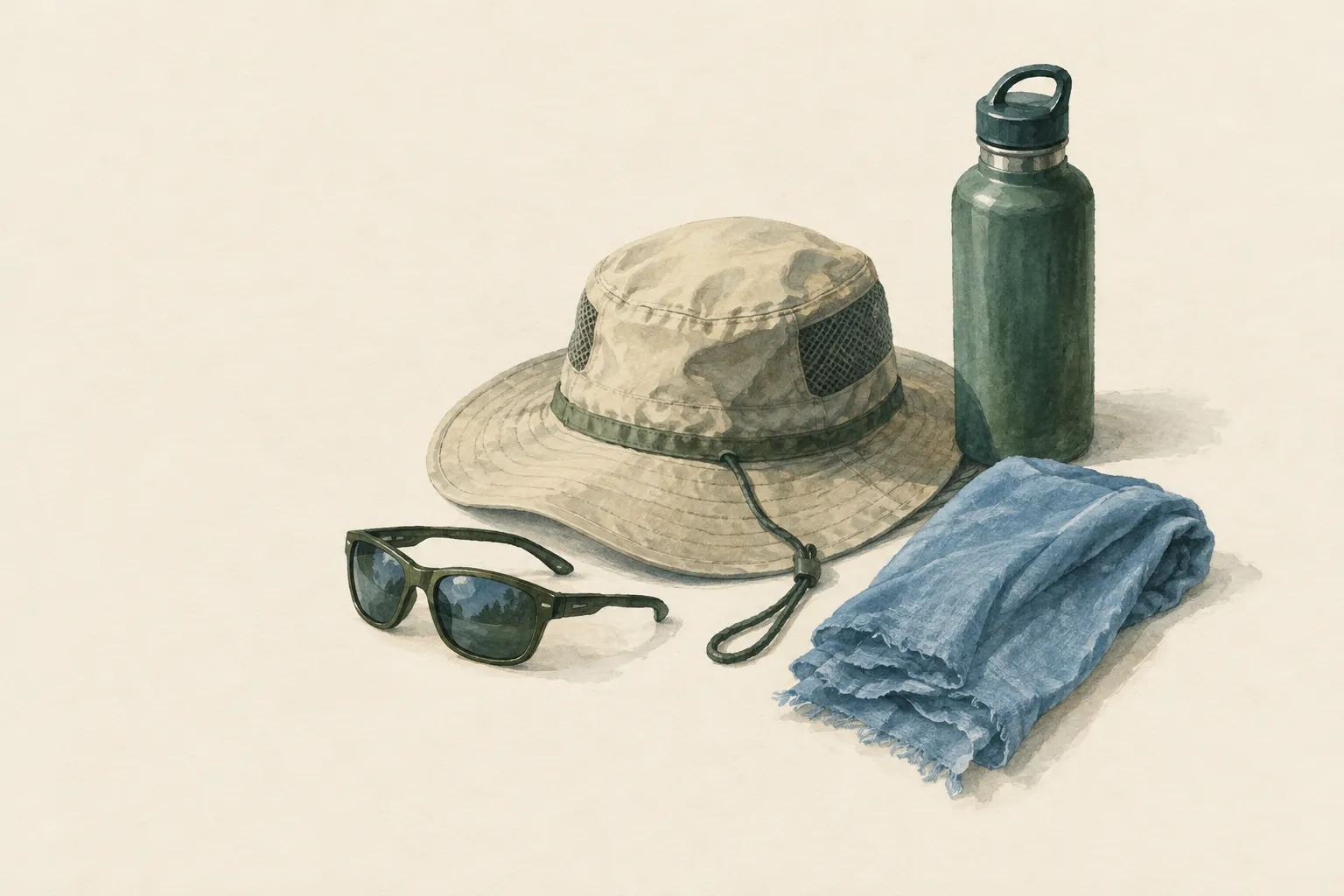
Protect your body: a hat and covering, airy clothing keep the sun off your skin. Taking clothing off feels cooling but puts more sun on your skin and can increase water loss. Drink water regularly and watch yourself and others for warning signs. Shade is no substitute for enough drinking water.
Safety: what to watch out for
Confusion, collapse, seizures or hot skin under severe heat stress can indicate heatstroke. This is a life-threatening emergency: call the local emergency number (112 in the EU) immediately and move the person into the shade. Further treatment belongs in the hands of emergency services.
Closed tents and vehicles heat up strongly in the sun – often much more than you would expect. Never leave children, vulnerable people or animals inside, not even for a short time.
Dry riverbeds and hollows often look tempting in the desert because there is shade or soft sand. But during thunderstorms, even distant ones, they can flood suddenly. Do not set up a shade or sleeping spot there. When thunderstorms are possible, also avoid exposed places.
Typical situations
A vehicle breakdown in a hot environment: the vehicle interior is usually too hot in the sun. A tarp guyed out on the shaded side of the vehicle makes use of its shade and creates an airy spot beside it.
A rest during the midday heat on a beach or in the steppe: often a cloth rigged high with open sides, a mat against the hot ground and a long break until the worst of the heat has passed are enough. Deeper, shaded ground is cooler than the surface.
A heatwave at home without air conditioning: keep windows and shading closed during the day, ventilate at night and in the early morning, and spend time in the coolest room.
Good to know
Survival manuals describe sunshades for desert situations made from two layers of material with an air gap, and advise resting in the shade during the hottest time and limiting water loss through sweat. The principle can be applied to any hot environment.
Shade clearly reduces the load but does not make high air temperatures harmless. A sunshade does not cool the air itself. How quickly heat illness develops depends on temperature, humidity, exertion, acclimatisation to the heat, age and health.
An emergency blanket can serve as an additional reflective layer above the sunshade. Make sure it is well secured – it tears easily in the wind, and a poorly anchored tarp can blow away in gusts.
Step by step
Act early
Set up shade before the midday heat sets in. Rest during the hottest part of the day and shift exertion to the cooler hours.
- 1
Act early
Set up shade before the midday heat sets in. Rest during the hottest part of the day and shift exertion to the cooler hours.
- 2
Choose a spot
Use natural shade if available. Otherwise choose a spot with some air movement, away from hollows and dry riverbeds.
- 3
Rig a sunshade
Rig the tarp or cloth high and angled so it casts shade on the resting spot and air can flow underneath. Leave the sides open.
- 4
Double layer if possible
With a second cloth or emergency blanket, rig a second layer with an air gap above or below.
- 5
Keep off the hot ground
Do not lie directly on hot sand or rock. Put a sleeping pad, backpack or clothing underneath; deeper, shaded ground is cooler than the surface.
- 6
Protect the body
Wear a hat and covering, airy clothing. Drink water regularly and watch for warning signs in yourself and others.
- 7
Follow the shade
Shade moves with the sun. Adjust the orientation or resting spot during the day.
Common mistakes
- Rigging the tarp flat and low over the body so heat builds up
- Resting in a closed tent in the sun
- Lying directly on hot sand or rock
- Seeking shade in dry riverbeds
- Setting up shade only once severely exhausted
- Removing clothing and so risking more sun and water loss
Quick view
Materials
Tarp
Ideally light-coloured or reflective side up
Paracord
For guying out
Not a climbing or safety rope.
Trekking poles
Sturdy sticks / poles
Do not cut live wood where prohibited.
Emergency blanket
As an additional reflective layer
Tears easily once punctured; short-term shelter only.
Conductive – keep away from power lines.
Sleeping pad
As a mat against hot ground
Suitable for
- Rest during the midday heat in desert, steppe or on the coast
- Waiting after a vehicle breakdown in a hot environment
- Heatwaves without air conditioning
Not suitable for
- Treating heat illness
- Thunderstorms with lightning risk in exposed terrain
- Strong wind without secure anchoring
Prerequisites
- A tarp, sheet or cloth
- Anchor points (trees, poles, a vehicle, rocks)
Safety
- Dry riverbeds and hollows can flood suddenly during thunderstorms – even distant ones. Do not set up a shade or sleeping spot there.
How it works
In heat, the body absorbs warmth from direct sunlight, from hot ground and from hot air. A sunshade blocks direct radiation, distance from the ground or a mat reduces conduction, and open sides allow air to circulate. Two layers of fabric with an air gap screen better than one, because the upper layer intercepts the heat and the air between carries it away.
Advantages
- Reduces heat stress and water loss
- Possible with simple gear
Disadvantages
- Needs anchor points
- Vulnerable in wind
- Does not cool the air itself
Deep knowledge
Background
Survival manuals such as FM 3-05.70 describe sunshades for desert situations made from two layers of material with an air gap, and advise resting in the shade during the hottest time and limiting water loss through sweat. The principle transfers to any hot environment.
Shade clearly reduces the load but does not make high air temperatures harmless. How quickly heat illness develops depends on temperature, humidity, exertion, acclimatisation, age and health.
Variants
- Shade at a vehicle
- A tarp guyed out on the shaded side of a vehicle makes use of its shade. The vehicle interior itself is usually too hot in the sun.
- Heat at home
- Keep windows and shading closed during the day, ventilate at night and in the early morning, and spend time in the coolest room.
Common mistakes
- Rigging the tarp flat and low over the body so heat builds up
- Resting in a closed tent in the sun
- Lying directly on hot sand or rock
- Seeking shade in dry riverbeds
- Setting up shade only once severely exhausted
- Removing clothing and so risking more sun and water loss
Limits and risks
- No temperature figures for the shade effect
- Not treatment for heat illness
- No substitute for enough water
Material alternatives
Derived from material properties: a substitute must have all relevant properties. Observe the notes on the substitute.
- Tarp
- Plastic sheet / large bin bag (Tears easily; never pull over the head (suffocation risk).), Emergency blanket (Tears easily once punctured; short-term shelter only.), Document folder (waterproof) (Store securely – contains sensitive personal data.), Rain poncho (When used as a shelter, it no longer protects your body from rain.), Bivy bag (Never fully close off the face.), Tent (Do not cook or heat inside the tent (fire and carbon monoxide danger).), Heavy-duty bin bag (large) (Suffocation risk: never pull plastic bags over the head or face and keep them away from small children.), Group shelter bag (Airtight – ventilate regularly.)
- Paracord
- Rope (Never use unknown or damaged rope for life-safety purposes.)
- Trekking poles
- Sturdy sticks / poles (Do not cut live wood where prohibited.), Tent pole repair sleeve (Temporary only – have broken sections replaced at home.)
- Sleeping pad
- Dry leaves, grass or conifer boughs (Collect only where allowed; no protected plants. Check for ticks and insects.), Backpack, Dry spare clothing (Carry it in waterproof packaging – wet clothing barely insulates.), Wool blanket / duvet (Keep away from candles, stoves and heaters.), Insulated cool box (Keeps cold only for a limited time; without ice packs or ice it is not a fridge.), Sleeping bag (Do not store compressed long-term; do not pack away damp.), Newspaper and cardboard (Flammable – keep away from candles, stoves, heaters and embers.), Insulated cooking box (hay box, thermal cooker) (Never put open flame or embers inside – only the hot, closed pot.)
Results come exclusively from structured entries. No improvised instructions are generated.
Sources
Headquarters, Department of the Army (USA) (2002): FM 3-05.70 Survival
Sunshades with an air gap, resting in the shade and limiting water loss in desert situations