Evacuating with pets
If you leave, take your animals with you – animals left behind are at risk, and owners often take dangerous risks returning for them. To make this quick: get animals used to the carrier, keep identification up to date, clarify pet-friendly accommodation beforehand and leave early.
- 1–2 hours of preparation plus familiarisation training
Explained simply
When a family has to leave home because of a flood or fire, the pets come too. An animal left behind alone cannot save itself. And otherwise people often take dangerous routes back to fetch it after all.
The hardest part is usually not food but time. A cat hiding under the bed or a dog that will not go into the carrier can cost many minutes. That is why you practise beforehand: the carrier stands open in the home, with a blanket and treats, until the animal likes it like a little house.
The most important thing: nobody goes back into a closed area against the authorities' instructions to fetch an animal. Instead you tell the responders or the authorities.
How it works
Evacuating with animals rarely fails because of food but because of obstacles that cost time: an animal that hides, a carrier stuck in the basement behind boxes, accommodation that does not take animals. Each of these hurdles can be removed calmly before anything happens. If you have done that, you can leave within minutes when a warning comes.
Many animals sense people's agitation and react by withdrawing or fleeing. Cats in particular like to hide under stress. So the rule is: when a warning comes, bring the animals inside first and get the carrier ready – even before you pack yourself.
What really matters
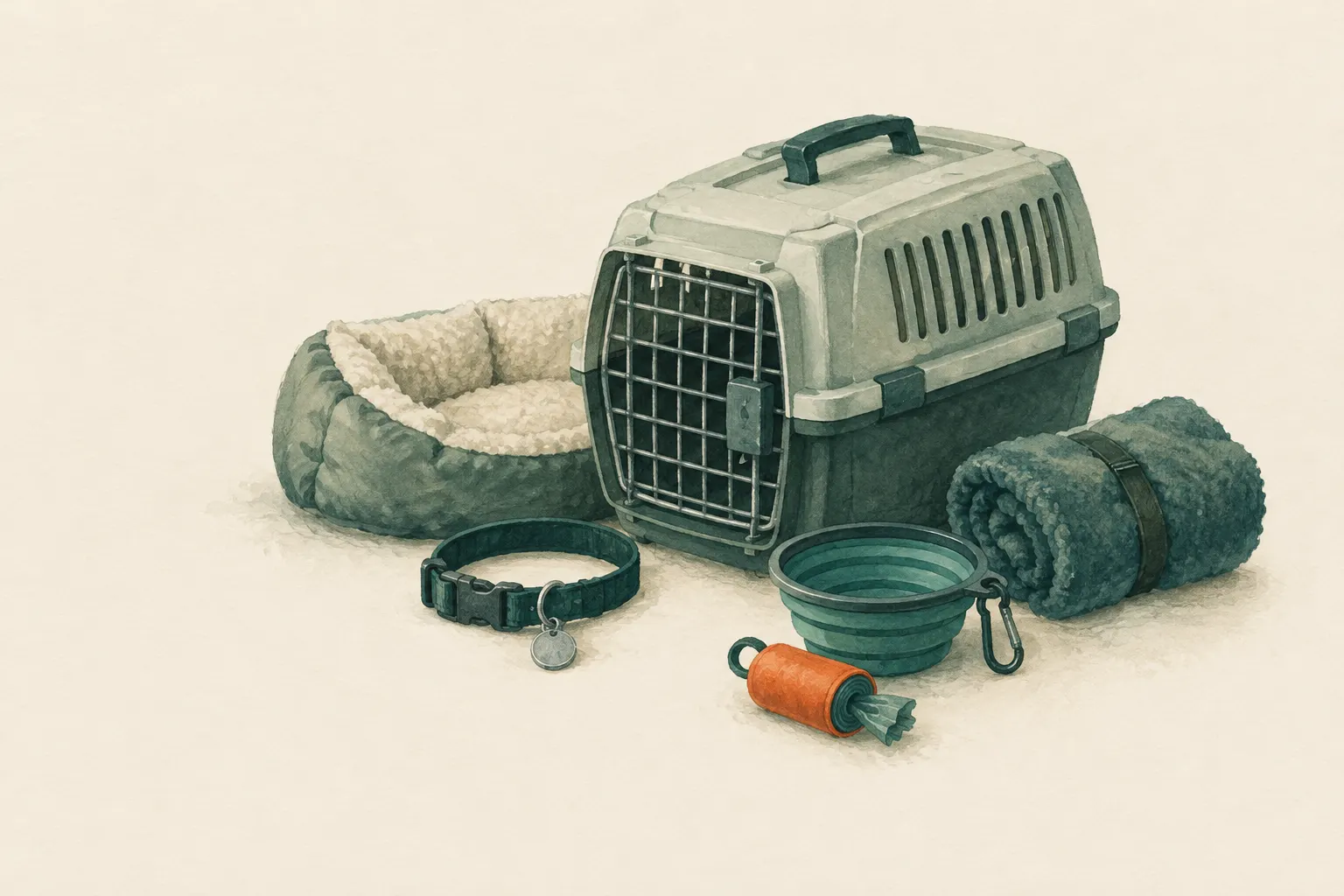
Carrier and lead training is the most important preparation. Leave the carrier permanently open in the home, put a blanket inside and occasionally give a treat in it. That turns it from the “vet box” into a familiar retreat. Dogs should be used to lead and harness and able to walk calmly even in unfamiliar surroundings.
Identification must be current. A collar with a phone number helps immediately, and a microchip helps if the collar is lost – but only if the registration has your current phone number. A recent photo showing you together with the animal can serve as proof that it belongs to you.
The pet emergency kit holds food and water for several days, bowls, any medication, the vaccination record, a lead, poo bags or cat litter with a tray, a familiar blanket and the vet practice's contact details. It sits near the carrier so both can be grabbed together.
Accommodation and neighbours
Public emergency shelters do not always take animals; the rules differ by region. So make a list beforehand of options outside the danger area: friends, relatives, boarding kennels or catteries, hotels that allow animals. Ask your municipality how animals are taken into account in evacuations there.
What if nobody is home when the warning comes? Agree with neighbours that they can take the animals in an emergency. They need a key, must know where the carrier and kit are and have your number. A sticker at the entrance can alert responders to animals in the home – but it must be up to date, or someone will search in vain.
Safety: what to watch out for
Never return to a closed area against the authorities' instructions to fetch animals. Instead, tell the authorities, animal welfare organisations or responders where the animal is. This rule protects you and also the responders, who would otherwise have to rescue you.
Stressed animals can bite, scratch or flee, even if they are usually gentle. Keep them on a lead or in the carrier in unfamiliar surroundings. And if there is truly no other way and an animal has to stay behind: never tied up or locked in, because then it cannot save itself in a flood or fire. The best way to prevent this situation is to leave early.
Good to know
Horses and livestock need their own planning: transport, destinations and considerably more lead time. This cannot be organised in an acute situation and should be discussed early with the stable, the vet and the authorities.
If you move with an animal across borders or to other regions, special rules may apply, for example on vaccinations or animal diseases. These vary widely; the responsible authorities and your vet practice can give information.
Step by step
Carrier and lead training
Leave the carrier open in the home with a blanket and treats. That way it becomes a familiar place and the animal can be loaded quickly in an emergency.
- 1
Carrier and lead training
Leave the carrier open in the home with a blanket and treats. That way it becomes a familiar place and the animal can be loaded quickly in an emergency.
- 2
Keep identification up to date
Check the microchip registration has a current phone number, collar with contact details, a current photo of the animal with its owner (proof of ownership).
- 3
Pet emergency kit
Food and water for a few days, bowls, medication, vaccination record, lead, poo bags or cat litter with tray, blanket, the vet's contact details.
- 4
Clarify accommodation beforehand
A list of friends, relatives, boarding kennels and hotels outside the danger area that accept animals. Public emergency shelters do not always accept animals – ask the municipality.
- 5
Leave early
When a warning is issued, bring animals indoors and get the carrier ready. Leaving early gives you time for a restless animal.
- 6
When nobody is at home
Agree with neighbours that they can take the animals in an emergency: key, where the carrier is, contact. A sticker at the entrance can alert responders to animals – keep it up to date.
Common mistakes
- Trying to get the cat into the carrier only during the evacuation
- Out-of-date phone number in the microchip registration
- No accommodation with animals arranged
- Leaving animals behind assuming you will be back soon
- No lead in unfamiliar surroundings
Quick view
Materials
Pet carrier
Get the animal used to the carrier before it is needed.
Label the carrier with name and contact details.
Pet emergency supplies
Food, water, bowls, lead, medication
Document folder (waterproof)
Vaccination record, microchip number, current photo
Store securely – contains sensitive personal data.
Suitable for
- Dogs, cats and small animals
- Evacuation in floods, wildfire, gas leaks
- Temporary stays with friends
Not suitable for
- Returning into a danger zone to fetch animals
- Large livestock without its own early planning
Prerequisites
- The animal is identified and registered where this is usual
- The animal is used to its carrier or lead
Safety
- Stressed animals can bite, scratch or run away. Keep them on a lead or in the carrier in unfamiliar surroundings.
- If there is truly no other way, never leave animals tied up or locked in – they cannot save themselves in a flood or fire. Leave early so this situation never arises.
How it works
Evacuating with animals rarely fails because of food but because of time: an animal that hides, a carrier in the basement, accommodation that does not take animals. If you remove these obstacles beforehand, you can leave within minutes when a warning comes.
Advantages
- Protects animals and prevents risky returns
- Shortens the time until departure
- Less stress for animal and owner
Disadvantages
- Requires training and kit upkeep
- Accommodation that takes animals is limited
Deep knowledge
Background
Ready.gov recommends including pets in the emergency plan, taking them along when evacuating, keeping an emergency kit with food, water, medication and documents and identifying pet-friendly accommodation in advance.
This entry deepens the general entry on preparing with children and pets with the concrete process of an evacuation.
Variants
- Horses and livestock
- Larger animals need transport, destinations and much more lead time. Plan early with the stable, vet and authorities.
Common mistakes
- Trying to get the cat into the carrier only during the evacuation
- Out-of-date phone number in the microchip registration
- No accommodation with animals arranged
- Leaving animals behind assuming you will be back soon
- No lead in unfamiliar surroundings
Limits and risks
- No veterinary instructions
- No statements on entry or animal-disease regulations – these differ by region
Material alternatives
Derived from material properties: a substitute must have all relevant properties. Observe the notes on the substitute.
- Document folder (waterproof)
- Tarp, Plastic sheet / large bin bag (Tears easily; never pull over the head (suffocation risk).), Emergency blanket (Tears easily once punctured; short-term shelter only.), Rain poncho (When used as a shelter, it no longer protects your body from rain.), Bivy bag (Never fully close off the face.), Tent (Do not cook or heat inside the tent (fire and carbon monoxide danger).), Heavy-duty bin bag (large) (Suffocation risk: never pull plastic bags over the head or face and keep them away from small children.), Group shelter bag (Airtight – ventilate regularly.)
Results come exclusively from structured entries. No improvised instructions are generated.
Sources
Ready.gov – U.S. Federal Emergency Management Agency (FEMA): Pets and animals – disaster preparedness guidance
Taking pets along, emergency kit, identification, pet-friendly accommodation
Ready.gov – U.S. Federal Emergency Management Agency (FEMA): Make A Plan
Pets in the family emergency plan