Wildfire nearby: leave early, avoid smoke
Wildfires can spread faster in wind than you can run or drive, and smoke harms health far away. The most important rule: leave early – at the latest when authorities tell you to, better as soon as danger is foreseeable. If you stay because there is no danger, protect yourself from smoke indoors.
- 1–2 hours of preparation; departure within minutes
Explained simply
A wildfire is a fire that eats its way through forest, meadows or scrub. Fire needs three things, just as a stool needs three legs: something to burn, oxygen from the air and heat. In a dry summer there is plenty of burnable material lying around in the forest, and wind keeps blowing fresh oxygen into the fire. Then a wildfire can travel faster than a person can run.
Wind also carries small glowing pieces – sparks and embers – far ahead. Wherever they land, a new fire can start long before the actual wall of fire arrives. That is why the most important rule is: leave early. Do not wait until you see the flames.
The smoke is dangerous too, even far away from the fire. When there is a lot of smoke in the air, you stay indoors and close the windows. If you see smoke or flames, tell a grown-up at once or call the local emergency number (112 in the EU).
How it works
A wildfire is driven by three things: dryness, wind and terrain. Dry grass, leaves, needles and dead wood catch fire easily and burn quickly. Wind supplies the fire with oxygen and pushes the flames forward onto new fuel. On a slope, a fire usually runs uphill faster, because the flames reach closer to the material above and preheat it.
Flying embers are particularly treacherous. Glowing pieces of bark and embers are carried far ahead by the wind and can start fires long before the fire front arrives – in gardens, on roofs, in woodpiles. That is why a situation that seemed far away a moment ago can change very quickly.
Smoke is a separate danger. It contains fine particles that penetrate deep into the lungs, and gases such as carbon monoxide. Smoke can spread over long distances and harm health even where nothing of the fire itself can be seen. Children, older people, pregnant women and people with heart or lung disease are especially sensitive.
What really matters
The decisive factor is time. Leaving early means clear roads, good visibility and room for decisions. Leaving too late means smoke, traffic jams and rush, and roads can be blocked by emergency vehicles or by the fire itself. So: when an evacuation is ordered, leave at once – and if you feel threatened, leave even without an order.
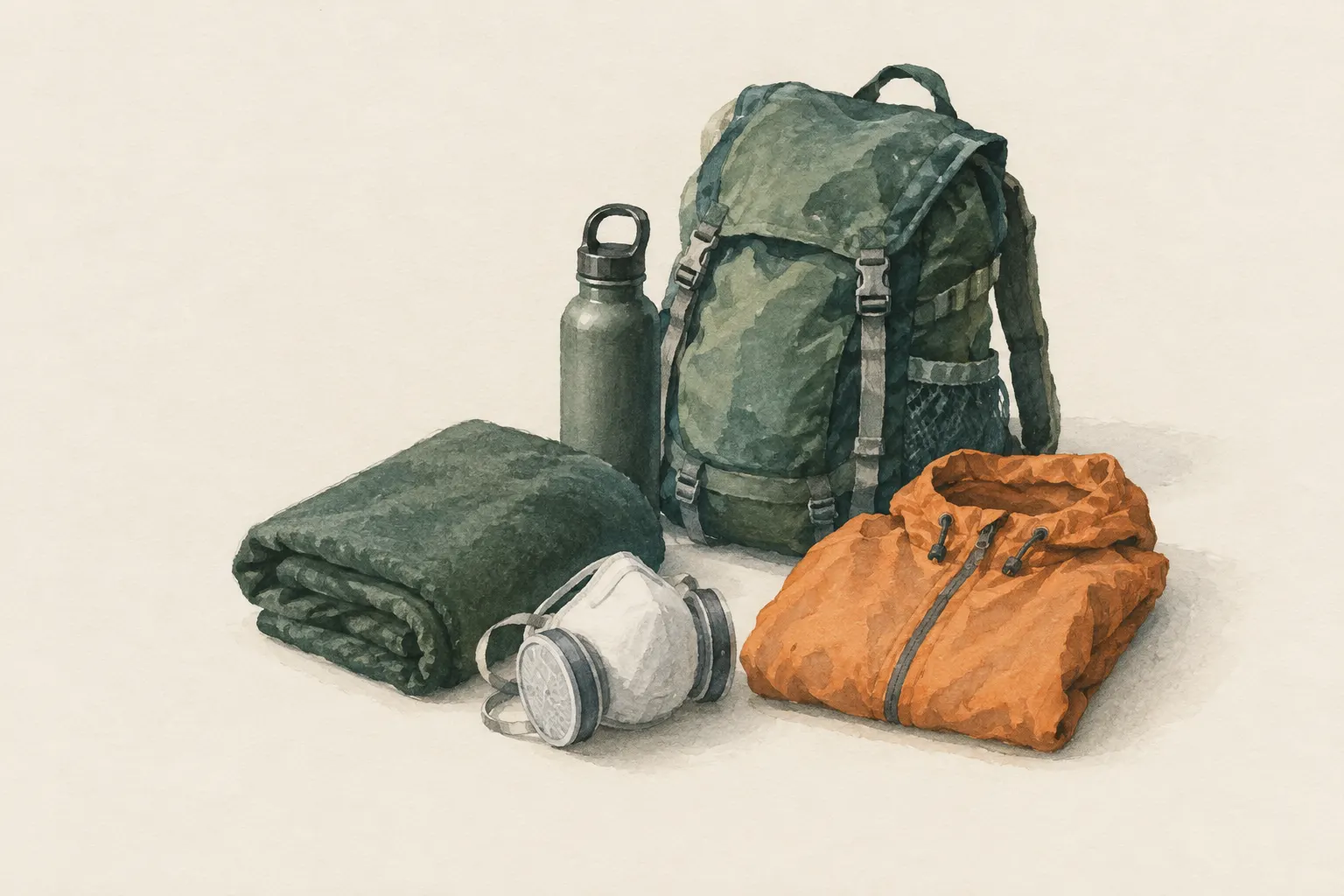
Preparation makes a quick departure possible. Know two ways out of your residential area, in case one is closed. Keep your go bag packed, your documents ready and plan for your pets. Do not store flammable things such as woodpiles, dry leaves and gas cylinders right next to the house. In times of high wildfire danger, it helps to have the car fuelled and parked facing the direction of departure.
If there is still time, close windows and doors – but do not lock them if the authorities recommend this, so that firefighters can get in. Turn off the gas if it is safe to do so. Do not lose time trying to put out the fire: a wildfire cannot be stopped with a garden hose.
Safety: what to watch out for
Never drive towards smoke or fire, and use the designated evacuation routes. Smoke takes away visibility, and you do not know what lies behind it. If you notice smoke while hiking, leave the area across the wind or against it, on paths if possible and away from the slope above the fire, and make an emergency call (112 in the EU).
If no evacuation is needed but there is smoke in the air, stay indoors. Keep windows and doors closed, set the ventilation to recirculation or off and avoid extra smoke sources such as candles or a grill. Avoid exertion outdoors. If you have to go out, a well-fitting FFP2 or N95 mask helps against particles – but it does not filter gases such as carbon monoxide and does not replace leaving a smoke-filled area.
If you are short of breath, get medical help. After the fire, return only when the area has been cleared: hot spots can smoulder under the ash for a long time, trees can fall and lines can be damaged. Wear sturdy shoes and gloves and do not stir up ash unnecessarily.
Good to know
Most wildfires in central Europe are caused by people – through carelessness such as discarded cigarettes, barbecue fires or hot vehicle parts on dry grass. That is why fire and barbecue bans in dry periods are so important. The rules differ by region; check with the local authorities before making any fire outdoors.
In Germany the German Weather Service publishes a wildfire danger index showing how high the danger currently is. Many other countries have similar services. It is worth checking before hikes and camping trips in dry periods.
A false alarm is no reason to stay next time. No one can say for certain in advance where a fire will move. If you leave and are then allowed to return safely, you did everything right – and you helped responders to concentrate on the fire instead of on rescues.
Step by step
Prepare beforehand
Know the escape routes, go bag packed, documents ready, pets included. Store flammable things such as woodpiles, dry leaves and gas cylinders away from the house.
- 1
Prepare beforehand
Know the escape routes, go bag packed, documents ready, pets included. Store flammable things such as woodpiles, dry leaves and gas cylinders away from the house.
- 2
Monitor the situation
In times of wildfire danger or when you smell smoke, follow the radio, warning app and official advice. Car fuelled and parked facing the direction of departure.
- 3
Leave early
Immediately when ordered, and also without an order if you feel threatened. Inform your contact person, use the designated route.
- 4
Leaving the house – if there is time
Close windows and doors, but do not lock them if the authorities recommend this. Turn off the gas if it is safely possible. Do not lose time with firefighting attempts.
- 5
Smoke without evacuation
Stay indoors, windows and doors closed, ventilation on recirculation or off, no extra smoke sources (candles, grill). Avoid exertion outdoors. A well-fitting FFP2/N95 mask if you have to go out.
- 6
Return only when cleared
Hot spots, damaged lines and unstable trees remain dangerous. With sturdy shoes and gloves, do not stir up ash.
Common mistakes
- Waiting until you can see the fire
- Trying to fight a wildfire with a garden hose
- Driving through smoke
- Believing a mask protects against all smoke gases
- Returning before the area has been cleared
Quick view
Materials
Particle-filtering respirator (FFP2/N95)
Against smoke particles, not gases
Only protects with a tight fit; beards and the wrong size reduce effectiveness.
Filters particles, not gases – no protection against chemical vapours or carbon monoxide.
Battery or crank radio
Check batteries regularly and keep spares.
Sturdy closed shoes
Document folder (waterproof)
Store securely – contains sensitive personal data.
Suitable for
- Living at the forest edge or in dry regions
- Holidays and camping in areas prone to wildfire
- Smoke exposure in the wider surroundings
Not suitable for
- Fighting a wildfire yourself
- Waiting to see whether the fire really comes closer
Prerequisites
- Two escape routes out of the residential area known
- A packed go bag
Safety
- FFP2/N95 masks filter smoke particles, not gases such as carbon monoxide. They do not replace leaving a smoke-filled area.
- Children, older people, pregnant women and people with heart or lung disease are more sensitive to smoke. Get medical help if short of breath.
How it works
A wildfire is driven by wind, dryness and terrain; flying embers can ignite fires well ahead of the fire front. Time is therefore the decisive factor: leaving early means clear roads, visibility and room to act. Leaving too late means smoke, traffic jams and panic. Smoke itself is a separate danger – fine particles penetrate deep into the lungs.
Advantages
- Leaving early saves lives
- Simple measures against smoke exposure
- Relieves responders
Disadvantages
- False alarms are possible – leave anyway
- Smoke protection indoors is limited
Deep knowledge
Background
For wildfires Ready.gov recommends following evacuation orders immediately, knowing escape routes, keeping the house clear of flammable material and protecting yourself from smoke particles with N95 masks. In Germany the German Weather Service informs about the danger level with its wildfire danger index.
Wildfires are increasing in many regions of Europe, including areas that were rarely affected before. Regional rules on barbecue and fire bans differ – check with the local authorities.
Variants
- On foot outdoors
- If you notice smoke while hiking, leave the area across or against the wind direction, on paths if possible and away from the slope above the fire, and make an emergency call.
Common mistakes
- Waiting until you can see the fire
- Trying to fight a wildfire with a garden hose
- Driving through smoke
- Believing a mask protects against all smoke gases
- Returning before the area has been cleared
Limits and risks
- No firefighting instructions
- No survival techniques when trapped by fire – then emergency call and the dispatcher's instructions
Material alternatives
Derived from material properties: a substitute must have all relevant properties. Observe the notes on the substitute.
- Document folder (waterproof)
- Tarp, Plastic sheet / large bin bag (Tears easily; never pull over the head (suffocation risk).), Emergency blanket (Tears easily once punctured; short-term shelter only.), Rain poncho (When used as a shelter, it no longer protects your body from rain.), Bivy bag (Never fully close off the face.), Tent (Do not cook or heat inside the tent (fire and carbon monoxide danger).), Heavy-duty bin bag (large) (Suffocation risk: never pull plastic bags over the head or face and keep them away from small children.), Group shelter bag (Airtight – ventilate regularly.)
Results come exclusively from structured entries. No improvised instructions are generated.
Sources
Ready.gov – U.S. Federal Emergency Management Agency (FEMA): Wildfires
Evacuating early, escape routes, flammable material, N95 masks against smoke
Deutscher Wetterdienst (DWD): Waldbrandgefahrenindex (WBI)
Wildfire danger index as a source of information