Improvising sun protection: shade, cover, neck protection
Without sunscreen or a hat, shade, loose, densely woven clothing and an improvised neck cover from a T-shirt or cloth protect you. A tarp or umbrella as a sunshade with airflow underneath lowers the heat load. Avoid the midday hours and drink water.
- A few minutes
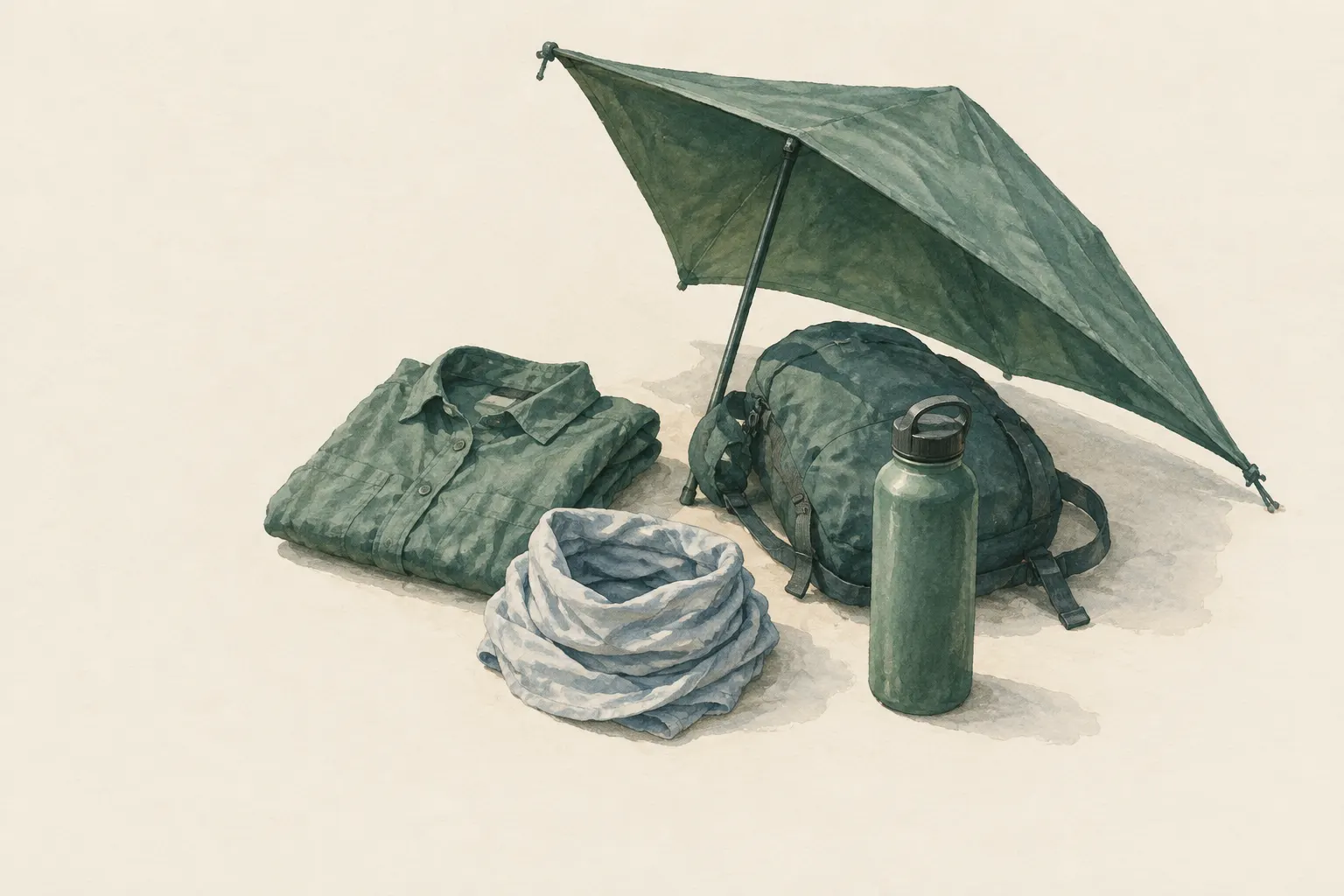
Explained simply
The sun sends us two things: heat that you feel on your skin, and UV radiation that you do not feel. UV radiation causes sunburn, and it often only shows hours later. That is why you do not notice in time when it is becoming too much. The heat, in turn, can warm your body up so much that you feel dizzy or sick.
Without sunscreen or a hat, anything that makes shade helps: a tree, a tarp, an umbrella, loose clothing with long sleeves. You can put a T-shirt on your head so the neck hole frames your face and the fabric falls over your neck and shoulders – like a desert cap. And drink regularly, even before you are thirsty.
Very important: if someone in the heat seems confused, stops answering properly or collapses, it is an emergency. Call the emergency number (112 in the EU), get the person into the shade and cool them.
How it works
Sunlight contains visible light, thermal radiation and invisible UV radiation. Thermal radiation heats skin and clothing, and the body has to get rid of that heat again, mainly by sweating. UV radiation, on the other hand, hardly warms you but damages skin and eyes. Because you cannot feel it, you can get sunburnt even on cool, windy or cloudy days – clouds let part of the UV radiation through.
Fabric protects by catching radiation before it reaches the skin. Densely woven fabric lets less through than thin or loose fabric, or stretchy fabric that fits tightly and pulls its weave apart. A simple test: hold the fabric up to the light. If you see a lot of light through it, a lot of UV radiation gets through too. You cannot determine exact protection values this way, though.
With shade, the air is what matters. A roof directly above the body heats up and radiates the heat back down. A shade roof with space above the head and open sides lets warm air escape and cooling air flow through. Two layers with an air gap in between cool even better, because the top layer catches the heat and the lower one lies in the shade of the top one.
What really matters
Shade first: use natural shade from trees, rocks or buildings, or rig a tarp high and angled with open sides. An umbrella gives shade while walking too. Cover as much skin as possible with long, loose, densely woven clothing. Light colours heat up less.
The neck, ears and face are forgotten especially often. A T-shirt or cloth on your head, with the neck opening around your face and the fabric over neck and shoulders, protects exactly these spots. With a cap or a cord over it, it stays in place even in the wind.
The time of day is a powerful tool. Around midday UV radiation is strongest and the heat often greatest. Put exertion into the cooler morning and evening hours and rest in the shade at midday. A simple rule of thumb: if your shadow is shorter than you are, UV radiation is particularly strong. Drink regularly and keep your water in the shade.
Safety: what to watch out for
Heat can make you ill. Warning signs are severe tiredness, headache, dizziness, nausea and muscle cramps. Then: get into the shade straight away, take a break, loosen clothing, cool with water and drink. Confusion, altered consciousness or collapse may be heatstroke – a life-threatening emergency. Call the local emergency number (112 in the EU), move the person to shade and cool them until help arrives.
Children and older people are especially sensitive to heat and often notice thirst less. Actively offer them shade and drinks. Infants do not belong in direct sun. Never leave children or animals in a parked car – it heats up strongly and quickly in the sun.
The eyes need protection too. Snow, water and bright sand reflect a lot of light, and UV radiation is stronger at altitude. This can lead to snow blindness, a painful inflammation of the surface of the eye that often only becomes noticeable hours later. Sunglasses with UV protection therefore belong in your pack; improvised slit goggles made from card or cloth are only a stopgap.
Typical situations
You are waiting outdoors for help, after a breakdown or on a hike, say, and there is no shade. Then rig a tarp, a blanket or even a jacket between the car and the ground, sticks or backpacks – as high as possible, with open sides. Do not sit on hot ground; sit on a mat.
On the water, in snow or in the mountains the sun is easily underestimated because it feels cool or windy. Yet this is exactly where UV radiation is especially strong due to reflection and altitude. Cover your skin, protect your neck and wear sunglasses.
In dry heat a damp cloth on the neck can cool pleasantly, because evaporating water carries heat away. But do not use drinking water for this when it is scarce – drinking always comes first.
Good to know
Health authorities such as the WHO name shade, avoiding the midday heat and drinking enough as the cornerstones of heat protection. Travel medicine advice adds covering clothing, a hat and sunglasses. Improvisation helps when gear is missing – but it does not replace planning water, route and times of day.
A common misconception is that a light, tight shirt protects well from the sun. Thin, stretched fabric in particular often lets a lot of radiation through. And another misconception: if you are not sweating or thirsty, you do not need to drink. In dry heat sweat evaporates so quickly that you hardly notice it.
Step by step
Find or build shade
Use natural shade or rig a tarp high and angled with open sides for airflow. A double layer with an air gap cools better.
- 1
Find or build shade
Use natural shade or rig a tarp high and angled with open sides for airflow. A double layer with an air gap cools better.
- 2
Cover skin
Wear long, loose, densely woven clothing. Light colours stay cooler.
- 3
Neck cover
Put a T-shirt on the head so the neck opening frames the face and the fabric falls over the neck and shoulders; fix it with a cap or cord if needed.
- 4
Use the time of day
Put exertion into the cooler morning and evening hours and rest at midday.
- 5
Drink
Drink regularly, not only when thirsty. Keep water in the shade.
Common mistakes
- Thinking thin, tight fabric protects from the sun
- Tarp directly over the body without an air gap
- Forgetting neck and ears
- Walking at midday
Quick view
Materials
Cotton cloth / T-shirt
T-shirt, cloth, scarf
Removes coarse particles only – no disinfection.
Tarp
Wide-brimmed sun hat
Rope
Never use unknown or damaged rope for life-safety purposes.
Suitable for
- Unexpectedly long time in the sun
- Waiting for help outdoors
- Water, snow and altitude with strong reflection
Not suitable for
- Substitute for medical help with heatstroke
- Infants in direct sun
Prerequisites
- Drinking water
- Knowing the signs of heat illness
Safety
- On snow and water reflected light can damage the eyes. Improvised slit goggles are only a stopgap – carry sunglasses with UV protection.
- Children and older people are especially sensitive to heat; actively offer shade and drinks.
How it works
UV radiation damages the skin and thermal radiation heats the body. Densely woven fabric blocks both better than thin fabric. A shade roof with space above the head and open sides lets heat escape; a roof directly against the body traps it.
Advantages
- Works with everyday material
- No chemicals on the skin
Disadvantages
- Covering clothing can be warm
- Protection from fabric varies
Deep knowledge
Background
The WHO names shade, avoiding the midday heat and drinking enough as the cornerstones of heat protection. Travel medicine guidelines such as the CDC Yellow Book add covering clothing, a hat and sunglasses.
Improvisation helps when gear is missing – but it does not replace planning water and times of day.
Variants
- Umbrella
- An umbrella provides shade while walking and blocks thermal radiation.
Common mistakes
- Thinking thin, tight fabric protects from the sun
- Tarp directly over the body without an air gap
- Forgetting neck and ears
- Walking at midday
Limits and risks
- No treatment of sunburn or heat illness
- No UV protection ratings for fabrics
Material alternatives
Derived from material properties: a substitute must have all relevant properties. Observe the notes on the substitute.
- Tarp
- Plastic sheet / large bin bag (Tears easily; never pull over the head (suffocation risk).), Emergency blanket (Tears easily once punctured; short-term shelter only.), Document folder (waterproof) (Store securely – contains sensitive personal data.), Rain poncho (When used as a shelter, it no longer protects your body from rain.), Bivy bag (Never fully close off the face.), Tent (Do not cook or heat inside the tent (fire and carbon monoxide danger).), Heavy-duty bin bag (large) (Suffocation risk: never pull plastic bags over the head or face and keep them away from small children.), Group shelter bag (Airtight – ventilate regularly.)
- Rope
- Paracord (Not a climbing or safety rope.)
Results come exclusively from structured entries. No improvised instructions are generated.
Sources
World Health Organization: Heat and health (fact sheet)
Shade, avoiding midday heat, drinking
Centers for Disease Control and Prevention: CDC Yellow Book: Health Information for International Travel
Sun protection with clothing, hat and sunglasses when travelling
Wilderness & Environmental Medicine (Wilderness Medical Society) (2019): Wilderness Medical Society Clinical Practice Guidelines for the Prevention and Treatment of Heat Illness: 2019 Update
Prevention of heat illness