In hot and dry areas
In heat and drought, water, shade and time of day are decisive. Travelling in the cooler hours, carrying enough water rather than hoping for sources, protecting yourself from the sun and avoiding dry riverbeds when thunderstorms threaten avoids the greatest dangers: heat illness, lack of water and flash floods.
- Careful water and time planning before every trip
Explained simply
When you are hot, you sweat. The sweat evaporates on your skin, and that cools you – just as wet skin feels cool in the wind. It is a great air conditioner, but it needs water. In hot, dry places like deserts there is hardly any water to top up.
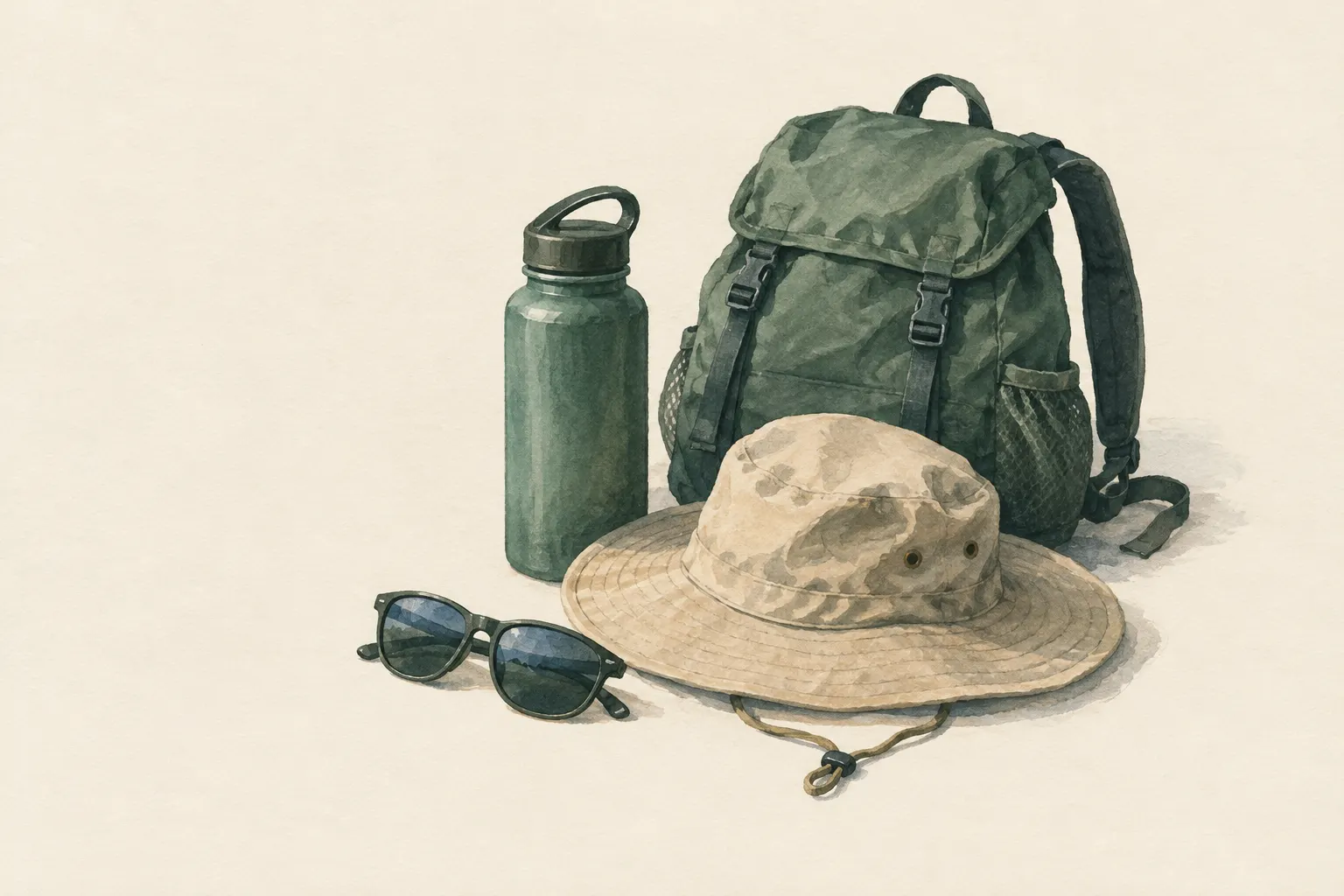
So three things matter most there: carrying enough water, finding shade and choosing the right time of day. It is smart to be on the move early in the morning and late in the afternoon and to rest in the shade during the midday heat. Loose, light-coloured, long clothing and a wide hat protect you better than bare skin.
The most important safety point: if someone becomes confused in the heat, talks strangely or passes out, that is an emergency. Call the emergency number at once (112 in the EU), move the person into the shade and cool them. And never camp in a dry riverbed – water can suddenly come down it after a thunderstorm.
How it works
Your body constantly produces heat when working, and on hot days heat from outside adds to it: direct sun, light reflected from bright ground and hot air. To avoid overheating, the body gets rid of heat mainly by evaporating sweat. In dry air this works well – so well that you often do not even notice the sweat because it evaporates at once. That is exactly what makes it treacherous: you lose a lot of water without realising.
If more heat comes in than the body can get rid of, body temperature rises. At first there is often exhaustion, headache, dizziness and nausea. If the load is not reduced, this can turn into heatstroke, where the body can no longer regulate its temperature. That is life-threatening.
Dry regions have a second side too: at night it can cool down sharply there, because dry air and a cloudless sky let heat escape quickly. And rain, when it comes, often falls as a violent thunderstorm downpour. The hard, dry ground barely absorbs the water; it collects in channels and riverbeds and can arrive as a flash flood even where not a drop is falling.
What really matters
Water is planned, not hoped for. How much someone needs depends on heat, exertion, body and clothing, so there is no fixed number that fits everyone. Plan generously, include a reserve and rely only on water points that are known and currently confirmed. A spring on an old map may have dried up long ago. If there is no reliable way to refill, turn back before half the water is used.
Drink the water instead of saving it in your pack. Water in the bottle does not protect you – only water you have drunk does. Drink regularly, not only when you are thirsty, and when sweating heavily eat something salty too, because salt is lost with sweat. Very dark urine or rarely needing to pee are simple signs that you are drinking too little.
Time of day is your second tool. Many people in hot countries rest during the midday heat, and for good reason. Starting early and seeking shade in the hottest hours saves water and strength. Clothing helps too: loose, light-coloured, long-sleeved, with a wide-brimmed hat and sunglasses. It keeps direct sun off your skin while sweat can still evaporate underneath.
Safety: what to watch out for
Heatstroke is an emergency. Warning signs are confusion, odd behaviour, impaired consciousness, seizures or a very high body temperature. Then call the local emergency number at once (112 in the EU), move the person into the shade, loosen tight clothing and cool them, for example with water and moving air. Even early signs such as severe exhaustion, headache or nausea are a signal to stop exerting yourself and get into the shade.
Dry riverbeds, also called wadis or washes, and narrow canyons are no place to rest or camp when thunderstorms threaten. The water can come from a storm far away that you cannot even see. Choose raised camp sites away from drainage channels, and before trips into canyons check the forecast for the whole region.
If your vehicle breaks down in remote terrain, it is usually better to stay with it. It gives shade, is much easier to spot from the air and from afar than a single person, and water and gear can be stored in it. Leaving your route with someone beforehand means you are searched for and found sooner.
Good to know
A common misconception is that you should “ration” water for as long as possible to make it last. Anyone who drinks too little becomes weak and unfocused sooner and is more prone to heat illness. It is wiser to reduce exertion and heat – staying in the shade and moving in the cool hours – and to drink the water you have when your body needs it.
Desert nights can be surprisingly cold. A warm layer and a sleeping bag therefore belong in the pack despite the daytime heat. Also think of sun protection for lips and eyes, because sun and dry wind irritate them strongly.
Deserts are not the only hot, dry places. Steppes, Mediterranean summers and heatwaves at home follow the same rules: water, shade, time of day. Anyone in a group at higher heat risk – because of age, existing conditions or medication, for example – should discuss trips in the heat with a doctor beforehand.
Step by step
Plan water
Plan water needs generously for heat and exertion, include a reserve and count only known, currently confirmed water points.
- 1
Plan water
Plan water needs generously for heat and exertion, include a reserve and count only known, currently confirmed water points.
- 2
Use the cool hours
Walk or work early in the morning and late in the afternoon, rest in the shade during the midday heat.
- 3
Cover the skin
Loose, light-coloured, long-sleeved clothing, a wide-brimmed hat and sunglasses protect better than bare skin.
- 4
Drink regularly
Drink regularly, not only when thirsty, and eat salty food when sweating heavily. Drink the water rather than saving it in the pack.
- 5
Choose a safe camp
Do not camp in dry riverbeds or hollows; choose raised spots away from drainage channels.
- 6
Stay with the vehicle
In a breakdown in remote terrain, as a rule stay with the vehicle: it provides shade and is easier to find. Leave your route with someone beforehand.
Common mistakes
- Rationing water until dehydrated
- Hiking in the midday heat
- Camping in a dry riverbed
- Trusting a spring from an old map
- Leaving the vehicle to look for help on foot
Quick view
Materials
Wide-brimmed sun hat
Food-grade water container
Water reserve in the vehicle
Only use containers that never held chemicals or fuel.
PET bottle (clear, max. 2 litres)
Enough containers for the planned amount of water
Do not heat or place in a fire.
Tarp
For shade
Suitable for
- Desert and steppe travel
- Summer tours in dry regions
- Trips on remote tracks
Not suitable for
- Trips without a secured water supply
- People at increased heat risk without medical consultation
Prerequisites
- Water planning with a reserve
- Knowledge of reliable water points
- Weather forecast including thunderstorms in the region
How it works
In heat the body cools mainly by evaporating sweat – which uses water that can hardly be replaced in dry areas. Sun, hot ground and exertion increase the heat load. Moving activity to cool hours, seeking shade and planning water rather than rationing it keeps the load below the limit the body can compensate for.
Advantages
- Clear, plannable main hazards
- Good visibility for navigation and signals
Disadvantages
- High water needs with hardly any resupply
- Heat illness can quickly become life-threatening
Deep knowledge
Background
The WHO describes heat as a significant health risk and names shade, fluid intake and avoiding exertion during the hottest time of day as protective measures. The survival manual FM 3-05.70 covers water needs, activity in cool hours and the danger of flash floods in arid areas.
Actual water needs depend on temperature, exertion and the person; this entry therefore gives no fixed amounts. See “Water in arid regions” for planning.
Variants
- Cold desert nights
- In many deserts it cools down sharply at night. A warm layer and sleeping bag belong in the pack despite the daytime heat.
Common mistakes
- Rationing water until dehydrated
- Hiking in the midday heat
- Camping in a dry riverbed
- Trusting a spring from an old map
- Leaving the vehicle to look for help on foot
Limits and risks
- No fixed water quantities
- No treatment of heat illness beyond first aid
Material alternatives
Derived from material properties: a substitute must have all relevant properties. Observe the notes on the substitute.
- Food-grade water container
- Single-wall stainless steel bottle (Heat only single-wall bottles without paint/plastic; remove the lid before heating.), Double-wall insulated bottle (Never heat directly.), PET bottle (clear, max. 2 litres) (Do not heat or place in a fire.), Airtight food-grade storage container (Fill only when clean and completely dry; never use containers that previously held chemicals.), Collapsible water container or bag (Protect from sharp objects.), Food-grade water bag (Use only for drinking water, never for chemicals or fuel.), Fermentation jar or crock (Use only food-grade containers of glass, food-safe glazed stoneware or food-grade plastic – no metal containers for acidic food.), Resealable food bags (Use only bags intended for food; do not use with boiling water unless the manufacturer explicitly allows it.)
- Tarp
- Plastic sheet / large bin bag (Tears easily; never pull over the head (suffocation risk).), Emergency blanket (Tears easily once punctured; short-term shelter only.), Document folder (waterproof) (Store securely – contains sensitive personal data.), Rain poncho (When used as a shelter, it no longer protects your body from rain.), Bivy bag (Never fully close off the face.), Tent (Do not cook or heat inside the tent (fire and carbon monoxide danger).), Heavy-duty bin bag (large) (Suffocation risk: never pull plastic bags over the head or face and keep them away from small children.), Group shelter bag (Airtight – ventilate regularly.)
Results come exclusively from structured entries. No improvised instructions are generated.
Sources
World Health Organization: Heat and health (fact sheet)
Health risks from heat and protective measures
Headquarters, Department of the Army (USA) (2002): FM 3-05.70 Survival
Water needs, activity in cool hours, flash floods in arid areas
European Commission: 112 – the European emergency number
European emergency number 112