Improving the taste of treated water
Boiled water tastes flat, chlorinated or iodinated water tastes chemical – and bad-tasting water is drunk too little. Pouring between containers, letting it stand, activated carbon or drink powders help. Order is decisive: everything only after the full contact time.
- A few minutes
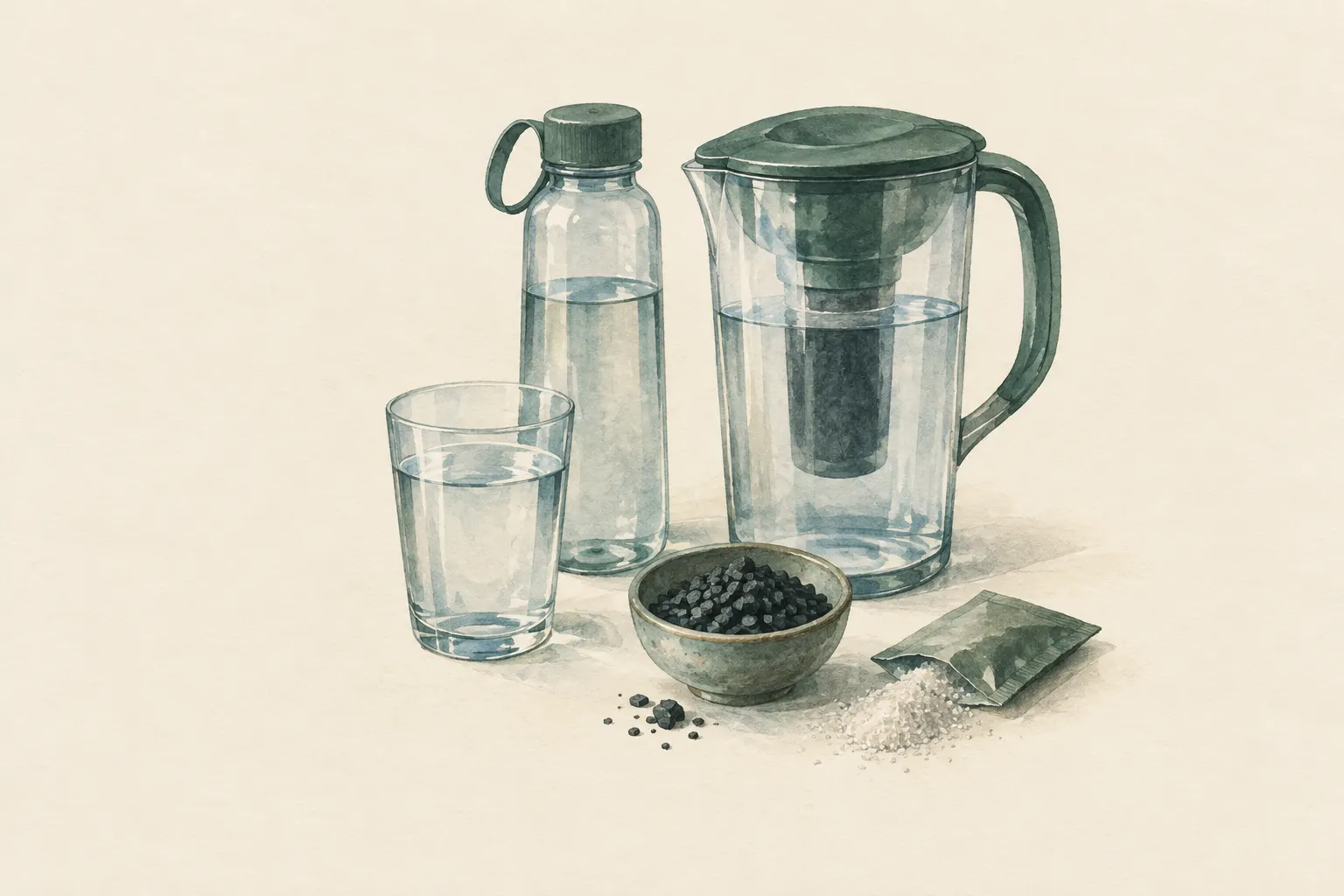
Explained simply
Boiled water often tastes boring and ‘empty’. Water treated with chlorine or iodine tablets tastes like a swimming pool or medicine. That sounds like a small thing, but it isn't: anyone who finds their water disgusting drinks too little – and that can make you ill.
Luckily there are simple tricks. Pour boiled water back and forth a few times between two clean cups. That gets air back into it and it tastes fresher. Chlorinated water can be left to stand open for a short while, or you add a little vitamin C or drink powder.
But watch out, the most important rule: the disinfectant has to finish its work first. That means you wait the whole time stated on the pack. Only after that may anything else go into the water. Otherwise you stop the tablet before it has caught all the germs.
How it works
Normal water contains dissolved air. Boiling drives this air out – that is why boiled water tastes flat. If you pour it back and forth between two clean containers or shake a half-full bottle, air dissolves into it again and the taste becomes livelier.
Chlorine is volatile: in open air part of it escapes over time. Vitamin C (ascorbic acid) and special neutralisers react chemically with chlorine or iodine and turn them into substances with hardly any taste. Activated carbon has a huge internal surface where chlorine, iodine and many odour compounds stick.
The catch: exactly what improves the taste also takes away the water's disinfecting effect. Chlorine and iodine taste because they are there – and they are there to fight germs. That is why the order is what matters most.
What really matters
First the water is fully treated: boiled and cooled covered, or chemically disinfected with the full contact time according to the instructions. Only then do you add pouring, standing, vitamin C, neutraliser, drink powder or an activated-carbon filter. Anyone who puts drink powder into the bottle together with the tablet weakens the disinfection.
When pouring, cleanliness counts. The vessels must be clean and you do not touch the rims or insides with your fingers. Otherwise you put back the germs you have just got rid of.
Leave chlorinated water standing covered but not airtight only if it will be drunk soon. A small pinch of vitamin C powder is usually enough to reduce the chlorine taste noticeably. Flavoured drink powder helps children in particular, but watch the sugar content if they drink it over many days.
Safety: what to watch out for
Residual protection means: a small remainder of chlorine in the water keeps protecting it against new germs for a while after disinfection, for example when someone touches the bottle with not-quite-clean hands. If you remove the chlorine taste, you also remove this protection. Drink such water soon and do not store it for days.
Activated carbon and taste filters are not disinfection. They make water more pleasant, not safer. An activated-carbon filter therefore always goes at the end of the chain, after boiling or chemical treatment.
And most important: bad-tasting but properly treated water is far better than no water at all. Never leave water undrunk because of its taste when you are thirsty.
Typical situations
Under a boil-water notice at home, chill boiled water in a clean, covered jug in the morning; pour it once into another vessel before drinking and it tastes noticeably better. A few lemon slices or a tea bag in water that has already been boiled and cooled turn it into a drink children like too.
On a trip with chlorine tablets, fill a bottle in the evening, wait out the contact time and only then add drink powder. People living on chemically disinfected water for weeks benefit especially from such small habits, because otherwise they grow tired of the taste and drink less.
Step by step
Complete the contact time
Wait for the full contact time of the disinfectant, or let boiled water cool covered.
- 1
Complete the contact time
Wait for the full contact time of the disinfectant, or let boiled water cool covered.
- 2
Pour back and forth
Pour boiled water back and forth several times between two clean containers, or shake the half-filled bottle.
- 3
Let it stand
Let chlorinated water stand covered but not airtight shortly before drinking – only if it will be drunk soon.
- 4
Additives only now
Now use neutraliser, a pinch of vitamin C powder, drink powder or an activated-carbon filter.
Common mistakes
- Adding drink powder together with the tablet
- Storing dechlorinated water for days
- Not drinking water because it tastes bad
- Using dirty containers for pouring
Quick view
Materials
PET bottle (clear, max. 2 litres)
Do not heat or place in a fire.
Activated carbon (filter cartridge)
Does not reliably remove pathogens; replace regularly.
Suitable for
- Children and people who drink little
- Long periods with chemically disinfected water
Not suitable for
- Water still within its contact time
- Water meant for longer storage if residual protection is removed
Prerequisites
- Water that has already been fully treated
- Clean containers
Safety
- Use vitamin C, neutralisers, drink powders or activated carbon only after the full contact time – before that they weaken disinfection.
- Removing chlorine taste also removes residual protection. Drink such water soon and do not store it unprotected.
How it works
Boiling drives out dissolved air; pouring back and forth brings oxygen back. Chlorine partly evaporates in open air, vitamin C and neutralisers reduce chlorine or iodine chemically, activated carbon binds them. All of this also reduces the disinfecting effect – hence only afterwards.
Advantages
- People drink more
- Simple and cheap
Disadvantages
- Removes residual protection
- Additives bring sugar or cost
Deep knowledge
Background
Health authorities recommend improving flat-tasting boiled water by pouring it between clean containers. Travel-medicine guidance describes that vitamin C or neutralisers improve the taste of iodine and chlorine but may only be added after the contact time.
Taste is not a luxury: people who dislike their water drink too little.
Variants
- Activated carbon after disinfection
- An activated-carbon cartridge after disinfection reduces taste and smell, but is not itself disinfection.
Common mistakes
- Adding drink powder together with the tablet
- Storing dechlorinated water for days
- Not drinking water because it tastes bad
- Using dirty containers for pouring
Limits and risks
- No additional disinfection
- Residual protection is lost
Sources
Centers for Disease Control and Prevention: Making Water Safe in an Emergency
Improving the taste of boiled water by pouring between containers
Centers for Disease Control and Prevention: CDC Yellow Book: Health Information for International Travel – Water Disinfection
Improving taste after halogen disinfection only after the contact time