Private wells after flooding
If a private well or cistern has been flooded, the water is considered contaminated until a test shows otherwise. Do not drink it or use it for cooking or brushing teeth, and do not touch the pump's electrical connections while wet. Disinfect and flush the well according to the authority's instructions or by professionals, then have the water tested.
- Often days until clearance; testing via laboratory or authority
Explained simply
Some houses do not get their water from the town's mains but from their own well in the garden. When a flood comes, dirty water can run into that well – with sewage, manure, soil and sometimes oil or chemicals. After that the well water is no longer safe, even if it looks clear.
So the rule is: after a flood you no longer drink the well water, cook with it or brush your teeth with it. You use bottled water, your stock or water from a distribution point. Only when a laboratory has tested the water and says it is fine is the well used again.
And very important: do not touch the pump or the power cables while they are wet or standing in water. Electricity and water together can give a dangerous electric shock. Professionals check that.
How it works
A well draws groundwater from the ground. Normally the soil layers above filter out much of the dirt, and a sealed wellhead stops surface water from running straight in. During a flood both are disrupted: water stands over the wellhead, gets into the shaft through leaks and can also contaminate the surrounding groundwater.
Flood water carries with it everything it picks up on the way: sewage from overflowing drains and septic tanks, manure from fields, soil and often heating oil, fuel or other chemicals. Shallow dug wells and cisterns are usually more vulnerable than deep, well-sealed drilled wells, but these too count as unsafe after flooding.
A flooded well therefore becomes safe again only once it has been cleaned, disinfected, flushed and the water tested. Household treatment such as boiling cannot replace this, because it does nothing against fuels and chemicals.
What really matters
Stop using the water immediately for drinking, cooking, brushing teeth, ice cubes and food – and tell everyone in the household as well as guests. A note on every tap helps, because out of habit it is easy to take a sip after all.
Then secure replacement water: your stock, bottled water or official distribution points. Using treated well water is an option only if the authority explicitly instructs it.
Next, call the public-health office or the competent body. There you find out how disinfection and sampling should be done, which laboratories test water and what is required in your region. Unlike with the public supply, as a well owner you are usually responsible yourself for making this happen.
Safety: what to watch out for
The biggest immediate danger is electricity. Do not touch or switch on the pump, controls or cables of a flooded well while they are wet or standing in water. A qualified electrician checks the installation before it goes back into operation.
Never climb into a well shaft. Gases that cause suffocation can collect in narrow shafts, and there is a risk of falling. Work in the shaft belongs in the hands of professionals.
Disinfecting a well, often called ‘shock chlorination’, is done only according to the authority's instructions or by professionals – with the amounts stated there, not self-estimated ones. After that the well is flushed, and the water is used again only after a laboratory result. If oil, fuel or chemicals are suspected, a specialist firm and the authority are needed, not the household.
Typical situations
A holiday home or farm with its own supply was in the flood zone; the water has drained away and clear water comes out of the tap. This is exactly where the temptation to just use it again is strongest. But clarity says nothing about germs or dissolved chemicals – until cleared, it stays off limits.
It can take days or weeks before a well is cleared, and professionals and laboratory tests cost money. A sufficient water stock and knowing where the nearest distribution point is make this time much easier. If the area floods again, the checks start over.
Rules for sampling and well maintenance differ by country and region. The local authority is therefore always the authoritative point of contact.
Step by step
Stop using it immediately
Stop using the well water for drinking, cooking, brushing teeth and food. Inform everyone in the household and any guests.
- 1
Stop using it immediately
Stop using the well water for drinking, cooking, brushing teeth and food. Inform everyone in the household and any guests.
- 2
Secure replacement water
Use your stock, bottled water or official distribution points. Use well water treated only if the authority expressly instructs this.
- 3
Contact the authority
Ask the public-health office or the competent body how disinfection and sampling should be done and which laboratories are available.
- 4
Restore properly
Have the pump and electrics checked and the well cleaned, disinfected and flushed according to instructions.
Do not climb into well shafts – risk of suffocation and falling.
- 5
Have it tested
Resume using the water only when a water test clears it. Check again after any repeat flooding.
Common mistakes
- Simply boiling and drinking well water after the flood
- Switching on a wet pump
- Climbing into the well shaft
- Pouring chlorine into the well by guesswork
- Drinking again without a laboratory result
Quick view
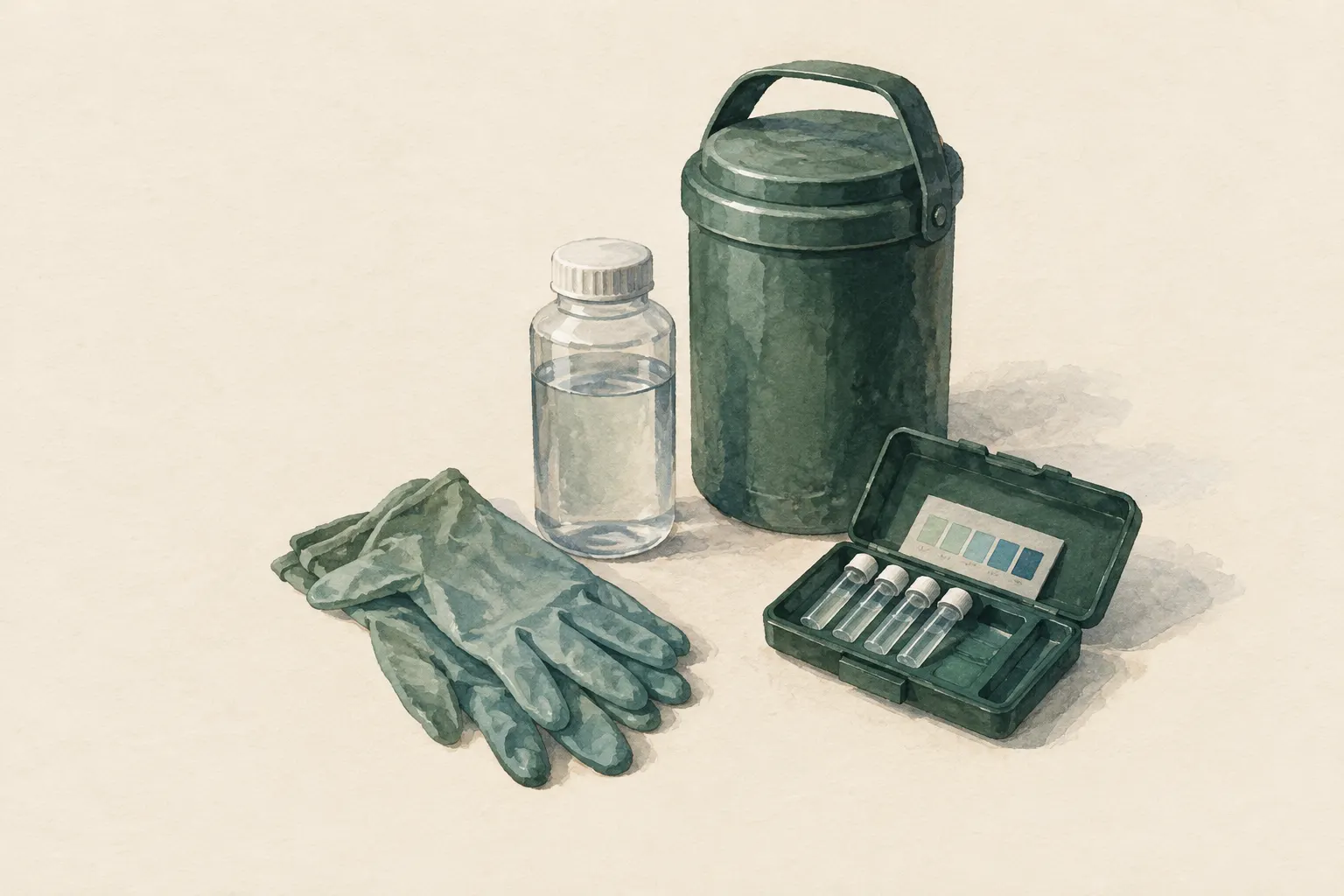
Materials
Food-grade water container
For replacement water during the restriction
Only use containers that never held chemicals or fuel.
Disposable gloves
Consider latex allergies – prefer latex-free gloves (e.g. nitrile).
Suitable for
- Households with their own well or cistern
- Holiday homes and farms with their own supply
Not suitable for
- Public water supply – the utility's notices apply there
- Suspected oil, fuel or chemicals – specialist firm and authority
Prerequisites
- Contact with the public-health or competent authority
- Replacement water (stock, distribution point or bottled water)
Safety
- Well disinfection (shock chlorination) only according to the authority's instructions or by professionals. No self-estimated chlorine amounts; resume use only after a laboratory result.
How it works
Flood water carries sewage, manure, soil and often chemicals into well shafts and aquifers. A well is then unsafe until it has been cleaned, disinfected, flushed and the water tested. Household treatment cannot reliably make up for a contaminated well.
Advantages
- A clear procedure protects against illness
- Avoids electrical accidents
Disadvantages
- The well is unusable for days or weeks
- Costs for professionals and laboratory
Deep knowledge
Background
After floods, health authorities advise not to use water from private wells until it has been tested. Public utilities inform their customers themselves; private well owners, by contrast, are usually responsible themselves.
Rules for sampling and well maintenance differ by country and region – the local authority is the authoritative point of contact.
Common mistakes
- Simply boiling and drinking well water after the flood
- Switching on a wet pump
- Climbing into the well shaft
- Pouring chlorine into the well by guesswork
- Drinking again without a laboratory result
Limits and risks
- No instructions for well restoration or dosing
- Regional regulations take precedence
- Chemical contamination requires specialist testing
Material alternatives
Derived from material properties: a substitute must have all relevant properties. Observe the notes on the substitute.
- Food-grade water container
- Single-wall stainless steel bottle (Heat only single-wall bottles without paint/plastic; remove the lid before heating.), Double-wall insulated bottle (Never heat directly.), PET bottle (clear, max. 2 litres) (Do not heat or place in a fire.), Airtight food-grade storage container (Fill only when clean and completely dry; never use containers that previously held chemicals.), Collapsible water container or bag (Protect from sharp objects.), Food-grade water bag (Use only for drinking water, never for chemicals or fuel.), Fermentation jar or crock (Use only food-grade containers of glass, food-safe glazed stoneware or food-grade plastic – no metal containers for acidic food.), Resealable food bags (Use only bags intended for food; do not use with boiling water unless the manufacturer explicitly allows it.)
Results come exclusively from structured entries. No improvised instructions are generated.
Sources
Ready.gov – U.S. Federal Emergency Management Agency (FEMA): Floods
Behaviour after floods and dealing with possibly contaminated water
Centers for Disease Control and Prevention: Making Water Safe in an Emergency
Water in emergencies; wells may be contaminated after flooding
United States Environmental Protection Agency: Emergency Disinfection of Drinking Water
Limits of emergency disinfection with chemical contamination