Fetching water from distribution points and tankers
When the mains supply fails for longer, authorities or utilities often provide water: tankers, distribution points, bottled water or, in some countries, emergency wells. What matters are clean, closable containers, a way to carry them and following the instructions – such as whether the water must be boiled before drinking.
- Depends on distance and waiting time; water is heavy
Explained simply
When the tap water in a town or village fails for a longer time, the authorities or the water company often help. They set up tankers, hand out bottled water or open special emergency wells. You can fetch water there – but you have to bring your own containers.
The water handed out there is controlled. To keep it clean at home too, you need clean jerrycans with lids. When filling, you do not touch the opening or the inside, and at home you keep the water somewhere cool and dark.
Read or listen carefully to what is said at the distribution point. Sometimes it says: ‘boil before drinking’ or ‘for washing only’. And because water is heavy, take several small jerrycans and a handcart – and maybe help older neighbours who cannot carry it themselves.
How it works
When the mains supply fails for longer, for example after floods, earthquakes, major burst mains or power cuts, utilities and civil protection in many countries organise a replacement supply. This can be tankers, fixed distribution points with taps, bottled water handed out or, in some countries, emergency wells kept ready for crises.
The water at such points is controlled by authorities or utilities. The most common weak point comes afterwards: on the way home and during storage. Dirty containers, unclean hands reaching into the water and storing it too long in warmth can contaminate clean water again. This is a well-known experience in humanitarian work.
So the quality of the water in your glass depends to a large extent on you: on clean containers, clean filling and short storage times.
What really matters
Find out via the radio, warning apps, loudspeaker announcements and notices where and when water is being handed out and what it is intended for. Whether and where emergency wells exist in your country, and whether their water must be boiled, is announced by the competent authorities.
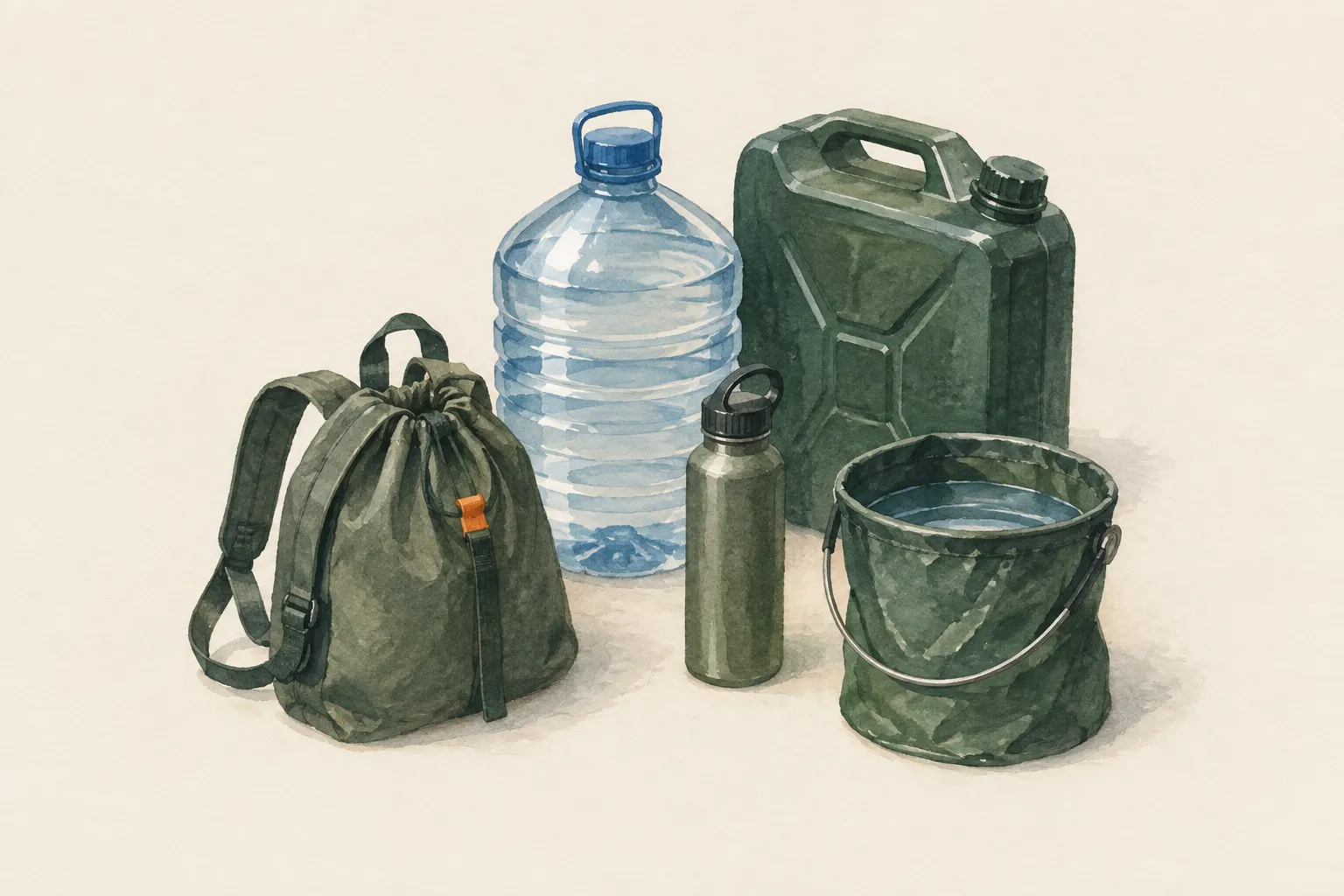
Prepare your containers in advance: clean, food-grade and with a matching lid. Label them with the date and, if the distribution point requires it, with ‘boil’. Several smaller containers are easier to carry than one large one, and a trolley, backpack or help from neighbours makes the trip easier. Expect waiting times and limited amounts per person.
When filling, keep the container opening away from the tap, do not touch the inside or the inside of the lid, and close the container immediately. At home, store the water cool and dark and use it promptly. If in doubt about its quality, boil it before drinking.
Safety: what to watch out for
Follow the instructions at the distribution point carefully. Sometimes the water is intended only for boiling or only for hygiene. If you are unsure, ask – the helpers on site know.
Never use canisters that held fuel, chemicals or cleaning agents, not even after rinsing. Unlabelled canisters of unknown origin are unsuitable as well. Hands and tap should not come into contact with the water.
Full canisters are heavy. Lift with your legs, not with a rounded back, use a trolley or help, and watch out for slippery paths and stairs. A fall with full canisters can lead to injuries.
Typical situations
After a major burst main, a tanker stands in the market square. Anyone with clean jerrycans in the cellar is supplied quickly; anyone who first has to find containers loses time. That is why preparedness guides recommend keeping a few clean, closable containers ready.
In high-rises and for older or sick people, the trip to the distribution point is often the biggest hurdle. Neighbourly help makes a big difference here: whoever is going takes jerrycans for others too.
Your own stock remains important nevertheless. It can take hours or days until a replacement supply is organised, and during that time you live on what you have at home.
Step by step
Get informed
Listen to the radio, warning apps, loudspeaker announcements and notices about where and when water is distributed and what it is intended for.
- 1
Get informed
Listen to the radio, warning apps, loudspeaker announcements and notices about where and when water is distributed and what it is intended for.
- 2
Prepare containers
Clean containers beforehand and bring matching lids. Label them with the date and, if applicable, ‘boil’.
- 3
Fill hygienically
Keep the opening away from the tap and do not touch the inside or the lid. Close the container immediately.
- 4
Carry and share
Transport the water with a trolley or backpack and help neighbours who cannot carry it themselves.
- 5
Store cool and use promptly
Store the water cool and dark and use it promptly. Boil it if in doubt about its quality.
Common mistakes
- Using former fuel or chemical canisters
- Overlooking ‘drink only after boiling’ notices
- Carrying canisters that are too large alone
- Transporting water uncovered
Quick view
Materials
Food-grade water container
Clean, food-grade, with lid
Only use containers that never held chemicals or fuel.
Collapsible water container or bag
Protect from sharp objects.
Use only food-grade and only for water.
Food-grade water bag
Use only for drinking water, never for chemicals or fuel.
Labels and waterproof marker
Suitable for
- Longer supply outages
- After floods, earthquakes or burst mains
- Supporting older neighbours
Not suitable for
- Unlabelled canisters that previously held chemicals
Prerequisites
- Clean containers
- Information on location and times of distribution
- Means of transport (trolley, backpack, neighbours)
Safety
- Follow the instructions at the distribution point: sometimes the water is intended only for boiling or only for hygiene. Ask if in doubt.
- Use only clean, food-grade containers, never canisters that held fuel, chemicals or cleaning agents. Do not let hands or the tap touch the water.
- Full canisters are heavy. Use several smaller containers, a trolley or help to avoid back injuries and falls.
How it works
Distribution points supply water that is controlled by authorities or utilities. The most common weak point comes afterwards: dirty containers, unclean hands and long storage recontaminate the water. Clean containers and short storage times preserve its quality.
Advantages
- Controlled water
- Relieves your own stock
- Encourages neighbourly help
Disadvantages
- Waiting times and heavy transport
- Limited amounts per person
Deep knowledge
Background
During prolonged disruptions of water supply, utilities and civil protection in many countries organise replacement supply via tankers or distribution points. Preparedness guides recommend keeping clean containers ready for this.
Your own stock remains important nevertheless, because it can take time until replacement supply is in place.
Variants
- Emergency wells
- Some countries maintain emergency wells for supply in crises. Whether and where they exist, and whether their water must be boiled, is announced by the competent authorities.
Common mistakes
- Using former fuel or chemical canisters
- Overlooking ‘drink only after boiling’ notices
- Carrying canisters that are too large alone
- Transporting water uncovered
Limits and risks
- Authorities determine location, time and amount
- Emergency wells do not exist everywhere
- Water can become recontaminated if stored incorrectly
Material alternatives
Derived from material properties: a substitute must have all relevant properties. Observe the notes on the substitute.
- Food-grade water container
- Single-wall stainless steel bottle (Heat only single-wall bottles without paint/plastic; remove the lid before heating.), Double-wall insulated bottle (Never heat directly.), PET bottle (clear, max. 2 litres) (Do not heat or place in a fire.), Airtight food-grade storage container (Fill only when clean and completely dry; never use containers that previously held chemicals.), Collapsible water container or bag (Protect from sharp objects.), Food-grade water bag (Use only for drinking water, never for chemicals or fuel.), Fermentation jar or crock (Use only food-grade containers of glass, food-safe glazed stoneware or food-grade plastic – no metal containers for acidic food.), Resealable food bags (Use only bags intended for food; do not use with boiling water unless the manufacturer explicitly allows it.)
- Collapsible water container or bag
- Single-wall stainless steel bottle (Heat only single-wall bottles without paint/plastic; remove the lid before heating.), Double-wall insulated bottle (Never heat directly.), PET bottle (clear, max. 2 litres) (Do not heat or place in a fire.), Food-grade water container (Only use containers that never held chemicals or fuel.), Airtight food-grade storage container (Fill only when clean and completely dry; never use containers that previously held chemicals.), Food-grade water bag (Use only for drinking water, never for chemicals or fuel.), Fermentation jar or crock (Use only food-grade containers of glass, food-safe glazed stoneware or food-grade plastic – no metal containers for acidic food.), Resealable food bags (Use only bags intended for food; do not use with boiling water unless the manufacturer explicitly allows it.)
- Food-grade water bag
- Single-wall stainless steel bottle (Heat only single-wall bottles without paint/plastic; remove the lid before heating.), Double-wall insulated bottle (Never heat directly.), PET bottle (clear, max. 2 litres) (Do not heat or place in a fire.), Food-grade water container (Only use containers that never held chemicals or fuel.), Airtight food-grade storage container (Fill only when clean and completely dry; never use containers that previously held chemicals.), Collapsible water container or bag (Protect from sharp objects.), Fermentation jar or crock (Use only food-grade containers of glass, food-safe glazed stoneware or food-grade plastic – no metal containers for acidic food.), Resealable food bags (Use only bags intended for food; do not use with boiling water unless the manufacturer explicitly allows it.)
Results come exclusively from structured entries. No improvised instructions are generated.
Sources
Bundesamt für Bevölkerungsschutz und Katastrophenhilfe (BBK), Deutschland: Ratgeber für Notfallvorsorge und richtiges Handeln in Notsituationen
Emergency preparedness for drinking water and behaviour during supply failures
Ready.gov – U.S. Federal Emergency Management Agency (FEMA): Water (emergency water supply guidance)
Safe containers and storage of water
Centers for Disease Control and Prevention: Making Water Safe in an Emergency
Making and keeping water safe in emergencies