Emergency water from the water heater and pipes
When the supply fails, there is often still water in the house: in the water heater tank, in the pipes and in ice cubes. It can be drained safely once power or gas to the heater is switched off and the inlet is closed. Water from heating systems, toilet bowls, waterbeds or pools is not drinking water.
- 15–45 minutes depending on the installation
Explained simply
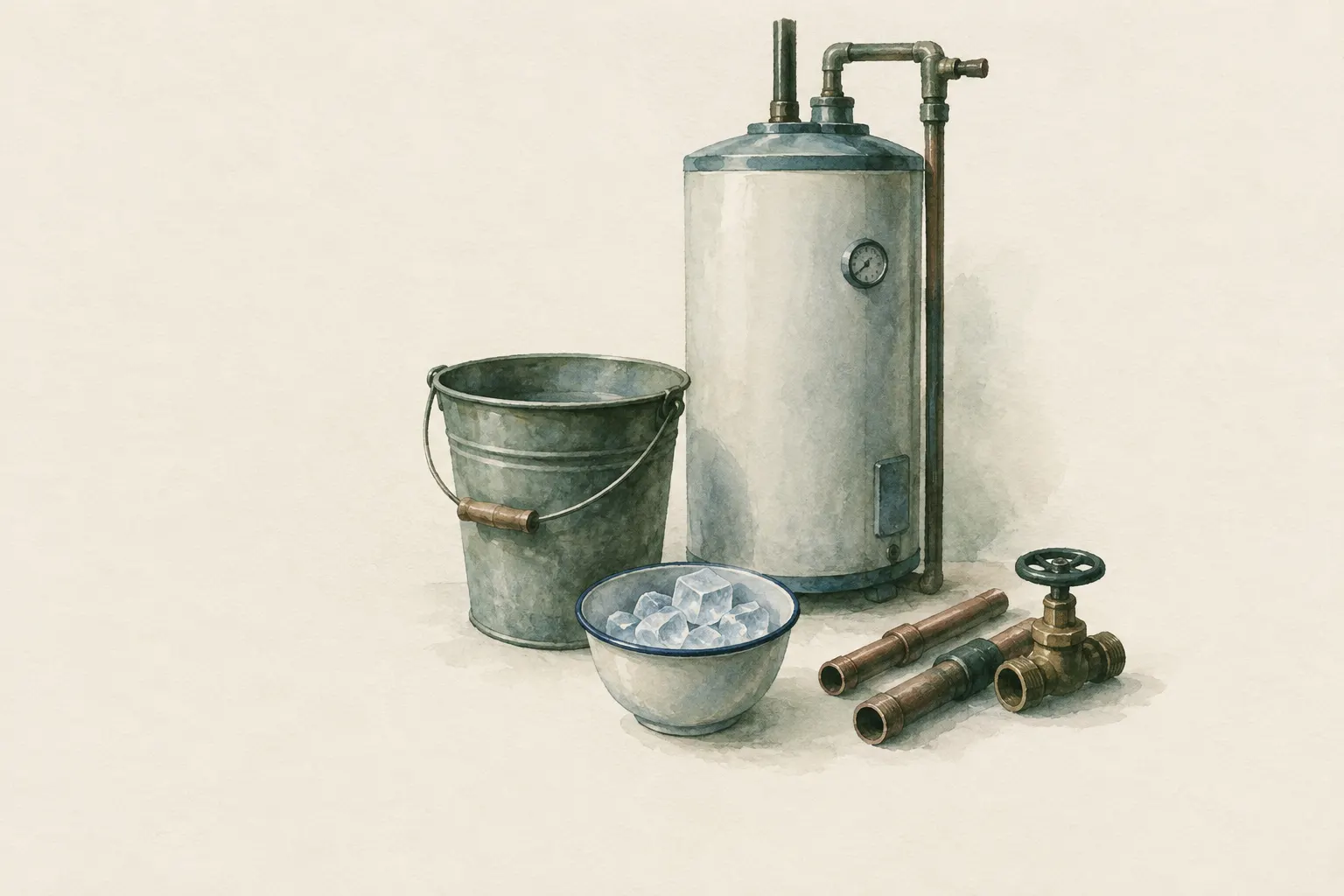
When no more water comes out of the tap, there is often still some hidden in the house. In the water heater tank – the large container in which water for the shower and taps is heated – there are often many litres. Water also stands in the pipes, and ice cubes in the freezer are frozen drinking water.
This water can be drained if you follow a few rules. The water in the tank can be very hot, so you let it cool first. And the heater must be switched off before you empty it – an empty heater that keeps heating can be damaged or even start a fire. This is best done by adults who know the installation.
Not all water in the house is drinking water: you never drink water from the heating system, the toilet or cistern, a waterbed or a pool.
How it works
A water heater tank is a large, closed container. Depending on its size, it holds a considerable amount of water. At the top, hot water flows to the taps; at the bottom there is usually a drain valve. For water to run out at the bottom, air must be able to enter at the top – otherwise a vacuum forms and the water stays in. You know this from a drink carton: without an air hole, hardly anything comes out.
So you close the cold-water inlet, open a hot tap above to let air in and drain the water from the drain valve. The pipes work in a similar way: you open the highest tap in the house to let air in and catch the water at the lowest tap in clean containers.
The water is only as clean as the tap water was before the failure. If the supply may already have been contaminated, it must be boiled or disinfected according to official instructions before drinking.
Safety: what to watch out for
Risk of scalding: the water in the tank can be very hot. Let it cool before you open the drain valve, and keep children away.
Appliance safety: before draining, switch off power or gas to the water heater as described in its manual. Switch it on again only once the tank is completely full and vented. A tank heated while empty can be damaged or cause a fire. Restart gas appliances only as the manufacturer instructs, or have professionals do it. Work on electrical or gas installations belongs in the hands of professionals.
Water from radiators and heating systems is not drinking water, as it often contains additives. Toilet bowls and cisterns, waterbeds, pools and hot tubs are also off-limits. If there is a warning that the mains is contaminated, for example after a burst main or flooding, close the main shut-off valve where the authority advises this – so that no contaminated water flows into pipes and tank.
What really matters
The first water from the tank may contain sediment, such as limescale or rust. Catch it in a separate container, let it settle and then scoop off the clear water at the top. You do not drink the sediment at the bottom.
Not every installation has a tank. Tankless heaters only heat water as it flows through and hold hardly any water. Installations in rented flats or apartment buildings are also often central and not easily accessible – in that case, talk to the building management beforehand if possible.
Ice cubes made from clean tap water and frozen water bottles are a simple, safe reserve. Let them thaw in a clean container.
How to prepare
In an emergency it is dark, hectic and possibly without power. That is why it pays to get to know your own installation calmly: where is the main shut-off valve? Where is the water heater, where is its drain valve, and how is it switched off according to the manual? Which is the highest and which the lowest tap in the house?
Keep the heater’s manual within reach, have a headlamp ready for the basement and a few clean, food-grade containers. Mark the main valve clearly so other household members can find it too. That way you can act calmly and step by step in an emergency.
Once the supply is restored, the most important rule applies: fill first, then heat. The tank is filled completely and vented before power or gas is switched back on.
Good to know
Official preparedness guides in the United States explicitly name water heaters, pipes and ice cubes as “hidden” water sources in the home. At the same time they warn against heating systems, toilets, waterbeds and pools.
These reserves are limited and do not replace your own drinking-water stock. But they can help bridge the first days of a disruption until the authorities supply water or the supply runs safely again. Domestic installations differ greatly – if you know yours, you have a clear advantage.
Step by step
Close the main valve
When warned of contaminated water, close the main shut-off valve so that no contaminated water enters pipes and tank.
- 1
Close the main valve
When warned of contaminated water, close the main shut-off valve so that no contaminated water enters pipes and tank.
- 2
Drain the pipes
Open the highest tap in the house to let air in, and catch the water at the lowest tap in clean containers.
- 3
Switch off the heater
Switch off power or gas to the water heater and let the water cool.
Never switch an empty heater back on.
- 4
Drain the heater
Close the cold inlet at the heater, open a hot tap to let air in and drain the water from the drain valve. The first water may contain sediment – let it settle.
- 5
Treat if in doubt
If the supply may already have been contaminated, boil the water or disinfect it per official instructions before drinking.
- 6
Refill first, then heat
After restoration, fill and vent the tank completely before switching power or gas back on.
Common mistakes
- Draining hot water immediately
- Switching the empty heater back on
- Drinking heating-system water
- Leaving the main valve open during a contamination warning
- Drinking the sediment
Quick view
Materials
Food-grade water container
Clean, food-grade containers
Only use containers that never held chemicals or fuel.
Metal pot (stainless steel, aluminium, titanium)
Hot – scalding risk.
Headlamp / flashlight
For a basement during a power cut
Suitable for
- Longer supply interruptions
- Warnings about contaminated tap water
Not suitable for
- Tankless heaters without storage
- Where tap water was already contaminated before draining, without treatment
Prerequisites
- Knowing the main shut-off valve and the heater
- The water heater's manual
- In rented flats, consulting the building management where possible
Safety
- If there is a warning that the mains is contaminated (e.g. burst main, flooding), close the main shut-off valve so that no contaminated water flows in – where the authority advises this.
How it works
A water heater tank holds a considerable amount of water depending on its size. Closing the inlet and opening a tap above to let air in allows the water to drain from the drain valve at the bottom. Water also stands in the pipes and flows out at the lowest tap when air can enter from above.
Advantages
- Often unlocks dozens of litres without a stockpile
- No device needed
Disadvantages
- Scalding and appliance risks
- Installations differ
- Sediment in the tank
Deep knowledge
Background
Official preparedness guides in the United States explicitly name water heaters, pipes and ice cubes as ‘hidden’ water sources in the home and at the same time warn against heating systems, toilets, waterbeds and pools.
Domestic installations vary greatly. Knowing your installation in advance – main valve, drain valve, shut-off – allows calm action in an emergency.
Variants
- Ice cubes and frozen water
- Ice cubes made from clean tap water and frozen water bottles are usable drinking water.
Common mistakes
- Draining hot water immediately
- Switching the empty heater back on
- Drinking heating-system water
- Leaving the main valve open during a contamination warning
- Drinking the sediment
Limits and risks
- Limited amount
- Only as clean as the water before the failure
- Not with tankless heaters
Material alternatives
Derived from material properties: a substitute must have all relevant properties. Observe the notes on the substitute.
- Food-grade water container
- Single-wall stainless steel bottle (Heat only single-wall bottles without paint/plastic; remove the lid before heating.), Double-wall insulated bottle (Never heat directly.), PET bottle (clear, max. 2 litres) (Do not heat or place in a fire.), Airtight food-grade storage container (Fill only when clean and completely dry; never use containers that previously held chemicals.), Collapsible water container or bag (Protect from sharp objects.), Food-grade water bag (Use only for drinking water, never for chemicals or fuel.), Fermentation jar or crock (Use only food-grade containers of glass, food-safe glazed stoneware or food-grade plastic – no metal containers for acidic food.), Resealable food bags (Use only bags intended for food; do not use with boiling water unless the manufacturer explicitly allows it.)
- Metal pot (stainless steel, aluminium, titanium)
- Single-wall stainless steel bottle (Heat only single-wall bottles without paint/plastic; remove the lid before heating.)
- Headlamp / flashlight
- Mobile phone (The battery drains quickly in cold and with continuous screen and GPS use.), Battery lantern / LED light
Results come exclusively from structured entries. No improvised instructions are generated.
Sources
U.S. Federal Emergency Management Agency (FEMA): Are You Ready? An In-Depth Guide to Citizen Preparedness
Hidden water sources at home, draining water heater and pipes, unsafe sources
Ready.gov – U.S. Federal Emergency Management Agency (FEMA): Water (emergency water supply guidance)
Emergency water at home and unsafe water sources