Drinking and keeping water liquid in the cold
In the cold the body keeps losing water through breathing and sweat, but thirst is often weaker. At the same time bottles and hoses freeze. Warm drinks from insulated bottles, bottles carried close to the body or in the sleeping bag, and drinking to a plan help. Eating snow is no substitute.
- Low; allow time morning and evening for melting and filling
Explained simply
When it is cold you often do not feel thirsty. Yet your body keeps losing water: every breath you see as a white cloud takes a bit of moisture with it. And anyone trudging through snow sweats under their jacket. So in winter you drink to a plan – a few sips at every break, even without thirst.
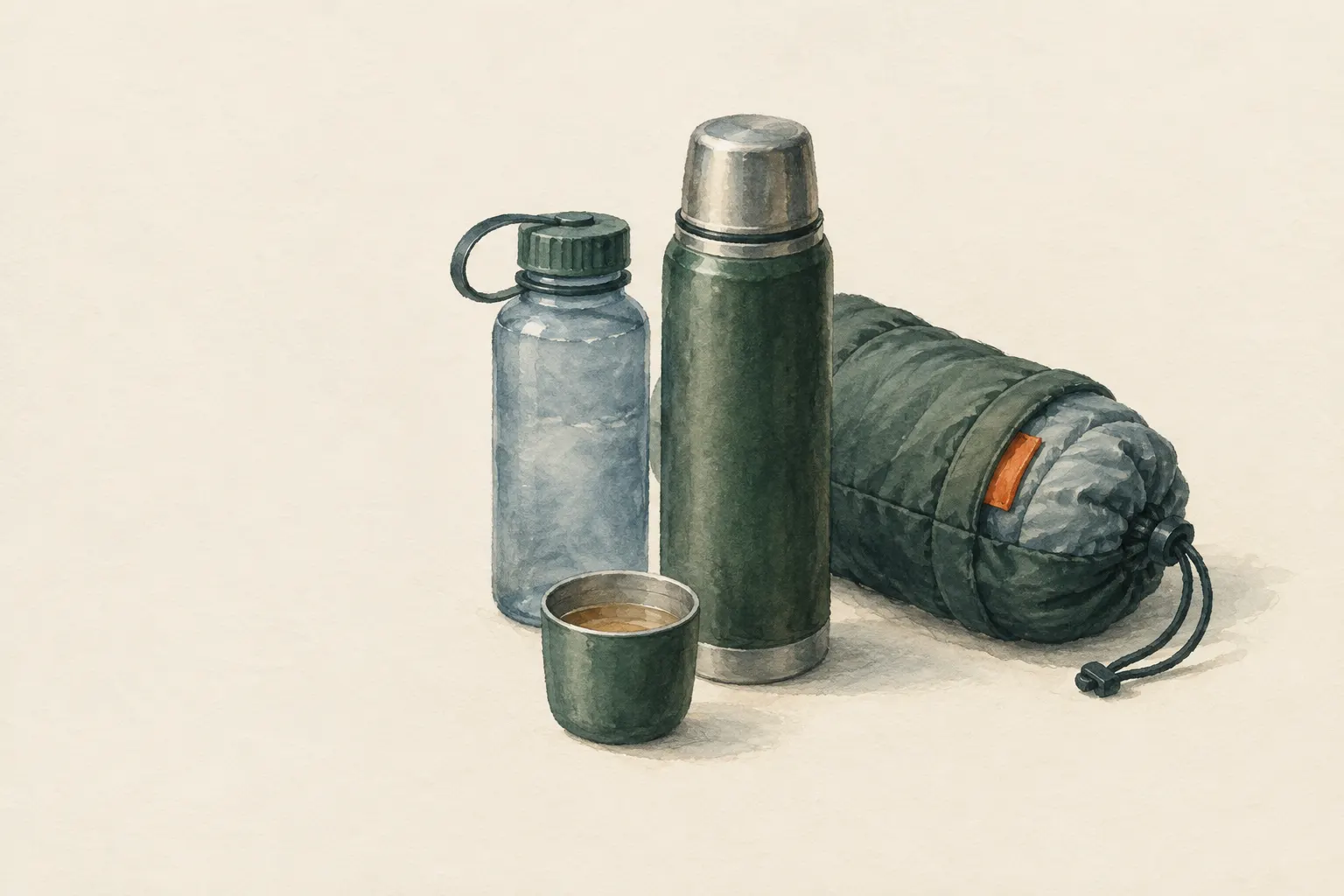
The second problem: water freezes. Bottles turn into blocks of ice and the cap will not turn any more. What helps is a vacuum flask of warm tea, a bottle in the inside pocket of your jacket, and at night you take the bottle into your sleeping bag.
Eating snow is not a good idea. It chills you from the inside, and you need a lot of it for a little water. Better: melt the snow, and if you do not know how clean it is, boil the water.
How it works
Cold air can hold only little moisture and is therefore usually very dry. When you breathe it in, your lungs warm and moisten it, and you breathe that moisture out again – the white cloud of breath is exactly that water. During exertion you breathe faster and deeper, and the loss increases. Under warm clothing you also sweat, often without noticing, because the sweat evaporates quickly or is absorbed by the clothing.
At the same time the cold dampens the sense of thirst, and many people need to urinate more often in the cold. Cold drinks are also not very tempting. Together this means that a fluid deficit easily goes unnoticed in winter. It impairs concentration and performance and makes poor decisions more likely – in a cold environment that can have serious consequences.
Water freezes first at surfaces and at narrow, thin points: at the cap, in the thread, in the drinking hose. Warmth from the body or insulation delays this. That is why the best place for a bottle in frost is close to the body or well wrapped.
What really matters
Drink to a plan rather than to thirst: a few sips at every break, plenty in the morning before setting off and in the evening at camp. The colour and frequency of urine give a rough indication – very dark, infrequent urine shows you should drink more.
Warm drinks are much more appealing in the cold. In the morning, fill an insulated bottle with warm, not boiling, water or tea. Carry a second bottle in an inside pocket or well wrapped in your pack. Drinking hoses on hydration bladders freeze quickly; after drinking, blow the water back into the bladder, or in hard frost switch to bottles altogether.
At night the bottle goes into the sleeping bag with you, and so does a water filter. If the bottle stays outside, keep it insulated and upside down so the cap freezes less quickly. If snow has to be melted, melt enough in the evening for the night and the morning – that saves time and nerves on a cold morning.
Snow and ice as a water source
Snow consists largely of air. A full pot of snow yields only a small amount of water, and melting it costs a lot of fuel and time. Ice gives more water per pot than loose snow. Put a little water into the pot before adding snow; otherwise the snow can scorch on the dry bottom of the pot and the water tastes burnt.
Snow and ice are not automatically clean. They can contain dust, animal traces and germs, especially near paths, huts and campsites. If the origin is uncertain, disinfect the meltwater, most easily by boiling – you need the stove for melting anyway.
Eating larger amounts of snow or ice is no solution: your body has to spend energy melting and warming it, and that chills you. In addition, unmelted snow is untreated.
Safety: what to watch out for
Hot bottles go into the sleeping bag only tightly closed and in a cover, for example a sock. A leaking hot bottle can cause scalds and soak the sleeping bag – both are dangerous in the cold. Use only bottles that are suitable for hot liquids.
Hollow-fibre filters must not freeze, because ice can damage the fine fibres invisibly. A filter that may have frozen can no longer be trusted. Then boil the water or disinfect it chemically, bearing in mind that chemical agents often need longer in cold water – the pack instructions apply.
At home during a heating failure, too, people often drink too little. Warm drinks help, but use flame stoves only with good ventilation and never a grill, outdoor gas heater or generator indoors – carbon monoxide is invisible, odourless and deadly. Anyone who is very cold, shivering, confused or hard to rouse needs warmth and help; in an emergency call the local emergency number (112 in the EU).
Step by step
Drink to a plan
Drink regularly during breaks, even without thirst. Watch the colour and frequency of urine as a rough indicator.
- 1
Drink to a plan
Drink regularly during breaks, even without thirst. Watch the colour and frequency of urine as a rough indicator.
- 2
Fill warm
In the morning, fill insulated bottles with warm (not boiling) water or tea. Warm drinks are more likely to be drunk in the cold.
- 3
Carry close to the body
Carry a bottle in an inside pocket or insulated in the pack. Drinking hoses freeze quickly; blow the water back into the bladder after drinking or switch to bottles.
- 4
Protect at night
Take the water bottle and any filter into the sleeping bag at night, or store the bottle insulated and upside down so the lid freezes less quickly.
- 5
Melt in good time
If snow must be melted, melt enough in the evening for the night and morning. Put a little water in the pot first so the snow does not scorch.
Common mistakes
- Drinking only when thirsty
- Leaving a drinking hose exposed in the cold
- Sucking snow instead of melting it
- Leaving the water filter outside overnight
- Drinking alcohol to warm up
Quick view
Materials
Double-wall insulated bottle
Never heat directly.
Single-wall stainless steel bottle
Can take hot water; beware of scalding
Heat only single-wall bottles without paint/plastic; remove the lid before heating.
Never heat double-wall (vacuum-insulated) bottles – risk of rupture.
Stove
For melting snow
Never operate inside a tent, shelter or enclosed room – carbon monoxide and fire risk.
Sleeping bag
Do not store compressed long-term; do not pack away damp.
Suitable for
- Winter trips and snowshoe hikes
- Cold snaps during power cuts
- Camps in snow
Not suitable for
- As a substitute for treating meltwater from unsafe sources
Prerequisites
- Insulated or cold-tolerant containers
- Fuel if snow must be melted
Safety
- Do not eat snow or ice in larger amounts: it chills the body and is untreated when unmelted. Melt snow and disinfect the water if its origin is uncertain.
- Put hot bottles into the sleeping bag only tightly closed and in a cover – risk of scalding and leaks. Do not use bottles not suitable for hot liquids.
- Hollow-fibre filters must not freeze. A filter that may have frozen can no longer be trusted – then boil the water or disinfect it chemically.
How it works
Cold, dry air draws water from the body with each breath, and people sweat under clothing during exertion. Cold dampens the sense of thirst, so fluid deficits go unnoticed more easily. Water freezes first at surfaces and narrow points such as lids and hoses; warmth from the body or insulation delays this.
Advantages
- Simple measures
- Maintains performance and judgement
- Protects equipment from frost
Disadvantages
- Insulated bottles are heavier
- Melting snow costs fuel and time
Deep knowledge
Background
Mountaineering and winter handbooks stress that fluid deficits in the cold are often underestimated. Insulated bottles, keeping bottles in the sleeping bag and melting snow early are common practice on winter trips.
Fluid deficits impair concentration and performance and make poor decisions in a cold environment more likely.
Variants
- Cold at home during a heating failure
- At home too, people often drink too little in the cold. Warm drinks from a safe stove (only with ventilation, never a grill or generator indoors) help with drinking and warming up.
Common mistakes
- Drinking only when thirsty
- Leaving a drinking hose exposed in the cold
- Sucking snow instead of melting it
- Leaving the water filter outside overnight
- Drinking alcohol to warm up
Limits and risks
- No substitute for treatment
- At very low temperatures even insulated containers eventually freeze
- No medical advice for hypothermia
Material alternatives
Derived from material properties: a substitute must have all relevant properties. Observe the notes on the substitute.
- Double-wall insulated bottle
- Single-wall stainless steel bottle (Heat only single-wall bottles without paint/plastic; remove the lid before heating.), PET bottle (clear, max. 2 litres) (Do not heat or place in a fire.), Food-grade water container (Only use containers that never held chemicals or fuel.), Airtight food-grade storage container (Fill only when clean and completely dry; never use containers that previously held chemicals.), Collapsible water container or bag (Protect from sharp objects.), Food-grade water bag (Use only for drinking water, never for chemicals or fuel.), Fermentation jar or crock (Use only food-grade containers of glass, food-safe glazed stoneware or food-grade plastic – no metal containers for acidic food.), Resealable food bags (Use only bags intended for food; do not use with boiling water unless the manufacturer explicitly allows it.)
- Sleeping bag
- Sleeping pad, Dry leaves, grass or conifer boughs (Collect only where allowed; no protected plants. Check for ticks and insects.), Backpack, Dry spare clothing (Carry it in waterproof packaging – wet clothing barely insulates.), Wool blanket / duvet (Keep away from candles, stoves and heaters.), Insulated cool box (Keeps cold only for a limited time; without ice packs or ice it is not a fridge.), Newspaper and cardboard (Flammable – keep away from candles, stoves, heaters and embers.), Insulated cooking box (hay box, thermal cooker) (Never put open flame or embers inside – only the hot, closed pot.)
Results come exclusively from structured entries. No improvised instructions are generated.
Sources
The Mountaineers Books (2017): Mountaineering: The Freedom of the Hills, 9th edition
Fluid needs and water supply on winter and high-altitude trips
Ready.gov – U.S. Federal Emergency Management Agency (FEMA): Winter Weather
Preparing for winter weather and cold
Wilderness & Environmental Medicine (Wilderness Medical Society) (2019): Wilderness Medical Society Clinical Practice Guidelines for Water Disinfection for Wilderness, International Travel, and Austere Situations: 2019 Update
Frost sensitivity of filters and disinfection in the cold