Maintaining and storing a water filter
A water filter only protects as long as it is intact and clean. Backflushing or cleaning per manufacturer instructions, strict separation of the dirty and clean sides, protection from frost and dry storage keep it reliable. A filter that may have frozen, been dropped or reached the end of its life can no longer be trusted.
- A few minutes after each use; thoroughly before storage
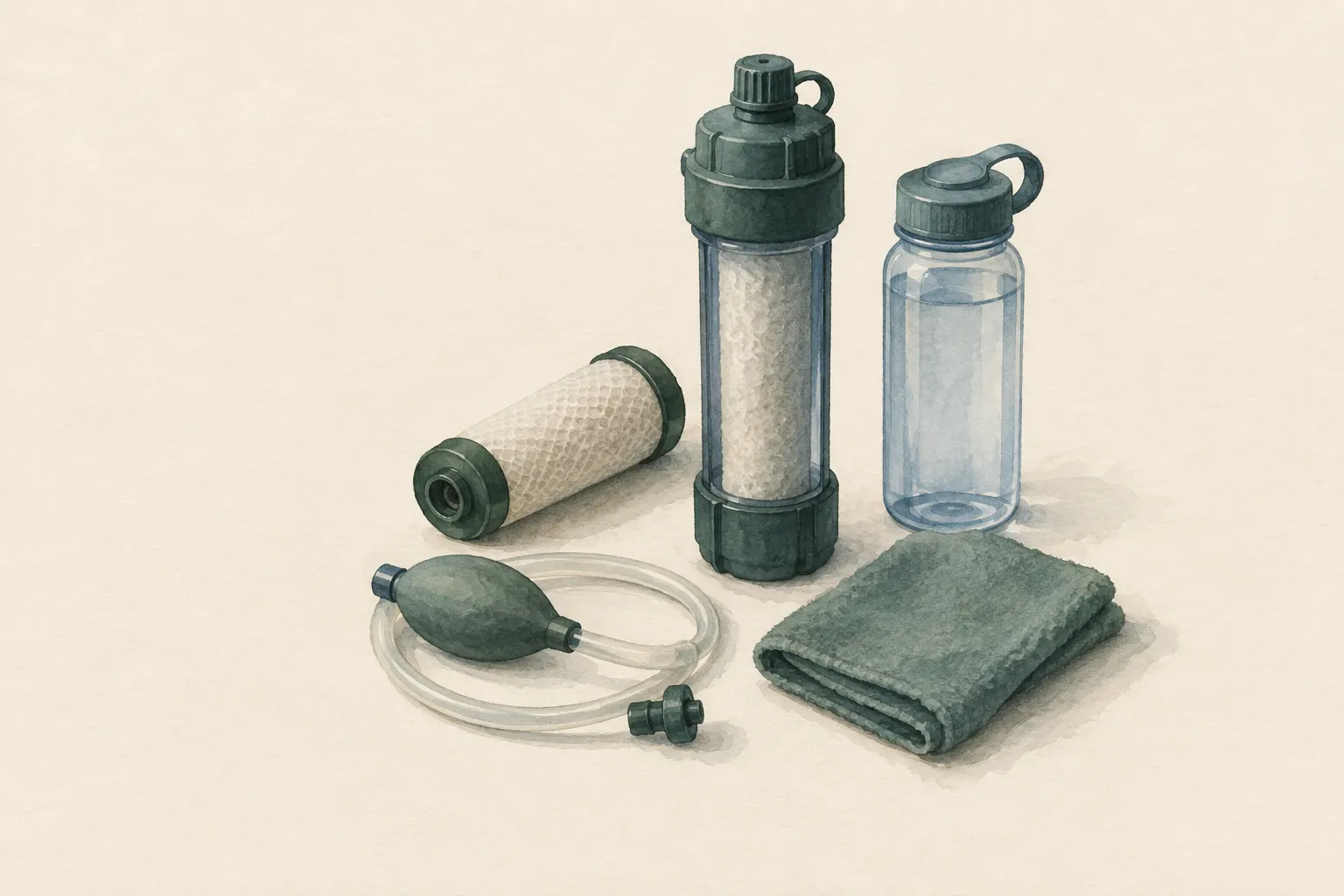
Explained simply
A water filter works like a very, very fine sieve. Water is pushed through, and tiny particles, including many germs, get stuck. Over time the sieve clogs up, like a coffee filter full of grounds. Then less water flows through, and you have to clean the filter the way the instructions describe.
A broken filter is more dangerous than a clogged one. When water freezes inside a filter, it expands and can damage the fine fibres – without you seeing anything. The water may then flow even better, but germs can get through. That is why you keep the filter warm when it freezes, for example in your sleeping bag at night.
Very important: a filter on its own does not always make water safe. Many filters, for example, do not reliably hold back viruses. Disinfect the water as well, for example by boiling it, and follow official advice.
How a filter works
Portable filters hold back particles and germs mechanically: the water has to pass through tiny pores, and anything larger than those pores gets stuck. In hollow-fibre filters these are many thin tubes with porous walls; in ceramic filters it is a block of fine-pored fired material. Single-celled parasites and bacteria are comparatively large and are held back by many filters.
Viruses, by contrast, are much smaller than bacteria. Many outdoor filters do not reliably hold them back. Dissolved substances such as salt or chemicals also pass through ordinary filters – no hiking filter can make seawater or chemically contaminated water drinkable. So: disinfect filtered water as well, for example by boiling, and follow official advice from the authorities.
What your filter actually does is stated in the manufacturer's information. The CDC Yellow Book describes which filter types hold back which groups of germs, and the WHO stresses that any water treatment only works when it is used and maintained correctly. Maintenance is therefore not an extra but part of the protection.
Clogged or broken: two different problems
It is normal for a filter to get slower over time. Particles lodge in the pores and the flow drops. Backflushing or cleaning per the manufacturer's instructions partly reverses this. Letting cloudy water settle first or pre-filtering it through a clean cloth spares the filter and extends its life.
The dangerous damage is the kind that does not reduce flow but opens paths for germs unnoticed. Frost is the best-known case: water expands when it freezes and can damage hollow fibres or membranes without anything being visible. A fall onto hard ground, cracks in the housing or hairline cracks in ceramic can also cancel the protection. A filter that suddenly runs noticeably fast is a reason for suspicion.
Many manufacturers therefore advise no longer treating a filter that may have frozen or been dropped as reliable. Some describe an integrity test you can use to check whether the filter is still intact. If there is no such test or it fails, the filter is replaced. Until then, disinfect the water as well or boil it.
What really matters: keeping dirty and clean water apart
Every filter has a dirty side (raw water) and a clean side. The best filtering is useless if a few drops of raw water get onto the mouthpiece, the outlet or into the clean-water container. A single contamination can make the filtered water unsafe again.
So label containers clearly, for example with coloured tape for “dirty”, and never mix them up. Hold hoses and lids so that raw water cannot drip onto the clean side. Wash or sanitise your hands if possible before touching the clean side. Backflush only with the water the manufacturer specifies – often that is already filtered or clean water.
This separation is a habit that needs practice. In groups it helps if one person is in charge of filtering and everyone knows which container is which.
Care, storage and replacement
Read the instructions before first use: how is the filter prepared, backflushed, cleaned and, if needed, sanitised? How long does it last? How do you protect it from frost? Take the instructions or a copy with you, because every model is different.
After the trip, clean the filter, sanitise it if the manufacturer provides for this, and let it dry completely before packing it away. A filter stored damp can grow germs or mould inside. Store it dry, frost-free and protected from dust. A filter kept for emergencies should be taken out and checked regularly – otherwise you will not know in an emergency whether it still works.
Replace the filter when its stated lifespan is reached, an integrity test fails, the housing is damaged or barely any water gets through despite cleaning. Ceramic filters are usually scrubbed carefully; after a fall, check them especially thoroughly for cracks.
Safety: what to watch out for
Contaminated water can cause diarrhoea and other illnesses. So: disinfect filtered water as well, for example by boiling, especially when sewage, settlements or grazing animals are nearby. When the authorities issue boil-water notices or warnings, always follow them.
When in doubt: better to boil once too often than once too little. A filter is a helpful tool for removing cloudiness and many germs, but it is not a free pass. If someone becomes seriously ill after drinking, loses a lot of fluid or becomes very weak, get medical help or call the local emergency number (112 in the EU).
Step by step
Read the instructions
Before first use read the manufacturer's information on preparation, backflushing, cleaning, sanitising, frost protection, lifespan and integrity testing, and carry the instructions (or a copy).
- 1
Read the instructions
Before first use read the manufacturer's information on preparation, backflushing, cleaning, sanitising, frost protection, lifespan and integrity testing, and carry the instructions (or a copy).
- 2
Pre-treat cloudy water
Let cloudy water settle or pre-filter it through a cloth. This extends lifespan and reduces clogging.
- 3
Keep sides separate
Mark the raw-water container and clean side clearly and never mix them up. Keep hands clean where possible.
- 4
Backflush or clean
When flow drops, backflush or clean the surface exactly as described by the manufacturer – only with the water or accessories intended for it.
- 5
Protect from frost
When frost is possible, keep the filter in the sleeping bag or close to the body at night, and in an inside pocket during the day.
If the filter may have frozen: test per manufacturer instructions or replace it; until then, disinfect water additionally.
- 6
Prepare for storage
After the trip clean it, sanitise if the manufacturer specifies, and let it dry completely before packing. Store dry, frost-free and protected from dust.
- 7
Replace in time
Replace the filter when its lifespan is reached, an integrity test fails, the housing is damaged or barely any water passes despite cleaning.
Common mistakes
- Continuing to use a filter after a frosty night without checking
- Raw water dripping onto the mouthpiece
- Storing the filter damp for months
- Backflushing with raw water when the manufacturer requires clean water
- Never testing the filter kept for emergencies
Quick view
Materials
Portable water filter (hollow fibre / membrane)
Do not let it freeze – fibres can be damaged without visible signs.
Cotton cloth / T-shirt
As a pre-filter for cloudy water
Removes coarse particles only – no disinfection.
PET bottle (clear, max. 2 litres)
Separate containers for raw and clean water
Do not heat or place in a fire.
Suitable for
- Hollow-fibre, membrane and ceramic filters in outdoor and emergency use
- Preparing a filter for emergency preparedness
Not suitable for
- Filters without available manufacturer instructions
- Chemically contaminated water or seawater – no filter solves this
Prerequisites
- The manufacturer's operating and care instructions
- Clean water for backflushing, where intended
Safety
- Raw water must not reach the clean side, the mouthpiece or the clean-water container. A single contamination can make filtered water unsafe again.
- Many outdoor filters do not reliably remove viruses. Where contamination by sewage is possible, also disinfect.
How it works
Filters hold back pathogens and particles mechanically. Over time pores clog and flow decreases – this is normal and is partly reversed by backflushing or cleaning. Dangerous, by contrast, is damage that does not reduce flow but opens paths for pathogens unnoticed: frost, impacts, cracks. Maintenance therefore means paying attention to both: preserving performance and checking integrity.
Advantages
- Extends lifespan
- Preserves protection
- Little effort
Disadvantages
- Damage is often not visible
- Depends on manufacturer instructions
Deep knowledge
Background
The CDC Yellow Book describes the performance of different filter types against pathogen groups and points out that many portable filters do not reliably remove viruses. The WHO drinking-water quality guidelines stress that any treatment only works when used and maintained correctly.
The “water filters” category in this site's gear advisor lists buying criteria; this entry adds maintenance and storage. The specific manufacturer instructions always take precedence.
Variants
- Ceramic filters
- Ceramic filters are usually cleaned by careful scrubbing. Hairline cracks can make them unsafe; check particularly carefully after a fall.
Common mistakes
- Continuing to use a filter after a frosty night without checking
- Raw water dripping onto the mouthpiece
- Storing the filter damp for months
- Backflushing with raw water when the manufacturer requires clean water
- Never testing the filter kept for emergencies
Limits and risks
- No product-specific maintenance instructions
- No test results for individual filters
Sources
Centers for Disease Control and Prevention: CDC Yellow Book: Health Information for International Travel – Water Disinfection
Performance of portable filters, limits with viruses
World Health Organization (2022): Guidelines for drinking-water quality, fourth edition incorporating the first and second addenda
Treatment effectiveness depends on correct use and maintenance