Digging for water in dry riverbeds
In dried-out stream and river beds, water may still stand below the surface in sand or gravel – most likely on the outside of bends and at the lowest points. Digging costs sweat and often yields nothing; any water found is raw water and must be treated. Dry riverbeds are also flash-flood zones.
- 30–60 minutes of digging, then waiting for water to seep in; success uncertain
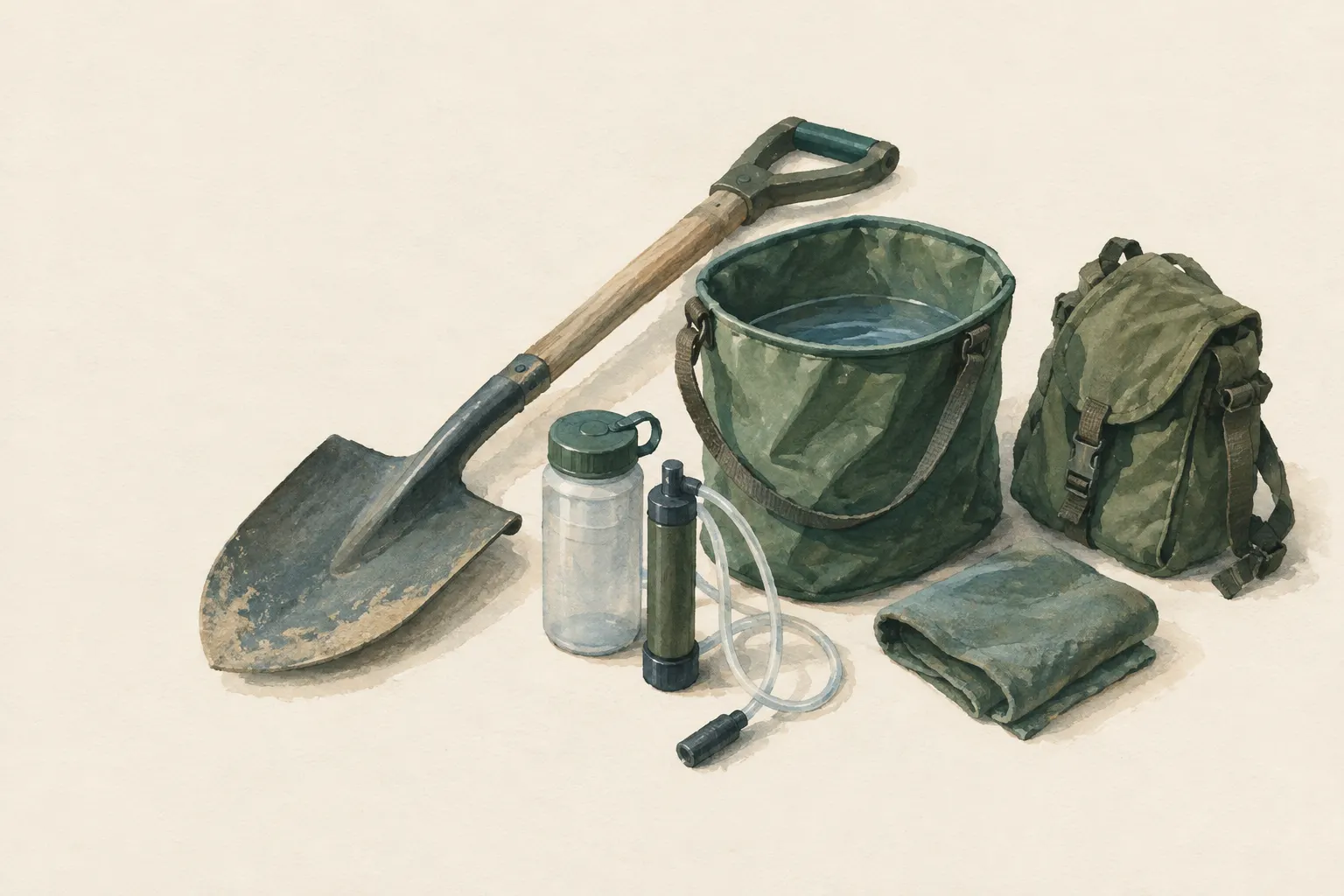
Explained simply
A river can look dried up on top and still have water down in the sand. Picture a sponge that is already dry on the outside but still damp inside. Sand and gravel in the riverbed hold water in the small gaps between the grains – sometimes long after the river has stopped flowing.
You are most likely to find such water on the outside of a bend and at the lowest points of the riverbed. Green plants and dark, damp sand are good signs. But nothing is guaranteed – often you dig and find only dry sand.
Two things are very important: first, dug water is “raw water” and must be boiled or otherwise disinfected before drinking. Second, a dry riverbed can fill with rushing water within minutes when it rains further upstream. That is why you never sleep or camp in the riverbed.
How it works: water beneath the riverbed
When a river dries up at the surface, the water has often not completely disappeared. It keeps flowing or standing in the pore space – the name for the tiny gaps between grains of sand and gravel. Beneath many riverbeds lies a permeable layer that holds water longer than the visible surface.
Where the current used to be strongest, it scoured the bed deeper. That is usually the outside of a bend – the side the water was pushed against in the curve. There, and at the lowest points, groundwater is often closest to the surface and remains longest.
Clues to water underground are green plants while everything around is dry, dark and cool sand, and animal tracks leading to particular spots. These signs improve the odds but are no guarantee. If the groundwater has dropped deeply, digging by hand will find nothing.
Safety: flash floods and heat
A dry riverbed is the path water takes when it comes. If it rains far upstream – perhaps in mountains you cannot even see – a flood wave can arrive within minutes, even with blue sky overhead. So check the weather upstream before digging and fix an escape route to high ground. When thunderstorms threaten, do not work in the riverbed, and never camp or sleep there.
Warning signs are a rushing sound growing louder, suddenly cloudy or rising water, floating debris and distant thunder. Then leave everything and go to higher ground immediately. Gear can be replaced, you cannot.
The second danger is the heat. Digging is hard work, and in the midday sun you can sweat out more water than the hole will ever yield. Dig only in cool hours or in shade, and carry enough drinking water for the work itself. Do not undercut loose walls, so the hole does not collapse.
What really matters
First dig a test hole at the most promising spot. If the ground becomes clearly damp, it is worth carrying on. If it stays dry, try another spot or give up – digging ever deeper only costs energy and water.
Once you reach damp ground, you need patience. Water seeps in slowly. The first water is usually cloudy; you can scoop it off and pour it away. After that, suspended matter settles, and you carefully scoop the upper, clearest water without stirring up the bottom. Pour it through a clean cloth into a container meant only for raw water.
The water is clearer afterwards, but not safe. It must be disinfected: boil it, or filter it and then disinfect chemically. Only then do you drink it.
When it makes sense – and when not
Digging makes sense in arid regions with rivers that only carry water at certain times of year, when no open water source can be reached. If there are still remaining pools in the riverbed, a hole right beside them often yields clearer water than the pool itself – microbiologically it is still raw water.
It does not make sense as the planned main water source of a trip, because success depends heavily on region, season and subsoil. Also avoid riverbeds below settlements, industry or mining. There the water may contain substances that no field treatment removes. Water that tastes salty or mineral also occurs in arid regions; salt cannot be removed by boiling or filtering.
Good to know
Military and civilian survival manuals have long described digging on the outside of bends. The method rests on simple hydrology – the study of how water moves through the landscape. People and animals in arid regions have always used water holes in riverbeds as well.
Even so: in arid regions, planning water points is more important than any emergency method. If you set out with enough water and know where you can reliably refill, you never have to dig in the first place.
Step by step
Read the terrain
Look for the outside of a bend, the lowest point of the bed or spots with green vegetation and dark, damp sand. Watch for animal tracks leading to damp spots.
- 1
Read the terrain
Look for the outside of a bend, the lowest point of the bed or spots with green vegetation and dark, damp sand. Watch for animal tracks leading to damp spots.
- 2
Check the weather
Before digging, check whether rain or thunderstorms are possible upstream and fix an escape route to high ground.
Do not work in the riverbed when thunderstorms threaten.
- 3
Dig a test hole
Dig a hole until the ground becomes clearly damp. If it stays dry, try elsewhere or give up rather than digging ever deeper. Do not undercut loose walls.
- 4
Let it seep in
Wait until water collects in the hole and suspended matter settles. The first cloudy water can be scooped off and discarded.
- 5
Scoop carefully
Scoop off the upper, clearest water without stirring up the bottom, and pour it through a cloth into a raw-water container.
- 6
Treat
Disinfect the water: boil it, or filter and then disinfect chemically. Only then drink it.
Common mistakes
- Spending the night in the riverbed
- Digging in the midday heat
- Digging ever deeper although the ground stays dry
- Drinking the water unfiltered and unboiled
- Using riverbeds below settlements or mining
Quick view
Materials
Small trowel
Or a flat stone, stick or pot lid
Metal pot (stainless steel, aluminium, titanium)
For scooping and boiling
Hot – scalding risk.
Cotton cloth / T-shirt
For pre-clarifying
Removes coarse particles only – no disinfection.
Suitable for
- Arid regions with seasonal rivers
- Emergencies where no open water source can be reached
Not suitable for
- During rain or thunderstorms in the catchment
- As the planned main water source of a trip
- Riverbeds below settlements, industry or mining
Prerequisites
- A disinfection method
- Knowledge of the weather upstream
- Enough drinking water for the work itself
Safety
- Digging in the heat can cost more water than the hole yields. Dig only in cool hours or in shade, and stop if no damp ground appears after a reasonable depth.
- Collected or dug water is raw water. It must be disinfected before drinking – by boiling or a suitable filter-plus-disinfection method. None of these reliably helps against chemicals or salt.
How it works
After surface flow stops, water often still flows or stands in the pore space of sand and gravel. On the outside of bends the current scoured deeper, and groundwater remains longest at the lowest points. Damp sand and green vegetation are clues, not guarantees.
Advantages
- Can yield water where no open source is visible
- Little equipment needed
- Dug water is often clearer than puddle water
Disadvantages
- High effort and sweat
- Uncertain yield
- Flash-flood risk
- Treatment mandatory
Deep knowledge
Background
Military and civilian survival manuals have long described digging on the outside of bends in dry riverbeds. The method rests on simple hydrology: beneath the visible bed there is often a permeable body of groundwater that holds water longer than the surface.
In practice success depends heavily on region, season and subsoil. In arid regions, planning water points remains more important than any emergency method.
Variants
- At the edge of remaining pools
- If there are still remaining pools, a hole beside them often yields clearer water than the pool itself (see seep well). Microbiologically it is still raw water.
Common mistakes
- Spending the night in the riverbed
- Digging in the midday heat
- Digging ever deeper although the ground stays dry
- Drinking the water unfiltered and unboiled
- Using riverbeds below settlements or mining
Limits and risks
- No water when groundwater has dropped deeply
- Removes no pathogens, chemicals or salt
- Water may be salty or mineral-laden
Material alternatives
Derived from material properties: a substitute must have all relevant properties. Observe the notes on the substitute.
- Metal pot (stainless steel, aluminium, titanium)
- Single-wall stainless steel bottle (Heat only single-wall bottles without paint/plastic; remove the lid before heating.)
Results come exclusively from structured entries. No improvised instructions are generated.
Sources
Headquarters, Department of the Army (USA) (2002): FM 3-05.70 Survival
Digging for water in dry riverbeds, especially on the outside of bends
Centers for Disease Control and Prevention: Making Water Safe in an Emergency
Treating water from unsafe sources
NOAA National Weather Service (USA): Turn Around Don't Drown
Danger from rapidly rising water and flash floods