Water for infants, older people and the sick in emergencies
Infants, older people, pregnant women and the sick are especially at risk from water shortage and contaminated water. Use only safe water as advised by authorities for baby food, actively encourage older people to drink, and take medication needs into account. Get medical help early when warning signs appear.
- Planning ahead, ongoing attention in an emergency
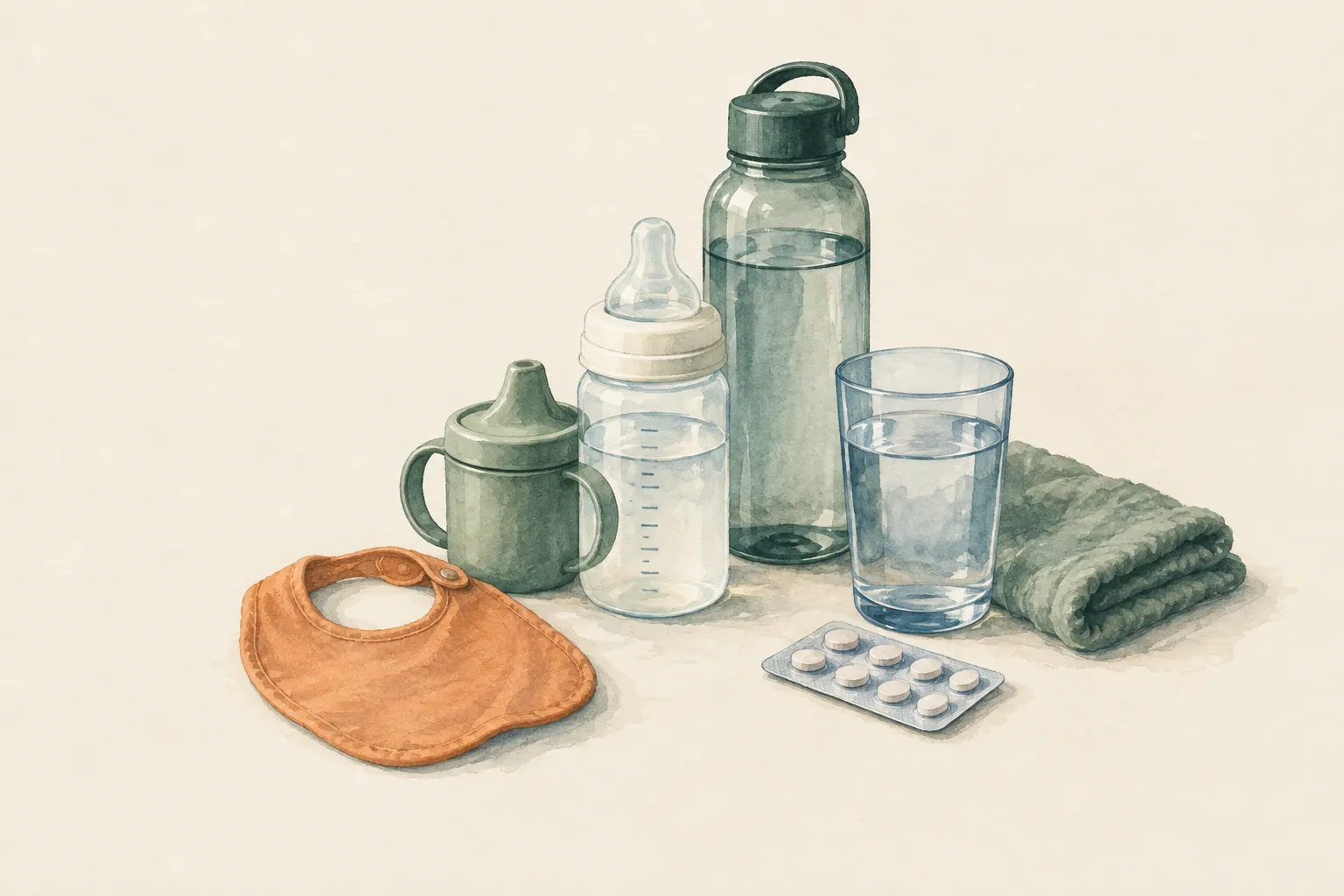
Explained simply
Some people need special attention when it comes to water in an emergency: babies, older people, pregnant women and the sick. A baby cannot say ‘I'm thirsty’ and cannot fetch a drink. Many older people do not even notice that they are thirsty. And anyone with a fever or diarrhoea loses extra water.
So you think for them. For a baby's bottle, you use only water that the authorities or the paediatric practice recommend for it. For older people, you regularly put out a drink and offer it, instead of waiting until they ask.
Watch for warning signs: very little wee, dry nappies for a long time, a person who is confused or unusually floppy. Then get medical help early – and in an emergency, call the emergency number (112 in the EU).
Why these groups are especially at risk
Infants turn over a great deal of water relative to their small bodies. If fluid is lacking, for example through heat, fever or diarrhoea, this can become serious much faster for them than for adults. They also depend entirely on others to look after them.
In older people the sense of thirst is often weakened. Some deliberately drink little, for example because they worry about needing the toilet often at night or when out. Some medications affect the body's water balance, and some people may only drink limited amounts for medical reasons, for example with certain heart or kidney conditions.
Sick people lose additional water through fever, diarrhoea or vomiting, and their immune system may be weakened. Pregnant and breastfeeding women also need special attention. For all these groups, safe water and attentive care take priority.
What really matters
Much can be clarified in advance, calmly and without pressure. Ask the paediatric or family practice which water is suitable for baby food, whether relatives have fluid restrictions and whether medications have particular water needs. Write down the answers and keep them with the supplies.
Set aside a separate, clearly labelled stock of safe water for infants and the sick – for example unopened bottled water, where the authorities recommend it for baby food. This stock is not touched for cooking or washing. Always prepare infant formula exactly as the pack says and never dilute it more to make it last. Anyone breastfeeding should drink enough themselves and seek advice if they have questions.
With older and sick people, actively offering helps: hand them a drink regularly, keep favourite drinks ready, place a filled cup or bottle within reach. A tick on a list reminds everyone when someone last drank. Clean bottles, teats and cups with safe water, and wash hands before every preparation.
Safety: what to watch out for
For infant formula, use only water that the authorities or health services recommend for babies. Under a boil-water notice this also applies to bottles. Do not give infants chemically disinfected water or water you suspect contains chemicals without professional advice.
Warning signs are confusion, listlessness, very little urine, dry nappies for a long time, a sunken fontanelle (the soft spot on a baby's head) or persistent diarrhoea and vomiting. Then get medical help, and do it early. In an emergency call the local emergency number (112 in the EU).
For diarrhoea, ready-made oral rehydration solutions from the pharmacy can help. They are prepared only according to the package leaflet, and for infants, young children and older people you seek medical advice. Anyone who has to limit their fluid intake for medical reasons clarifies with a doctor what applies in an emergency – drinking more is not automatically better here.
Typical situations
Under a boil-water notice with a baby in the house, the authorities often issue specific advice on preparing infant formula. It takes precedence over general rules; if in doubt, call the paediatric practice.
During a heatwave combined with a water outage, visit older neighbours or relatives, bring water and check whether they are drinking enough. Older people living alone in particular depend on attention from others in such situations.
This advice does not replace medical consultation. It is meant to help you prepare early, recognise warning signs and get help in time.
Step by step
Clarify needs in advance
Clarify with the paediatric or family practice which water is suitable for baby food and whether relatives have fluid restrictions or medications with particular water needs.
- 1
Clarify needs in advance
Clarify with the paediatric or family practice which water is suitable for baby food and whether relatives have fluid restrictions or medications with particular water needs.
- 2
Reserve safe water
Set aside a separate, labelled stock of safe water for infants and the sick, e.g. unopened bottled water where authorities recommend it for baby food.
- 3
Offer actively
Offer drinks to older and sick people regularly instead of waiting for them to express thirst. Place drinks within reach.
- 4
Maintain hygiene
Clean bottles, teats and cups with safe water; wash hands before preparation.
- 5
Watch and get help
Watch urine output, behaviour and diarrhoea. Seek medical help early when warning signs appear.
Common mistakes
- Preparing baby formula with untreated tap water under a boil-water notice
- Waiting for older people to say they are thirsty
- Ignoring fluid restrictions in people with heart or kidney disease
- Waiting too long with persistent diarrhoea
Quick view
Materials
Baby emergency supplies
Never dilute or stretch infant formula; prepare only as directed on the pack.
Check expiry dates and sizes regularly – children grow quickly.
Medication supply
Agree any stock of prescription medication with a doctor or pharmacist; observe storage instructions and expiry dates.
Metal pot (stainless steel, aluminium, titanium)
For boiling
Hot – scalding risk.
Suitable for
- Families with infants and toddlers
- Caring for older relatives
- Households with chronically ill people
Not suitable for
- As a substitute for medical treatment
Prerequisites
- Stock of safe water
- Medical consultation for pre-existing conditions or fluid restrictions
Safety
- Some people must limit their fluid intake for medical reasons (e.g. certain heart or kidney conditions). Clarify with a doctor what applies in an emergency.
How it works
Infants have a high water turnover relative to body weight and cannot look after themselves. In older people the sense of thirst is often weakened. Sick people lose additional water through fever, diarrhoea or vomiting, and their immune system may be weakened. For these groups, safe water and attentive care take priority.
Advantages
- Protects the most vulnerable
- Early recognition of problems
Disadvantages
- Requires additional stock and attention
Deep knowledge
Background
Preparedness guides for families and older people stress including special needs such as baby food, medication and care in emergency planning. Authorities often issue specific advice on preparing infant formula during boil-water notices.
This page does not replace medical advice; it is meant to help prepare early and get help in time.
Variants
- Oral rehydration solutions from the pharmacy
- For diarrhoea, ready-made oral rehydration solutions from the pharmacy can help. Prepare only according to the package leaflet and seek medical advice for infants, young children and older people.
Common mistakes
- Preparing baby formula with untreated tap water under a boil-water notice
- Waiting for older people to say they are thirsty
- Ignoring fluid restrictions in people with heart or kidney disease
- Waiting too long with persistent diarrhoea
Limits and risks
- No medical treatment instructions
- Official and medical advice takes precedence
- No volume figures for infants
Material alternatives
Derived from material properties: a substitute must have all relevant properties. Observe the notes on the substitute.
- Metal pot (stainless steel, aluminium, titanium)
- Single-wall stainless steel bottle (Heat only single-wall bottles without paint/plastic; remove the lid before heating.)
Results come exclusively from structured entries. No improvised instructions are generated.
Sources
Centers for Disease Control and Prevention: Making Water Safe in an Emergency
Safe water in emergencies, including notes on infant formula
Ready.gov – U.S. Federal Emergency Management Agency (FEMA): Older Adults
Preparedness for older adults
International Federation of Red Cross and Red Crescent Societies (IFRC) – Global First Aid Reference Centre (2020): International First Aid, Resuscitation, and Education Guidelines 2020
First-aid basics for fluid loss and calling for help
European Commission: 112 – the European emergency number
European emergency number 112