Emergency stock for allergies, special diets and infants
Anyone with a food allergy, coeliac disease, diabetes or another diet-related condition, or caring for an infant, cannot rely on emergency rations or donations in a crisis. A separate, labelled stock, agreement with a doctor or dietitian and a plan for preparation without power and running water are essential.
- A few hours of planning plus medical consultation
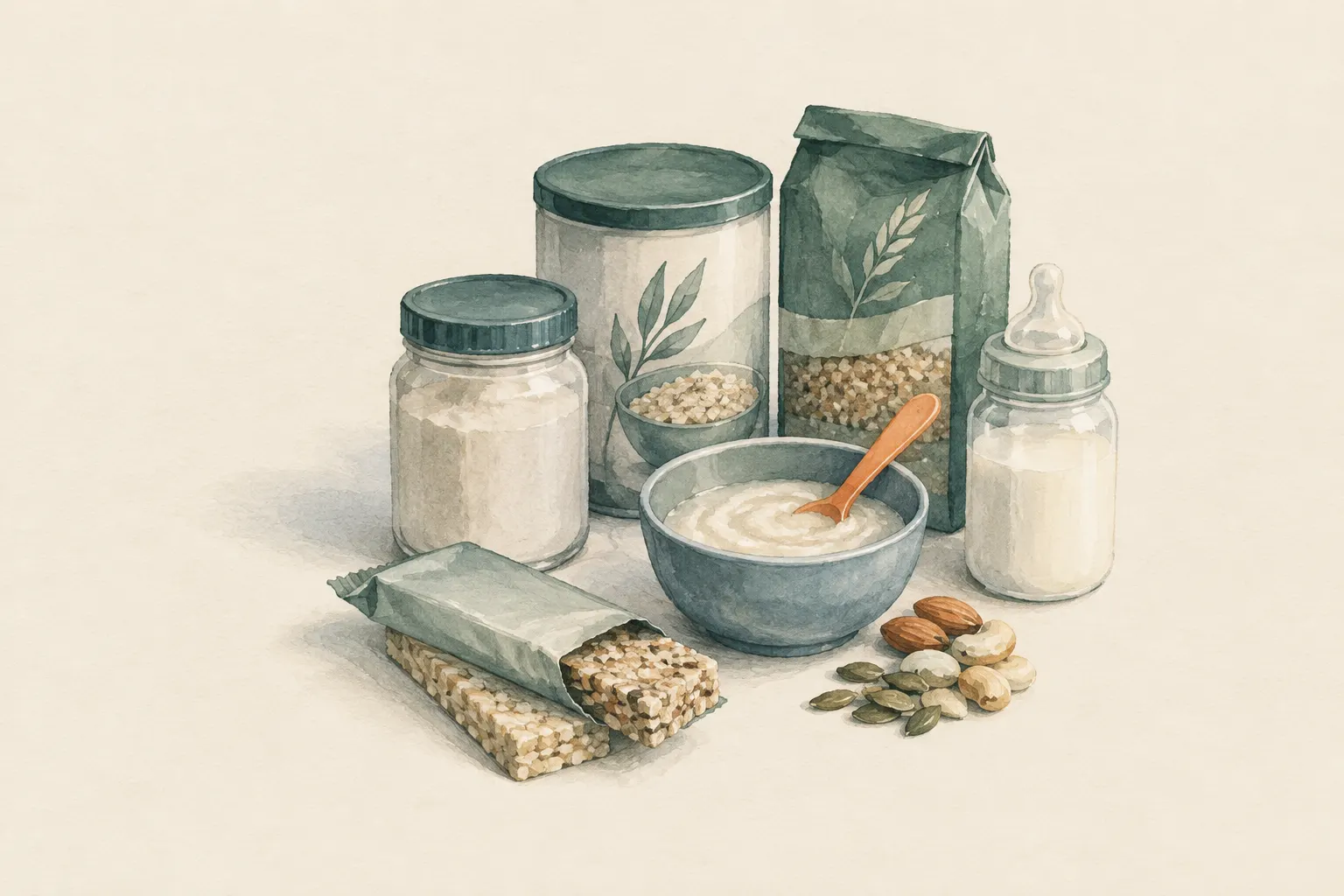
Explained simply
Some people cannot eat everything. With an allergy, for example, the body mistakes nuts for a dangerous enemy and fights back hard. With coeliac disease, the protein gluten from wheat harms the gut. With diabetes, food has to fit well with the medication. And babies need very special food.
When many people are being fed in a crisis, helpers usually cook for the majority. Anyone who needs something special should therefore have their own stock. You label it clearly – like a name tag – so that nobody mixes it up.
Very important: if someone has trouble breathing after eating, their face or throat swells, or they feel faint, call the emergency number immediately (112 in the EU).
Why a separate stock is needed
Emergency rations, donations and food distribution in emergency shelters are designed for as many people as possible. Whether a stew contains wheat, milk or nuts often cannot be said for certain there, and donations sometimes arrive without an ingredient list. For people who must strictly avoid certain foods, this is a real risk.
On top of that, special products such as gluten-free baked goods, particular infant formulas or medically prescribed nutrition drinks are not available everywhere even in normal times. When shops are closed or supply chains are disrupted, they are the first to run out. A separate buffer that keeps without refrigeration buys time and calm.
This stock is kept apart from the rest of the supplies and labelled clearly, for example “gluten-free” or “only for Lena”. If neighbours, grandparents or helpers step in, they immediately see what is meant for whom.
Planning together with professionals
With a diet-related condition, planning belongs in a conversation with the treating doctor, a dietitian or – for babies – the midwife or paediatric practice. Ask specifically: what can be eaten in an emergency when the usual food is missing? What do I need to watch out for if I cannot cook?
For some conditions, food and medication are closely linked, for example with diabetes. How meals and medication fit together in an exceptional situation is not something you decide on your own, but in advance with the doctor. Some medicines also need particular storage conditions – that belongs in this conversation too.
A small information card helps: allergies, diet, medication and the contact details of the doctor's practice. One card is kept with the stock, one in the go bag. Anyone who wants to help then has all the important details at a glance, even if the person concerned cannot speak for themselves at that moment.
Babies and toddlers
Infant formula is prepared only according to the directions on the package – with safe water and clean bottles and teats. This is exactly what is difficult without power and running water: water must be in stock, a heat source may only be used outdoors, and cleaning also needs water. Ready-to-feed infant formula in single portions can simplify these steps.
Anyone breastfeeding needs enough to eat and drink themselves – that belongs in the stock too. For toddlers, familiar jars, purées and snacks matter, because in an unfamiliar situation children often eat only what they know.
Babies and toddlers grow quickly. What fitted half a year ago may already be too little or the wrong type today. So check the children's stock more often than the rest of the stock. When unsure, the midwife, paediatric practice or the responsible authority can help.
Safety: what to watch out for
A severe allergic reaction can develop within a short time. Warning signs are breathing difficulty, swelling of the face or throat and circulation problems such as dizziness. Then call the local emergency number immediately (112 in the EU) and use any prescribed emergency kit as it was prescribed.
Mix-ups are the most common danger when living with special supplies. Unlabelled packs among other supplies, decanted flours without a label or a shared spoon in the jar can be enough to make someone with an allergy or coeliac disease ill. Separate shelves, clear labels and dedicated utensils help.
Manufacturers sometimes change their recipes. A product that was tolerated for years can suddenly contain a new ingredient. So read the ingredient list again with every new purchase, not just the first time.
Good to know
Many staple foods naturally fit certain diets: rice, potatoes and maize, for example, contain no gluten. With coeliac disease it still matters that the product is labelled gluten-free, because contamination can occur during processing. Such staples are often cheaper and keep longer than special products.
Special products are more expensive and sometimes keep for a shorter time. That makes it all the more important to use them up in everyday life and replace them, instead of forgetting them in the cupboard for years. Then the stock is always fresh and nothing is wasted.
This entry describes planning a stock, not treating a condition. Which diet, which amounts and which medication are right is decided by the treating professionals.
Step by step
Get professional advice
Discuss with a doctor, dietitian or midwife what can be eaten in an emergency and what to watch for.
- 1
Get professional advice
Discuss with a doctor, dietitian or midwife what can be eaten in an emergency and what to watch for.
- 2
Build a separate stock
Stock tolerated, shelf-stable products, store them separately and label them clearly (e.g. "gluten-free", "only for …").
- 3
Plan preparation without power
For infant formula: safe water, an outdoor heat source, cleaning bottles. Ready-to-feed single portions can help.
- 4
Information card
Keep a card with allergies, diet, medication and the doctor's contact details with the stock and in the go bag.
- 5
Check regularly
Regularly check shelf life, manufacturers' recipe changes and changed needs (e.g. a growing child).
Common mistakes
- Relying on emergency shelters
- Unlabelled special products among other supplies
- Infant formula with unsafe water
- No agreement on medication and food
Quick view
Materials
Non-perishable food
Prefer food that can be eaten without cooking; consider allergies and dietary needs; do not forget a can opener.
Baby emergency supplies
Never dilute or stretch infant formula; prepare only as directed on the pack.
Check expiry dates and sizes regularly – children grow quickly.
Medication supply
Agree any stock of prescription medication with a doctor or pharmacist; observe storage instructions and expiry dates.
Labels and permanent marker
Suitable for
- Households with allergies or intolerances
- People with diabetes, coeliac disease, kidney disease
- Families with babies and toddlers
Not suitable for
- Replacing medical advice or adjusting treatment
Prerequisites
- Medical or dietetic recommendation
- List of tolerated products
Safety
- Prepare infant formula only according to the package directions and with safe water. Bottles and teats must be clean. When unsure, ask a midwife, paediatrician or the authorities.
- For some conditions diet and medication are linked (e.g. diabetes). Discuss an emergency plan in advance with the treating doctor.
How it works
General emergency food is designed for the majority. Anyone who depends on specific foods or must avoid others therefore needs their own buffer that keeps without refrigeration and can be prepared without power. Clear labelling prevents mix-ups when others help.
Advantages
- Safety for vulnerable people
- Less dependence on help
Disadvantages
- Special products are more expensive and sometimes shorter-lived
- More planning effort
Deep knowledge
Background
Ready.gov and the BBK point out that special dietary needs, infants and medication should be taken into account when planning supplies.
This entry describes planning, not dietary treatment – that remains a matter for the treating professionals.
Common mistakes
- Relying on emergency shelters
- Unlabelled special products among other supplies
- Infant formula with unsafe water
- No agreement on medication and food
Limits and risks
- No diet or dosage recommendations
- No infant formula preparation instructions beyond the package directions
Sources
Ready.gov – U.S. Federal Emergency Management Agency (FEMA): Build A Kit
Infant needs and special dietary needs in the kit
Bundesamt für Bevölkerungsschutz und Katastrophenhilfe (BBK), Deutschland: Ratgeber für Notfallvorsorge und richtiges Handeln in Notsituationen
Special needs in stock planning