Emergency preparedness for babies and toddlers
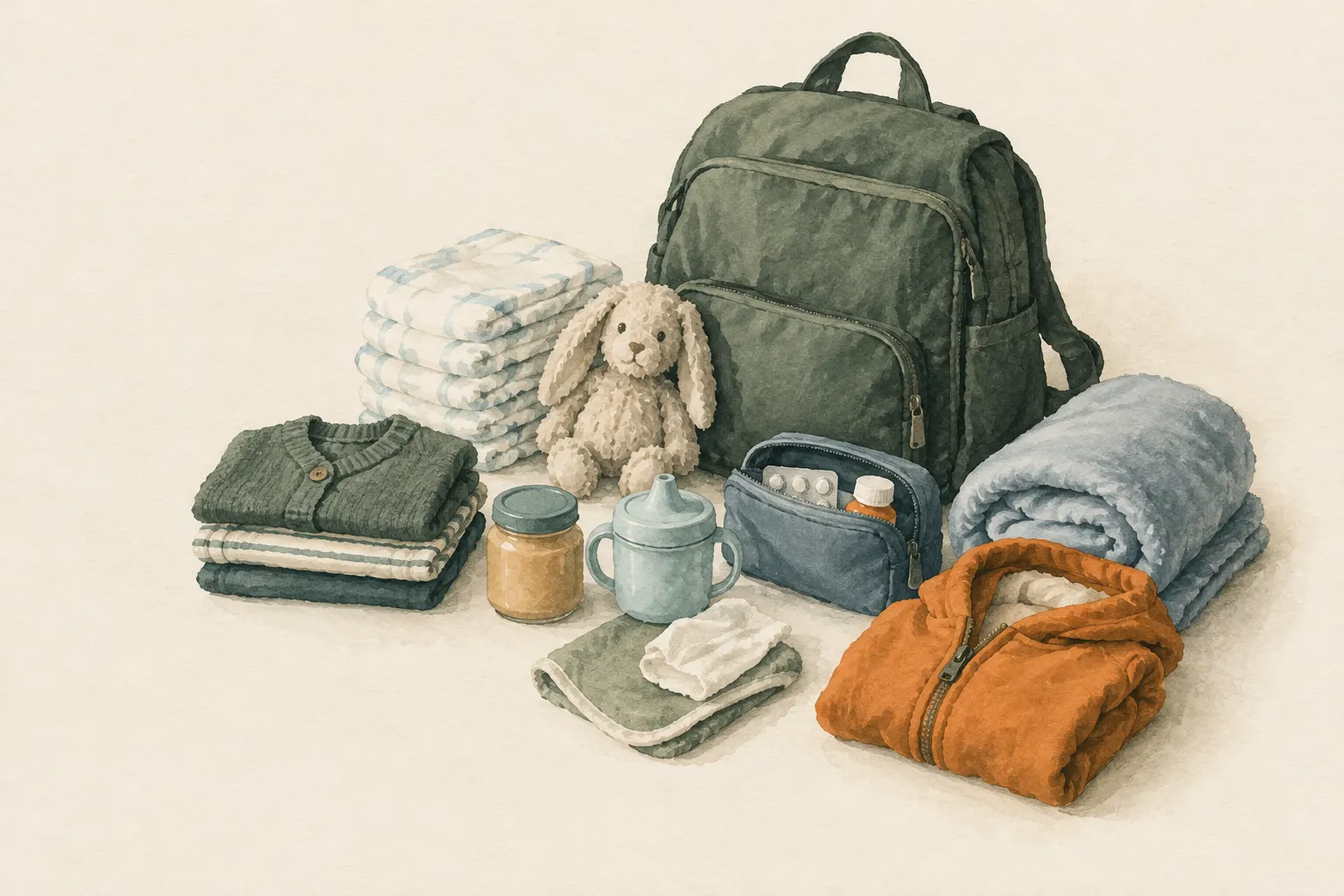
Babies and toddlers cannot do anything themselves and are sensitive to cold, heat, lack of fluids and unclean food. Their own emergency kit with food, nappies, hygiene items, clothing, medication and familiar things, plus a plan for feeding without power and running water, makes the difference.
- About 1 hour to assemble; adjust every 2–3 months
Explained simply
Babies and small children cannot help themselves. They cannot fetch a jacket, get water or say what is wrong. So in an emergency they need adults who have everything with them: food, nappies, warm clothes, their favourite cuddly toy.
Small bodies cool down faster and overheat faster than big ones – a bit like a small cup of tea goes cold faster than a big pot. That is why you have to watch them especially carefully in cold and heat.
The most important thing: baby formula is never diluted or replaced with other milk. And if a baby is hardly drinking, has a fever, is very floppy or is breathing badly, get medical help at once or call the emergency number (112 in the EU).
How it works
Relative to their body weight, small children need a lot of fluid, warmth and regular food. Their bodies also have a lot of surface area for their size, through which heat is lost. If the heating fails in an emergency or it gets very hot, babies feel it sooner than adults – and they cannot do anything about it themselves.
Preparing for the youngest therefore means having everything the child needs each day ready for a few days, independent of power, shops and running water. And it means keeping daily life as familiar as possible. Familiar routines, smells and sounds give small children security, especially when everything around them is different.
What really matters
Go through a completely normal day: meals, bottles, nappies, care, medication, sleep. That shows what needs to be in stock for a few days. For bottle-fed babies, ready-to-feed formula in single portions is an emergency option that needs no water. For older children, jars, pouches and food the child already knows are suitable. Breastfeeding remains possible in crises; the breastfeeding parent then needs enough to drink and eat themselves. Any questions about food, amounts and special formula are for your paediatrician or midwife.
For hygiene without running water, nappies in the right size, wet wipes, nappy cream, bin bags and hand sanitiser help. Bottles and teats are cleaned only with safe water; disposable bottles are an emergency option. For warmth, spare clothing, a hat, a baby sleeping bag and a blanket belong in the kit. In the cold it helps to carry the child close to your body and stay together in one warm room.
In the go bag, a baby carrier or wrap is worth its weight in gold. Stairs, debris and crowds are often almost impossible with a pram. Add a cuddly toy, a dummy, a book or small game and copies of documents such as the vaccination record and important health information.
Safety: what to watch out for
Infant formula is never diluted to make it last and is not replaced with other milk or homemade mixtures – that can be dangerous for a baby. Powdered formula is prepared only with safe water, exactly as the pack says. If you have no safe water, ready-to-feed formula is the better choice.
Watch for warning signs: fever, poor drinking, listlessness, clearly fewer wet nappies or breathing problems. Then get medical help at once or call the local emergency number (112 in the EU). A grill, gas heater or generator is never used indoors to keep warm or to warm bottles, because carbon monoxide is especially dangerous for children. Even in an emergency shelter, a baby sleeps on their back, on a firm surface and without loose pillows or blankets over the head.
How to keep the kit up to date
Children grow faster than emergency kits go out of date. So every few months, check: does the nappy size still fit? Do the clothes fit? Does the child eat different things now? Are food and medication still in date? A good moment is, for example, each routine check-up at the paediatrician.
Also think of every place where the child regularly spends time. If they are often with grandparents, a childminder or other carers, a small kit should be there too – or the carers should know where to find the essentials and whom to call.
Good to know
In emergency shelters, exactly the things a particular child needs are often missing: the familiar food, the right nappy size, a specific medicine. A small kit of your own fills exactly this gap. Ready.gov explicitly lists infant formula, bottles, nappies, wipes and nappy rash cream among emergency supplies.
An emergency is especially hard for parents, because they have to care for themselves and their child. Asking for help – from neighbours, helpers at the shelter or professionals – is not a sign of weakness. Calm rituals like a lullaby or reading aloud often help both of you: the child and you.
Step by step
Record daily needs
Go through a normal day: meals, bottles, nappies, care, medication, sleep. That shows what needs to be in stock for a few days.
- 1
Record daily needs
Go through a normal day: meals, bottles, nappies, care, medication, sleep. That shows what needs to be in stock for a few days.
- 2
Plan food without cooking
For bottle-fed babies keep ready-to-feed formula in single portions; for older children jars, pouches and food the child knows. Breastfeeding remains possible in crises – breastfeeding parents themselves need enough to drink and eat.
- 3
Hygiene without running water
Nappies, wet wipes, nappy cream, bin bags, hand sanitiser. Clean bottles and teats only with safe water; disposable bottles are an emergency option.
- 4
Warmth and clothing
Spare clothing in the right size, hat, baby sleeping bag, blanket. In the cold, carry the child close to the body and stay together in one warm room.
- 5
Transport without a pram
Put a baby wrap or carrier in the go bag: stairs, debris and crowds are often impassable with a pram.
- 6
Pack familiar things
Cuddly toy, dummy, a book or a small game. Fixed rituals such as a lullaby or reading aloud give stability.
- 7
Adjust regularly
Check sizes, food and expiry dates every few months. Children grow faster than emergency kits go out of date.
Common mistakes
- Storing nappies in a size that no longer fits
- Only powdered formula without safe water
- Diluting formula to make it last
- No baby carrier for evacuation
- Emergency kit only with the parents, not with grandparents or carers
Quick view
Materials
Baby emergency supplies
Never dilute or stretch infant formula; prepare only as directed on the pack.
Check expiry dates and sizes regularly – children grow quickly.
Hygiene supplies
Medication supply
As prescribed, including child-appropriate fever medication after consulting a doctor or pharmacist
Agree any stock of prescription medication with a doctor or pharmacist; observe storage instructions and expiry dates.
Comfort and activity items for children
Wool blanket / duvet
Warm clothing and a blanket
Keep away from candles, stoves and heaters.
Document folder (waterproof)
Copies of ID, vaccination record, health information
Store securely – contains sensitive personal data.
Suitable for
- All households with infants and toddlers
- Grandparents and carers with whom the child regularly stays
- Go bag and home supplies
Not suitable for
- A substitute for medical advice for sick children
- Improvised infant food made from adult food
Prerequisites
- Knowing what the child currently eats and needs
- Consulting the paediatrician about medication or special food
Safety
- Ensure safe sleep for babies even in emergency shelters: on the back, on a firm surface, without loose pillows and blankets over the head.
How it works
Relative to body weight, small children need a lot of fluid, warmth and regular food and cannot meet their needs themselves. Preparedness therefore means having everything the child needs daily available for a few days independently of power, shops and running water – and keeping daily life as familiar as possible.
Advantages
- Prevents dangerous makeshift solutions for food and warmth
- Gives parents peace of mind
- Makes evacuation and emergency shelter easier
Disadvantages
- Needs frequent adjustment
- Ready-to-feed formula is more expensive than powder
Deep knowledge
Background
Ready.gov's list of emergency supplies explicitly includes infant formula, bottles, nappies, wipes and nappy rash cream. The BBK recommends taking the special needs of children into account in preparedness.
In emergency shelters it is often exactly the things a particular child needs that are missing: familiar food, the right nappy size, a specific medicine. A small kit of your own fills exactly this gap.
Variants
- Toddlers from about one year
- Toddlers need familiar snacks, their own drinking bottle, things to do and a contact card in their clothing with the parents' names and an emergency number.
Common mistakes
- Storing nappies in a size that no longer fits
- Only powdered formula without safe water
- Diluting formula to make it last
- No baby carrier for evacuation
- Emergency kit only with the parents, not with grandparents or carers
Limits and risks
- No nutrition or medication recommendations – ask the paediatrician and pharmacy
- No quantities
Material alternatives
Derived from material properties: a substitute must have all relevant properties. Observe the notes on the substitute.
- Wool blanket / duvet
- Sleeping pad, Dry leaves, grass or conifer boughs (Collect only where allowed; no protected plants. Check for ticks and insects.), Backpack, Dry spare clothing (Carry it in waterproof packaging – wet clothing barely insulates.), Insulated cool box (Keeps cold only for a limited time; without ice packs or ice it is not a fridge.), Sleeping bag (Do not store compressed long-term; do not pack away damp.), Newspaper and cardboard (Flammable – keep away from candles, stoves, heaters and embers.), Insulated cooking box (hay box, thermal cooker) (Never put open flame or embers inside – only the hot, closed pot.)
- Document folder (waterproof)
- Tarp, Plastic sheet / large bin bag (Tears easily; never pull over the head (suffocation risk).), Emergency blanket (Tears easily once punctured; short-term shelter only.), Rain poncho (When used as a shelter, it no longer protects your body from rain.), Bivy bag (Never fully close off the face.), Tent (Do not cook or heat inside the tent (fire and carbon monoxide danger).), Heavy-duty bin bag (large) (Suffocation risk: never pull plastic bags over the head or face and keep them away from small children.), Group shelter bag (Airtight – ventilate regularly.)
Results come exclusively from structured entries. No improvised instructions are generated.
Sources
Ready.gov – U.S. Federal Emergency Management Agency (FEMA): Build A Kit
Infant formula, bottles, nappies, wipes in emergency supplies
Bundesamt für Bevölkerungsschutz und Katastrophenhilfe (BBK), Deutschland: Ratgeber für Notfallvorsorge und richtiges Handeln in Notsituationen
Special needs of children in preparedness
Centers for Disease Control and Prevention: Carbon Monoxide Poisoning – Prevention guidance
No combustion devices indoors