Home canning: tested recipes only
Canning can make food keep for a long time – but mistakes can lead to botulism, a life-threatening poisoning. According to recognised bodies, low-acid foods such as vegetables, meat, beans and soups require pressure canning. Hence the rule: use only current, tested instructions from official bodies and do not improvise. This entry deliberately contains no recipes.
- Several hours to learn; each canning session takes a few hours
Explained simply
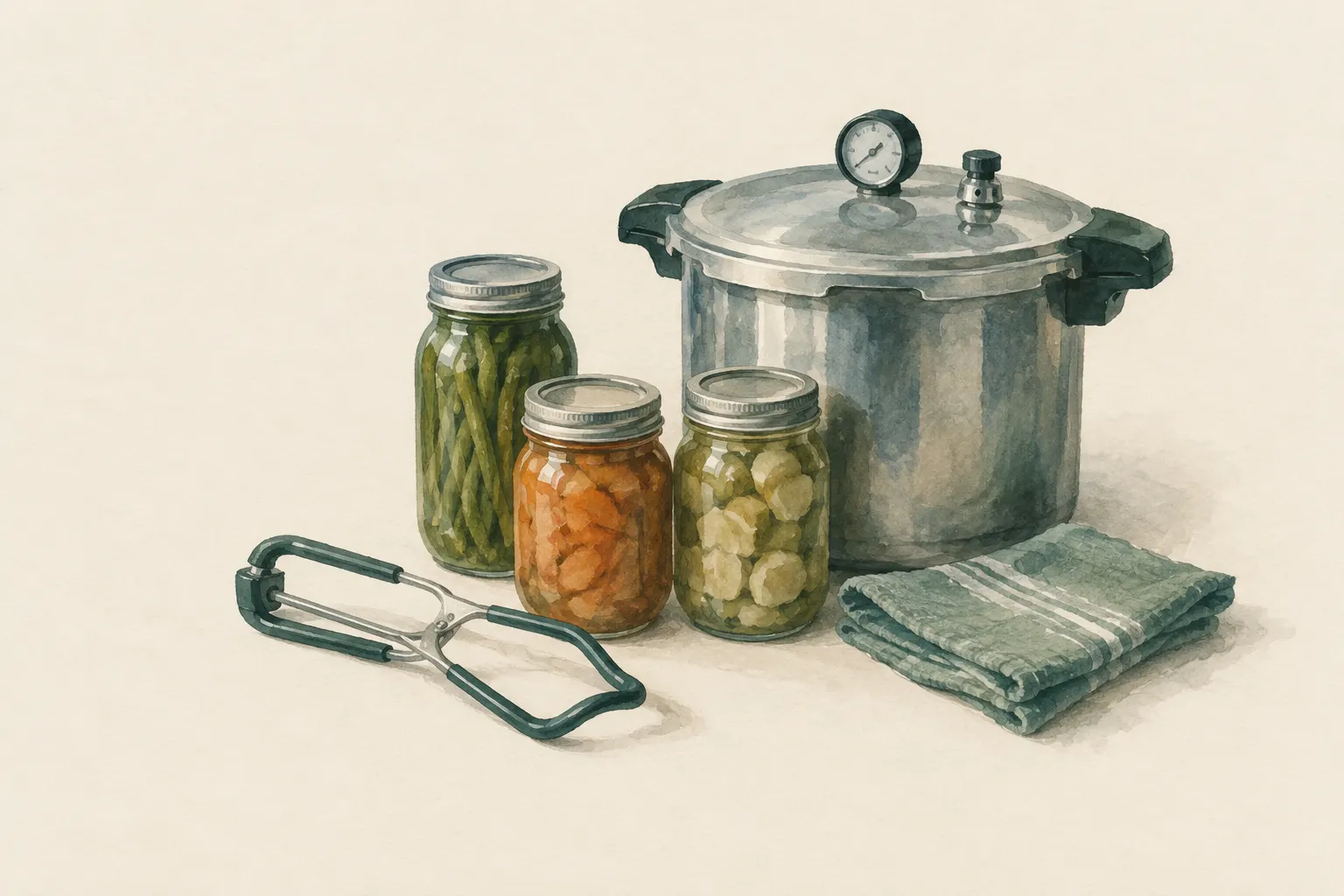
When canning, you put fruit or vegetables, for example, into jars, close them and heat them. The heat kills germs, and the lid makes sure no new ones get in. This way food can keep for a long time without a fridge.
But there is one bacterium that can protect itself especially well. It forms tiny, tough protective shells called spores – like a seed that survives heat. In a sealed jar, without air and without enough acid, a very strong poison can form from them. The illness is called botulism and can be fatal. You cannot see, smell or taste the poison.
That is why canning has a strict rule: only use tested recipes from official bodies, without changing anything. And a jar with a bulging or loose lid is never tasted but thrown away.
How it works
Clostridium botulinum occurs naturally in soil and so gets onto vegetables and other foods. Its spores are very heat-resistant. In a closed jar they find exactly what they like: little oxygen, moisture and – in low-acid foods – hardly any acid. There they can germinate and produce a nerve toxin.
Acid inhibits this bacterium. For sufficiently acidic foods such as most fruits, tested instructions therefore allow a water bath. Low-acid foods such as vegetables, meat, beans and soups, on the other hand, need a pressure canner. Under pressure, water only boils at a temperature higher than 100 °C, and only this higher temperature reliably kills the spores.
That is why tested recipes are so precise: they specify acidity, jar size, headspace, method and time. These values were determined in the laboratory so that the heat reaches the centre of the jar for long enough. Even a thicker sauce or a larger jar can change that.
What really matters
Use only current instructions from official or scientifically testing bodies, for example the USDA or the National Center for Home Food Preservation, or equivalent bodies in your own country. Follow them exactly: ingredients, quantities, jar sizes and times are not changed. Under these instructions tomatoes usually need added acid, even though they taste sour.
At higher altitude water boils at a lower temperature. Tested instructions therefore include altitude adjustments – anyone canning in the mountains must follow them.
After cooling, check that all lids have sealed. Jars that have not sealed go into the fridge and are eaten soon, or are reprocessed according to the instructions. Store the finished jars cool, dark and dry, and label them with contents and date.
Safety: what to watch out for
Jars with bulging or loose lids, gas, cloudiness, leaked liquid or an unusual smell are not opened or tasted but disposed of safely. Important to know: the toxin can be present without any visible sign at all. So the correct method is the real protection, not the check at the end.
If botulism is suspected – for example vision problems, difficulty swallowing or speaking, or paralysis after eating preserved food – call the local emergency number (112 in the EU) immediately. This is an emergency.
Inherited family recipes, canning in the oven or dishwasher, or simply turning hot jars upside down are not considered safe by recognised bodies. In an oven, dry air heats the jars unevenly, and turning jars over does not heat the contents sufficiently.
When it makes sense – and when not
Canning is a fine craft for calm times: if you have a garden, you can preserve harvest surpluses. But it takes time to learn, suitable jars, new lids or intact seals, and for low-acid foods a tested pressure canner.
In the middle of an emergency, without a reliable heat source, without experience and without instructions, canning is not a good idea. For an emergency stock, commercially produced tins are the safer choice. This entry deliberately contains no recipes, times or pressures; regional recommendations may differ.
Good to know
Many people have canned for years using grandmother's recipes without getting ill. But that does not mean these methods are safe – botulism is rare, and a single mistake can be enough. Modern laboratory testing has shown which methods are reliable and which are not.
The USDA publishes the “Complete Guide to Home Canning” for this, and the National Center for Home Food Preservation provides tested methods online. Both stress: low-acid foods must be pressure canned.
Step by step
Choose a tested source
Use only current instructions from official or scientifically testing bodies (e.g. USDA, NCHFP) and follow them exactly – do not change ingredients, quantities or times.
- 1
Choose a tested source
Use only current instructions from official or scientifically testing bodies (e.g. USDA, NCHFP) and follow them exactly – do not change ingredients, quantities or times.
- 2
Classify acidity
Establish whether the instructions class the food as acidic enough for a water bath or as needing pressure canning. Tomatoes usually require added acid under these instructions.
- 3
Account for altitude
At higher altitude water boils at a lower temperature; tested instructions include altitude adjustments.
- 4
Check jars
After cooling, check that all lids have sealed. Refrigerate unsealed jars and use soon, or reprocess according to the instructions.
- 5
Store and inspect
Store cool, dark and dry, and label. Check every jar for warning signs before opening; when in doubt, throw it out.
Common mistakes
- Canning vegetables or meat in a water bath
- Altering recipes or shortening times
- Using old recipes from grandmother's notebook untested
- Tasting suspicious jars
Quick view
Suitable for
- Anyone wanting to preserve harvest surpluses long-term
- Judging whether a home-canned jar is safe
Not suitable for
- Improvised methods without a recipe
- Low-acid foods without a pressure canner
- Emergencies without a reliable heat source and time
Prerequisites
- Current tested instructions from an official body
- Suitable jars, new lids or intact seals
- For low-acid foods: a tested pressure canner
Safety
- Inherited family recipes, oven canning, dishwasher canning or turning hot jars upside down are not considered safe by recognised bodies.
How it works
The bacterium Clostridium botulinum forms heat-resistant spores that can germinate in a low-oxygen, low-acid, moist environment – such as a sealed jar – and produce a nerve toxin. This is inhibited in acidic foods; a water bath is enough there. In low-acid foods the spores are only reliably killed by the higher temperatures of a pressure canner. Recipes therefore specify acidity, jar size, headspace and time exactly.
Advantages
- Long shelf life without refrigeration
- Makes use of your own harvest
Disadvantages
- Life-threatening if done wrong
- Equipment and time needed
- Hardly suitable during emergencies
Deep knowledge
Background
The USDA publishes the "Complete Guide to Home Canning", and the National Center for Home Food Preservation provides tested methods online. Both stress that low-acid foods must be pressure canned.
For an emergency stock, commercially produced tins are the safer choice; home canning is a craft for calm times.
Common mistakes
- Canning vegetables or meat in a water bath
- Altering recipes or shortening times
- Using old recipes from grandmother's notebook untested
- Tasting suspicious jars
Limits and risks
- No recipes, times or pressures
- Regional recommendations may differ – check official bodies in your own country
Sources
United States Department of Agriculture (USDA) – National Institute of Food and Agriculture: Complete Guide to Home Canning
Tested canning methods; pressure canning for low-acid foods
University of Georgia / National Center for Home Food Preservation (USA): National Center for Home Food Preservation – tested guidance on drying and preserving food
Tested methods, botulism risk, altitude adjustment