Storing the harvest: potatoes, root vegetables, apples
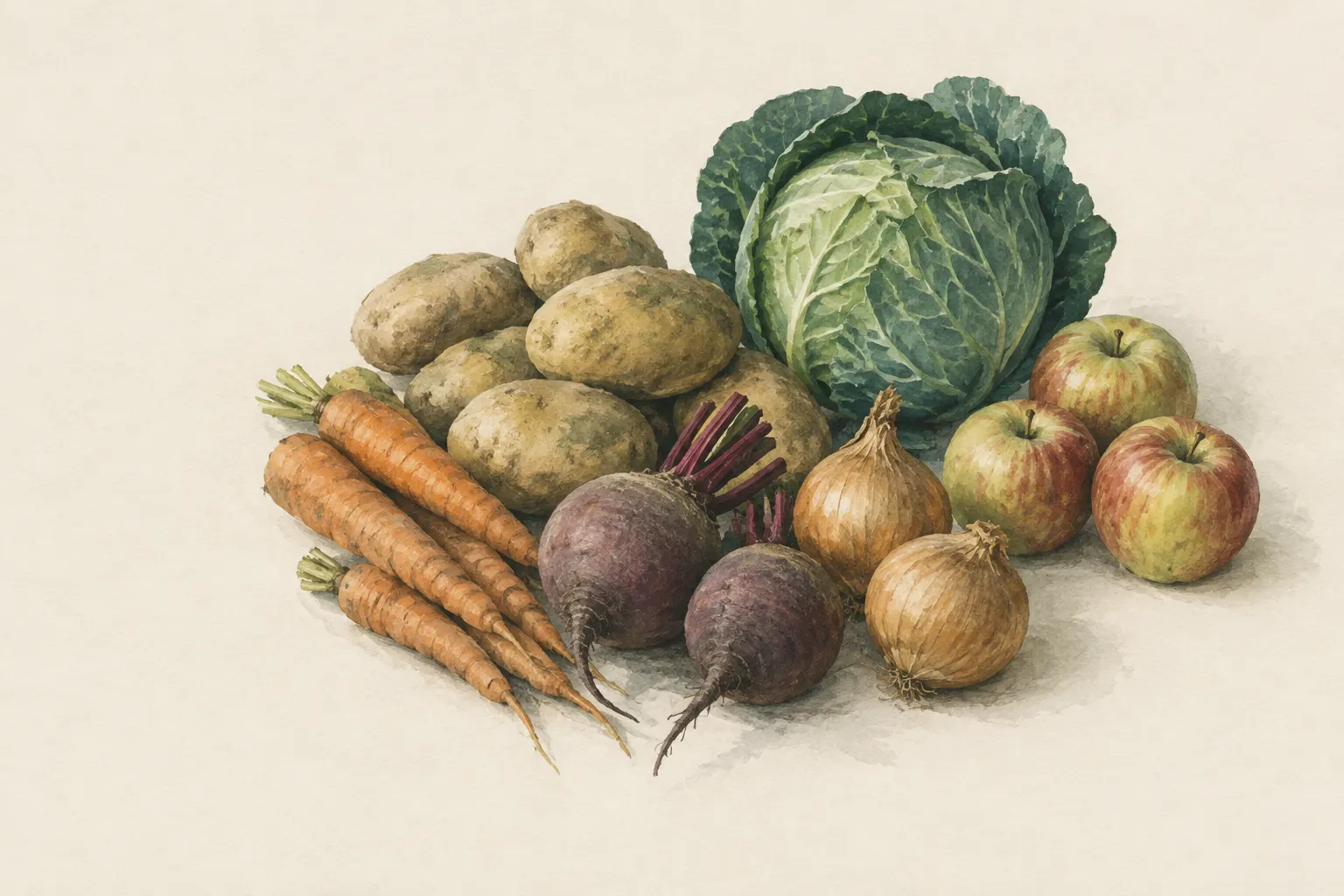
Potatoes, carrots, beetroot, cabbage, onions and keeping apples last for weeks to months without a fridge if they are undamaged and stored cool, dark and at suitable humidity. Regular checks stop one rotten item spoiling the whole store. Cut away green parts of potatoes generously and do not eat heavily greened tubers.
- A few hours to store, weekly check
Explained simply
Potatoes, carrots and apples are still alive after harvest. That sounds strange, but it is true: they keep breathing very slowly, like a sleeping animal. When it is warm they breathe faster, shrivel, start to sprout or rot. When it is cool and dark they sleep more deeply and last much longer – often weeks to months, without any fridge.
That is why such vegetables are stored in a cool, dark room where it does not freeze, for example a cellar or a garage. Carrots like it a little damp, onions dry. Apples go in a box of their own, because they give off an invisible ripening gas that makes other vegetables age faster.
Very important: potatoes that have turned green in the light contain more of a natural toxin. Cut green parts away generously, and do not eat heavily green or bitter potatoes. Check everything once a week – otherwise one rotten apple can spread to the whole box.
How it works
Storage vegetables and keeping apples are living plant parts. They use up their stored reserves – mainly sugar and starch – and give off heat, carbon dioxide and moisture in the process. This is called respiration. The warmer it is, the faster it runs and the faster the produce ages. So cool temperatures slow down not only rot caused by fungi and bacteria but also the ageing of the produce itself.
Darkness matters above all for potatoes. In light they form green chlorophyll and at the same time more solanine, a natural defence substance that can cause stomach upsets in larger amounts. The green itself is harmless, but it shows that more solanine has formed too.
Apples and some other fruits give off ethylene, a plant gas that triggers ripening. If apples are stored next to potatoes or cabbage, these can sprout or wilt faster. So apples are stored separately, ideally in a room of their own or at least in their own covered crate.
What really matters
The most important step happens before storing: sorting. Only undamaged, healthy items go into store. Every bruise, every spade cut and every broken skin is an open door for rot. Damaged items are eaten first. Potatoes are not washed; let clinging soil dry briefly instead. For carrots and beetroot, twist the leaves off instead of cutting them close.
Each kind of vegetable likes slightly different air. Root vegetables such as carrots and beetroot wilt quickly in dry air and keep better in crates of slightly damp sand. Onions and garlic, on the other hand, need dry, airy storage, otherwise they go mouldy or sprout. Potatoes lie in the dark in crates with ventilation slots, apples side by side in shallow trays so they do not press on each other.
A thermometer in the storage room shows whether it is really cool. Modern cellars with heating are often too warm; old unheated cellars, garages or sheds are often better – as long as it does not freeze there, because frozen storage vegetables turn mushy.
Safety: what to watch out for
Green patches and sprouts on potatoes contain more solanine. Cut them away generously; do not eat heavily greened tubers or potatoes that taste bitter. This applies especially to children, because smaller amounts matter more for them.
Rotten or mouldy items are removed immediately, and the ones lying right next to them are checked carefully. With soft, mouldy produce, do not just cut out the spot – throw it away. Wash stored vegetables before eating.
The clamp and other storage places
Before fridges existed, many families kept their winter stores in earth cellars or in a clamp. A clamp is a shallow pit in the garden: the root vegetables are layered in it and covered with straw and soil, and the soil keeps the temperature evenly cool. It needs protection from mice and rats, for example fine wire mesh, and a place where water does not collect.
Without a garden you can still store produce: a cool stairwell, an unheated storeroom or a well-insulated box on the balcony that protects from frost. What matters is always the same: cool, dark, not frozen, suitable humidity and regular checks.
How to keep your store in good shape
Go through the store once a week. Look for soft spots, mould, sprouts and smell. A sweet, rotten smell in the cellar is a sign that something is spoiling somewhere. Look out for signs of mice as well.
Write the variety and the date stored on every crate. Some varieties keep much longer than others; whatever starts to decline first is eaten first. In this way storage ties in with the “first in, first out” principle that applies to other supplies too.
Losses are part of it. Even with good storage, something sometimes spoils. Over the years you learn which varieties and which spot in your own home work best.
Step by step
Select
Store only undamaged, healthy produce; use bruised items first.
- 1
Select
Store only undamaged, healthy produce; use bruised items first.
- 2
Prepare
Do not wash potatoes; let them dry briefly. Twist the tops off carrots and beetroot. Let onions dry thoroughly.
- 3
Store
Potatoes in the dark in crates, root vegetables in crates of slightly damp sand, onions airy and dry, hung or in nets, apples side by side in shallow trays, separate from vegetables.
- 4
Label
Note variety and date stored.
- 5
Check
Go through weekly, remove anything rotten, keep an eye on temperature and frost protection.
Common mistakes
- Storing damaged produce
- Potatoes in the light
- Apples next to potatoes
- Storing in a warm boiler room
Quick view
Materials
Clean sand
Improvised sand layers do not reliably remove pathogens.
Newspaper and cardboard
Flammable – keep away from candles, stoves, heaters and embers.
Loses almost all insulation when wet.
Labels and waterproof marker
Suitable for
- Autumn garden harvest
- Bulk purchase of storage vegetables
- Stock without electricity
Not suitable for
- Damaged or diseased produce
- Heated living spaces
- Soft fruit and leafy vegetables
Prerequisites
- A cool, frost-free, dark room (cellar, garage, shed)
- Crates with ventilation slots
Safety
- Green patches and sprouts on potatoes contain more solanine. Cut them away generously; do not eat heavily green or bitter-tasting potatoes.
- Remove rotten or mouldy items immediately; wash stored vegetables before eating.
How it works
Storage vegetables stay alive after harvest and respire. Cool temperatures slow respiration, sprouting and rot; darkness prevents potatoes turning green. Root vegetables need rather humid air so they do not wilt, onions on the other hand dry air. Apples give off ethylene, which makes other stored produce ripen or sprout faster – so store them separately.
Advantages
- Long-lasting stores without energy
- Makes use of your own harvest
Disadvantages
- Needs a suitable room
- Regular checks needed
- Losses possible
Deep knowledge
Background
Gardening handbooks such as the RHS Encyclopedia of Gardening describe storing potatoes, root vegetables, onions and apples over winter, including crates, sand and clamps.
In modern, warm cellars storage is often harder than in old unheated cellars; a thermometer helps with the assessment.
Variants
- Clamp
- In the garden, root vegetables can overwinter in a pit covered with straw and soil (a clamp); protection from rodents and waterlogging is needed.
Common mistakes
- Storing damaged produce
- Potatoes in the light
- Apples next to potatoes
- Storing in a warm boiler room
Limits and risks
- No storage times or temperature figures per vegetable
Material alternatives
Derived from material properties: a substitute must have all relevant properties. Observe the notes on the substitute.
- Newspaper and cardboard
- Sleeping pad, Dry leaves, grass or conifer boughs (Collect only where allowed; no protected plants. Check for ticks and insects.), Backpack, Dry spare clothing (Carry it in waterproof packaging – wet clothing barely insulates.), Wool blanket / duvet (Keep away from candles, stoves and heaters.), Insulated cool box (Keeps cold only for a limited time; without ice packs or ice it is not a fridge.), Sleeping bag (Do not store compressed long-term; do not pack away damp.), Insulated cooking box (hay box, thermal cooker) (Never put open flame or embers inside – only the hot, closed pot.)
Results come exclusively from structured entries. No improvised instructions are generated.
Sources
Royal Horticultural Society – Dorling Kindersley: RHS Encyclopedia of Gardening
Storing potatoes, root vegetables, onions and apples