Protecting food stores from pests and moisture
Flour, rice, pasta, nuts and dried fruit are often attacked by food moths, beetles or mice, or absorb moisture and go mouldy. Tight containers, a dry, cool storage place, tidiness and regular checks usually prevent this. Infested or mouldy food is thrown away – not picked over and used anyway.
- A few hours once, then a few minutes a month
Explained simply
Flour, rice, pasta and nuts are not only tasty for us. Small moths, beetles and mice like them too. A paper bag is like an open door to them: moth caterpillars and beetles crawl through tiny gaps, and mice simply gnaw a hole in it.
The second enemy is moisture. When dry food gets damp, it can go mouldy. Mould is a fungus, and some moulds produce poisons that you cannot see.
The solution is simple: put stores into tightly closing, hard tins or jars, keep them in a cool, dry place and check now and then. If something is infested or mouldy after all, it is thrown away – not picked over and used anyway.
How it works
Pests need three things: access, food and hiding places. Pantry moths often lay their eggs in packages or in cracks in shelves; the caterpillars eat their way through the stock and leave fine webbing. Pantry beetles are so small that they crawl through folds and seams of bags. Mice gnaw through paper, cardboard and thin plastic.
Tight, hard containers made of glass, metal or thick food-grade plastic with a well-closing lid deny them access. If an infestation does get into one package, it stays in that one container and does not spread through the whole cupboard.
Mould needs mainly moisture and warmth. Dry goods absorb moisture from the air. On cold outer walls and cold floors condensation can form – like on a cold bottle that steams up. A cool, dry and dark place slows mould and also slows the development of insects.
What really matters
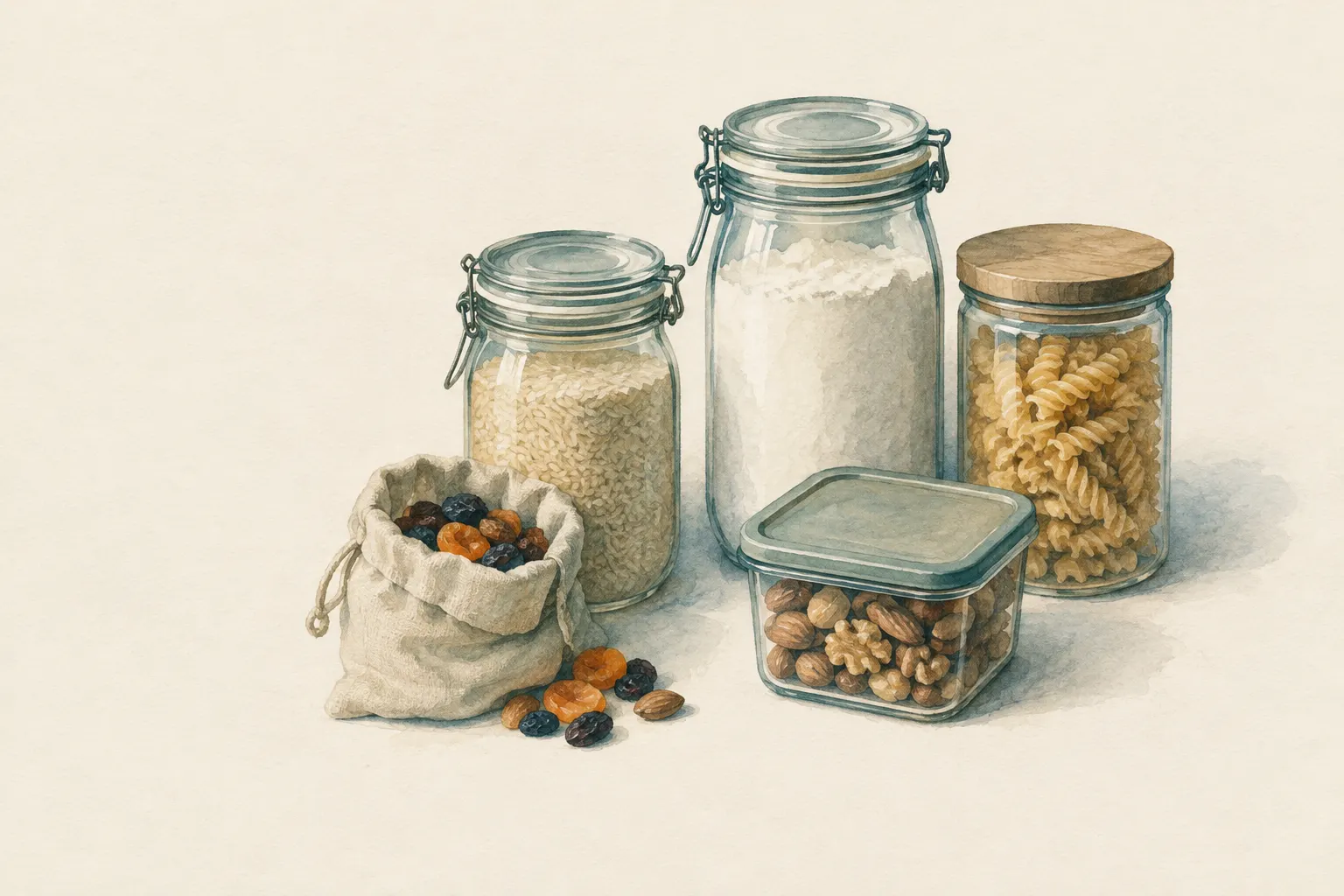
Protection starts when you shop: check packages for holes, webbing or crawling insects and store only undamaged ones. After opening, put flour, rice, pasta, sugar and nuts into jars or tins with tight lids and label them with contents and date.
The storage place should be cool, dry and dark, not directly on the floor and not against cold outer walls. Keep it away from cleaning products and fuels. Do not pour new stock on top of old; use up the old container first and clean it before refilling.
About once a month a quick look is worthwhile: webbing, larvae, beetles, gnaw marks, droppings, a musty smell or damp patches? Wipe the shelves at the same time and remove crumbs – they are food for pests. Some households put flour or nuts in the freezer for a few days before decanting to kill any insect eggs, and then store them dry and sealed.
Safety: what to watch out for
Mould on grain, nuts, bread or dried fruit is not cut away or sifted out – the whole item goes. Moulds grow into the food with fine threads, and some produce toxins, called mycotoxins, which are invisible and not reliably destroyed by cooking.
Insecticides and baits do not belong near food. For rodent infestations, call in professionals. Food that has come into contact with mouse droppings or urine is discarded; clean surfaces thoroughly. A heavy infestation in the building is a job for a pest control company.
If it has happened anyway
If you discover an infestation, dispose of the affected food sealed, for example in a tied bag in the outdoor bin. Then check all nearby containers, because moths and beetles move around. The shelf is emptied, cleaned thoroughly and dried, especially in corners and cracks.
Then look for the cause: an open package, a leaky tin, a damp wall, crumbs behind the shelf? Fixing the cause usually solves the problem. Sifting infested flour and using it anyway is no solution – droppings, webbing and eggs partly remain in it.
Good to know
Official preparedness guides such as the US agency FEMA's “Are You Ready?” recommend storing food cool and dry and putting opened packages into tightly closing containers. Which pests occur depends on region and building – the approach stays the same: sealed, dry, checked.
A pleasant side effect: if you keep your stores in labelled, see-through containers, you can see at a glance how much is left. That makes rotating and restocking much easier too.
Step by step
Check when buying
Check packages for holes, webbing or crawling insects. Store only undamaged packages.
- 1
Check when buying
Check packages for holes, webbing or crawling insects. Store only undamaged packages.
- 2
Decant
After opening, put flour, rice, pasta, sugar and nuts into jars or tins with tight lids. Paper and plastic bags are no barrier to moths and mice.
- 3
Label
Write the contents and date (purchase or best-before) on the container.
- 4
Storage place
Cool, dry, dark, not directly on the floor or against cold outer walls where condensation forms. Keep away from cleaning products and fuels.
- 5
Inspect regularly
About monthly, look for webbing, larvae, beetles, gnaw marks, droppings, musty smell and damp. Wipe shelves and remove crumbs.
- 6
If infested
Discard infested food sealed, check all nearby containers, clean and dry the shelf thoroughly. Find the cause (open package, damp).
Common mistakes
- Storing food in paper bags
- Sifting infested flour and using it anyway
- Storing in a damp cellar without checks
- Pouring new stock on top of old
Quick view
Materials
Airtight food-grade storage container
Fill only when clean and completely dry; never use containers that previously held chemicals.
Labels and permanent marker
Suitable for
- Dry stores at home
- Cellars, pantries, cupboards
- Longer storage of an emergency stock
Not suitable for
- Chilled or perishable food
- Dealing with a heavy infestation in the building – call a professional
Prerequisites
- Storage place away from direct sun, heaters or damp
- Food-grade, tightly closing containers
Safety
- Do not cut away or sift out mould on grain, nuts, bread or dried fruit – discard the whole item. Mould toxins are invisible.
- Do not use insecticides or baits near food. For rodent infestations call professionals and discard food contaminated with droppings.
How it works
Pests need access, food and hiding places; mould needs moisture and warmth. Tight, hard containers deny insects and mice access and keep out humidity. A cool, dry place slows insect development and mould. Regular checks spot infestations before they spread to other stores.
Advantages
- Fewer losses in the stock
- Overview of what is there
- Hardly any cost
Disadvantages
- Containers take space
- Requires regular checks
Deep knowledge
Background
Official preparedness guides such as FEMA's "Are You Ready?" recommend storing food cool and dry and putting opened packages into tightly closed containers to protect them from pests.
Which pests occur depends on region and building; the approach – sealed, dry, checked – stays the same.
Variants
- Cold before storing
- Some households put flour or nuts in the freezer for a few days before decanting to kill any insect eggs. Then store dry and sealed.
Common mistakes
- Storing food in paper bags
- Sifting infested flour and using it anyway
- Storing in a damp cellar without checks
- Pouring new stock on top of old
Limits and risks
- No instructions for chemical pest control
- No fixed shelf-life periods
Material alternatives
Derived from material properties: a substitute must have all relevant properties. Observe the notes on the substitute.
- Airtight food-grade storage container
- Single-wall stainless steel bottle (Heat only single-wall bottles without paint/plastic; remove the lid before heating.), Double-wall insulated bottle (Never heat directly.), PET bottle (clear, max. 2 litres) (Do not heat or place in a fire.), Food-grade water container (Only use containers that never held chemicals or fuel.), Collapsible water container or bag (Protect from sharp objects.), Food-grade water bag (Use only for drinking water, never for chemicals or fuel.), Fermentation jar or crock (Use only food-grade containers of glass, food-safe glazed stoneware or food-grade plastic – no metal containers for acidic food.), Resealable food bags (Use only bags intended for food; do not use with boiling water unless the manufacturer explicitly allows it.)
Results come exclusively from structured entries. No improvised instructions are generated.
Sources
U.S. Federal Emergency Management Agency (FEMA): Are You Ready? An In-Depth Guide to Citizen Preparedness
Store food cool, dry and in tightly closed containers
World Health Organization (WHO) (2006): Five Keys to Safer Food Manual
Cleanliness and protecting food from pests