Starting a small vegetable bed
A sunny bed of a few square metres can supply fresh vegetables over the season with good planning. What matters is a bright site, loosened soil improved with compost, a simple planting plan with crop rotation and regular watering and weeding. Stay realistic: a small garden supplements the stock but does not replace it.
- One to two days to set up, then a few hours a week
Explained simply
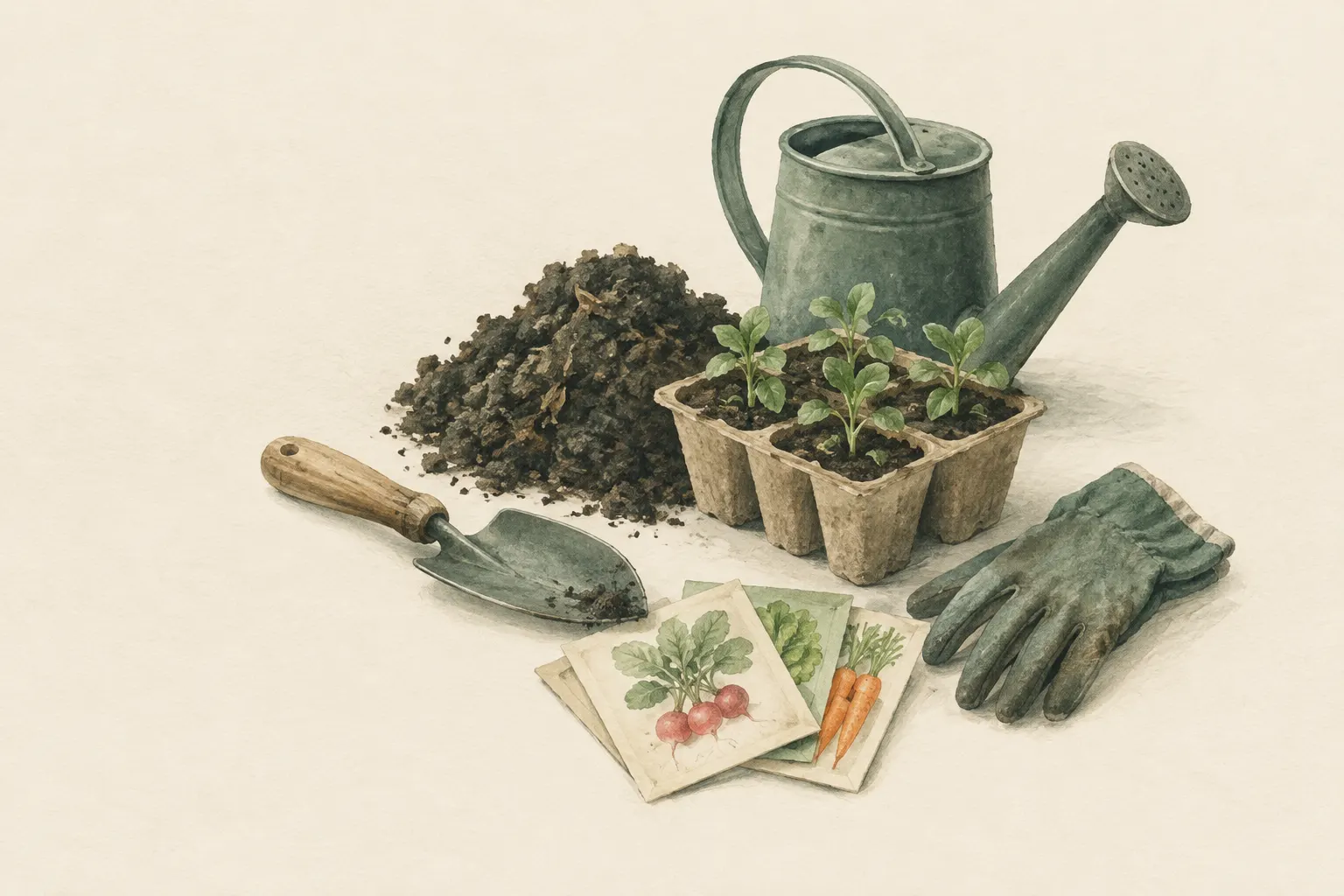
A vegetable bed is a patch of soil where you grow vegetables – lettuce, radishes, beans or potatoes, for example. It does not have to be big. A small bed that is well looked after gives more than a big one you cannot keep up with. Vegetables need four things above all: sun, water, nutrients and loose soil in which the roots can grow well.
One gardener's trick is called crop rotation. It means you do not plant the same vegetable in the same place every year. It is a bit like not eating the same thing every day – the soil stays healthier, and diseases have a harder time.
Patience matters: it takes weeks or months before you can harvest. So a bed is not a quick fix for an emergency, but a great way to build knowledge. And a safety tip: wear gloves when digging and put rakes and forks down with the points facing down.
How it works
Healthy soil is more than dirt: it is full of life. Earthworms, fungi and countless tiny creatures break down dead plant material and turn it into nutrients plants can take up. At the same time they loosen the soil so that air and water reach the roots. Compost feeds this soil life, improves the crumbly structure and helps the soil hold water longer.
Plants use sunlight to build their leaves, roots and fruits from water and air – this is called photosynthesis. That is why a sunny site matters so much: in shade, vegetables grow slowly and yield little. Most vegetables need at least half a day of sun.
Crop rotation works because related plants share similar diseases and pests and use similar nutrients. Tomatoes and potatoes, for example, belong to the same plant family. If they stand in the same place year after year, pathogens can build up in the soil. If you rotate families from year to year, you break this cycle. Beans and peas can even use nitrogen from the air with the help of bacteria on their roots.
What really matters
Start small. A bed of a few square metres is quite enough in the first year. Put it somewhere sunny, sheltered if possible, close to a water supply and not under trees whose roots take water and nutrients away. Make it narrow enough to reach the middle from both sides without stepping in – trodden soil is hard and lets hardly any air reach the roots.
To prepare, remove grass and weeds including the roots, loosen the soil with a spade or fork and work in mature compost. For a start, choose simple, robust crops like the ones the entry mentions: lettuce, radishes, beans, courgettes, potatoes. Sow at the right time according to the seed packet and put frost-tender plants out only after the last frosts.
Water less often and thoroughly rather than a little every day, ideally in the morning or evening. That way the water soaks in deeply and the roots grow downwards instead of staying near the surface. A layer of mulch made of grass clippings or leaves on the soil keeps moisture in and suppresses weeds. Pull weeds while they are small – then it is quick.
Safety: what to watch out for
Not every soil is suitable for vegetables. On former industrial or building land, right next to busy roads, or where nobody knows how the plot was used before, the soil may be contaminated. When in doubt, have a soil sample tested or grow in a raised bed with new soil.
Pipes and cables can lie in the ground where you dig. Do not dig deep where services might run, and ask for plans if in doubt. Wear gloves against blisters, thorns and dirt, and put tools down with the points facing down so nobody steps on a rake.
Wash your hands after gardening and wash produce before eating. Protect your back: lift heavy bags with your knees, not your back, and take breaks during long work. Raised beds are much easier on the back for many people.
When it makes sense – and when not
A vegetable bed is worthwhile in home gardens, allotments and community gardens – anywhere there is sun, water and a bit of time. It provides fresh vegetables, exercise in the fresh air and knowledge you cannot learn from books alone. Once you have done it, you know how much work goes into one head of lettuce.
For short-term emergency supply a bed is no use. Vegetables take weeks to months, and weather, slugs or diseases can sharply reduce a harvest. A bed supplements the stock but does not replace it. That is exactly why it is worth starting now: experience cannot be caught up quickly in a crisis.
A raised bed with new soil is a good alternative if the ground is poor or contaminated or bending is difficult. It does, however, cost materials and has to be filled.
How to practise it: keeping records
The most valuable tool in the vegetable garden is a simple notebook. Write down what you sowed when, which variety it was, how much you harvested and what problems there were. Draw a small sketch of the bed so that next year you know where each plant family stood.
With these notes you get better every year. You learn which vegetables grow well for you, when your last frosts are and when the slugs arrive. Sowing calendars from books are only rough guides because climate and region vary so much – your own records fit your garden exactly.
Standard works such as the RHS Encyclopedia of Gardening describe soil preparation, crop rotation and sowing in detail. Experienced neighbours or a community garden are also a wonderful source: gardeners usually like to share what they know.
Step by step
Choose a site
Sunny, sheltered, close to water, not under trees. Keep it small – a well-tended small bed is better.
- 1
Choose a site
Sunny, sheltered, close to water, not under trees. Keep it small – a well-tended small bed is better.
- 2
Prepare the soil
Remove grass and weeds, loosen the soil and work in mature compost. Make beds narrow enough to reach the middle without stepping on them.
- 3
Planting plan
Choose simple, robust crops (e.g. lettuce, radishes, beans, courgettes, potatoes). Write down the plan so you can rotate families next year.
- 4
Sow and plant
Sow at the right time according to the packet, mark rows and keep spacings. Frost-tender crops only after the last frosts.
- 5
Care
Water thoroughly in the morning or evening rather than lightly every day, remove weeds while young, cover the soil with mulch.
- 6
Keep records
Record sowing dates, varieties, harvests and problems – the most valuable basis for next year.
Common mistakes
- Bed too large in the first year
- Shady site
- Treading on and compacting the soil
- Same crop in the same place every year
Quick view
Materials
Compost bin
Wear gloves when turning and wash hands afterwards.
Rain barrel with lid
Collected rainwater is not drinking water without treatment.
Keep it covered – open barrels are a drowning hazard for small children and a breeding site for mosquitoes.
Sturdy work gloves
When handling flood mud or chemicals, also wear waterproof gloves.
Suitable for
- Home gardens, allotments, community gardens
- Getting started with growing vegetables
Not suitable for
- Soils suspected of contamination without prior testing
- Short-term emergency supply – vegetables take weeks to months
Prerequisites
- A site with at least half a day of sun
- Basic garden tools
- Access to water
Safety
- On former industrial or building land, next to busy roads or where previous use is unknown, the soil may be contaminated. When in doubt, have a soil sample tested or grow in raised beds with new soil.
- Wear gloves, put tools down with points facing down and watch for buried cables and pipes when digging.
How it works
Vegetables need light, water, nutrients and a loose, living soil. Compost improves structure and water-holding capacity. Crop rotation – not growing the same plant family in the same spot every year – reduces disease and one-sided depletion of the soil.
Advantages
- Fresh vegetables
- Knowledge and seed for times of crisis
- Exercise outdoors
Disadvantages
- Depends on weather, pests and time
- Yields vary widely
Deep knowledge
Background
Standard works such as the RHS Encyclopedia of Gardening describe soil preparation, crop rotation and sowing in the vegetable garden in detail.
Anyone who wants to grow vegetables for times of crisis is best off starting now – experience cannot be caught up in an emergency.
Variants
- Raised bed
- A raised bed with new soil avoids poor or contaminated ground and is easier on the back, but costs materials.
Common mistakes
- Bed too large in the first year
- Shady site
- Treading on and compacting the soil
- Same crop in the same place every year
Limits and risks
- No sowing calendars – they depend on region and climate
- No pesticide recommendations
Sources
Royal Horticultural Society – Dorling Kindersley: RHS Encyclopedia of Gardening
Soil preparation, crop rotation, sowing