Growing vegetables and herbs in containers and on balconies
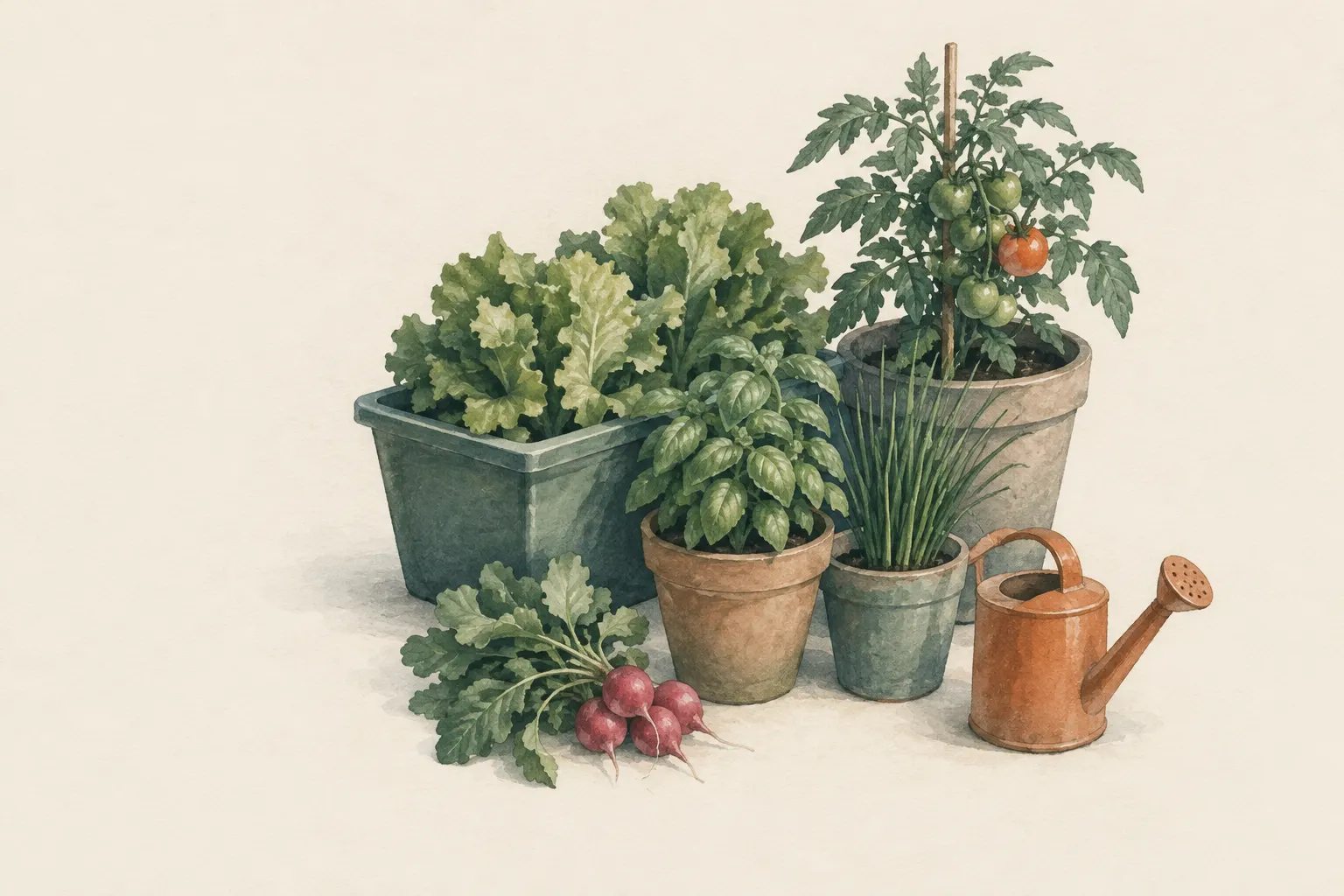
Even without a garden, herbs, lettuce, radishes, tomatoes or chillies can be grown on a balcony, terrace or windowsill. What matters is containers large enough with drainage holes, good potting compost, a sunny spot and regular watering. It will not make you self-sufficient – but it gives fresh greens, practice and enjoyment.
- A few hours to set up, then a few minutes a day
Explained simply
You do not need a big garden to grow something. On a balcony, a terrace or even a windowsill, herbs, lettuce, radishes or tomatoes can grow – in pots and boxes. A pot is like a little home for the plant: it must be big enough, have soil with nutrients and a hole at the bottom so extra water can drain away.
Plants need light, water and food. In a pot the roots have only a little soil, so it dries out quickly – on hot days you often have to water every day. In return you see your plants growing every day and can pick fresh herbs straight from the balcony.
Important for safety: pots and boxes on railings and windowsills must be fixed securely. A falling pot can seriously injure people below. A balcony garden will not feed you – but it is fun and you learn a lot.
How it works
In garden soil, roots can grow wide and deep and draw water and nutrients from a large area. In a pot, this supply is limited. The soil dries out faster, warms up or cools down faster, and the nutrients are used up after a few weeks. The larger the container, the more buffer the plant has and the more stable the conditions.
Plants take up water through their roots and need air there at the same time. If water stands in the pot permanently – this is called waterlogging – the roots suffocate and begin to rot. That is why every container needs a drainage hole. A saucer catches the water that drains out, but should not stand full all the time.
Garden soil is not well suited to pots because it easily compacts and turns hard there. Bought potting compost is looser, holds water better and contains nutrients to begin with. After a few weeks you need to feed again, ideally following the directions on the pack.
What really matters
The site decides what grows. Watch for a day how many hours of sun your balcony gets. Fruiting vegetables such as tomatoes and chillies need a sunny, warm spot. Lettuce, chives, parsley and many other herbs also cope with partial shade. A shady north-facing balcony is better suited to leafy greens than to fruiting vegetables.
Choose containers to match: large tubs for tomatoes, balcony boxes for herbs and lettuce, shallow trays for radishes or cress. Dark pots in full sun heat up a lot, and clay pots dry out faster than plastic. Wind dries out the soil even more – on windy spots a windbreak helps.
Water when the top layer of soil is dry – check with your finger. On hot days that is often daily, ideally in the morning or evening. Water thoroughly until water runs out at the bottom instead of giving just a few drops. Harvest herbs and lettuce regularly; this encourages the plant to put out new growth. Put tender plants outside only after the last frosts.
Safety: what to watch out for
Wet soil is heavy. A large tub of damp soil with a fully grown tomato plant can weigh as much as a child. Pay attention to what your balcony may carry and place heavy containers along the house wall rather than in the middle or on the railing. When in doubt, ask the landlord or building management.
Boxes and pots on railings and windowsills must be securely fixed or hang on the inside. Gusts of wind can knock pots over and blow them off the balcony – falling objects can seriously injure people below. Before storms, it is better to clear away loose containers.
Wash your hands after working with soil and wash produce before eating it. Make sure saucers do not drip onto the neighbours' balcony. Rules on balcony planting, weight and fixing may be set in tenancy agreements or house rules – check local rules.
When it makes sense – and when not
A balcony garden is ideal for anyone living in a flat without a garden who wants to start gardening. It costs little, needs little space and brings fresh herbs and lettuce into the kitchen. Above all, you learn along the way: when to sow, how much water plants need, what pests look like. This knowledge also helps later in a bigger garden.
Realistically, it is not a source of stocks. Yields are small, and in summer watering costs time and water every day. Anyone preparing for a crisis still needs a food and water stock – the balcony at most adds something fresh to it.
Growing in pots is especially nice with children. Cress on the windowsill sprouts after a few days, and children see a result straight away. Anyone who waters and harvests their own plant understands much better where food comes from.
Good to know
Gardening handbooks such as the RHS Encyclopedia of Gardening cover container gardening in detail – from choosing containers and compost to watering and feeding. Seed packets usually say when and how deep to sow; this information is a good starting point because it matches the particular variety.
Rainwater from a barrel is good for watering if you have access to one. A watering can filled in the evening is at the outside temperature by morning – many plants prefer that to ice-cold water.
You can put old potting compost on the compost heap or refresh it with fresh compost and soil. Sowing instead of buying young plants saves money, and later you may be able to save your own seed – that is a topic of its own.
Step by step
Check the site
Observe hours of sun, check wind shelter and weight. Sunny spots for tomatoes and chillies, partial shade for lettuce and many herbs.
- 1
Check the site
Observe hours of sun, check wind shelter and weight. Sunny spots for tomatoes and chillies, partial shade for lettuce and many herbs.
- 2
Choose containers
Containers with drainage holes; large tubs for tomatoes, balcony boxes for herbs and lettuce. Saucers to keep water off the neighbours.
- 3
Fill
Use fresh potting compost, not garden soil, in pots. Fill to just below the rim.
- 4
Sow or plant
Sow according to the packet or plant young plants; put tender plants outside only after the last frosts.
- 5
Water and feed
Water when the top layer of soil is dry – often daily on hot days. After a few weeks, feed according to the manufacturer's directions.
- 6
Harvest
Harvest herbs and lettuce regularly; this encourages new growth.
Common mistakes
- Pots too small
- Containers without drainage holes
- Unsecured boxes on the railing
- Irregular watering
Quick view
Materials
Plant containers and potting compost
Wet soil is heavy – consider the load capacity of balconies and sills and secure containers against falling.
Rain barrel with lid
Collected rainwater is not drinking water without treatment.
Keep it covered – open barrels are a drowning hazard for small children and a breeding site for mosquitoes.
Suitable for
- Flats without a garden
- Getting started with gardening
- Introducing children to plants
Not suitable for
- Building up a significant food stock
- Shady north-facing balconies for fruiting vegetables
Prerequisites
- A spot with several hours of sun
- Permission from landlord or building, if needed
- Water within reach
Safety
- Fix containers on railings and sills securely or place them on the inside – falling pots can seriously injure people. Consider the balcony's load capacity; wet soil is heavy.
- Wash hands after handling soil. Wash produce before eating.
How it works
In a pot, roots have only limited soil, water and nutrients. Containers therefore dry out quickly and need a loose, nutrient-rich potting compost, good drainage against waterlogging and regular watering and feeding. The larger the container, the more stable the conditions.
Advantages
- Possible in the city
- Low cost
- Fresh herbs and lettuce
Disadvantages
- Small yields
- A lot of watering in summer
Deep knowledge
Background
Gardening handbooks such as the RHS Encyclopedia of Gardening cover container gardening in detail – from choosing containers and compost to watering and feeding.
Rules on balcony planting, weight and fixing may be set in tenancy agreements or house rules – check local rules.
Variants
- Indoor windowsill
- Herbs and cress grow indoors on a bright windowsill too.
Common mistakes
- Pots too small
- Containers without drainage holes
- Unsecured boxes on the railing
- Irregular watering
Limits and risks
- No yield figures
- No variety recommendations
Sources
Royal Horticultural Society – Dorling Kindersley: RHS Encyclopedia of Gardening
Container gardening: containers, compost, watering, feeding