Food hygiene on the trail: hands, leftovers, washing up
Stomach bugs on tours are often caused not by water but by unwashed hands, shared snack bags and lukewarm leftovers. Cleaning hands before eating, pouring snacks instead of reaching in, eating cooked food immediately, packing out leftovers and washing up well away from water – these are the most effective rules.
- A few minutes per meal
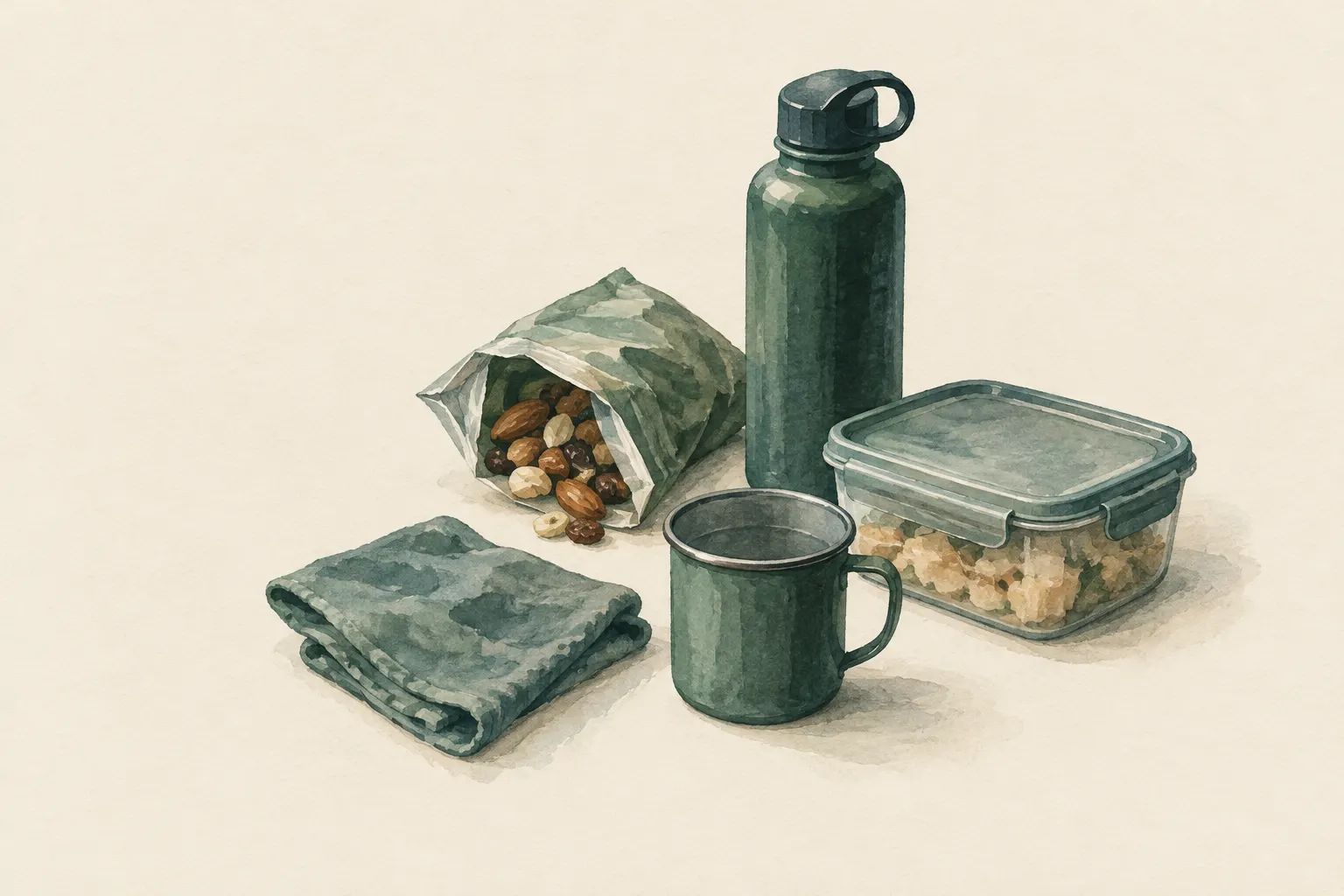
Explained simply
Many people think that on hikes you mostly get a stomach ache from the water. But often the hands are to blame. Germs are tiny, far too small to see. They travel from the toilet via the hands into the crisps bag – and from there into other people's mouths.
That is why there are a few simple rules: wash hands before eating. Pour nuts and crisps into your hand instead of reaching into the shared bag with all your fingers. Eat cooked food straight away and do not leave it standing lukewarm until tomorrow.
Washing up is never done directly in the stream or lake, but a good distance away. And anyone with diarrhoea or vomiting does not cook for the others.
How it works
Many stomach bugs are transmitted via tiny traces of faeces: they reach the mouth via hands, surfaces and food. A single unwashed grab into a shared snack bag can be enough for several people to become infected. On the trail there is no fridge, running water or dishwasher. That is why the rules start right at the source.
The second big danger is lukewarm leftovers. Bacteria multiply quickly in warm food, and some spores survive cooking. A pot of rice from the evening that stood overnight in a warm tent is therefore not a good idea for breakfast. The WHO sums up the basic rules in its “Five Keys”: keep clean, separate raw and cooked, cook thoroughly, keep food at safe temperatures and use safe water.
The surroundings need protection too: food scraps, soap and washing-up water in a stream or lake burden plants and animals and contaminate the water for everyone who drinks from it later. That is why washing up belongs well away from the bank.
What really matters
Hands are washed before cooking and eating and after using the toilet – with soap and a little water, away from the water body. It is practical if a second person pours a cup of water from the bottle over your hands. If no water is available, hand sanitiser is the second-best solution.
Shared supplies are poured, not grabbed: nuts, dried fruit or crisps go into an open hand, rather than all fingers going into the bag. Water bottles are not shared. In groups it helps to appoint one person to serve food who washes their hands first, while everyone else does not help themselves.
Cook only as much as will be eaten. Cooked leftovers are not left standing without cooling for hours or overnight. To wash up, wipe out the pot with hot water and scrape leftovers into the rubbish bag. The washing-up water is strained through a sieve or cloth and scattered well away from water bodies. Use biodegradable soap sparingly or not at all – it does not belong in the water either.
Safety: what to watch out for
Anyone with diarrhoea or vomiting does not prepare food for others or share snacks, because otherwise the pathogens spread through the whole group. What matters then is drinking plenty. With severe or persistent symptoms, blood in the stool or signs of dehydration – such as very little urine, marked weakness or confusion – medical help is called. In an emergency, use the local emergency number (112 in the EU).
Hand sanitiser works poorly when hands are visibly dirty, and only to a limited extent against some pathogens. Whenever possible, soap and water are the better choice. Good hygiene also never replaces treating drinking water: water from streams and lakes is disinfected before drinking, for example by boiling.
Food scraps and smells attract wildlife – from mice to larger animals. Leftovers and rubbish are packed sealed, carried out and stored the way local rules require.
Gear and materials
You do not need much: a small piece of soap or a little bottle of liquid soap, hand sanitiser as a backup, resealable bags for food and leftovers, a sealed rubbish bag and a small cloth or sieve for straining washing-up water. A separate mug and spoon per person make sharing unnecessary.
Pack the hygiene items so that they are quickly at hand – for example together with the toilet paper in a small bag. Anything you first have to search for tends to be skipped in practice. The rules apply not only on tours, by the way, but just as much in emergency shelters with little water.
Step by step
Clean hands
Before cooking and eating and after using the toilet, wash hands with soap and a little water – away from the water body, e.g. with a cup of water from the bottle. Otherwise use hand sanitiser.
- 1
Clean hands
Before cooking and eating and after using the toilet, wash hands with soap and a little water – away from the water body, e.g. with a cup of water from the bottle. Otherwise use hand sanitiser.
- 2
Pour, don't reach in
Pour nuts, dried fruit and crisps into the hand instead of reaching into the shared bag. Do not share water bottles.
- 3
Eat cooked food at once
Cook only as much as will be eaten. Do not keep cooked leftovers without cooling for hours or overnight.
- 4
Wash up
Wipe the pot with hot water, scrape out leftovers into the rubbish bag, strain the washing-up water through a sieve or cloth and scatter it well away from water bodies. Use biodegradable soap sparingly or not at all.
- 5
Pack it out
Pack food scraps, packaging and strained residue sealed and carry them out – do not bury them or throw them into a fire unless they burn completely.
Common mistakes
- Everyone reaching into the same bag
- Last night's leftovers for breakfast
- Washing up directly in the stream
- A sick person cooking for the group
- Focusing only on water treatment and forgetting hands
Quick view
Materials
Soap / detergent
Rinse drinking-water containers thoroughly after cleaning.
Rubbish bag (resealable)
Resealable food bags
Use only bags intended for food; do not use with boiling water unless the manufacturer explicitly allows it.
Metal pot (stainless steel, aluminium, titanium)
Hot – scalding risk.
Suitable for
- Hikes, camps, multi-day tours
- Groups sharing food
- Emergency shelters with little water
Not suitable for
- A substitute for water treatment
- Large kitchens with their own hygiene regulations
Prerequisites
- Some soap or hand sanitiser
- Safe or treated water for washing up and drinking
Safety
- Anyone with diarrhoea or vomiting does not prepare food for others or share snacks. Drink plenty; with severe or persistent symptoms, blood in the stool or signs of dehydration, get medical help.
- Hand sanitiser works poorly on visibly dirty hands and against some pathogens. Wash with soap and water where possible.
- Food scraps and smells attract wildlife. Pack leftovers and rubbish sealed and store them according to local rules.
How it works
Pathogens usually reach the mouth via hands, surfaces and food. On the trail there is no refrigeration, running water or dishwasher, so the rules start at the source: clean hands, no reaching into shared supplies, no lukewarm leftovers and clean cookware. Washing up and soap belong well away from water bodies so that they are not contaminated.
Advantages
- Prevents many stomach bugs
- Little equipment needed
- Protects water bodies and wildlife
Disadvantages
- Requires discipline in the group
- Carrying rubbish and leftovers
Deep knowledge
Background
The WHO's basic food safety rules ("Five Keys") stress cleanliness, separation, thorough cooking, safe temperatures and safe water – they apply on the trail just as in the kitchen.
The Leave No Trace principles recommend packing out rubbish and food scraps and disposing of washing-up and wash water at a clear distance from water bodies.
Variants
- Group kitchen
- In groups, appoint one person to serve the food who washes their hands first; everyone else does not help themselves.
Common mistakes
- Everyone reaching into the same bag
- Last night's leftovers for breakfast
- Washing up directly in the stream
- A sick person cooking for the group
- Focusing only on water treatment and forgetting hands
Limits and risks
- No treatment instructions for stomach bugs
- Rules on rubbish and fires differ by region – check local rules
Material alternatives
Derived from material properties: a substitute must have all relevant properties. Observe the notes on the substitute.
- Resealable food bags
- Single-wall stainless steel bottle (Heat only single-wall bottles without paint/plastic; remove the lid before heating.), Double-wall insulated bottle (Never heat directly.), PET bottle (clear, max. 2 litres) (Do not heat or place in a fire.), Food-grade water container (Only use containers that never held chemicals or fuel.), Airtight food-grade storage container (Fill only when clean and completely dry; never use containers that previously held chemicals.), Collapsible water container or bag (Protect from sharp objects.), Food-grade water bag (Use only for drinking water, never for chemicals or fuel.), Fermentation jar or crock (Use only food-grade containers of glass, food-safe glazed stoneware or food-grade plastic – no metal containers for acidic food.)
- Metal pot (stainless steel, aluminium, titanium)
- Single-wall stainless steel bottle (Heat only single-wall bottles without paint/plastic; remove the lid before heating.)
Results come exclusively from structured entries. No improvised instructions are generated.
Sources
World Health Organization (WHO) (2006): Five Keys to Safer Food Manual
Clean hands, separation, safe temperatures, safe water
Leave No Trace Center for Outdoor Ethics: The Seven Principles of Leave No Trace (Principle 5: Minimize Campfire Impacts)
Pack out waste, dispose of wastewater away from water bodies