Safe food and water when travelling
Where drinking water and food hygiene are unsafe, travellers' diarrhoea is common. Thoroughly cooked food served hot, water from sealed bottles or self-treated water and consistent hand hygiene reduce the risk. No method offers complete safety.
- Ongoing during the trip
Explained simply
When travelling, many people get diarrhoea. It is often caused by tiny germs – so small you cannot see them – in water, in food or on hands. Your tummy does not know them and fights back. This is called travellers' diarrhoea.
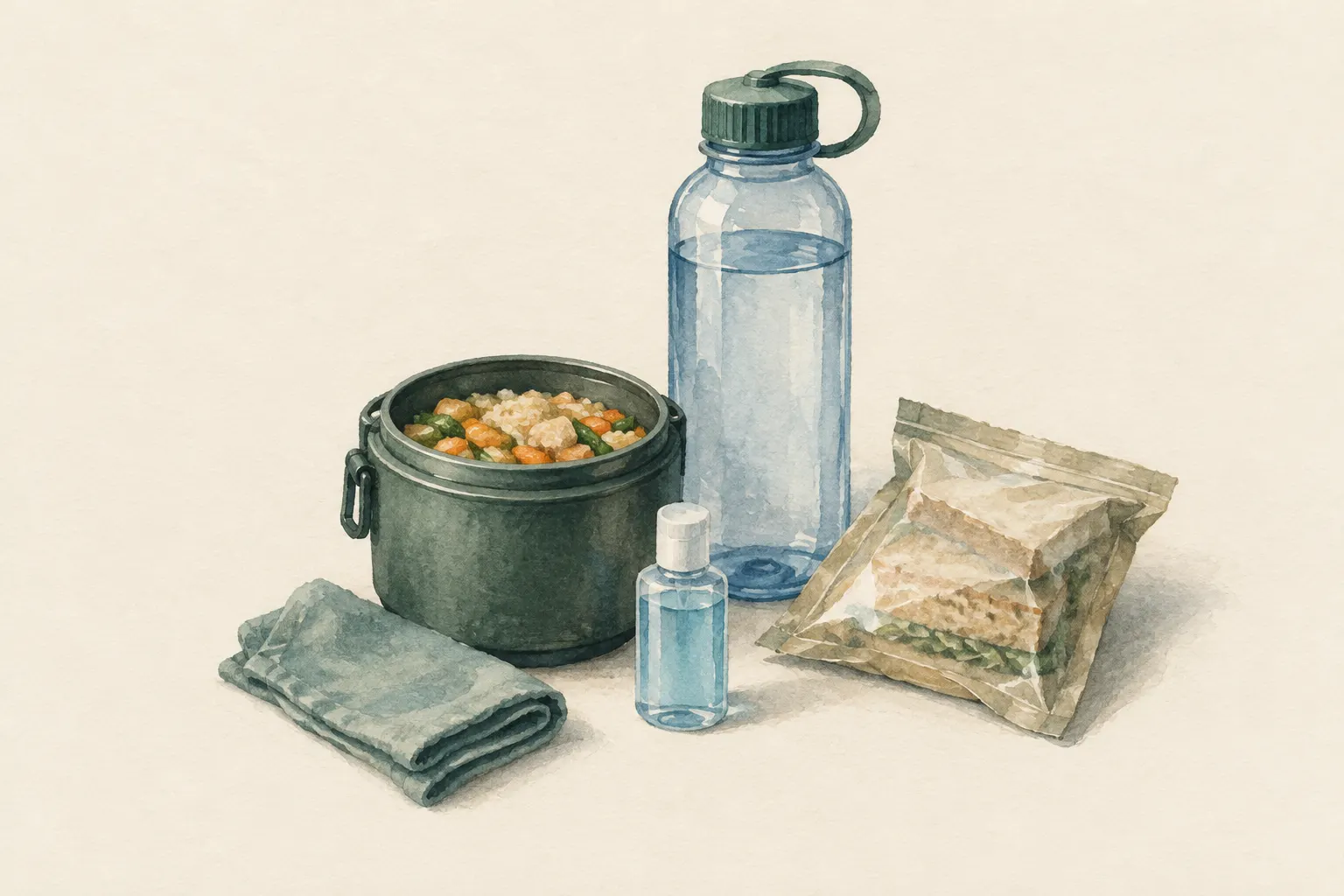
You can protect yourself well by closing three “doors” for germs: water, food and hands. Drink water from sealed bottles or water that has been boiled or properly treated – also for brushing your teeth. Eat food that is freshly cooked and served hot, and peel fruit yourself. And wash your hands with soap before eating and after using the toilet.
Remember ice cubes too – they are frozen water and can contain germs. If someone has blood in their stool, a high fever or severe pain, or if a baby has diarrhoea, they need medical help; in an emergency call the local emergency number (112 in the EU).
How it works
Pathogens – bacteria, viruses and parasites – enter the body by three main routes: contaminated water, raw or insufficiently heated food, and hands. Where sewage and drinking water are not safely separated, or food stands around for a long time without refrigeration, the risk is higher.
Heat, treatment and hygiene interrupt these routes. Thorough heating kills most pathogens; that is why freshly cooked food served hot is safer than a buffet that has stood lukewarm for a long time. Peeling removes the surface that germs cling to. Soap loosens dirt and germs from the skin, and rinsing carries them away.
The World Health Organization sums up safe food hygiene in five key rules: keep clean, separate raw and cooked food, cook thoroughly, keep food at safe temperatures, and use safe water and raw materials. These rules apply at home just as much as when travelling.
What really matters
Water: use sealed bottles, boiled or self-treated water – for everything that goes into your mouth, including brushing your teeth. Ice cubes are often forgotten, and so are drinks mixed with tap water. How good the tap water is at your destination is something you learn from travel advice and travel-health information.
Food: prefer freshly cooked dishes that arrive at the table hot. Fruit you peel yourself is a good choice. Be careful with raw salads, raw eggs, unpasteurised milk and buffets that have been standing for a long time. A well-known travellers' saying goes: “Boil it, cook it, peel it or forget it.”
Hands: wash them with soap before eating and after using the toilet. Hand sanitiser is a supplement on the go, but it does not replace washing when hands are visibly dirty. None of these rules offers complete protection, but together they reduce the risk considerably.
Treating water yourself
On treks without supplies you often have to treat water yourself. Proven methods are boiling, and filtering followed by disinfection. A filter alone does not make water safe: many filters hold back bacteria and parasites, but not necessarily viruses. That is why disinfection follows filtering, for example by boiling or with a suitable disinfectant according to the manufacturer's instructions.
Boiling is the simplest and most reliable method if you have fuel: bring the water to a rolling boil. The water treatment entries on this platform explain the methods in more detail. Where local authorities give advice on drinking water, such as a boil-water notice, it always takes priority.
Safety: what to watch out for
With diarrhoea the body loses water and salts. That is why drinking plenty is important – with safe water. Whether you should carry oral rehydration solutions to replace fluid and salts, and how to use them, is something to discuss before the trip with a doctor or a travel-medicine service. This page gives no medication recommendations and no treatment instructions.
Watch for warning signs: blood in the stool, high fever, severe pain or signs of dehydration such as passing very little urine, severe dizziness or confusion. Infants and small children, pregnant women and older people need particular care because they can become dehydrated faster. In these cases seek medical help; in an emergency call the local emergency number (112 in the EU).
Step by step
Find out in advance
Use travel health advice and travel guidance on water quality.
- 1
Find out in advance
Use travel health advice and travel guidance on water quality.
- 2
Water
Use sealed bottles, boiled or self-treated water – including for brushing teeth.
- 3
Food
Prefer freshly cooked food served hot; peel fruit yourself; be careful with raw salads, raw eggs, unpasteurised milk and buffets that have stood for long.
- 4
Hands
Wash hands with soap before eating and after using the toilet; hand sanitiser as a supplement on the go.
- 5
With diarrhoea
Drink plenty; carry oral rehydration solutions as advised by a travel health service. Watch for warning signs.
Common mistakes
- Forgetting ice cubes
- Brushing teeth with tap water
- Using sanitiser instead of washing when hands are visibly dirty
- Ignoring warning signs
Quick view
Materials
Soap / detergent
Rinse drinking-water containers thoroughly after cleaning.
Portable water filter (hollow fibre / membrane)
Do not let it freeze – fibres can be damaged without visible signs.
Chlorine tablets (NaDCC) for drinking water
Follow the manufacturer's dose and contact time.
Suitable for
- Travel in regions with unsafe water supply
- Backpacking and adventure travel
Not suitable for
- Treatment of illness
Prerequisites
- Knowledge of water quality at the destination (travel advice, travel medicine)
Safety
- Ice cubes, tap water for brushing teeth and raw, unpeeled food can also contain germs.
How it works
Pathogens are transmitted via contaminated water, raw or insufficiently heated food and hands. Heat, treatment and hygiene interrupt these routes.
Advantages
- Simple rules, large effect
Disadvantages
- Restricts food choices
- No complete protection
Deep knowledge
Background
The CDC Yellow Book and the WHO "Five Keys to Safer Food" manual describe the basic rules: cleanliness, separating raw and cooked, cooking thoroughly, safe temperatures and safe water and raw materials.
The Wilderness Medical Society guidelines on water disinfection also cover travel in regions with unsafe water.
Variants
- Trekking without supplies
- Treat water with proven methods (boiling, filter plus disinfection); see the water treatment entries.
Common mistakes
- Forgetting ice cubes
- Brushing teeth with tap water
- Using sanitiser instead of washing when hands are visibly dirty
- Ignoring warning signs
Limits and risks
- No medication recommendations
- No treatment instructions
Material alternatives
Derived from material properties: a substitute must have all relevant properties. Observe the notes on the substitute.
- Chlorine tablets (NaDCC) for drinking water
- Chlorine dioxide tablets or drops (Only approved drinking-water products; follow manufacturer instructions.), Unscented household bleach (sodium hypochlorite) (Only unscented, without additives, with known concentration.), Iodine water purification tablets (Not in pregnancy, thyroid disease or iodine allergy without medical advice.)
Results come exclusively from structured entries. No improvised instructions are generated.
Sources
Centers for Disease Control and Prevention: CDC Yellow Book: Health Information for International Travel
Food and water precautions when travelling, travellers' diarrhoea
World Health Organization (WHO) (2006): Five Keys to Safer Food Manual
Five keys to safer food
Wilderness & Environmental Medicine (Wilderness Medical Society) (2019): Wilderness Medical Society Clinical Practice Guidelines for Water Disinfection for Wilderness, International Travel, and Austere Situations: 2019 Update
Water disinfection when travelling