Health preparation and travel medical kit
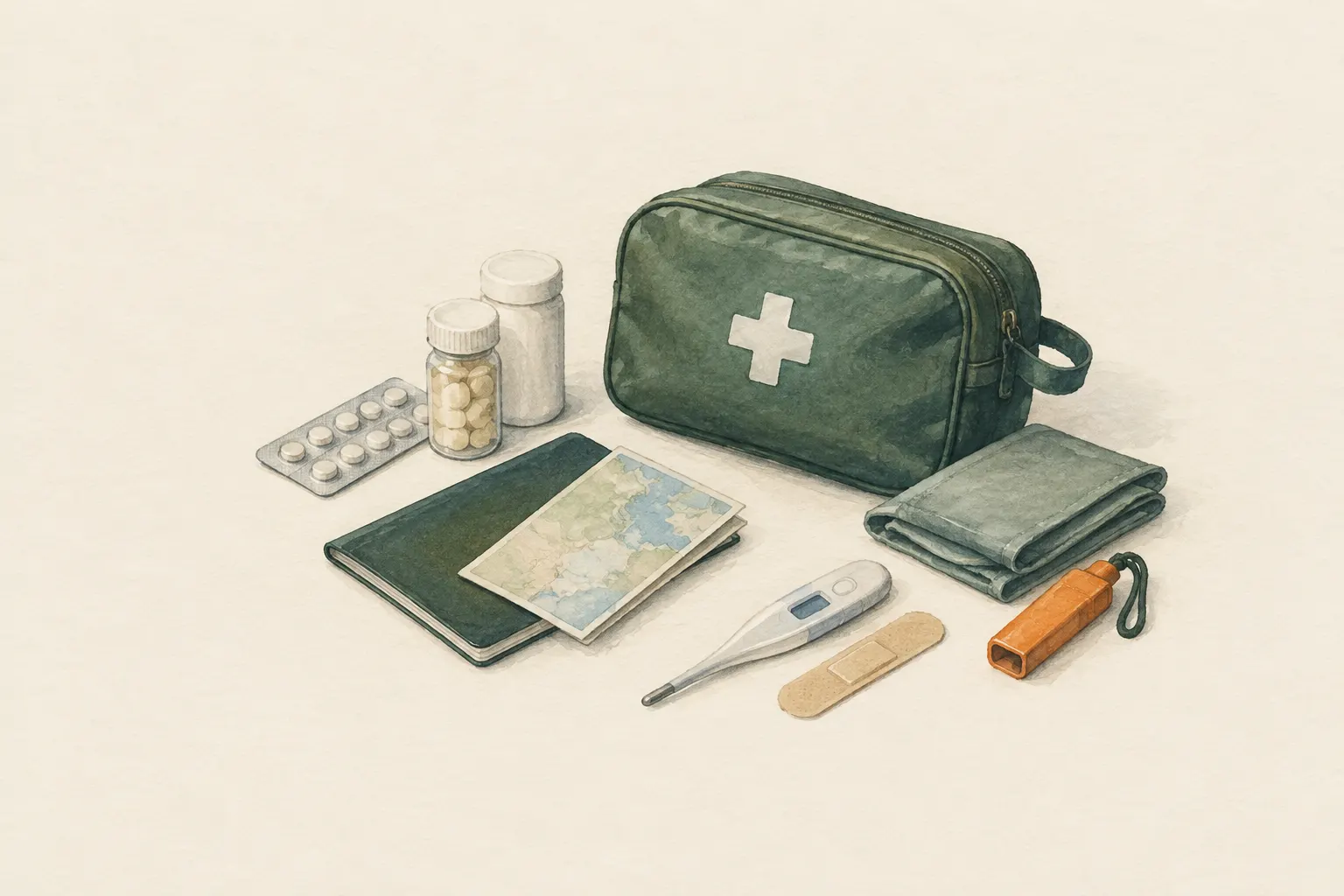
Health preparation starts weeks before departure: medical or travel-medicine advice on vaccinations and risks at the destination, enough of your own medication in hand luggage, suitable health insurance abroad and a small travel medical kit whose contents are agreed with a doctor or pharmacist.
- Plan advice several weeks before the trip (some vaccinations need time); packing about 30 minutes
Explained simply
In another country a lot is different: the weather, the food, sometimes the illnesses that occur there, and the doctors and hospitals. To stay healthy you prepare – just as you check your shoes and pack a jacket before a hike.
A few weeks before the trip you go to a doctor or a travel-medicine service. There you find out which vaccinations and which protection make sense for your destination. Some vaccinations need several appointments, so start in good time. You take your own medication in your hand luggage so that it does not get lost along with your suitcase.
The most important point: what you take and which vaccinations you need is decided in medical or travel-medicine advice – not by a list on the internet. And if you have a high fever, shortness of breath or severe pain on the way, seek medical help immediately or call the local emergency number (112 in the EU).
How it works
At the destination there may be different pathogens than at home, the climate may put more strain on the body, and medical care may be organised differently or be further away. Health preparation works in three places: reducing avoidable risks, securing the supply of your own medication and clarifying in advance how treatment and repatriation would be organised and paid for in an emergency.
Which vaccinations, preventive measures and medicines make sense depends on many things: the destination, the season, the kind of trip and your own health. That is why there is no general packing list for it. It belongs in personal advice from a doctor or a travel-medicine service. This page therefore deliberately gives no vaccination or medication recommendations.
In many countries, health authorities, institutes of tropical medicine and travel clinics offer country-specific information. The CDC Yellow Book from the US health agency is a well-known reference that covers, among other things, travel preparation and travel health kits.
What really matters
Time is the most important factor. Plan the consultation a few weeks before departure, because some vaccinations need several appointments or some time before protection builds up. If you come only a few days before, you often have fewer options. Bring your route, the length of the trip and the type of accommodation to the consultation, and mention medical conditions and allergies.
Take your regular medication in sufficient quantity plus a reserve, in your hand luggage and in its original packaging. Checked luggage can get lost or arrive days later. A list of the active ingredients helps, because medicines abroad are often sold under different brand names.
Some medicines are subject to special rules or even bans on entry. So ask the destination country or its embassy in advance and carry a doctor's certificate. Agree the contents of your travel medical kit with a doctor or pharmacy, matched to destination, duration and fellow travellers such as children. Dressings and plasters almost always belong in it.
Prevention on the way
Much of what can make you ill on the road can be reduced with simple habits. These include drinking water and food hygiene (see the entry on food and water when travelling), protection from sun and heat and – where the advice recommends it – protection from mosquito bites, for example with long clothing.
Write your blood group (if known), allergies, medical conditions and emergency contacts on a card and carry it with your documents. If you ever cannot speak for yourself, helpers still know the most important things. Also check before the trip whether treatment abroad and repatriation are covered by insurance, and note your insurer's emergency number.
Safety: what to watch out for
A travel medical kit is meant for minor problems, not for treating serious illness yourself. In case of high fever, shortness of breath, severe pain or impaired consciousness, seek medical help immediately or call the local emergency number (112 in the EU). Afterwards, inform your insurer's emergency line, which can often help find a suitable clinic.
Symptoms that only appear after you return can also be linked to the trip. Tell your doctor where you have been. That helps them think of the right causes.
Typical situations
On a long-haul trip to a tropical country, the consultation is usually more detailed because there are different disease risks there. People with chronic conditions or regular medication should also talk to their own doctor about the trip, for example about time differences or heat.
Expeditions and trips far from medical care need more: a first-aid course, more extensive, medically agreed equipment and a plan for how to call for help and organise a rescue in an emergency. The further away the nearest hospital, the more important this planning becomes.
Step by step
Get advice
Get medical or travel-medicine advice a few weeks before the trip: vaccinations, prevention, risks at the destination. Some vaccinations need several appointments.
- 1
Get advice
Get medical or travel-medicine advice a few weeks before the trip: vaccinations, prevention, risks at the destination. Some vaccinations need several appointments.
- 2
Check insurance
Clarify whether treatment abroad and repatriation are covered. Note the policy number and the insurer's emergency number.
- 3
Your own medication
Take regular medication in sufficient quantity plus a reserve in its original packaging in your hand luggage, with a list of active ingredients and a doctor's certificate where appropriate.
- 4
Agree the medical kit
Agree the contents of the medical kit with a doctor or pharmacy, matched to destination, duration and fellow travellers (e.g. children). Dressings and plasters almost always belong in it.
- 5
Prevention on the way
Pay attention to drinking water and food hygiene, sun and heat protection, and mosquito protection where advised.
- 6
Carry information
Note blood group (if known), allergies, medical conditions and emergency contacts on a card and carry it with your documents.
Common mistakes
- Getting advice only a few days before departure
- Medication only in checked luggage
- No certificate for medicines with import restrictions
- Not checking health insurance abroad
- Medical kit not matched to travellers and destination
Quick view
Materials
Medication supply
Your regular medication with a reserve
Agree any stock of prescription medication with a doctor or pharmacist; observe storage instructions and expiry dates.
First-aid kit (household)
Compact travel version
Does not replace a first-aid course; check contents and expiry dates regularly.
Copies of travel documents
Including insurance proof and medication list
Keep separate from the originals; store digital copies only in protected form.
Suitable for
- Long-haul trips and travel to regions with different disease risks
- Travellers on regular medication or with chronic conditions
- Expeditions far from medical care
Not suitable for
- Self-treatment of serious illness on the way
- A substitute for medical advice
Prerequisites
- A timely appointment with a GP, travel clinic or pharmacy
- Knowing your own medical conditions and allergies
Safety
- Which vaccinations, preventive measures and medicines make sense depends on the destination, the season and your own health. This belongs in medical or travel-medicine advice, not a general packing list.
- Some medicines are subject to special rules or bans on entry. Ask the destination country or its embassy in advance and carry a doctor's certificate.
How it works
Different pathogens, climate conditions and different medical care may prevail at the destination. Preparation reduces avoidable risks (e.g. through vaccinations and mosquito protection), secures the supply of your own medication and ensures that, if the worst happens, treatment and repatriation can be organised and paid for.
Advantages
- Avoids many predictable health problems
- Secures your own medication
- Clarifies costs in an emergency in advance
Disadvantages
- Requires lead time
- Advice and vaccinations can incur costs
Deep knowledge
Background
The CDC Yellow Book from the US health agency is a well-known travel medicine reference and covers, among other things, travel preparation, vaccinations and travel health kits. In many countries health authorities, institutes of tropical medicine and travel clinics provide country-specific recommendations.
This entry deliberately gives no medication or vaccination recommendations: they depend on the person, the destination and the current situation and belong in individual advice.
Variants
- Expeditions and remote regions
- Far from medical care, a first-aid course, more extensive, medically agreed equipment and a plan for emergency calls and rescue are necessary.
Common mistakes
- Getting advice only a few days before departure
- Medication only in checked luggage
- No certificate for medicines with import restrictions
- Not checking health insurance abroad
- Medical kit not matched to travellers and destination
Limits and risks
- No vaccination or medication recommendations
- No treatment instructions
Sources
Centers for Disease Control and Prevention: CDC Yellow Book: Health Information for International Travel
Travel health preparation, vaccination advice, travel health kit
European Commission: 112 – the European emergency number
European emergency number 112