Allergies in shared emergency food: labels and cross-contact
In emergency shelters, neighbourhood help or group camps, many people eat from one kitchen. For people with food allergies it then matters not only what is in the food, but also what can get into it via spoons, boards, hands or oil. Keep packaging, prepare allergen-free food first, use separate utensils and, when in doubt, do not serve it.
- Organisation before and during every meal
Explained simply
With a food allergy, the body wrongly mistakes a certain food, such as peanuts, milk or wheat, for a dangerous enemy. Then it fights back – sometimes so hard that it becomes life-threatening. Often a tiny amount that you cannot even see is enough.
Cross-contact means the allergen ends up by accident in food where it does not belong. For example, when the same spoon was first in the peanut butter and then in the rice. Picking it out does not help, and cooking does not make allergens harmless. That is why the allergen-free food is cooked first, with clean, separate spoons.
If someone has trouble breathing after eating or their face swells, call the emergency number immediately (112 in the EU).
How it works
With an allergy, the immune system reacts to certain proteins in a food. Even the smallest amounts can trigger a reaction, from a skin rash to a life-threatening reaction of the whole body. An intolerance, for example to milk sugar, is usually unpleasant but less dangerous. People with coeliac disease must strictly avoid gluten, even in small amounts.
Cross-contact happens when the allergen is transferred to an otherwise free dish via shared utensils, chopping boards, hands, frying oil or cooking water. An example: gluten-free pasta cooked in the water from wheat pasta is no longer gluten-free. Boiling, frying or baking does not destroy allergens. Picking things out only removes the visible pieces, not the traces.
That is why only four things work: separation, the right order, thorough cleaning and complete information about what is in a dish.
What really matters
On arrival, or already during planning, ask who has which allergy or intolerance and write it down visibly in the kitchen. With children, ask the parents; many children cannot yet explain their allergy reliably. Do not throw packaging away until the dish has been eaten, or photograph the ingredient list. In the EU, 14 major allergens must be highlighted in the ingredient list of packaged foods.
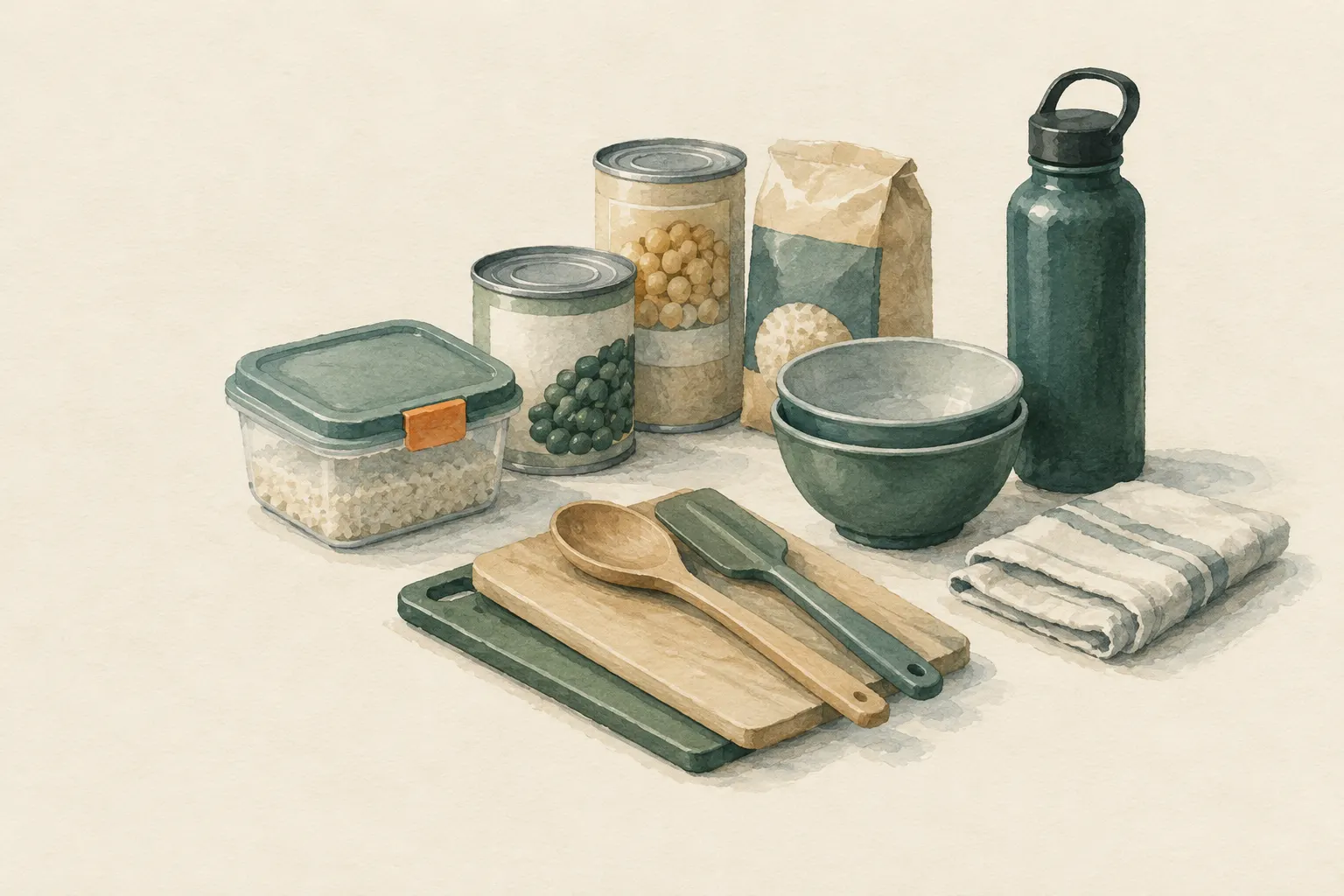
Prepare the allergen-free dish first – with freshly cleaned utensils and on a clean surface. Then it is covered, labelled and set apart. Separate spoons, boards and pots, ideally colour-coded, prevent mix-ups. Shared frying oil or cooking water is off-limits.
When serving, the affected person is served first, with a separate ladle. Whoever serves must be able to answer questions – or say honestly when an ingredient is unknown. If it is unclear what is in a dish, it is not served to people with allergies, even when food is scarce.
Safety: what to watch out for
An allergic reaction can become life-threatening. Warning signs are breathing difficulty, swelling of the face or throat, for example, and circulation problems. Then the local emergency number is called immediately (112 in the EU) and the affected person's own emergency plan is followed, for example a prescribed emergency medication according to its instructions. Ask people with severe allergies beforehand where their emergency kit is and what to do in an emergency.
Hand sanitiser kills germs, but it does not reliably remove food proteins. Hands are therefore washed with soap and water or wiped with cleaning wipes. Surfaces and utensils are also cleaned with water and washing-up liquid.
Where water is scarce, separate utensils are safer than a quick rinse. Phrases such as “a little won't hurt” have no place in a kitchen that serves people with allergies.
Typical situations
In an emergency shelter or neighbourhood help, donations often arrive without an ingredient list – home-baked cake, decanted food, stew in big pots. That may be fine for most people, but it is not served to people with allergies. Statements such as “may contain traces” are voluntary, by the way; if they are missing, that does not automatically mean a product is free of traces.
People with severe allergies are safest when they bring their own labelled stock that needs no cooking. Outside the EU, other labelling rules apply; check the local requirements there. A communal kitchen can try very hard – but there is never a guarantee of complete freedom from allergens.
Step by step
Record allergies
On arrival or during planning, ask who has which allergy or intolerance and note it visibly in the kitchen.
- 1
Record allergies
On arrival or during planning, ask who has which allergy or intolerance and note it visibly in the kitchen.
- 2
Keep packaging
Do not throw away ingredient lists: keep the packaging or a photo until the dish has been eaten. In the EU, 14 major allergens are highlighted on packaged food.
- 3
Allergen-free first
Prepare the allergen-free dish first with freshly cleaned utensils, cover it, label it and set it apart.
- 4
Separate
Separate spoons, boards and pots for allergen-free food; no shared frying oil or cooking water (e.g. pasta water with wheat).
- 5
Serving
Serve the affected person first, with a separate ladle. Be able to answer questions – or say honestly when an ingredient is unknown.
- 6
Clean
Clean surfaces and utensils with water and washing-up liquid; where water is scarce, use separate utensils instead of washing.
Common mistakes
- "A little won't hurt"
- Just picking out nuts or allergens
- Throwing packaging away immediately
- Shared frying oil
- Hand sanitiser instead of hand washing
Quick view
Materials
Labels and permanent marker
Airtight food-grade storage container
Fill only when clean and completely dry; never use containers that previously held chemicals.
Soap / detergent
Rinse drinking-water containers thoroughly after cleaning.
Suitable for
- Communal catering in emergency shelters
- Neighbourhood and club kitchens
- Group trips and camps
Not suitable for
- A substitute for medical advice or a personal emergency plan
- Serving unlabelled donations without ingredient lists to people with allergies
Prerequisites
- A list of allergies in the group
- Access to ingredient lists or original packaging
- Water and soap or cleaning wipes
Safety
- If it is unclear what a dish contains, it is not served to people with allergies – even when food is scarce.
- Hand sanitiser does not reliably remove food proteins. Wash hands with soap and water or wipe them with cleaning wipes.
How it works
With allergies, a tiny amount of the trigger is often enough. Cross-contact happens when it is transferred to an otherwise free dish via shared utensils, surfaces, hands, frying oil or cooking water. Cooking does not destroy allergens. That is why only separation, order of preparation, cleaning and complete information work.
Advantages
- Protects particularly vulnerable people
- Builds trust in the group
- Hardly any extra cost
Disadvantages
- More organisation and utensils
- Unlabelled donations remain difficult
Deep knowledge
Background
The EU Food Information Regulation (Regulation (EU) No 1169/2011) lists in Annex II 14 substances that can cause allergies or intolerances and must be highlighted in the ingredient list; statements such as "may contain traces" are voluntary.
Outside the EU, other labelling rules apply – check local rules.
Variants
- Own stock
- People with severe allergies are best off carrying their own labelled stock that needs no cooking.
Common mistakes
- "A little won't hurt"
- Just picking out nuts or allergens
- Throwing packaging away immediately
- Shared frying oil
- Hand sanitiser instead of hand washing
Limits and risks
- No medical advice or treatment instructions
- No guarantee of allergen-free food in communal kitchens
Material alternatives
Derived from material properties: a substitute must have all relevant properties. Observe the notes on the substitute.
- Airtight food-grade storage container
- Single-wall stainless steel bottle (Heat only single-wall bottles without paint/plastic; remove the lid before heating.), Double-wall insulated bottle (Never heat directly.), PET bottle (clear, max. 2 litres) (Do not heat or place in a fire.), Food-grade water container (Only use containers that never held chemicals or fuel.), Collapsible water container or bag (Protect from sharp objects.), Food-grade water bag (Use only for drinking water, never for chemicals or fuel.), Fermentation jar or crock (Use only food-grade containers of glass, food-safe glazed stoneware or food-grade plastic – no metal containers for acidic food.), Resealable food bags (Use only bags intended for food; do not use with boiling water unless the manufacturer explicitly allows it.)
Results come exclusively from structured entries. No improvised instructions are generated.
Sources
European Parliament and Council of the European Union (2011): Regulation (EU) No 1169/2011 on the provision of food information to consumers
14 allergens requiring labelling (Annex II) and highlighting in the ingredient list
World Health Organization (WHO) (2006): Five Keys to Safer Food Manual
Clean hands and utensils, separation during preparation
European Commission: 112 – the European emergency number
Emergency number 112 in the EU