Dew point: why tents get wet inside
Warm air can hold more water vapour than cold air. When humid air cools at a cold surface to its dew point, water condenses – as dew, fogging or frost. In a tent, breath, wet clothing and cooking supply the vapour and the cold tent wall supplies the surface. Ventilating, keeping moisture outside and choosing the site wisely reduce the problem.
- 5 minutes reading
Explained simply
Air almost always contains some water you cannot see – invisible water vapour. Warm air can carry a lot of it, cold air only a little. Imagine the air as a sponge: a warm sponge is big and soaks up a lot, a cold one shrinks and has to let water go.
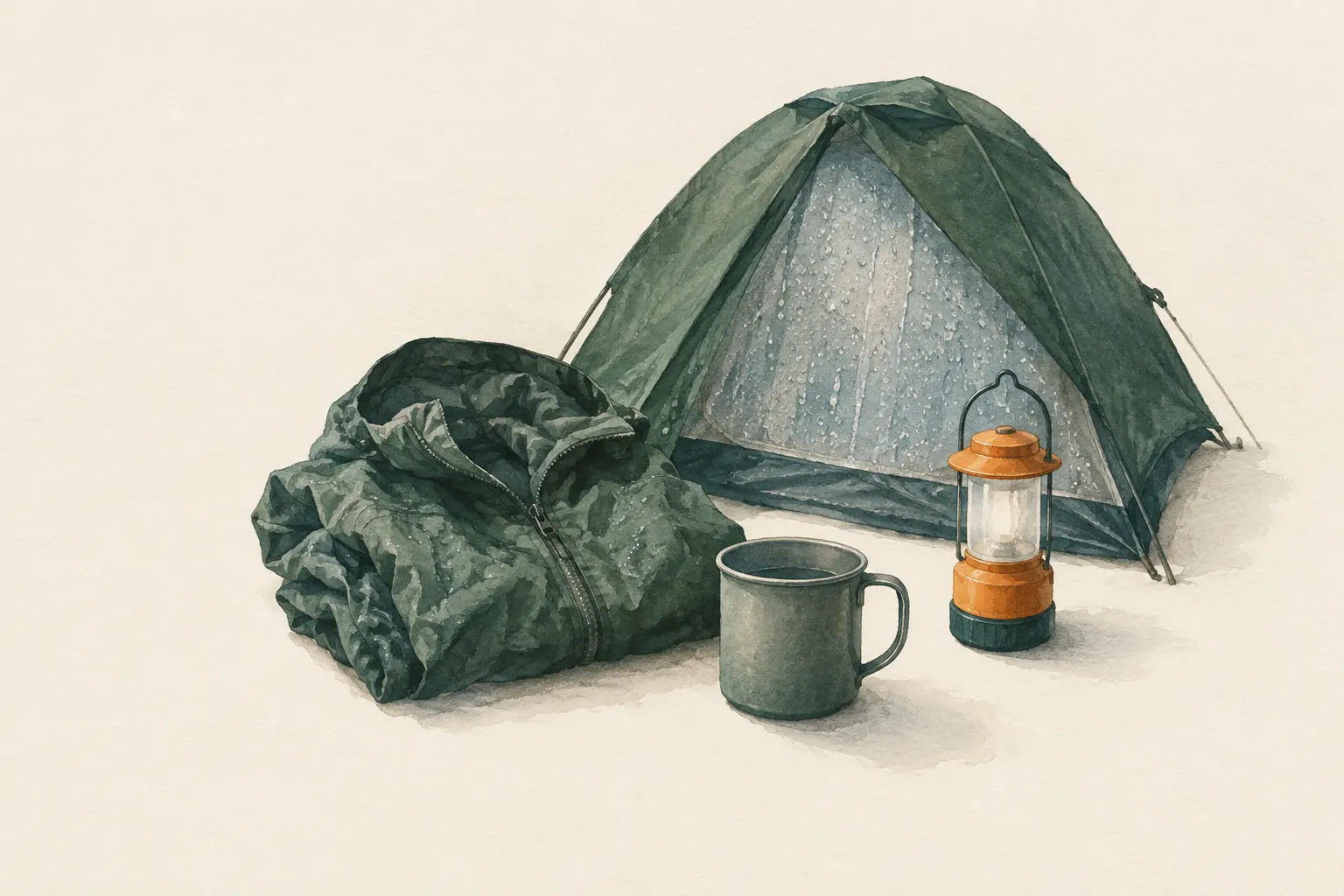
That is why a glass of cold lemonade mists up on a warm day: the air right next to the glass cools down, can no longer hold the vapour, and droplets form. The temperature at which this happens is called the dew point. In a tent it is just the same. You breathe out moist air all night, and on the cold tent wall it turns into water. So the tent is not broken – it is physics.
What helps: keep the vents open, leave wet things outside and wipe off the water in the morning. And very important: never cook in a closed tent to dry or warm it. This can produce poisonous carbon monoxide, and the tent can catch fire.
How it works
How much water vapour air can hold at most depends on temperature: the warmer, the more. Relative humidity says what percentage of this maximum is reached at the moment. If air cools without any water being added, the relative humidity rises – until it reaches 100 percent. That temperature is the dew point. If it gets even colder, water has to condense, that is, turn from gas into liquid.
Condensation needs a surface or tiny particles on which droplets can form. On the ground this produces dew on grass and car roofs, in the air fog and clouds. If the surface is below freezing, the vapour settles directly as ice – that is frost, the fine white crystals on cold mornings.
Why does the tent wall get colder than the air? On clear nights it gives off heat as invisible radiation to the cold sky without getting any back. Clouds act like a blanket and slow this cooling. That is why clear, calm nights are the nights with the most dew, frost and condensation.
Where the water in the tent comes from
The biggest source is you. With every breath out the body releases moist air, and a little water constantly evaporates through the skin too. Two or three people in a small tent put a noticeable amount of moisture into the air over a night.
Add wet clothing, damp boots, a wet dog or a pot of steaming water. Each of these sources fills the “air sponge” further. The more vapour there is in the tent, the higher the dew point – and the sooner the wall gets wet.
The ground plays a part too: on a damp meadow or right next to a stream, water evaporates from below, and cold air collects in hollows at night. That is why the spot in the valley dip next to the water is often the dampest.
What really matters
The most effective remedy is air exchange. Vents carry the moist air out and let drier air in. This costs a little warmth, but a damp sleeping bag insulates worse over time, especially if it is filled with down. A gap at the entrance or at both ends of the tent creates a gentle draught.
Second: keep moisture outside. Wet jackets and socks belong in the vestibule or in a stuff sack, not drying in the inner tent. Third: choose the site wisely – slightly raised, with some air movement and, if possible, under trees that act like an umbrella and reduce radiation to the sky. Watch out for dead branches above the tent.
In high humidity condensation can never be avoided completely. Double-walled tents and breathable inner tents only make sure the water forms on the outer skin where it bothers you less. A cloth for wiping in the morning is therefore simply part of the kit.
Safety: what to watch out for
It is tempting to “heat up” the tent briefly with the stove to dry everything. That is dangerous: every flame uses oxygen and can produce carbon monoxide, a gas you can neither smell nor see. In a closed tent it can build up quickly. On top of that there is the fire risk from tent fabric, sleeping bags and clothing. Cook outside or at most in a well-ventilated vestibule according to the stove and tent manufacturers' instructions.
Wet gear is a real risk in the cold. Damp insulation keeps you less warm, and anyone shivering in a clammy sleeping bag is losing heat. So dry your sleeping bag and clothing in sun and wind at every opportunity, and keep a dry set for sleeping in a waterproof bag.
Typical situations
You meet the same principle everywhere. Glasses mist up when you come from the cold into a warm hut. The bathroom mirror goes blind after a shower. Cold external walls in homes get damp in winter and can grow mould – regular short, wide-open airing and even heating help here.
Devices are affected too: if you bring a cold camera or cold phone into a warm room, water condenses on it and even inside it. Put it in a sealed bag beforehand and let it warm up slowly inside. Then the water forms on the outside of the bag instead of in the device.
Step by step
Ventilate
Keep vents open even when it is cold; air exchange carries the vapour out.
- 1
Ventilate
Keep vents open even when it is cold; air exchange carries the vapour out.
- 2
Reduce moisture sources
Leave wet clothing and gear in the vestibule or a bag, do not dry them in the inner tent.
- 3
Choose the site
Valley hollows and shores collect cold, humid air; slightly raised sites with some air movement are drier. Trees above the tent reduce radiative cooling.
- 4
Wipe in the morning
Wipe off condensation with a cloth and dry the sleeping bag when possible.
Common mistakes
- Mistaking condensation for a leaking tent
- Closing all vents
- Hanging wet clothing in the inner tent
- Camping in the hollow by the stream
Quick view
Suitable for
- Camping and bivouacking
- Damp homes in winter
- Understanding fog and dew
Not suitable for
- Building physics assessments
Prerequisites
- None
How it works
Relative humidity states how much water vapour the air contains relative to the maximum at its temperature. When air cools, relative humidity rises until it reaches 100% at the dew point and water condenses. On clear nights the tent wall radiates heat to the sky and becomes colder than the air – on the inside, vapour from the tent condenses. If the surface is below freezing, frost forms.
Advantages
- Explains dew, fog, frost and tent condensation with one principle
Disadvantages
- In high humidity condensation can never be completely avoided
Deep knowledge
Background
The German Weather Service and the US weather service explain dew point, relative humidity and the formation of dew, frost and fog. Night-time radiative cooling is strongest on clear, calm nights.
No tent fabric prevents condensation completely; breathable inner tents and ventilation only move it to where it bothers you less.
Variants
- Damp walls at home
- The same principle leads to condensation and mould on cold external walls; ventilating and even heating help.
Common mistakes
- Mistaking condensation for a leaking tent
- Closing all vents
- Hanging wet clothing in the inner tent
- Camping in the hollow by the stream
Limits and risks
- No product recommendations
Sources
Deutscher Wetterdienst (DWD): Wetter- und Klimalexikon
Dew point, relative humidity, dew and frost
U.S. National Weather Service (NOAA): JetStream – An Online School for Weather
Humidity and condensation