Carbon monoxide: why it is so dangerous
Carbon monoxide (CO) forms when fuel burns incompletely. It is colourless, odourless and tasteless and binds far more strongly to the blood's red pigment than oxygen does. As a result the body suffocates from within, often without the person noticing. Protection: never burn anything in enclosed spaces, use CO alarms, and if you suspect it get into fresh air immediately and call for help.
- 5 minutes reading
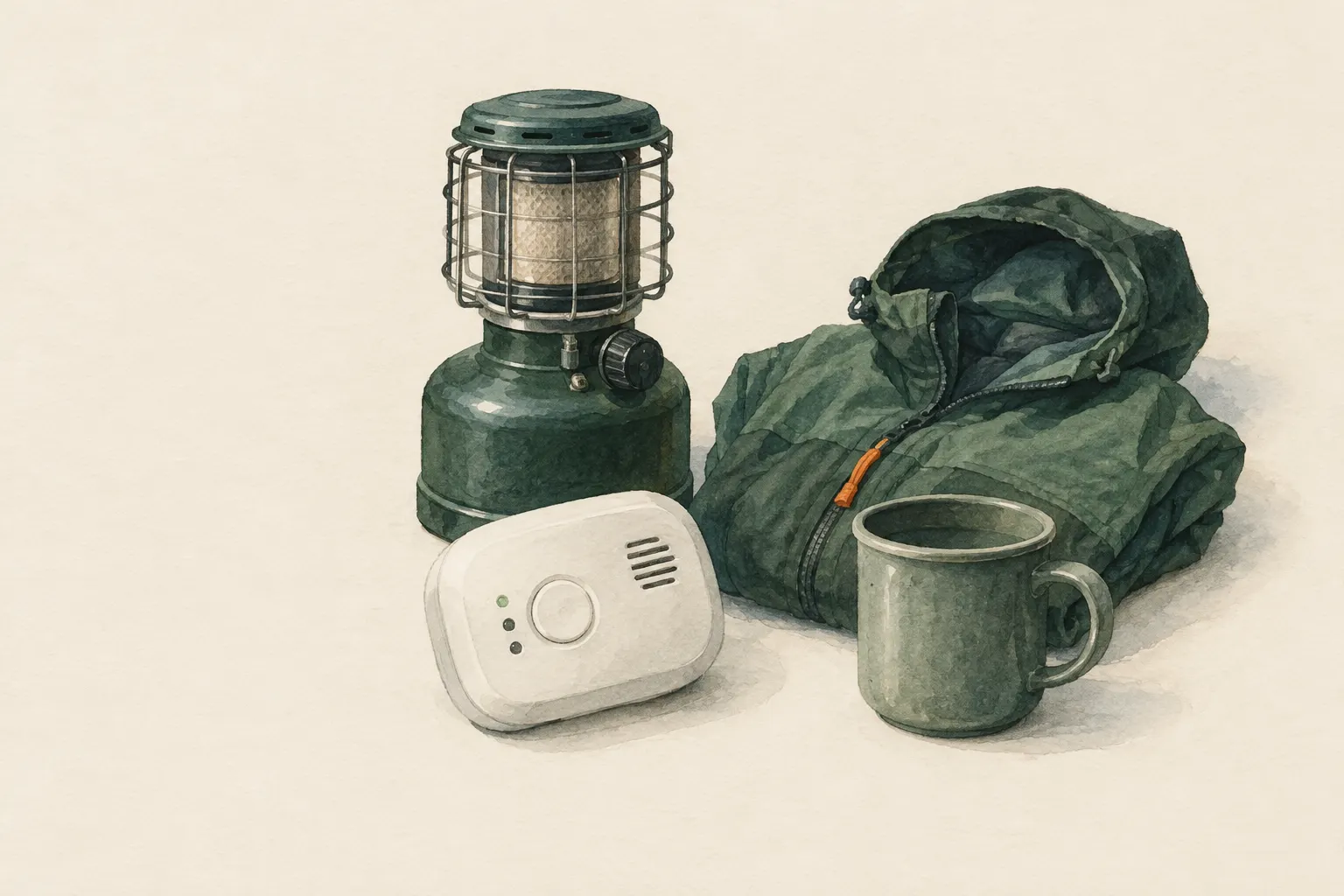
Explained simply
Carbon monoxide, CO for short, is a gas that forms when something does not burn completely – for example in a stove, a barbecue, a camping stove, a generator or a car engine. The dangerous part: you cannot see it, smell it or taste it. It is like an invisible thief.
In your blood there are tiny “delivery vans” that carry oxygen from the lungs to every part of the body. They are called haemoglobin. CO likes to sit in these vans far more than oxygen does and stays there stubbornly. Then there is no room left for oxygen, and the body gets too little of it, even though you are breathing normally. You get a headache, feel dizzy, tired and sick – it feels like flu.
The most important point: never use a barbecue, stove, generator or fire in a home, basement, garage, tent or car – not even with a window open. If a CO alarm beeps or several people get a headache and dizziness at the same time: get everyone outside immediately and call the local emergency number (112 in the EU).
How it works
In complete combustion each carbon atom joins with two oxygen atoms to form carbon dioxide (CO₂). If oxygen is lacking, or the flame is cooled, for example by a cold cooking pot or poor air supply, the reaction stops halfway: carbon monoxide (CO), with only one oxygen atom, is formed. In an enclosed space a fire also gradually uses up the oxygen, so combustion becomes more and more incomplete.
CO is about as heavy as air and therefore spreads through the whole room rather than collecting specifically at the floor or ceiling. It is colourless, odourless and tasteless. The smell you notice with smoke or exhaust comes from other substances; an appliance or a charcoal barbecue can give off a lot of CO without any noticeable smell.
What CO does in the body
Oxygen is carried in the blood by the red pigment haemoglobin. CO binds to exactly the same spot, and many times more strongly than oxygen – of the order of around 200 times. That is why even small amounts of CO in the air are enough to occupy a large share of the transport sites over time. The CO only comes off again slowly.
The organs that need the most oxygen suffer first: the brain and heart. The first signs are headache, dizziness, nausea, tiredness and drowsiness. Because they resemble flu or an upset stomach, they are often misinterpreted. An important clue: several people or pets are affected at the same time, and it gets better outside in the fresh air.
Another danger is that CO clouds thinking. Those affected become drowsy and confused and may no longer recognise the danger in time. This is especially treacherous during sleep, when the signs go unnoticed altogether.
Typical situations
CO poisonings become more frequent during power cuts and cold snaps, when people improvise heating or cooking: with a charcoal barbecue in the flat, an unflued gas heater or a generator in the basement or garage. Even with a window or garage door open this is dangerous, because the gas can build up faster than it escapes.
When camping, a stove or a smouldering barbecue in a closed tent is a known danger. In a car buried in snow with the engine running, exhaust can enter the cabin if the exhaust pipe is blocked by snow. At home, faulty or poorly maintained stoves, boilers and fireplaces can release CO.
Safety: what to watch out for
The most important rule: never run barbecues, charcoal, gas stoves, unflued heaters or generators in living spaces, basements, garages, tents or vehicles – not even with a window open. Have fireplaces and heating appliances checked regularly by professionals.
In rooms with fuel-burning appliances, a CO alarm installed and tested according to the manufacturer's instructions protects you. A smoke alarm does not detect CO; they are two different devices. If CO is suspected – the alarm sounds or several people have a headache, dizziness or nausea – get everyone into fresh air immediately, do not go back in, and call the local emergency number (112 in the EU). Only return once the fire service or professionals have checked the room.
Good to know
Carbon monoxide and carbon dioxide are often confused because the names sound similar. We breathe out carbon dioxide (CO₂) ourselves all the time; in large amounts it displaces oxygen, but in normal amounts it is harmless. Carbon monoxide (CO), on the other hand, is toxic even in small amounts because it blocks oxygen transport in the blood.
A common misconception is that you can recognise CO by the smoke. Smoke only shows that something is burning incompletely – but CO can form without any visible smoke at all, for example from glowing charcoal or a gas appliance. You cannot rely on your own senses here; a working CO alarm is far more reliable.
Step by step
Know the sources
Stoves, boilers, fireplaces, barbecues, camping stoves, generators, vehicle engines – every flame and every combustion engine.
- 1
Know the sources
Stoves, boilers, fireplaces, barbecues, camping stoves, generators, vehicle engines – every flame and every combustion engine.
- 2
CO alarm
Install and test CO alarms according to the manufacturer in rooms with fuel-burning appliances. A smoke alarm does not detect CO.
- 3
Take signs seriously
Headache, dizziness, nausea, tiredness – especially if several people or pets are affected at once and it improves outdoors.
- 4
Get out and call
Get into fresh air immediately, call for help and have the fire service or professionals check before returning.
Common mistakes
- Relying on smell
- Bringing a barbecue indoors for heating
- Running a generator in the garage with the door open
- Using a stove in a closed tent
Quick view
Materials
Carbon monoxide alarm
Does not replace the rule never to run combustion devices indoors. Choose battery-powered or with battery backup.
Suitable for
- Heating and cooking during power outages
- Tent and vehicle use in winter
Not suitable for
- Medical treatment
Prerequisites
- None
How it works
With complete combustion carbon forms carbon dioxide. If oxygen is lacking or the flame cools, carbon monoxide forms instead. In the blood CO binds to haemoglobin many times more strongly than oxygen – of the order of around 200 times. Even low concentrations in the air therefore block a large part of the oxygen-carrying capacity over time. Because CO cannot be perceived and the first symptoms are flu-like, it is often recognised too late.
Advantages
- CO alarms are cheap and effective
Disadvantages
- Cannot be perceived
- Symptoms are mistaken for other things
Deep knowledge
Background
The WHO indoor air quality guidelines cover carbon monoxide in detail, and the US health agency CDC gives advice on preventing CO poisoning, for instance during power outages. Physiology textbooks describe CO's strong binding to haemoglobin.
CO poisonings become more frequent during power cuts and cold snaps, when people improvise heating.
Variants
- Car buried in snow
- If the engine is running, the exhaust must be clear of snow, otherwise fumes can enter the cabin – see stranded vehicle.
Common mistakes
- Relying on smell
- Bringing a barbecue indoors for heating
- Running a generator in the garage with the door open
- Using a stove in a closed tent
Limits and risks
- No medical treatment
- No limit values
Sources
World Health Organization, Regional Office for Europe (2010): WHO guidelines for indoor air quality: selected pollutants (carbon monoxide chapter)
Formation, sources and effects of carbon monoxide
Centers for Disease Control and Prevention: Carbon Monoxide Poisoning – Prevention guidance
Prevention, no combustion devices indoors, CO alarms
John E. Hall – Elsevier: Guyton and Hall Textbook of Medical Physiology
Binding of CO to haemoglobin
European Commission: 112 – the European emergency number
European emergency number 112