Stranded in a vehicle: snow, cold, carbon monoxide
If you are stuck in snow or a traffic jam, staying in the vehicle is usually safer than walking in a snowstorm. The greatest hidden danger is carbon monoxide: if the exhaust pipe is blocked by snow, exhaust can enter the cabin. Keep the exhaust clear, run the engine only briefly, ventilate slightly, dress warmly and stay visible.
- Depends on the situation, often several hours
Explained simply
If your car gets stuck in snow, staying inside is usually best. The car is like a metal tent: it keeps out wind and snow, and rescuers spot a car much more easily than a single person in a blizzard. On foot in a snowstorm you quickly lose your way and your strength.
But there is an invisible danger: carbon monoxide. It is a gas from the exhaust that you can neither see nor smell. If the exhaust pipe at the back of the car is blocked by snow, the gas can get into the car. So the rule is: keep the exhaust clear, run the engine only briefly now and then, and open a window a crack while it runs.
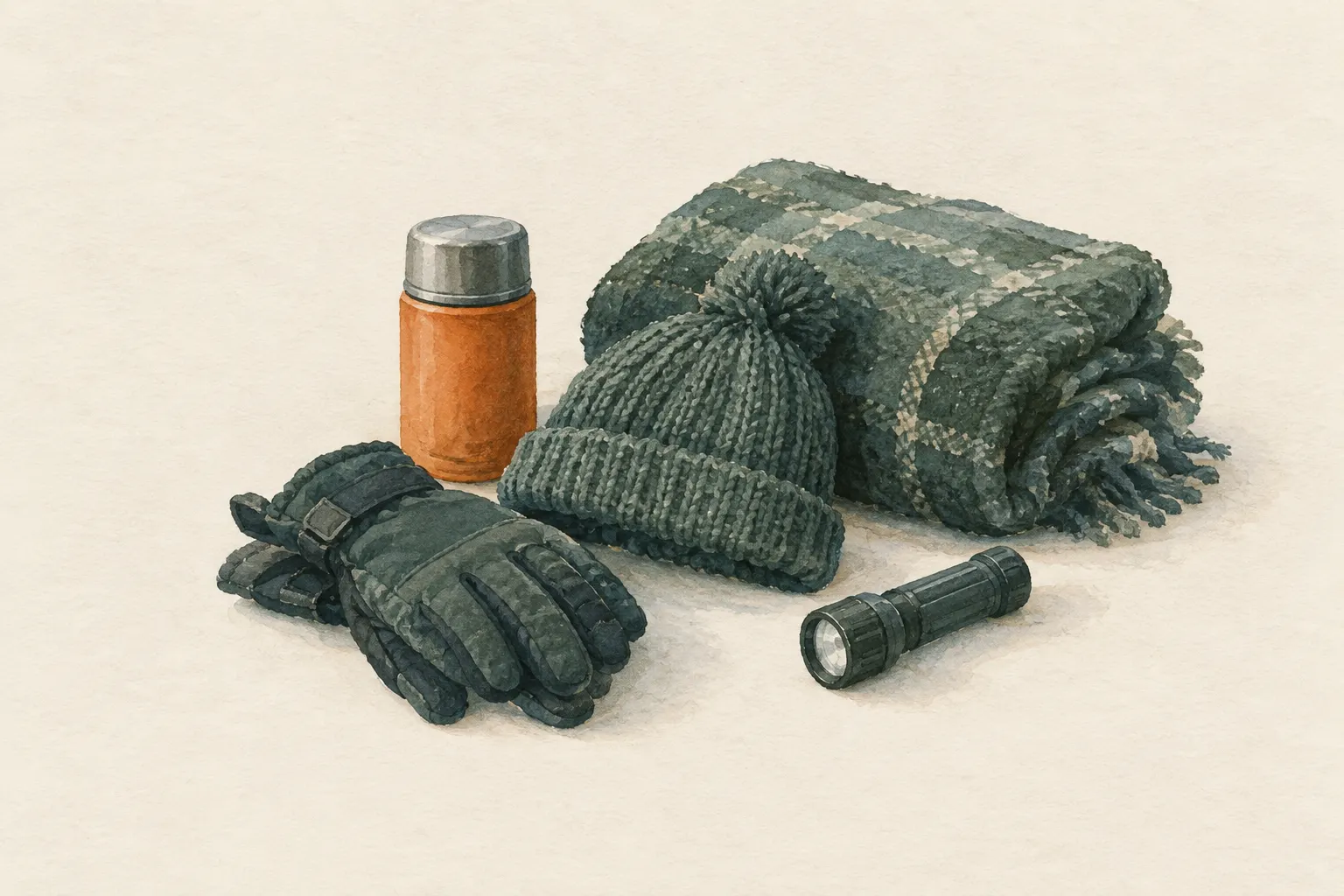
You stay warm mainly with clothing, hat, gloves and a blanket – not with the engine. If someone gets a headache, feels dizzy or very sleepy: engine off, fresh air, call the emergency number (112 in the EU).
How it works
A stranded vehicle is good protection from wind and precipitation, and that is decisive in the cold: wind carries body heat away very quickly, and so does wet clothing. The car keeps both away. A vehicle is also large and easier for rescuers to find than a person on foot.
But the warmth in the car comes mainly from yourself. Your body is like a little stove. Clothing, blankets and a sleeping bag hold that warmth in, and when several people huddle together, they warm each other. The engine is only an extra source of heat that you use from time to time. Fuel and battery are limited, and the more sparingly you use them, the longer they last.
Carbon monoxide is produced when fuel burns and is contained in exhaust. In the open it disperses. But if the exhaust pipe is blocked by snow, the exhaust can be forced under the vehicle and into the cabin. The gas is treacherous because it takes the place of oxygen in the blood and you do not notice it: it has no smell and is invisible.
Safety: what to watch out for
Before you start the engine, check every time that the exhaust pipe and the area behind it are clear of snow. If it keeps snowing, check again regularly. If the exhaust cannot be kept clear reliably, leave the engine off. While the engine runs, open a window on the sheltered side a crack. Ready.gov gives running the engine for about ten minutes per hour as a guide. That is orientation, not a guarantee.
Warning signs of carbon monoxide poisoning can include headache, dizziness, nausea and drowsiness. Then immediately: engine off, fresh air, call the local emergency number (112 in the EU). Because drowsiness can itself be a warning sign, not everyone should sleep at the same time.
The second danger is hypothermia. Intense shivering, confusion or slurred speech are warning signs. Then call emergency services and warm the person with all the dry layers you have. Pay particular attention to children, older people and people with medical conditions. Treating hypothermia or frostbite belongs in medical hands.
When to stay – and when not
The rule “stay in the vehicle” applies to a snowbound or broken-down car in the cold, away from moving traffic. Setting off on foot in a snowstorm is dangerous because visibility, orientation and strength fade quickly. Only walk if safe help is visible and close, or if the vehicle itself is in danger.
There are clear exceptions. If the car is on a carriageway with moving traffic, first leave the danger zone and secure the scene, as described in the entry on motorway breakdowns. If the car is in floodwater or on fire, leave it immediately.
If someone is injured or in danger, call the emergency number at once and give the location, road, direction of travel and the number of people. In a long traffic jam without an emergency, listen for radio announcements and keep an emergency corridor clear where that is required.
What really matters
Put on warm clothing before you get cold. Once you are chilled through, it is hard to get warm again. A hat and gloves help a lot, and one blanket over several people warms better than each person alone. Move your arms and legs lightly to stay warm, but not so much that you sweat – wet clothing cools you.
Drink regularly and eat something, because the body needs energy to produce heat. Stay visible: tie a brightly coloured cloth to the antenna or window, keep the roof and lights clear of snow, and at night switch on the interior light only briefly while the engine is running. That way the battery does not run flat.
Staying calm is easier when everyone has a job: one person checks the exhaust, one keeps an eye on the time, one looks after the children. Waiting is tiring, but in this situation it is usually the right decision.
Step by step
Assess and call for help
If anyone is injured or in danger, call the local emergency number (112 in the EU) and give location, road, direction of travel and number of people. In a traffic jam without an emergency, listen for radio announcements.
- 1
Assess and call for help
If anyone is injured or in danger, call the local emergency number (112 in the EU) and give location, road, direction of travel and number of people. In a traffic jam without an emergency, listen for radio announcements.
- 2
Stay in the vehicle
As a rule, stay in the vehicle. If you must get out briefly (e.g. for the exhaust), do not go far and watch for traffic.
- 3
Keep the exhaust clear
Before each start check that the exhaust pipe and the area behind it are clear of snow, and check again regularly during continued snowfall.
If the exhaust cannot be kept clear reliably, do not run the engine.
- 4
Use the engine sparingly
Run the engine only intermittently to warm up, with a window on the sheltered side opened a crack. Ready.gov gives about 10 minutes per hour as a guide. This also makes fuel and battery last longer.
- 5
Stay warm
Put on all available layers, hat and gloves, use the blanket, huddle together. Light movement of arms and legs helps, without sweating. Drink and eat something regularly.
- 6
Stay visible
Tie a brightly coloured cloth to the antenna or window; at night switch on the interior light briefly while the engine is running so the battery is not drained. During snowfall keep the roof and lights clear.
- 7
Watch each other
Do not let everyone sleep at the same time; pay particular attention to children, older people and those with medical conditions. Call for help immediately at warning signs of hypothermia or carbon monoxide poisoning.
Common mistakes
- Running the engine continuously while the exhaust is snowing up
- All windows fully closed with the engine running
- Setting off on foot in a snowstorm to find help
- Draining the battery with lights and fan while the engine is off
- Wearing only light clothing because a short trip was planned
Quick view
Materials
Vehicle emergency kit
Which equipment (e.g. warning triangle, high-visibility vest, first-aid kit) is mandatory differs between countries – check local rules.
Wool blanket / duvet
Keep away from candles, stoves and heaters.
Dry spare clothing
Carry it in waterproof packaging – wet clothing barely insulates.
Snow shovel
To keep the exhaust clear
Always take it inside when digging a snow shelter.
Headlamp / flashlight
Mobile phone
The battery drains quickly in cold and with continuous screen and GPS use.
Do not plan on it as your only means of navigation or emergency calls.
Suitable for
- Snowbound or broken-down vehicle
- Long traffic jams in snow and cold
- Closed roads in remote regions
Not suitable for
- A vehicle on a carriageway with moving traffic – then first leave and secure the scene
- A vehicle in floodwater or on fire – leave immediately
Prerequisites
- Warm clothing and a blanket in the vehicle
- Knowing the local emergency number
How it works
A vehicle protects from wind and precipitation and is easier for rescuers to find than a single person. Warmth comes mainly from clothing, blankets and your own body; the engine is only a limited, intermittent heat source. When it runs, exhaust must be able to escape safely – a snow-blocked exhaust pipe can force it into the cabin.
Advantages
- The vehicle provides weather protection
- Easier for rescuers to find
- Car kit can be used directly
Disadvantages
- The vehicle cools quickly without the engine
- Fuel, battery and water are limited
Deep knowledge
Background
Ready.gov advises staying in the vehicle during a winter storm, keeping the exhaust pipe clear of snow, running the engine only intermittently and opening a window a crack. The CDC points out that vehicle exhaust contains carbon monoxide, which becomes dangerous in enclosed or poorly ventilated spaces.
The right decision depends on the situation: a vehicle on a motorway with moving traffic, in floodwater or at risk of fire must be left. The advice to stay in the vehicle applies to snowbound or broken-down vehicles in the cold.
Variants
- Long traffic jam in snow
- The same rules apply in a traffic jam: keep an eye on the exhaust, use the engine sparingly, put on warm clothing before you get cold. Keep an emergency corridor clear where required.
Common mistakes
- Running the engine continuously while the exhaust is snowing up
- All windows fully closed with the engine running
- Setting off on foot in a snowstorm to find help
- Draining the battery with lights and fan while the engine is off
- Wearing only light clothing because a short trip was planned
Limits and risks
- No treatment of hypothermia or frostbite – call medical help
- Engine running-time guidance is orientation, not a guarantee
Material alternatives
Derived from material properties: a substitute must have all relevant properties. Observe the notes on the substitute.
- Wool blanket / duvet
- Sleeping pad, Dry leaves, grass or conifer boughs (Collect only where allowed; no protected plants. Check for ticks and insects.), Backpack, Dry spare clothing (Carry it in waterproof packaging – wet clothing barely insulates.), Insulated cool box (Keeps cold only for a limited time; without ice packs or ice it is not a fridge.), Sleeping bag (Do not store compressed long-term; do not pack away damp.), Newspaper and cardboard (Flammable – keep away from candles, stoves, heaters and embers.), Insulated cooking box (hay box, thermal cooker) (Never put open flame or embers inside – only the hot, closed pot.)
- Dry spare clothing
- Sleeping pad, Dry leaves, grass or conifer boughs (Collect only where allowed; no protected plants. Check for ticks and insects.), Backpack, Wool blanket / duvet (Keep away from candles, stoves and heaters.), Insulated cool box (Keeps cold only for a limited time; without ice packs or ice it is not a fridge.), Sleeping bag (Do not store compressed long-term; do not pack away damp.), Newspaper and cardboard (Flammable – keep away from candles, stoves, heaters and embers.), Insulated cooking box (hay box, thermal cooker) (Never put open flame or embers inside – only the hot, closed pot.)
- Headlamp / flashlight
- Mobile phone (The battery drains quickly in cold and with continuous screen and GPS use.), Battery lantern / LED light
- Mobile phone
- Headlamp / flashlight, Battery lantern / LED light
Results come exclusively from structured entries. No improvised instructions are generated.
Sources
Ready.gov – U.S. Federal Emergency Management Agency (FEMA): Winter Weather
Stay in the vehicle, keep the exhaust clear, run the engine intermittently, open a window a crack
Centers for Disease Control and Prevention: Carbon Monoxide Poisoning – Prevention guidance
Carbon monoxide from vehicle exhaust and signs of poisoning
Wilderness & Environmental Medicine (Wilderness Medical Society) (2019): Wilderness Medical Society Clinical Practice Guidelines for the Out-of-Hospital Evaluation and Treatment of Accidental Hypothermia: 2019 Update
Warning signs of hypothermia
European Commission: 112 – the European emergency number
European emergency number 112