Caring for and safely running stoves: gas, liquid fuel, alcohol
Canister, liquid-fuel and alcohol stoves need different care: check seals, keep jets clean, lubricate pumps, store fuel correctly. What they share: only run them outdoors or well ventilated, set them up stably and never inside a tent.
- Quick check 5 minutes, service 15–30 minutes
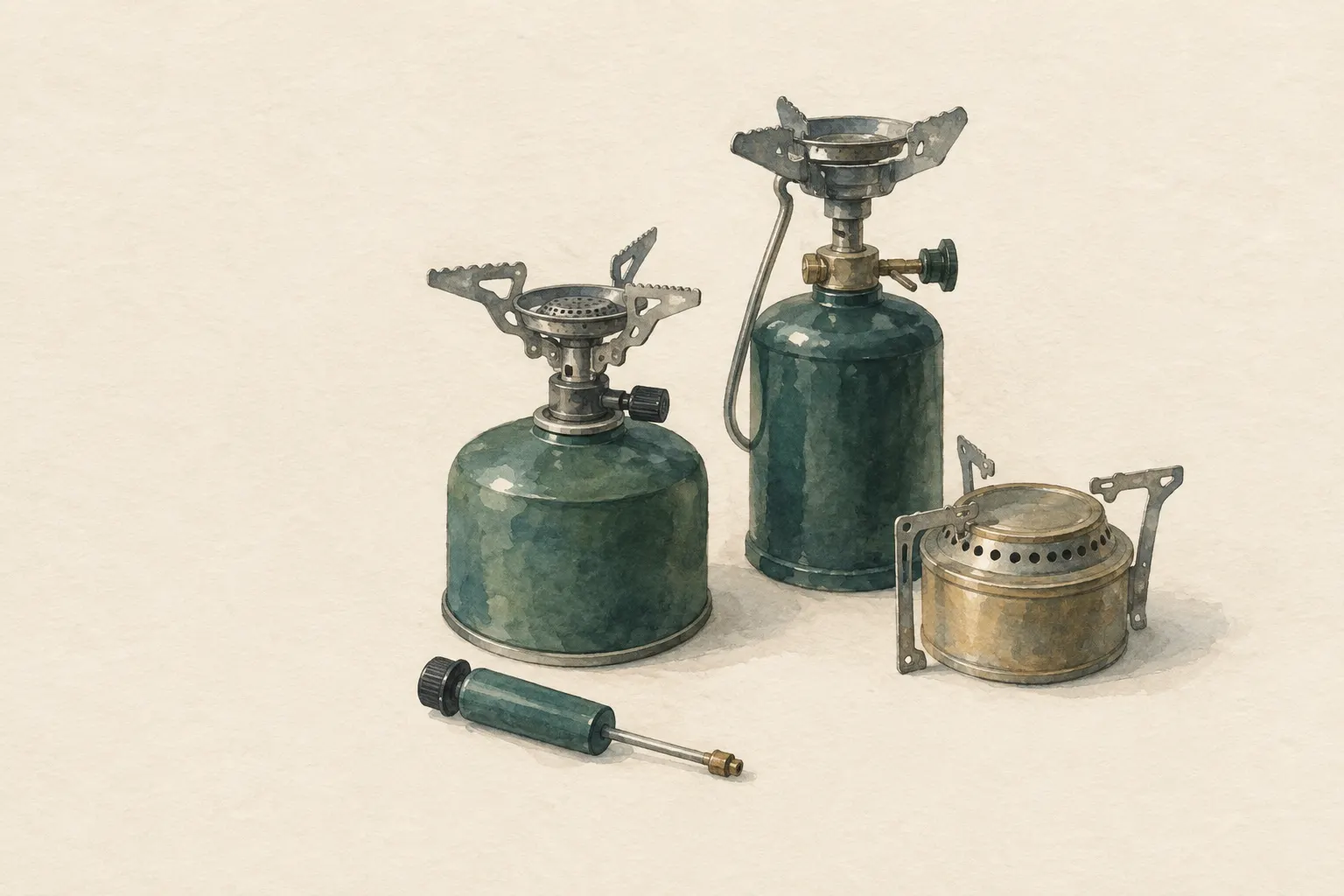
Explained simply
A camping stove is like a tiny gas cooker you can take with you. The fuel turns into vapour, mixes with air and burns at a small opening, the jet. Small rubber rings, the seals, make sure the fuel only comes out where it should. When the jet is clean and the seals are tight, a calm blue flame burns.
So before every trip you take a quick look: are the seals intact? Does the stove burn evenly? Is there a smell of gas? If there is a smell of gas, do not light the stove.
The most important rule: a stove is only used outdoors, never in a tent, a car or your home. Burning produces carbon monoxide, a poisonous gas you cannot see or smell. Stand the stove firmly on the ground and keep small children away.
How a stove works
All stoves basically do the same thing: they turn fuel into vapour, mix it with air and burn it at the jet. In canister stoves the gas is under pressure inside the canister and is liquid there; when you open the valve, it vaporises and flows to the jet. In liquid-fuel stoves you build up pressure in the fuel bottle with a pump, and the fuel has to be preheated (primed) before use so that it vaporises in a hot tube. Alcohol stoves are the simplest: the alcohol evaporates from an open container and burns without pressure or a valve.
A calm, mostly blue flame shows that fuel and air are well mixed and burning completely. A yellow, flickering or sooty flame is a warning sign: combustion is incomplete, producing more soot and more carbon monoxide. The cause may be a dirty jet, a liquid-fuel stove that was not primed properly or contaminated fuel.
Seals – usually small O-rings at the canister connection or on the pump – keep the fuel inside the system. If they become cracked, dry or dirty, fuel can escape. A leak on a stove is dangerous, because escaping fuel can catch fire from the flame.
Care by stove type
For all stoves, check the seals for cracks, drying out and dirt and replace or lubricate them as the manufacturer specifies. There is often a service kit with matching spare seals for this. Take it on longer trips. Use only original parts or parts approved by the manufacturer.
Liquid-fuel stoves need the most care. The jet is cleaned with the supplied cleaning needle or a built-in shaker needle, and the fuel line is flushed as instructed. The pump often has a leather cup or an O-ring that must be lubricated so it can build up pressure. Canister stoves need less care: keep the thread clean, check the seal and unscrew the canister after cooking.
Alcohol stoves have hardly any parts that wear out. Keep them clean and check that the lid or regulator closes tightly. For all stoves: never modify a stove yourself and do not repair valves or regulators yourself. A damaged stove is properly repaired or replaced.
Fuel, cold and storage
Gas canisters lose performance in the cold. The gas vaporises less well, the pressure drops and the flame becomes weak. Butane in particular vaporises poorly around freezing point. The canister also cools itself during use, because evaporating gas uses up heat. Keep the canister body-warm before cooking, for example in your sleeping bag at night – but never heat it.
Store fuel in its original containers or in purpose-made, clearly labelled fuel bottles, cool, ventilated and out of children's reach. Never in drinks bottles: a mix-up can lead to serious poisoning. Use only the fuel the manufacturer intends for your stove.
After cooking, unscrew the canister, let the stove cool and put it away clean and dry. Before longer storage, empty liquid-fuel stoves as the instructions describe.
Safety: what to watch out for
Stoves consume oxygen and produce carbon monoxide. Never run them inside a tent, in a vestibule with the entrance closed, in a vehicle or in living spaces. Carbon monoxide is invisible and odourless. With headache, dizziness or nausea get to fresh air at once and call the local emergency number (112 in the EU).
If there is a smell of gas or a connection is leaking, do not light. Unscrew the canister and take the stove out of use. Never enclose a canister with a windscreen: heat builds up and the canister can burst. Alcohol burns with an almost invisible flame in daylight. Only refill it when the stove is definitely out and has cooled down.
Put the stove on level, non-flammable ground, sheltered from wind, with the pot centred on it. Keep children away and never leave a burning stove unattended. Cool small burns with cool running water; for larger burns call the emergency number. In some areas restrictions apply when the risk of wildfire is high, and they can include stoves – check the local rules.
How to practise it
Before every trip, do a test run outdoors: assemble the stove, light it and watch the flame. It should burn evenly and mostly blue, no fuel should escape anywhere and there should be no smell of fuel. After long storage, check the seals especially thoroughly first.
Practise operating it until it is second nature – especially priming a liquid-fuel stove, because a larger flame can flare up while doing so. Learn how to turn the stove off quickly. Read the instructions completely and take them with you: stoves differ greatly in design and maintenance, and the manufacturer's instructions always take precedence.
Step by step
Check seals
Check O-rings at the canister connection or pump for cracks, drying out and dirt; replace or lubricate as the manufacturer specifies.
- 1
Check seals
Check O-rings at the canister connection or pump for cracks, drying out and dirt; replace or lubricate as the manufacturer specifies.
- 2
Clean the jet
Liquid-fuel stoves: clean the jet with the cleaning needle or shaker needle and flush the fuel line as instructed.
- 3
Test run outdoors
Light it outdoors before the trip: even blue flame, no leaks, no smell of fuel.
- 4
Set up safely
On level, non-flammable ground, sheltered from wind, pot centred. Keep children away.
- 5
Store
Unscrew the canister, store fuel in original containers cool and ventilated, put the stove away clean and dry.
Common mistakes
- Cooking in the tent
- Enclosing a canister in a windscreen
- Refilling alcohol while the stove is still burning
- Fuel in drinks bottles
Quick view
Materials
Stove
Never operate inside a tent, shelter or enclosed room – carbon monoxide and fire risk.
Stove fuel (canister, liquid fuel, alcohol)
Store fuels apart from food and in original containers or bottles intended for them.
Store cool, well ventilated and out of children's reach.
Water for extinguishing (bucket, canister or pot)
Have several litres ready before lighting.
Suitable for
- Before every trip and after long storage
- Cooking outdoors during power outages
Not suitable for
- Use indoors, in tents or vehicles
- Self-modified or damaged stoves
Prerequisites
- The stove's instructions
- Spare seals or the manufacturer's service kit
Safety
- No windscreens that enclose canisters – overheating can burst them. Alcohol flames are almost invisible in daylight.
How it works
A stove mixes fuel vapour with air and burns it at the jet. Seals keep the fuel in the system and clean jets give an even flame. Blocked jets, cracked seals or dirty fuel lead to flare-ups, leaks and incomplete combustion.
Advantages
- A reliable stove on trips
- Fewer accidents
Disadvantages
- Spare parts and maintenance take time
- Different fuels not available everywhere
Deep knowledge
Background
Mountaineering handbooks cover stove types, fuels and maintenance in detail. Health authorities such as the CDC warn about carbon monoxide from fuel-burning devices in enclosed spaces.
Manufacturer instructions are authoritative – stoves differ widely in design and maintenance.
Variants
- Gas in the cold
- Gas canisters lose performance in the cold. Keep the canister body-warm before use (e.g. in the sleeping bag) but never heat it.
Common mistakes
- Cooking in the tent
- Enclosing a canister in a windscreen
- Refilling alcohol while the stove is still burning
- Fuel in drinks bottles
Limits and risks
- No repair of valves or regulators
- No substitute for the manufacturer's instructions
Material alternatives
Derived from material properties: a substitute must have all relevant properties. Observe the notes on the substitute.
- Stove fuel (canister, liquid fuel, alcohol)
- Dry firewood (Collect only where permitted.), Tinder (Carry in waterproof packaging.), Char cloth (charred cotton) (Store dry in a tin.), Finest-grade steel wool (Store separately from batteries – fire risk.), Fatwood (resin-rich wood) (Collect only dead wood where permitted.), Petroleum jelly cotton balls (Use only pure cotton.)
Results come exclusively from structured entries. No improvised instructions are generated.
Sources
The Mountaineers Books (2017): Mountaineering: The Freedom of the Hills, 9th edition
Stove types, fuels and maintenance
Centers for Disease Control and Prevention: Carbon Monoxide Poisoning – Prevention guidance
Carbon monoxide from fuel-burning devices in enclosed spaces