Microbes in food: spoilage, fermentation and safety
Bacteria, yeasts and moulds need water, nutrients, a suitable temperature and, depending on the type, oxygen or its absence. Preserving food means taking one of these conditions away: cooling, drying, salting, acidifying, heating. Fermentation uses desirable microbes that produce acid and thereby crowd out undesirable ones – it only works reliably with tested recipes.
- Reading time
Explained simply
All around us live tiny creatures you can only see under a microscope: bacteria, yeasts and moulds. Together they are called microbes. Most are harmless, many are even useful – without them there would be no bread, no yoghurt and no sauerkraut. A few, however, make people ill.
Microbes are like little guests who want to make themselves at home in your food. For that they need water, food and a pleasant temperature. If you take one of these away, they cannot grow. That is why we chill food in the fridge, dry fruit, salt fish or pickle cucumbers in vinegar. In fermentation, on the other hand, you invite very particular, friendly guests. They make the food sour, and the dangerous guests no longer feel comfortable in the acid.
What matters: dangerous germs and their toxins often cannot be seen, smelled or tasted. That is why, when canning and preserving, you stick exactly to tested recipes. A bulging lid or a strange smell means: do not taste it, throw it away.
How it works
Bacteria multiply by dividing: one cell becomes two, two become four, then eight, sixteen and so on. Under good conditions, such a doubling can take well under an hour for some species. That is why a few germs can become a great many within a few hours. Yeasts and moulds grow somewhat differently but follow the same basic rules.
Microbes need available water, nutrients and a suitable temperature. Some need oxygen, others manage without it or cannot tolerate it at all. Preserving means changing at least one of these conditions so that unwanted microbes can no longer grow: cold slows them down, heat kills many, drying and salt take away their water, acid inhibits them.
Many disease-causing bacteria multiply fastest between about 5 and 60 °C. The WHO calls this range the danger zone. Below it, in the fridge, most grow only slowly; well above it, when cooking, many die. According to WHO advice, cooked food should not stand at room temperature for more than about two hours.
Fermentation: letting the good microbes work
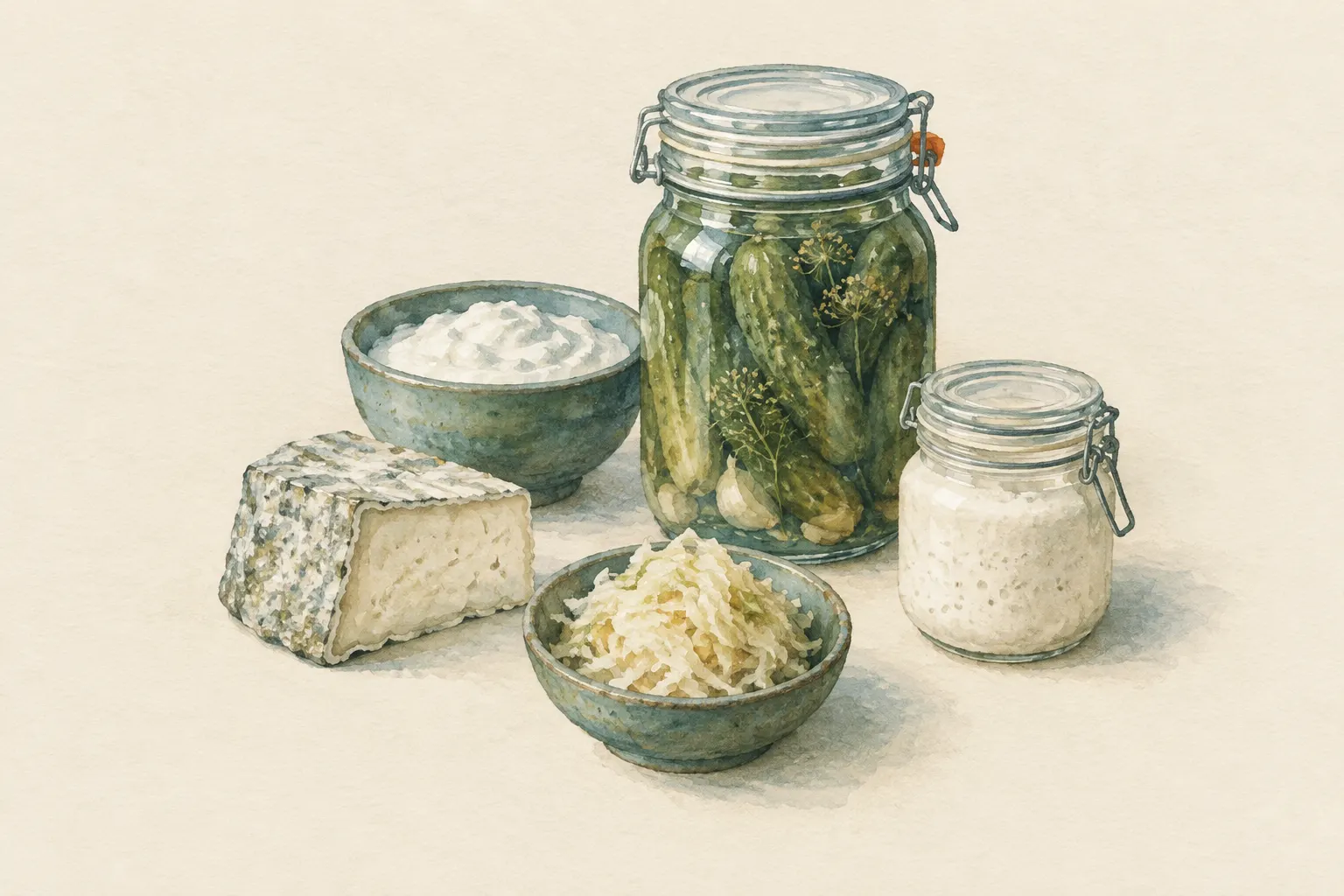
In lactic acid fermentation – for example sauerkraut or sour pickles – lactic acid bacteria are the main actors. They live naturally on many vegetables. They eat sugar from the vegetables and turn it into lactic acid. As a result, the jar becomes more and more acidic, and many pathogens can no longer multiply.
Salt and the exclusion of air give the lactic acid bacteria a head start. Salt draws water out of the vegetables and forms a brine. Lactic acid bacteria tolerate the salt well, many unwanted microbes less so. Under the brine there is hardly any oxygen, which makes life hard for moulds. That is why the vegetables must stay completely under the liquid.
Other fermentations work similarly: yeasts turn sugar into carbon dioxide and alcohol – the gas makes bread dough rise. In yoghurt, bacteria sour the milk. What they all have in common is that the result is only reliably safe if the salt quantity, temperature and time are right. That is why you work with tested recipes and not by feel.
Safety: botulism and other invisible dangers
The bacterium Clostridium botulinum lives in soil and forms very hardy spores, a kind of resting form that can survive normal boiling. In airtight, low-acid foods at room temperature – such as home-canned vegetables, beans or meat – it can germinate and produce a deadly toxin. Often you can see, smell and taste nothing of it.
That is why low-acid foods may only be canned using tested methods that use pressure to reach higher temperatures than an ordinary pan. Acidic foods – experts draw the line at a pH of 4.6 – are less at risk, because the bacterium cannot grow in a sufficiently acidic environment. How acidic something is follows from the recipe, not from the taste.
Other germs also form toxins that are not destroyed by reheating. So it does not help simply to boil spoiled food up again. Bulging lids, gas in non-fermented preserves, unusual smells or mould mean: do not taste it, throw it away. If food poisoning is suspected – for example with blurred vision, difficulty swallowing or signs of paralysis – call the local emergency number (112 in the EU) immediately.
What really matters
Cleanliness at the start gives you a head start: clean hands, clean jars, clean work surfaces. The fewer unwanted germs there are from the beginning, the easier it is for the wanted ones. Keep raw meat and ready-to-eat food apart so that germs do not travel from one to the other.
Keep food cold or hot, not lukewarm. Cool leftovers quickly and put them in the fridge. During a power cut keep the fridge door closed as much as possible so the cold lasts longer. Perishable food that has been warm for a long time is, when in doubt, no longer safe.
Dried and salted foods only keep as long as they stay dry. If dried fruit absorbs water in a damp environment, the risk returns. So store them airtight, cool and dry.
Good to know
People have been fermenting food for thousands of years – long before anyone knew microbes existed. Only in the 19th century did Louis Pasteur show that fermentation is caused by living microorganisms. Since then we have understood why old household rules such as “salt it well” and “keep it under the brine” work.
A common misconception is: “If it smells fine, it is safe.” Many spoilage germs do smell unpleasant, but the most dangerous pathogens and toxins often do not. Conversely, well-made sauerkraut smells strong even though it is safe. The nose is a warning signal, not proof of safety.
This entry deliberately contains no recipes and does not help with identifying moulds or pathogens. Tested instructions are available from food safety and home preservation authorities.
Step by step
Understand the cold chain
Keep perishable food cold or keep it hot – do not leave it for hours in the range in between.
- 1
Understand the cold chain
Keep perishable food cold or keep it hot – do not leave it for hours in the range in between.
- 2
Acid as protection
Pickled and lacto-fermented foods are safer because the acid inhibits pathogens. The necessary acidity comes from the recipe, not from taste.
- 3
Use tested methods
Can low-acid foods such as vegetables, meat and beans only according to tested instructions; when fermenting, stick to the salt quantity and temperature.
- 4
Work cleanly
Keep hands, jars and work surfaces clean – fewer unwanted microbes at the start mean a lower risk.
Common mistakes
- Changing recipes by feel
- Canning low-acid vegetables without a tested method
- Tasting suspicious preserves
- Leaving cooked food standing warm for hours
Quick view
Materials
Fermentation jar or crock
Use only food-grade containers of glass, food-safe glazed stoneware or food-grade plastic – no metal containers for acidic food.
Suitable for
- Understanding why preservation rules exist
- Getting started with fermentation and canning
- Assessing food during a power cut
Not suitable for
- Developing your own preservation recipes without testing
Safety
- Bulging lids, gas in non-fermented preserves, unusual smells or mould: do not taste, throw it away. If poisoning is suspected, call the local emergency number (112 in the EU).
How it works
Many disease-causing bacteria multiply fastest between about 5 and 60 degrees Celsius – the so-called danger zone. Cold slows them, sufficient heat kills many, and drying and salt deprive them of available water. In lactic acid fermentation, lactic acid bacteria convert sugar into lactic acid; acidity rises and many pathogens can no longer multiply. Salt and the exclusion of air under the brine give the lactic acid bacteria a head start.
Advantages
- Explains why preservation rules are so strict
- Helps assess food during a power cut
Disadvantages
- Dangerous microbes and toxins often cannot be seen, smelled or tasted
Deep knowledge
Background
The WHO manual "Five Keys to Safer Food" gives the temperature rule of keeping food below 5 °C or above 60 °C and explains why microbes multiply quickly in between. The US Department of Agriculture's "Complete Guide to Home Canning" explains why low-acid foods may only be canned with tested pressure methods because of Clostridium botulinum.
The National Center for Home Food Preservation provides tested instructions for fermenting, pickling and drying.
Variants
- Drying
- Drying lowers the available water so far that microbes cannot grow. Dried food must be stored dry, otherwise the risk returns.
Common mistakes
- Changing recipes by feel
- Canning low-acid vegetables without a tested method
- Tasting suspicious preserves
- Leaving cooked food standing warm for hours
Limits and risks
- No recipes
- No identification of moulds or pathogens
Material alternatives
Derived from material properties: a substitute must have all relevant properties. Observe the notes on the substitute.
- Fermentation jar or crock
- Single-wall stainless steel bottle (Heat only single-wall bottles without paint/plastic; remove the lid before heating.), Double-wall insulated bottle (Never heat directly.), PET bottle (clear, max. 2 litres) (Do not heat or place in a fire.), Food-grade water container (Only use containers that never held chemicals or fuel.), Airtight food-grade storage container (Fill only when clean and completely dry; never use containers that previously held chemicals.), Collapsible water container or bag (Protect from sharp objects.), Food-grade water bag (Use only for drinking water, never for chemicals or fuel.), Resealable food bags (Use only bags intended for food; do not use with boiling water unless the manufacturer explicitly allows it.)
Results come exclusively from structured entries. No improvised instructions are generated.
Sources
World Health Organization (WHO) (2006): Five Keys to Safer Food Manual
Temperature range in which microbes multiply quickly
United States Department of Agriculture (USDA) – National Institute of Food and Agriculture: Complete Guide to Home Canning
Botulism risk in low-acid foods, tested methods
University of Georgia / National Center for Home Food Preservation (USA): National Center for Home Food Preservation – tested guidance on drying and preserving food
Tested instructions for fermenting and preserving
European Commission: 112 – the European emergency number
European emergency number 112