Fire in wind: decide, shelter, keep it small
Wind makes a fire harder to light and at the same time more dangerous: it blows out the first flame, fans a running fire excessively and carries sparks far. The first question is therefore whether a fire is justifiable at all. If so, a sheltered, non-flammable spot, a low, compact lay, a small fire and a large cleared area downwind all help.
- More preparation and constant supervision
Explained simply
For a fire, wind is two things: at the start it is an enemy, later it can become dangerous. When you are lighting the fire, it blows out the small flame before the wood is warm enough. Once the fire is burning, it blows into it like a bellows, makes it bigger and carries sparks far away – perhaps into dry grass.
So first ask yourself one question: is a fire a good idea at all in this wind? In strong or gusty wind and dry surroundings, the answer is no. Then a stove with a windscreen or simply cold food is the better choice.
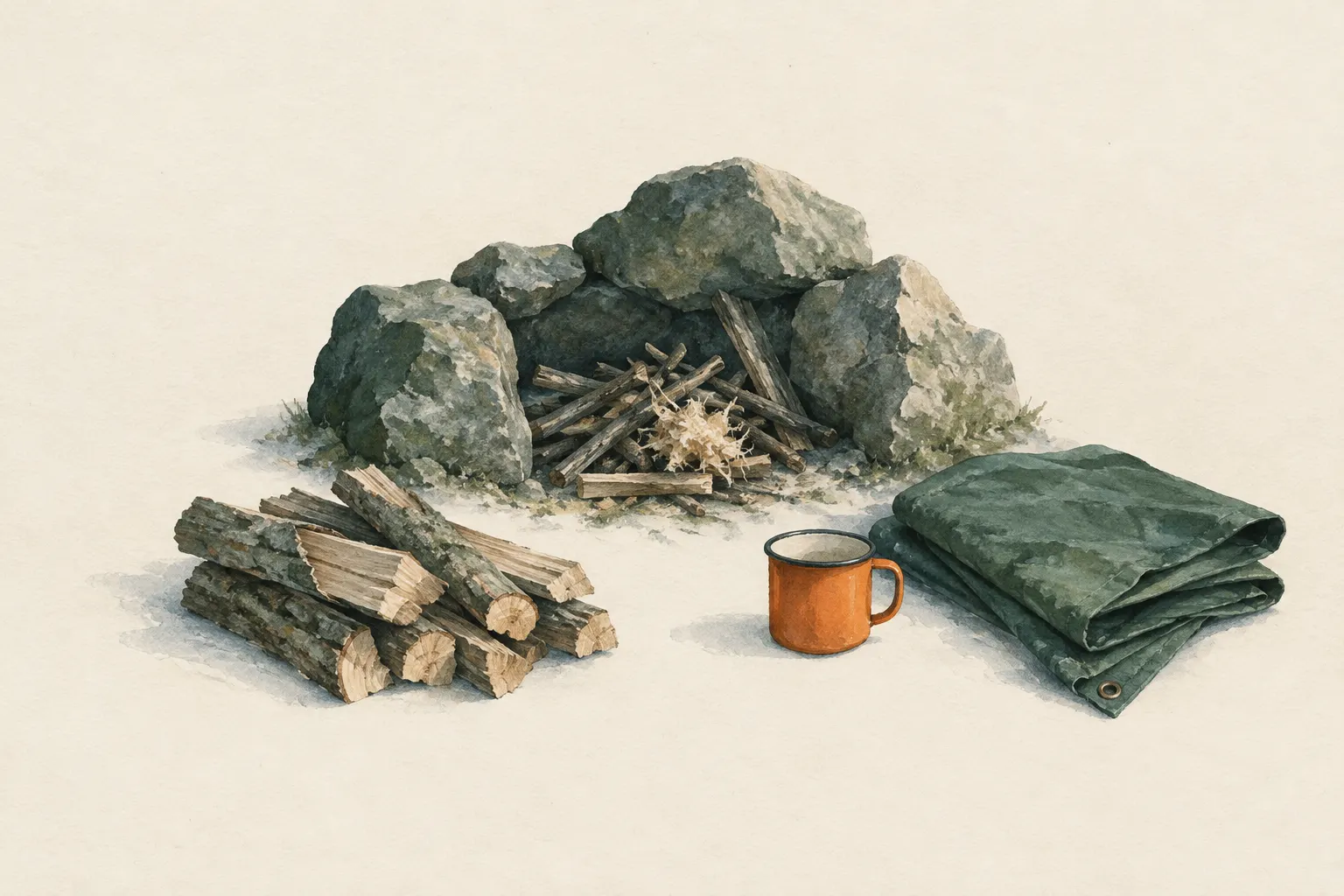
If a fire is justifiable, a sheltered spot helps – for example behind a rock – along with a low, small fire and a large cleared area on the side the wind is blowing towards.
How it works
A fire needs fuel, heat and oxygen – like a stool needs three legs. Wind affects two of them at once. It brings extra oxygen, which makes a running fire hotter and bigger. And it cools, which robs a small, young flame of heat before it has warmed the wood enough.
This leads to a simple rule: the lighting phase needs shelter, the running fire needs limiting. On top of that comes flying sparks. Sparks and glowing particles travel with the wind, often further than you would think. The risk therefore almost always lies on the downwind side, i.e. where the wind is blowing to.
What really matters
The decision comes first. Assess wind strength, gusts, dryness and vegetation downwind. If there is grass, heath or forest there, and it is dry, there is no fire. If in doubt, likewise not. Also always check the local rules and the current wildfire danger.
If a fire is justifiable: use natural shelter in the lee, i.e. on the side of rocks or banks facing away from the wind, or in hollows – but not under overhanging branches. A low stone wall on the windward side helps, as long as the stones are dry; stones from streams can burst in the heat. Clear the area around the fire site generously, especially downwind, and store the wood supply on the windward side so that no sparks fly into it.
Build low and compact, for example a lean-to lay in which a cross-piece on the windward side shelters the lighting point. To light it, kneel with your back to the wind and hold the ignition source close to the tinder, which you have fully prepared beforehand. After that, add only a little wood and keep the fire small.
Safety: what to watch out for
Many escaped fires start in exactly this way: the wind carries sparks from a fire site into dry vegetation. So keep a constant eye on flying sparks and the surroundings downwind. If the wind picks up, put the fire out immediately and thoroughly – not “in a minute”.
Tarps, tents and backpacks are not a windbreak for a fire. Sparks burn holes in them, and synthetics melt and can burn themselves. If a fire gets out of control anyway, do not fight it alone: get yourself and others to safety, across the wind and away from the direction of spread, and immediately call the local emergency number (112 in the EU).
When it makes sense – and when not
In moderate, steady wind, in wet surroundings with no fire risk downwind and with enough extinguishing water, a small, well-sheltered fire can be justifiable. A well-shielded fire then even burns especially strongly, but also uses more wood.
In storms, gusts and dry conditions there is no safe solution. A windbreak does not replace a firebreak, i.e. a wide strip with nothing flammable on it. Where digging is permitted and the soil is suitable, a sunken fire site such as a Dakota hole can shield the fire – afterwards the ground must be carefully restored. Often, though, a stove with a windscreen is the simpler and safer choice.
Step by step
Decide
Assess wind strength, gusts, dryness and vegetation downwind. If in doubt, no fire.
- 1
Decide
Assess wind strength, gusts, dryness and vegetation downwind. If in doubt, no fire.
- 2
Find natural shelter
Use the lee behind rocks, banks or in hollows, without going under overhanging branches. A low stone wall on the windward side helps (no wet river stones).
- 3
Clear generously
Clear the area around the fire site, especially downwind, of leaves, grass and deadwood. Store the wood supply on the windward side.
- 4
Build low
Choose a compact, low lay, e.g. a lean-to with the cross-piece on the windward side so the lighting point is sheltered.
- 5
Shield with your body
Kneel with your back to the wind and hold the ignition source close to the tinder. Prepare the tinder fully beforehand.
- 6
Keep small and watch
Add only a little wood, watch for sparks and put the fire out immediately if the wind increases.
Common mistakes
- A big, tall fire in wind
- Storing firewood on the downwind side
- A tarp as a windbreak right next to the fire
- Not watching for sparks
Quick view
Materials
Tinder
Carry in waterproof packaging.
Do not use liquid accelerants as tinder.
Dry firewood
Collect only where permitted.
Water for extinguishing (bucket, canister or pot)
Have several litres ready before lighting.
Stove
Often the better choice with a windscreen
Never operate inside a tent, shelter or enclosed room – carbon monoxide and fire risk.
Suitable for
- Moderate, steady wind
- Wet surroundings with no fire risk downwind
Not suitable for
- Storms, gusts and dry conditions
- Grass, heath and forest downwind
- No extinguishing water
Prerequisites
- Fire permitted and no elevated wildfire danger
- A sheltered spot with non-flammable ground
- Extinguishing water
Safety
- Do not use tarps, tents or backpacks as a windbreak near the fire – sparks burn holes, synthetics melt and burn.
How it works
Wind supplies extra oxygen and at the same time cools small flames before they have heated the wood. That is why the lighting phase needs shelter, whereas the running fire needs limiting. Sparks and glowing particles travel with the wind – the risk is almost always on the downwind side.
Advantages
- Wind helps a well-sheltered fire burn
Disadvantages
- High risk from flying sparks
- Higher wood consumption
- Difficult lighting phase
Deep knowledge
Background
Many escaped fires begin when wind carries sparks from a fire site into dry vegetation. Fire-prevention campaigns therefore advise not making a fire in windy conditions or putting it out straight away.
For lighting itself, the same moves help as with matches and lighters: body as a windbreak, prepared tinder, patience.
Variants
- Sunken fire site
- Where the soil is suitable and digging is permitted, a sunken fire site (e.g. a Dakota hole) can shield the fire from wind. Restore the ground carefully afterwards.
Common mistakes
- A big, tall fire in wind
- Storing firewood on the downwind side
- A tarp as a windbreak right next to the fire
- Not watching for sparks
Limits and risks
- No safe solution in a storm
- A windbreak does not replace a firebreak
Material alternatives
Derived from material properties: a substitute must have all relevant properties. Observe the notes on the substitute.
- Tinder
- Dry firewood (Collect only where permitted.), Char cloth (charred cotton) (Store dry in a tin.), Finest-grade steel wool (Store separately from batteries – fire risk.), Fatwood (resin-rich wood) (Collect only dead wood where permitted.), Stove fuel (canister, liquid fuel, alcohol) (Store fuels apart from food and in original containers or bottles intended for them.), Petroleum jelly cotton balls (Use only pure cotton.)
- Dry firewood
- Tinder (Carry in waterproof packaging.), Char cloth (charred cotton) (Store dry in a tin.), Finest-grade steel wool (Store separately from batteries – fire risk.), Fatwood (resin-rich wood) (Collect only dead wood where permitted.), Stove fuel (canister, liquid fuel, alcohol) (Store fuels apart from food and in original containers or bottles intended for them.), Petroleum jelly cotton balls (Use only pure cotton.)
Results come exclusively from structured entries. No improvised instructions are generated.
Sources
USDA Forest Service / Ad Council / National Association of State Foresters: Campfire Safety (Smokey Bear wildfire prevention campaign)
No fire in windy conditions; sparks and keeping fires small
Headquarters, Department of the Army (USA) (2002): FM 3-05.70 Survival
Choosing a sheltered fire site