Lighting with a lighter – including in wind, wet and cold
A gas lighter gives many ignitions and an open flame. A wet spark wheel can be dried; cold is the bigger weakness because gas vaporises poorly at low temperatures. Carry it close to your body and have a second ignition method.
- Seconds, once tinder and wood are ready
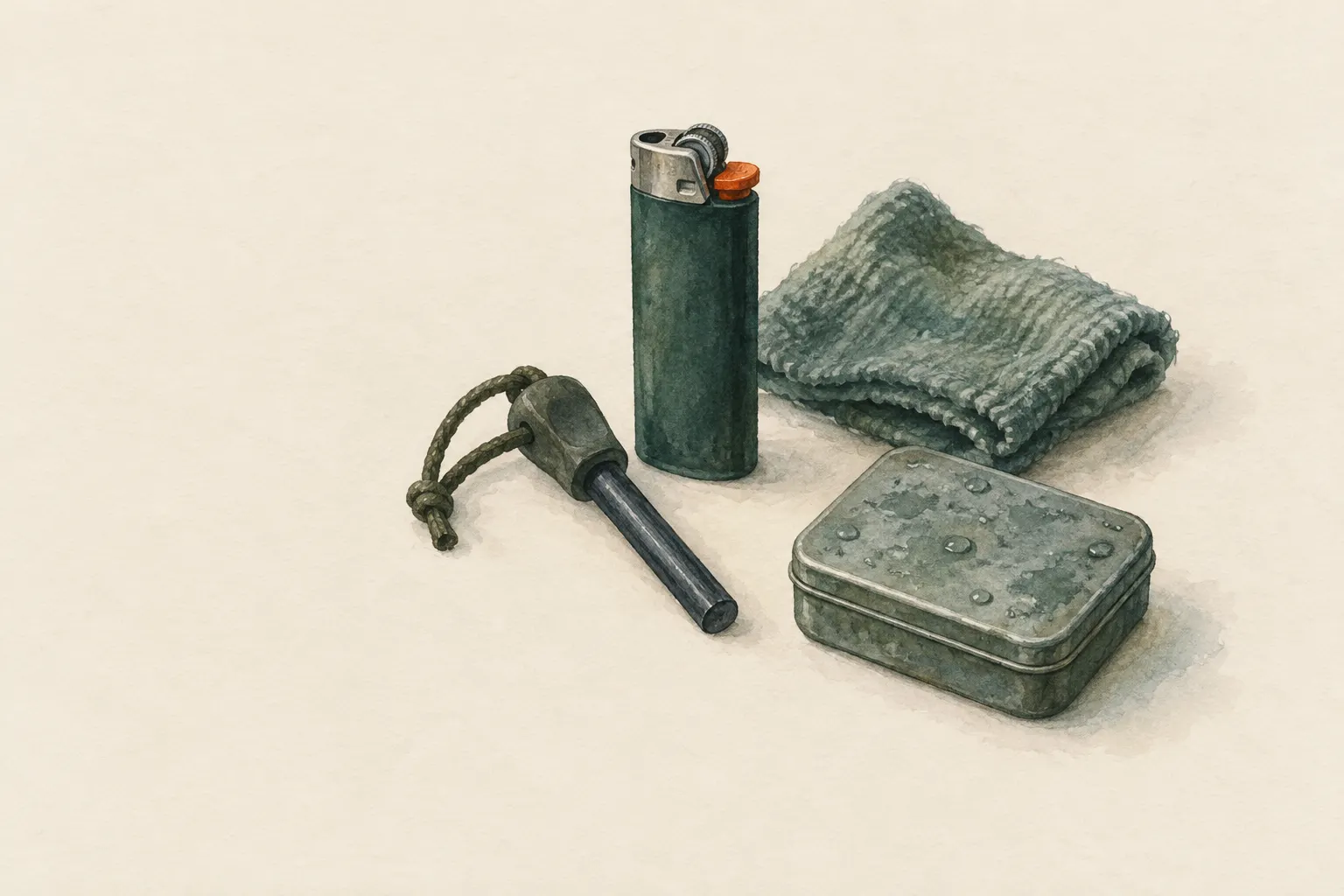
Explained simply
Inside a lighter there is liquid gas. When you press the button, a little gas flows out and turns into vapour. A spark – from the wheel or from a small electric igniter – makes it burst into flame. With a lighter you can make a flame very many times in a row.
The lighter does not like cold. When it is very cold, the gas gets “lazy”: it hardly evaporates any more, and the flame stays small or does not light at all. So in winter you carry the lighter in an inside pocket, close to your body – just as you put your hands in your pockets to keep them warm.
For safety: never leave a lighter next to the fire, in direct sun or in a hot car. It can burst.
How it works
A simple gas lighter contains liquefied gas, usually butane-based, kept liquid under pressure. When the valve opens, gas flows out. A spark from a wheel and flint or a piezo element (a crystal that makes a small electric spark when pressed) ignites it.
For gas to flow out, the liquid inside the lighter must evaporate. That works only when it is warm enough. Butane evaporates poorly at around freezing point; the colder it gets, the less pressure builds up inside the lighter. Then the flame becomes tiny or fails completely. Body heat restores the pressure.
By the way, the flint in a lighter is made of the same material as a ferro rod, only very small. The wheel scrapes off particles that glow as sparks and ignite the gas.
What really matters
In the cold: carry the lighter in an inside pocket against your body and take it out only to light. If it has already cooled down, warm it in your hand or under your armpit for a while before trying again. A lighter on the outside of the pack is often useless in frost.
In the wet: a wet wheel gives no sparks. Shake the lighter, blow the wheel and flint dry and roll the wheel several times over your trouser leg or palm until it sparks again. Constantly spinning a wet wheel only rubs your thumb raw.
When lighting: kneel with your back to the wind, shield the flame with your body and hand, and hold the lighter at an angle so the flame reaches the underside of the tinder without burning your thumb. If the tinder does not catch within a few seconds, it is usually too wet or too coarse – then it is more worthwhile to find better tinder than to hold the flame to it for minutes.
Gear and materials
Simple gas lighters are cheap, light and give many ignitions. On opaque models you cannot see the fuel level – check it before every trip or choose a transparent lighter. Gas can run out unnoticed.
Windproof or jet lighters produce a focused, wind-stable flame. But they use gas faster and usually rely on piezo ignition, which can fail when wet. Petrol (fluid) lighters often work better in the cold than gas lighters, but their fuel evaporates over time, even when they are not used.
How well a lighter works in the cold depends heavily on the gas and the model. Manufacturer information and your own tests tell you more than general limits. Because any lighter can fail, a second ignition method belongs with it, such as matches in a waterproof case or a ferro rod.
Safety: what to watch out for
A lighter is under pressure. Next to the fire, in direct sun or in a hot car it can burst. Do not keep the flame burning for long at a time either: metal parts get hot and the casing can be damaged.
Windproof and jet lighters have a barely visible, very hot flame. Keep fingers and sleeves away and check that it is really out. The fuel of a petrol lighter must never be poured into a fire as an accelerant – that applies to all flammable liquids.
Keep lighters out of children's reach. Air travel has special rules for carrying them – check the airline's regulations. And as with any fire: check the local rules and the wildfire danger beforehand.
Typical situations
Winter hike: the lighter from the lid pocket of the pack only clicks. Instead of throwing it away, you put it in your trouser pocket or under your jacket for a few minutes and then try again. The flame often comes back.
After slipping into a stream: the wheel is wet. Shake, blow dry, roll it several times over a dry sleeve – it usually works again afterwards. In the meantime you can prepare your tinder so the first sparks are not wasted.
Step by step
Keep the lighter warm
In the cold, carry the lighter in an inside pocket close to your body and take it out only to light.
- 1
Keep the lighter warm
In the cold, carry the lighter in an inside pocket close to your body and take it out only to light.
- 2
Dry it if wet
If the wheel is wet, shake the lighter, blow the wheel and flint dry and roll it several times on your trouser leg or palm until it sparks.
- 3
Form a windbreak
Kneel with your back to the wind and shield the flame with your body and hand.
- 4
Light the tinder from below
Hold the lighter at an angle so the flame reaches the underside of the tinder without burning your thumb. Let go after a few seconds once the tinder is burning.
Common mistakes
- Carrying the lighter on the outside of the pack in frost
- Spinning a wet wheel over and over and rubbing your thumb raw
- Holding the flame to wet wood for minutes instead of finding better tinder
- Not checking the fuel level
Quick view
Materials
Lighter, matches or ferro rod
Gas lighter, possibly a windproof/jet lighter
Observe local fire bans.
Tinder
Carry in waterproof packaging.
Do not use liquid accelerants as tinder.
Suitable for
- Everyday fire-making
- Beginners
- Many ignitions from one device
Not suitable for
- Severe cold if the lighter is not kept body-warm
- Only ignition source on long trips
Prerequisites
- Tinder, kindling and fuel wood prepared
- Safe fire site
Safety
- Windproof and jet lighters have a barely visible, very hot flame. Keep fingers and sleeves away.
How it works
A spark from a wheel and flint or a piezo element ignites escaping liquefied gas. The gas must vaporise for this; in the cold the pressure in the lighter drops and the flame becomes small or fails. Body heat restores the pressure.
Advantages
- Many ignitions
- Hardly any practice needed
- Works again once the wheel is dried
Disadvantages
- Weak in the cold
- Wheel hard to operate with cold fingers
- Gas can run out unnoticed
Deep knowledge
Background
Simple gas lighters are cheap, light and included in many emergency kits. How well they work in the cold depends on the gas and model; manufacturer information and your own tests say more than general limits.
Air travel has special rules for carrying lighters – check the airline's regulations.
Variants
- Windproof or jet lighter
- Produces a focused, wind-stable flame. Uses gas faster and relies on piezo ignition, which may fail when wet.
- Petrol (fluid) lighter
- Often works better in the cold than gas lighters, but the fuel evaporates over time. Never misuse its fuel as an accelerant.
Common mistakes
- Carrying the lighter on the outside of the pack in frost
- Spinning a wet wheel over and over and rubbing your thumb raw
- Holding the flame to wet wood for minutes instead of finding better tinder
- Not checking the fuel level
Limits and risks
- Performance in the cold depends heavily on the model
- Fuel level not visible on opaque lighters
Material alternatives
Derived from material properties: a substitute must have all relevant properties. Observe the notes on the substitute.
- Lighter, matches or ferro rod
- Ferro rod (Practise before you need it.), Fire striker and hard stone (Carbon steel, not stainless.), Bow drill set (bow, spindle, hearth board, bearing block) (Use only dry wood.), Burning lens / magnifier (Never leave lying in the sun – fire risk.), Fire piston (Maintain the seal.)
- Tinder
- Dry firewood (Collect only where permitted.), Char cloth (charred cotton) (Store dry in a tin.), Finest-grade steel wool (Store separately from batteries – fire risk.), Fatwood (resin-rich wood) (Collect only dead wood where permitted.), Stove fuel (canister, liquid fuel, alcohol) (Store fuels apart from food and in original containers or bottles intended for them.), Petroleum jelly cotton balls (Use only pure cotton.)
Results come exclusively from structured entries. No improvised instructions are generated.
Sources
Headquarters, Department of the Army (USA) (2002): FM 3-05.70 Survival
Lighter as an ignition source
USDA Forest Service / Ad Council / National Association of State Foresters: Campfire Safety (Smokey Bear wildfire prevention campaign)
No flammable liquids for lighting