Lighting a fire with a ferro rod
A ferro rod (ferrocerium rod) throws a shower of very hot sparks when scraped with an edge. It works when wet after wiping, in the cold and very many times – but needs especially fine, dry tinder and some practice.
- Practice at home recommended; seconds to minutes in the field
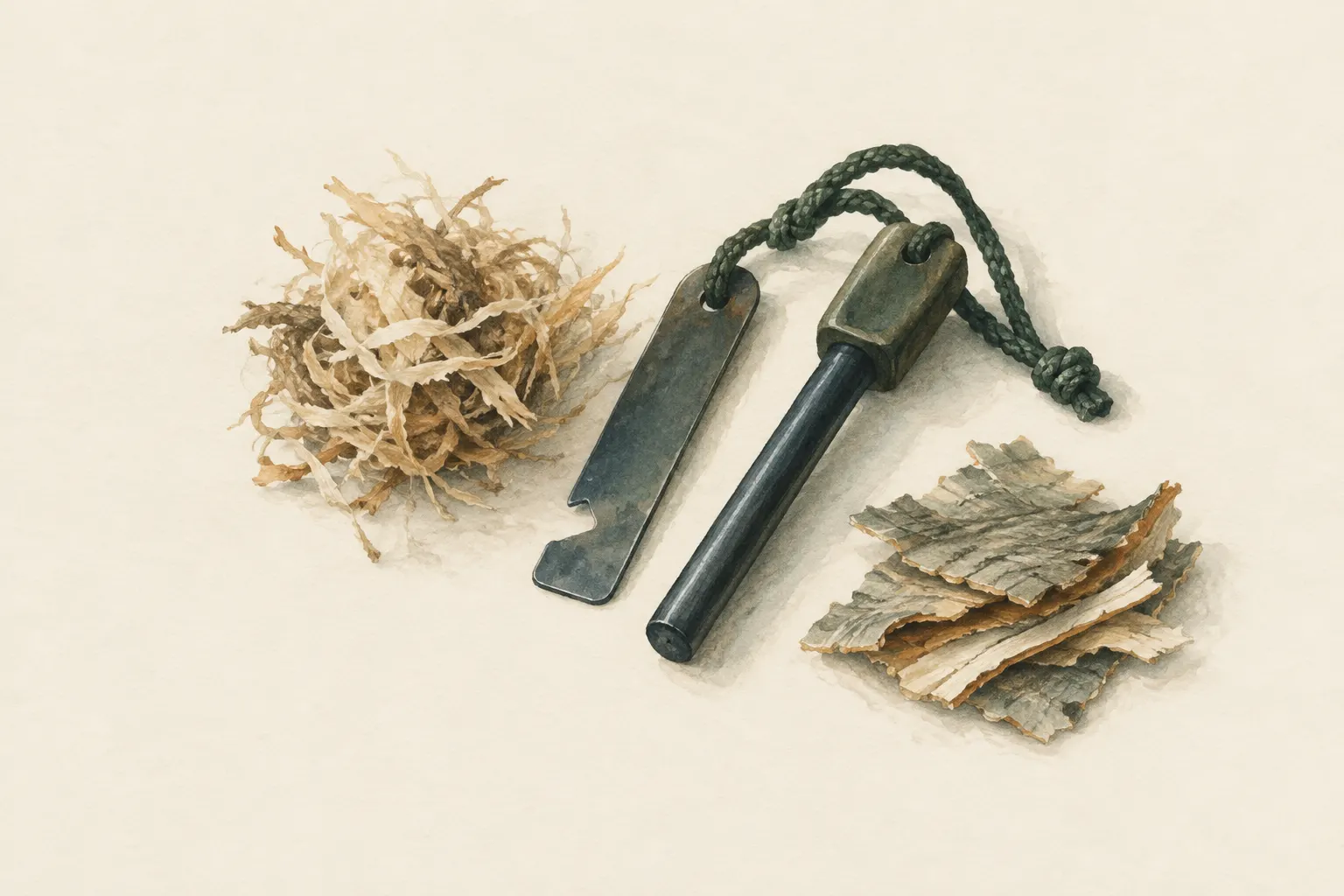
Explained simply
A ferro rod is a metal rod that sprays a whole shower of very hot sparks when you scrape it with a sharp edge – a bit like a sparkler, only much shorter and hotter. You use the sparks to light especially fine, dry tinder.
The great thing about a ferro rod: it works even after getting wet (just wipe it), when it is freezing cold, and very, very many times. The catch: sparks are not a flame. They only catch in very fine material, such as teased-out cotton wool or paper-thin wood shavings. And you need to practise beforehand.
For safety: the sparks fly far and are very hot. Use the ferro rod only at a safe fire site and keep your eyes and clothing out of the path of the sparks.
How it works
A ferro rod is made of ferrocerium, a metal mixture consisting mainly of the element cerium and other so-called rare earths, plus iron. When you scrape it with a hard, sharp edge, tiny metal particles come off. The heat of friction makes them ignite in air and burn as glowing sparks. The same material is used as the small flint in many lighters.
Each spark is very hot but tiny and gone in an instant. So it delivers its heat only at one point and only very briefly. That is why a ferro rod needs tinder with a very large surface and little mass: cotton wool, shredded birch bark, the finest shavings. In coarse or damp material the sparks simply fizzle out.
Ferro rods are often called “magnesium rods”. That is not correct: magnesium is a different metal. There are, however, combinations where you scrape fine shavings off a magnesium block and ignite them with the ferro rod. Magnesium shavings burn very hot and can help difficult tinder; but scraping them takes a while.
What really matters
The tinder decides. Build a loose, fist-sized tinder bed on a dry base, for example a piece of bark, and tease it out so finely that lots of fibres stick out. Kindling in several sizes lies within reach, because a burning cotton ball does not last long.
The technique is simpler than it looks: put the tip of the rod directly in or just above the tinder. Press the striker firmly against the rod at a steep angle, hold it still and pull the rod firmly back. That way the sparks land right in the tinder, and you do not knock the tinder pile apart with a forward stroke.
The striker needs a hard, sharp, right-angled edge. A suitable striker is usually supplied. A knife spine only works if it has a sharp edge; many knife spines are rounded. New rods often have a black protective coating that you must scrape off once in one spot before sparks appear.
When it makes sense – and when not
The ferro rod is an excellent backup in an emergency kit: it hardly wears, is insensitive to water, and cold does not bother it, unlike the gas in a lighter. How many strikes a rod gives depends on its size and your handling, but there are usually a great many.
Its weaknesses: it gives no flame, only sparks, so it needs especially fine, dry tinder and some practice. With very cold, stiff fingers the firm pull is hard. Without suitable tinder it is practically useless.
So a ferro rod is not a replacement for matches or a lighter but an addition. A good combination is a lighter for everyday use, a ferro rod as a robust reserve, and carried tinder in a waterproof bag.
Safety: what to watch out for
The sparks fly further than many people expect and are very hot. Use the ferro rod only at a safe fire site, not near gas canisters or fuel containers, and never aim sparks at people. Protect your eyes and clothing; synthetic fabrics can get holes from sparks.
If you use a knife as the striker, use only the spine and keep the blade pointing away from your body and the tinder. Many injuries happen because the edge slips during a firm pull.
As with any fire: check the local rules and the wildfire danger beforehand. A fire ban applies to practice fires too.
How to practise it
First practise just making sparks, without a fire, for example over a fireproof base in a place where that is allowed. Try different angles and pressure until each stroke gives a strong shower of sparks. Then practise with cotton wool, and after that with natural tinder such as shredded birch bark or fine shavings.
Be aware that natural tinder is much harder to ignite than cotton wool. Anyone who has practised this at home and in good weather is more relaxed in the field. Anyone using a ferro rod for the first time in an emergency often fails because of small things like the protective coating or tinder that is too coarse.
Step by step
Build a tinder bed
Place a fist-sized, loosely fluffed bundle of tinder on a dry base (bark, piece of wood). Kindling sorted by size within reach.
- 1
Build a tinder bed
Place a fist-sized, loosely fluffed bundle of tinder on a dry base (bark, piece of wood). Kindling sorted by size within reach.
- 2
Prepare a new rod
Many new rods have a protective coating; scrape it off once in one spot until sparks appear. Wipe a wet rod dry.
- 3
Position the rod
Place the tip of the rod directly in or just above the tinder. Press the striker firmly against the rod at a steep angle.
- 4
Pull the rod back
Hold the striker still and pull the rod firmly back. This leaves the tinder undisturbed and lands the sparks right in it.
- 5
Build up the flame
As soon as the tinder catches, add the finest kindling and gradually thicker pieces.
Common mistakes
- Tinder too coarse or damp
- Pushing the striker forward and knocking the tinder away
- Too little pressure or too shallow an angle
- Using it for the first time in an emergency without prior practice
Quick view
Materials
Ferro rod
Practise before you need it.
Sparks fly far – do not use near fuel containers.
Tinder
Very fine and dry: cotton wool with petroleum jelly, shredded birch bark, fine shavings
Carry in waterproof packaging.
Do not use liquid accelerants as tinder.
Knife (fixed or locking blade)
Spine of a knife or the supplied striker
Cut away from your body.
Rules on carrying knives differ by region – check local rules.
Suitable for
- Emergency kit and long-term backup
- Wet and cold conditions
- Many ignitions
Not suitable for
- Coarse or damp tinder
- Untrained users under time pressure
Prerequisites
- Tinder prepared very finely
- Practised beforehand
- Safe fire site
Safety
- Sparks fly far and are very hot. Use only at a safe fire site, not near gas or fuel containers, and protect your eyes and clothing.
- If a knife is used as the striker, use only the spine and keep the blade pointing away from your body and the tinder.
How it works
Scraping removes tiny metal particles that ignite in air from the friction and fall as sparks. Sparks deliver heat only locally and briefly – so the tinder must be very fine with a large surface area to catch from a spark.
Advantages
- Works after wiping even when wet
- Very many ignitions
- No gas that fails in the cold
Disadvantages
- Needs very fine, dry tinder
- Requires practice
- No flame, only sparks
Deep knowledge
Background
Ferro rods are made of ferrocerium, the same material as lighter flints, only in a large form. They are often wrongly called ‘magnesium rods’. How many strikes a rod gives depends on its size and handling.
Because a ferro rod hardly wears and is insensitive to water, it suits being a backup alongside matches or a lighter – not a substitute for practice.
Variants
- Magnesium block with ferro rod
- Scraped magnesium shavings burn very hot and can help difficult tinder. Collect the shavings in a small pile first; scraping takes time.
Common mistakes
- Tinder too coarse or damp
- Pushing the striker forward and knocking the tinder away
- Too little pressure or too shallow an angle
- Using it for the first time in an emergency without prior practice
Limits and risks
- Practically useless without suitable tinder
- Hard to use with very cold, stiff hands
Material alternatives
Derived from material properties: a substitute must have all relevant properties. Observe the notes on the substitute.
- Ferro rod
- Lighter, matches or ferro rod (Observe local fire bans.), Fire striker and hard stone (Carbon steel, not stainless.), Bow drill set (bow, spindle, hearth board, bearing block) (Use only dry wood.), Burning lens / magnifier (Never leave lying in the sun – fire risk.), Fire piston (Maintain the seal.)
- Tinder
- Dry firewood (Collect only where permitted.), Char cloth (charred cotton) (Store dry in a tin.), Finest-grade steel wool (Store separately from batteries – fire risk.), Fatwood (resin-rich wood) (Collect only dead wood where permitted.), Stove fuel (canister, liquid fuel, alcohol) (Store fuels apart from food and in original containers or bottles intended for them.), Petroleum jelly cotton balls (Use only pure cotton.)
Results come exclusively from structured entries. No improvised instructions are generated.
Sources
Headquarters, Department of the Army (USA) (2002): FM 3-05.70 Survival
Spark-based ignition methods and the need for fine tinder