Fire on a beach: rules, tides and hot sand
On many beaches open fires are prohibited or allowed only at designated sites – check local rules first. Where fire is allowed, special hazards apply: sea wind drives sparks into dunes, tides change the site, and embers buried under sand stay invisibly hot for hours and cause severe burns to bare feet. Beach fires are therefore always put out with water, never buried.
- Like a normal fire, plus thorough extinguishing
Explained simply
A fire on the beach sounds wonderful – but on many beaches it is prohibited or only allowed at certain spots. So first look at the signs or ask. Where it is allowed, there are a few special dangers by the sea.
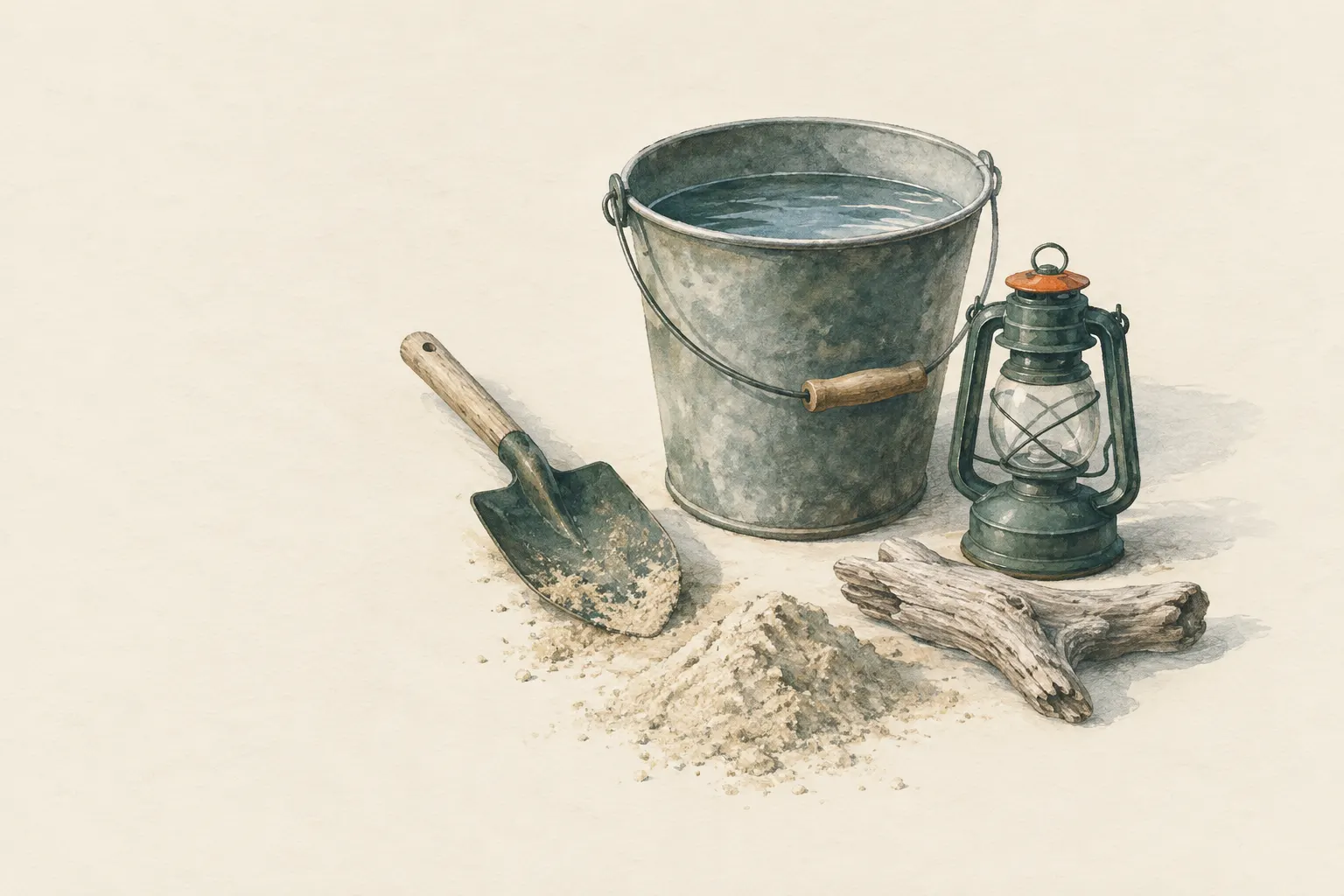
The most important one: sand is like a thick blanket for the embers. If someone covers a fire with sand, you cannot see anything any more – but underneath, the embers stay hot for many hours. Anyone who walks over it barefoot the next morning can badly burn their feet. That is why a beach fire is always put out with plenty of water, never covered with sand.
Also, wind from the sea can carry sparks into the dunes, where dry grass grows. And the water rises at high tide: a spot that was dry in the afternoon can be under water in the evening or cut off your way back.
How it works
Sand is a good thermal insulator. There is a lot of air between the grains, and air conducts heat poorly. If you cover embers with sand, they get less oxygen but also lose hardly any heat. They keep smouldering slowly or simply stay hot, and the layer of sand on top gives nothing away. Water, on the other hand, absorbs a great deal of heat when it evaporates and therefore cools embers quickly and thoroughly.
Wind also follows its own rules by the sea. On sunny days the land warms up faster than the water; the warm air over the land rises, and cooler air flows in from the sea. This onshore wind carries sparks inland – exactly where dunes, beach grass and driftwood lie. In the evening and at night the wind can turn again. So anyone making a fire must expect changing wind directions.
What really matters
First the rules: look out for notices and ask the municipality or beach staff whether and where fire is allowed. Use designated fire sites. Rules for beach fires differ greatly between countries, municipalities and seasons – if in doubt, there is no fire. In nature reserves and at bird nesting sites it is out of place in any case.
The site: open sand, far from dunes, beach grass, driftwood piles and boats. Know the local tides, because in many coastal regions the water rises and falls about twice a day, and the times shift from day to day. Do not stay in remote coves that become cut off at high tide.
The wood: bring dry firewood with you. Do not burn painted, treated or nailed wood such as pallets – harmful gases are produced when it burns, and nails remain in the sand, where someone will get hurt later. Do not throw glass or cans into the fire either.
Safety: what to watch out for
Buried beach fires are a known, avoidable cause of severe burns, especially in children walking barefoot. So without exception: never bury a fire with sand. Pour on plenty of water, stir, pour again – until the ash and the sand beneath it are cold. Check with the back of your hand from a short distance, without touching. Seawater in a bucket is perfectly fine for extinguishing.
Keep the fire small and reduce it or put it out as soon as the wind picks up. In strong onshore wind there is no fire. Cool burns immediately with cool, not ice-cold, running water – ideally clean water you have brought with you. For large or deep burns, burns to the face or hands and burns in children, call the local emergency number (112 in the EU).
Typical situations
An evening barbecue on the beach: many municipalities provide designated barbecue or fire spots. The ground there is prepared, and there are often containers for ash. Bring a bucket so you can fetch extinguishing water, and plan the extinguishing firmly before everyone gets tired.
At the end of the evening, take all remains and rubbish with you or dispose of them as provided for on site. A good sign that you did everything right: the next morning someone can walk barefoot over the spot without anything happening, and nobody can see there was a fire.
Step by step
Check rules
Check notices or ask the municipality or beach staff whether and where fires are allowed. Use designated fire sites.
- 1
Check rules
Check notices or ask the municipality or beach staff whether and where fires are allowed. Use designated fire sites.
- 2
Choose a site
On open sand far from dunes, beach grass, driftwood piles and boats; take wind and tides into account.
- 3
Fuel
Use dry firewood brought with you. Do not burn painted, treated or nailed wood (e.g. pallets) – nails remain as an injury hazard.
- 4
Keep it small
Keep the fire small and reduce or put it out if the wind picks up.
- 5
Douse with water
Pour on plenty of water, stir, pour again until the ash and the sand underneath are cold. Check with the back of your hand without touching.
- 6
Clean up
Take away or dispose of cold remains and rubbish as provided for on site.
Common mistakes
- Burying the fire with sand
- A fire near dunes
- Burning pallets with nails
- Ignoring the tides
- Throwing glass or cans into the fire
Quick view
Materials
Dry firewood
Brought-in firewood; no painted or nailed wood
Collect only where permitted.
Water for extinguishing (bucket, canister or pot)
Seawater in a bucket is fine for extinguishing
Have several litres ready before lighting.
Suitable for
- Designated fire spots on beaches
- Gravel and sand beaches without vegetation
Not suitable for
- Dunes and beach grass
- Strong onshore wind
- Nature reserves and bird nesting sites
- Beaches with fire bans
Prerequisites
- Fire is explicitly permitted on the beach
- A bucket or container for extinguishing water
- Knowledge of the local tides
Safety
- A rising tide can cut off the way back. Know the local tides and do not stay in remote coves that become cut off at high tide.
- Cool burns immediately with cool, not ice-cold, running water. For large or deep burns, burns to the face or hands and burns in children, call the local emergency number (112 in the EU).
How it works
Sand is a good thermal insulator: under it, embers lose hardly any heat and can stay hot for a long time. Water, by contrast, removes heat quickly. At the sea the wind often changes direction during the day; onshore wind carries sparks inland into dry vegetation.
Advantages
- Non-flammable ground
- Extinguishing water usually available without limit
Disadvantages
- Often prohibited
- Changing wind
- Danger from hidden embers
Deep knowledge
Background
Burns from buried beach fires are a known, avoidable cause of injury. That is why fire-prevention campaigns recommend always putting fires out with water and never covering them with soil or sand.
Rules for beach fires differ greatly between countries, municipalities and seasons – if in doubt, there is no fire.
Common mistakes
- Burying the fire with sand
- A fire near dunes
- Burning pallets with nails
- Ignoring the tides
- Throwing glass or cans into the fire
Limits and risks
- Only where explicitly permitted
- Not in strong onshore wind
Material alternatives
Derived from material properties: a substitute must have all relevant properties. Observe the notes on the substitute.
- Dry firewood
- Tinder (Carry in waterproof packaging.), Char cloth (charred cotton) (Store dry in a tin.), Finest-grade steel wool (Store separately from batteries – fire risk.), Fatwood (resin-rich wood) (Collect only dead wood where permitted.), Stove fuel (canister, liquid fuel, alcohol) (Store fuels apart from food and in original containers or bottles intended for them.), Petroleum jelly cotton balls (Use only pure cotton.)
Results come exclusively from structured entries. No improvised instructions are generated.
Sources
USDA Forest Service / Ad Council / National Association of State Foresters: Campfire Safety (Smokey Bear wildfire prevention campaign)
Putting fires out with water, stirring and feeling rather than burying
Leave No Trace Center for Outdoor Ethics: The Seven Principles of Leave No Trace (Principle 5: Minimize Campfire Impacts)
Fires only where permitted and appropriate; packing out remains