Making char cloth
Char cloth is made by charring pure cotton in an almost airtight metal tin in a fire without letting it burn. The black fabric catches even weak sparks or a burning-glass point and then smoulders reliably. Make it only outdoors, on a safe, existing fire.
- About half an hour at an existing fire, including cooling
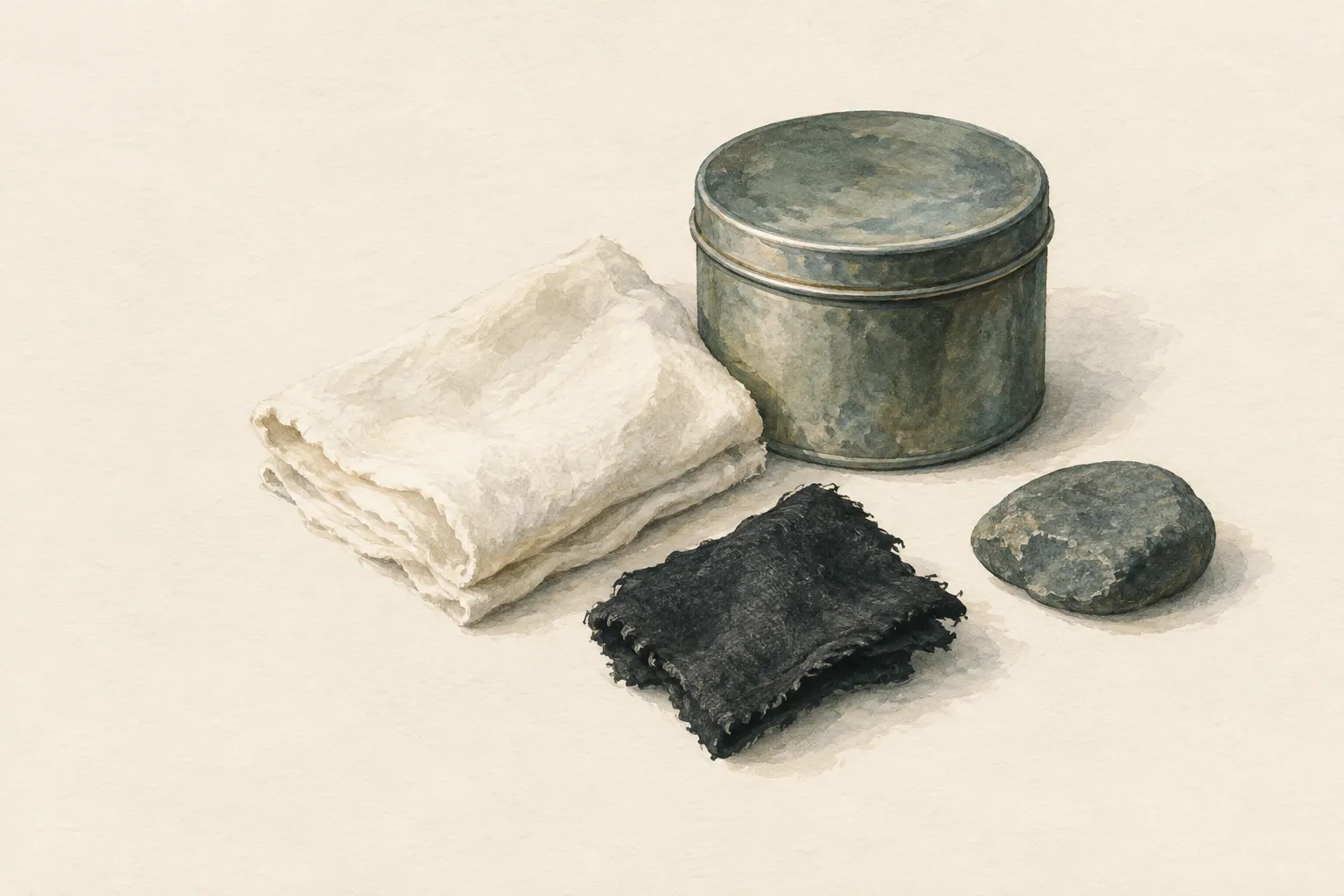
Explained simply
Char cloth is a piece of cotton fabric that has been heated until it is charred black – but without burning. To do this, the fabric goes into a small metal tin with a tiny hole in the lid, and the tin is placed in the fire. There is almost no air in the tin, so the fabric cannot go up in flames. It simply turns to charcoal, rather like barbecue charcoal, only as thin as a cloth.
This black cloth is something special: even a very weak spark makes it glow. That is why it is used for striking fire with flint and steel or with a burning glass.
Important: char cloth is made only outdoors on a safe fire, never in the kitchen. And open the tin only once it has cooled completely – otherwise the cloth catches fire as soon as air reaches it.
How it works
When cotton is strongly heated without enough oxygen, it does not burn but decomposes. Water and flammable gases escape, leaving almost pure, porous char. Charcoal is made from wood in the same way. Char cloth is essentially the same as charcoal, only in a light, flat form.
The small hole in the lid is crucial. It lets smoke and gases escape from the tin so no pressure builds up, but hardly lets any air in. If the hole is too big, too much oxygen reaches the cloth and it burns to ash.
The finished char is full of tiny pores and so has a huge surface area. That is why the small heat of a weak spark or the point of a burning glass is enough to make it glow. The ember then spreads slowly and reliably – but char cloth gives no flame; for that you still need a tinder bundle.
Gear and materials
You need pure cotton or linen, for example from an old T-shirt or old jeans with no synthetic content. Blends with synthetic fibres melt, char poorly and release toxic fumes. Cut the fabric into small squares and lay them loosely in the tin.
The tin should be a small metal tin with a well-fitting lid. Painted or coated tins are unsuitable unless the coating has been burned off outdoors beforehand, because that too produces harmful fumes. Pierce a small hole in the lid.
You also need an existing, safe and permitted outdoor fire and a stick or heat-resistant glove to take the hot tin out. Char cloth cannot be made without an existing fire – that is why you make it in advance and carry it with you.
What really matters
Place the closed tin in the embers or at the edge of a strong fire. Soon smoke streams from the hole, and this smoke may also ignite as a small flame – that is normal. Keep your distance and do not lean over the hole.
When no more smoke comes out, the charring is finished. Take the tin out with a stick and plug the hole with a twig or a little soil so no air gets in. Let the tin cool completely before opening it. If you open it too early, the hot cloth can ignite in the air and is lost.
Check the result: good pieces are evenly black and still somewhat flexible. Brown pieces are under-charred and catch sparks poorly – they can go back into the tin next time. Keep the finished char cloth in the closed tin or a waterproof bag, because it absorbs moisture and crumbles easily.
Safety: what to watch out for
Char cloth is made outdoors only, never in the kitchen, on the stove or in the oven. Smoke and flammable gas escape from the hole and can ignite. Synthetic fibres, coatings and paints also release toxic fumes.
The tin gets very hot. Handle it only with a stick or a heat-resistant glove and let it cool completely. Cool burns at once with cool, not ice-cold, running water; for large or deep burns, burns to the face or hands, and burns in children, call the local emergency number (112 in the EU).
The fire you make char cloth on is an ordinary campfire: it must be permitted, needs a safe fire site and is put out completely afterwards. Fire bans apply to it too.
Good to know
For centuries, char cloth was the usual companion of flint and steel and was kept dry in tinderboxes. It is also useful with friction and solar methods because it reliably turns a small, weak heat source into a stable ember.
Other pure natural fibres or very dry, punky wood can be charred in the same way. Results vary, though; cotton is the easiest and most reliable. Remember: char cloth gives only an ember. A dry tinder bundle and prepared kindling are still needed to turn it into a fire.
Step by step
Cut the fabric
Cut pure cotton (e.g. an old T-shirt or denim without synthetic content) into small squares and lay them loosely in the tin.
- 1
Cut the fabric
Cut pure cotton (e.g. an old T-shirt or denim without synthetic content) into small squares and lay them loosely in the tin.
- 2
Small hole
Pierce a small hole in the lid. Close the tin.
- 3
Place in the embers
Place the tin in the embers or at the edge of a strong fire. Soon smoke streams from the hole, and it may ignite.
Keep your distance; do not lean over the hole.
- 4
Wait for the end
When no more smoke comes out, remove the tin with a stick. Plug the hole with a twig or a little soil.
- 5
Cool and check
Let it cool completely before opening – otherwise the cloth ignites in the air. Good pieces are evenly black and still flexible; brown pieces are under-charred.
- 6
Store dry
Keep it in the closed tin or a waterproof bag.
Common mistakes
- Using blends with synthetic fibres
- Opening the tin too early
- A hole that is too big, so the cloth burns
- Heating too briefly (brown instead of black)
- Making it in the kitchen
Quick view
Materials
Cotton cloth / T-shirt
100% cotton or linen, no synthetics
Removes coarse particles only – no disinfection.
Small metal tin with lid
Burn off coated or painted tins outdoors first.
Gets very hot in a fire.
Dry firewood
Collect only where permitted.
Suitable for
- A supply for flint and steel and burning lenses
- Practice in a garden where fires are allowed
Not suitable for
- Indoors, kitchen stove, oven
- Synthetic or blended fabrics
- Coated or painted tins without burning them off first
Prerequisites
- A safe, permitted outdoor fire
- Heat-resistant glove or stick to remove the tin
Safety
- The tin becomes very hot. Remove it with a stick or heat-resistant glove and let it cool completely before opening.
How it works
Under heat and without enough oxygen, the cotton decomposes: water and flammable gases escape, leaving almost pure, porous char. This char starts to smoulder with very little heat. The small hole lets the gases out but hardly any air in.
Advantages
- Catches even weak sparks and burning-glass points
- Cheap to make from old clothes
Disadvantages
- Needs an existing fire to make
- Absorbs moisture and then becomes useless
- Crumbles easily
Deep knowledge
Background
For centuries, char cloth was the usual companion of flint and steel and was kept dry in tinderboxes. It is essentially the same as charcoal, only in a light, flat form.
It is also useful for ember transfer with friction and solar methods because it reliably turns a small, weak heat source into a stable ember.
Variants
- Other plant fibres
- Other pure natural fibres or very dry, punky wood can be charred the same way. Results vary; cotton is the easiest.
Common mistakes
- Using blends with synthetic fibres
- Opening the tin too early
- A hole that is too big, so the cloth burns
- Heating too briefly (brown instead of black)
- Making it in the kitchen
Limits and risks
- Cannot be made without an existing fire
- Only an ember, not a flame – a tinder bundle is still needed
Material alternatives
Derived from material properties: a substitute must have all relevant properties. Observe the notes on the substitute.
- Small metal tin with lid
- Single-wall stainless steel bottle (Heat only single-wall bottles without paint/plastic; remove the lid before heating.)
- Dry firewood
- Tinder (Carry in waterproof packaging.), Char cloth (charred cotton) (Store dry in a tin.), Finest-grade steel wool (Store separately from batteries – fire risk.), Fatwood (resin-rich wood) (Collect only dead wood where permitted.), Stove fuel (canister, liquid fuel, alcohol) (Store fuels apart from food and in original containers or bottles intended for them.), Petroleum jelly cotton balls (Use only pure cotton.)
Results come exclusively from structured entries. No improvised instructions are generated.
Sources
Ray Mears – Hodder & Stoughton (2002): Bushcraft
Making and using char cloth
Headquarters, Department of the Army (USA) (2002): FM 3-05.70 Survival
Charred cloth as tinder for spark methods