Fire on snow: building a platform
A fire made directly on snow melts into it and drowns in the meltwater. The remedy is a platform of thick logs laid side by side or of dry stones – or, where snow is shallow, digging down to the ground. Do not make a fire under snow-laden branches.
- 20–40 minutes in addition to the fire
Explained simply
What happens if you make a fire directly on snow? The heat melts the snow underneath. The fire sinks into a hole, the meltwater runs in – and the fire goes out. People say it drowns.
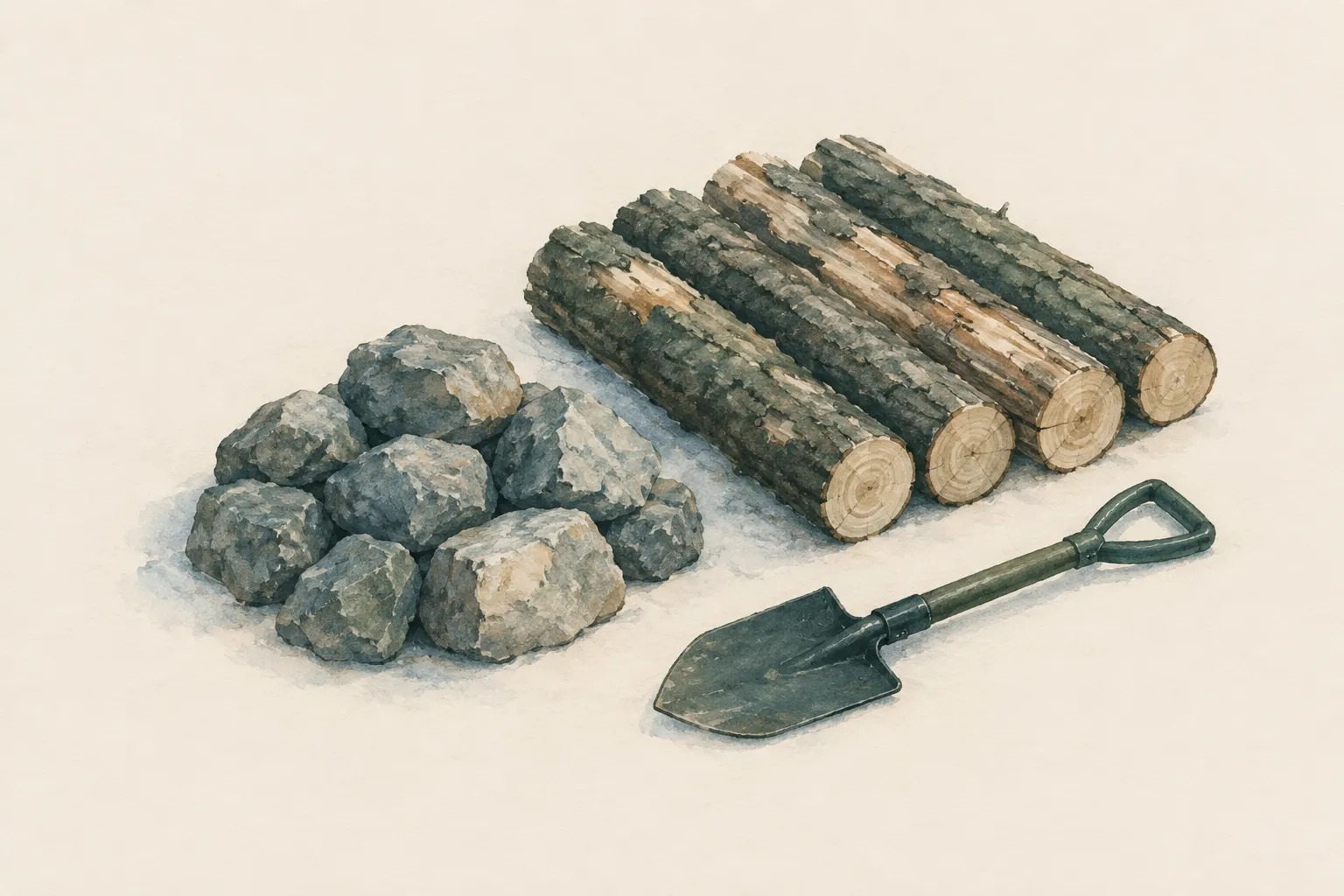
The solution is a floor for the fire, a platform. You lay thick pieces of wood close together on the snow, like a small raft, or you use dry, flat stones. You build your fire on top. If there is only a little snow, you can simply clear it down to the ground.
Important: do not make a fire under branches with snow on them – the heat can make it slide off. And never make a fire on the ice of lakes or rivers, because the heat weakens the ice.
How it works
Snow is frozen water with a lot of air in between. Beneath a fire it melts, and the meltwater collects exactly where the embers lie. Water cools the embers strongly because it absorbs a lot of heat as it evaporates. At the same time, the fire sinks into the hollow it melts for itself and gets less air down there.
A platform separates fire and snow. Thick logs take a long time to burn through and keep the embers and fuel above the snow. The meltwater underneath drains away without reaching the fire. Over time the platform logs burn too – so you have to replace them in good time.
What really matters
First choose the site: an open spot with no snow-laden branches above, sheltered from wind if possible and at a safe distance from your shelter. Then check the depth of the snow. If there is only a little, clear it down to the ground. If it is deep, tramp it down firmly so the platform does not sink.
For the platform, lay thick logs close together, with a second layer crosswise on top if needed. The thicker and denser the logs, the longer they last. Stones work too, but only dry ones. Wet stones or stones from streams and lakes can crack when heated.
Then build your fire on the platform as usual. Watch how the platform burns down and add new logs underneath or alongside in good time, before the fire sags through. Plan extra wood for this – in snowy landscapes, fuel wood is often scarce.
Safety: what to watch out for
The heat of the fire rises and can make snow on branches slide. A load of snow can put out the fire and hit people. So only make a fire in an open spot. Fire on the ice of lakes, ponds or rivers is off-limits, because the heat weakens the ice from above – and ice is often thinner than it looks anyway.
Fires, embers and stoves never belong in a snow cave, igloo, tent or other enclosed space. Carbon monoxide can build up there – invisible, odourless and potentially fatal. Keep a distance from the snow shelter outdoors too, so that smoke does not drift in and the heat does not damage it.
If you use the fire to melt snow for drinking water: water from snow is not automatically clean. Boil it before drinking and follow official advice on water treatment. Also check the local rules before every fire – they apply in winter too.
When it makes sense – and when not
A fire platform makes sense on a winter bivouac, on snow or icy ground on land, and anywhere you need warmth or want to melt snow. It costs extra time, energy and wood – which is a lot in the cold.
So the order is: first secure your body heat with clothing, insulation from the ground and shelter from wind. Only then invest energy in a fire. Military survival manuals recommend a base of wood or stones on snow and wet ground; in winter, however, fire should never be the only source of warmth. Where wood is scarce, a stove may be the better choice.
Step by step
Choose the site
An open spot with no snow-laden branches above, sheltered from wind, away from the shelter.
- 1
Choose the site
An open spot with no snow-laden branches above, sheltered from wind, away from the shelter.
- 2
Check the snow
If the snow is shallow, clear down to the ground. If it is deep, tramp the snow down firmly.
- 3
Lay the platform
Lay thick logs close together as a floor, a second layer crosswise if needed. Alternatively dry, flat stones.
- 4
Build the fire
Build and light a fire on the platform as usual.
- 5
Renew
Replace platform logs that have burned through in time so the fire does not sink.
Common mistakes
- Fire directly on snow
- Under snow-covered branches
- Wet stream stones as a platform
- Fire too close to the snow shelter
Quick view
Materials
Dry firewood
Thick logs for the platform and fuel wood
Collect only where permitted.
Snow shovel
Always take it inside when digging a snow shelter.
Tinder
Carry in waterproof packaging.
Do not use liquid accelerants as tinder.
Suitable for
- Winter bivouac
- Snow or ice ground
- Warmth and melting snow
Not suitable for
- Under snow-laden trees
- In or right next to a snow cave or igloo
- On ice over water
Prerequisites
- Permission for a fire
- Enough wood for platform and fire
- Warmth secured first (clothing, insulation)
Safety
- The heat can make snow slide off branches, putting out the fire and hitting people. Choose an open spot.
How it works
Snow channels meltwater straight into the fire, and the embers sink into the hollow that forms. A platform keeps fuel and embers above the snow; the platform logs slowly burn too or are replaced.
Advantages
- The fire stays stable
- Allows melting snow and warmth in winter
Disadvantages
- Needs extra wood
- Costs time and energy in the cold
Deep knowledge
Background
Military survival manuals recommend a base of wood or stones for the fire on snow and wet ground.
In winter, fire should never be the only source of warmth: clothing, insulation from the ground and shelter from wind come first.
Common mistakes
- Fire directly on snow
- Under snow-covered branches
- Wet stream stones as a platform
- Fire too close to the snow shelter
Limits and risks
- The platform burns through over time
- Wood is often scarce in snowy landscapes
Material alternatives
Derived from material properties: a substitute must have all relevant properties. Observe the notes on the substitute.
- Dry firewood
- Tinder (Carry in waterproof packaging.), Char cloth (charred cotton) (Store dry in a tin.), Finest-grade steel wool (Store separately from batteries – fire risk.), Fatwood (resin-rich wood) (Collect only dead wood where permitted.), Stove fuel (canister, liquid fuel, alcohol) (Store fuels apart from food and in original containers or bottles intended for them.), Petroleum jelly cotton balls (Use only pure cotton.)
- Tinder
- Dry firewood (Collect only where permitted.), Char cloth (charred cotton) (Store dry in a tin.), Finest-grade steel wool (Store separately from batteries – fire risk.), Fatwood (resin-rich wood) (Collect only dead wood where permitted.), Stove fuel (canister, liquid fuel, alcohol) (Store fuels apart from food and in original containers or bottles intended for them.), Petroleum jelly cotton balls (Use only pure cotton.)
Results come exclusively from structured entries. No improvised instructions are generated.
Sources
Headquarters, Department of the Army (USA) (2002): FM 3-05.70 Survival
Base for fires on snow and wet ground