Headwear: warm hat, sun hat, neck gaiter
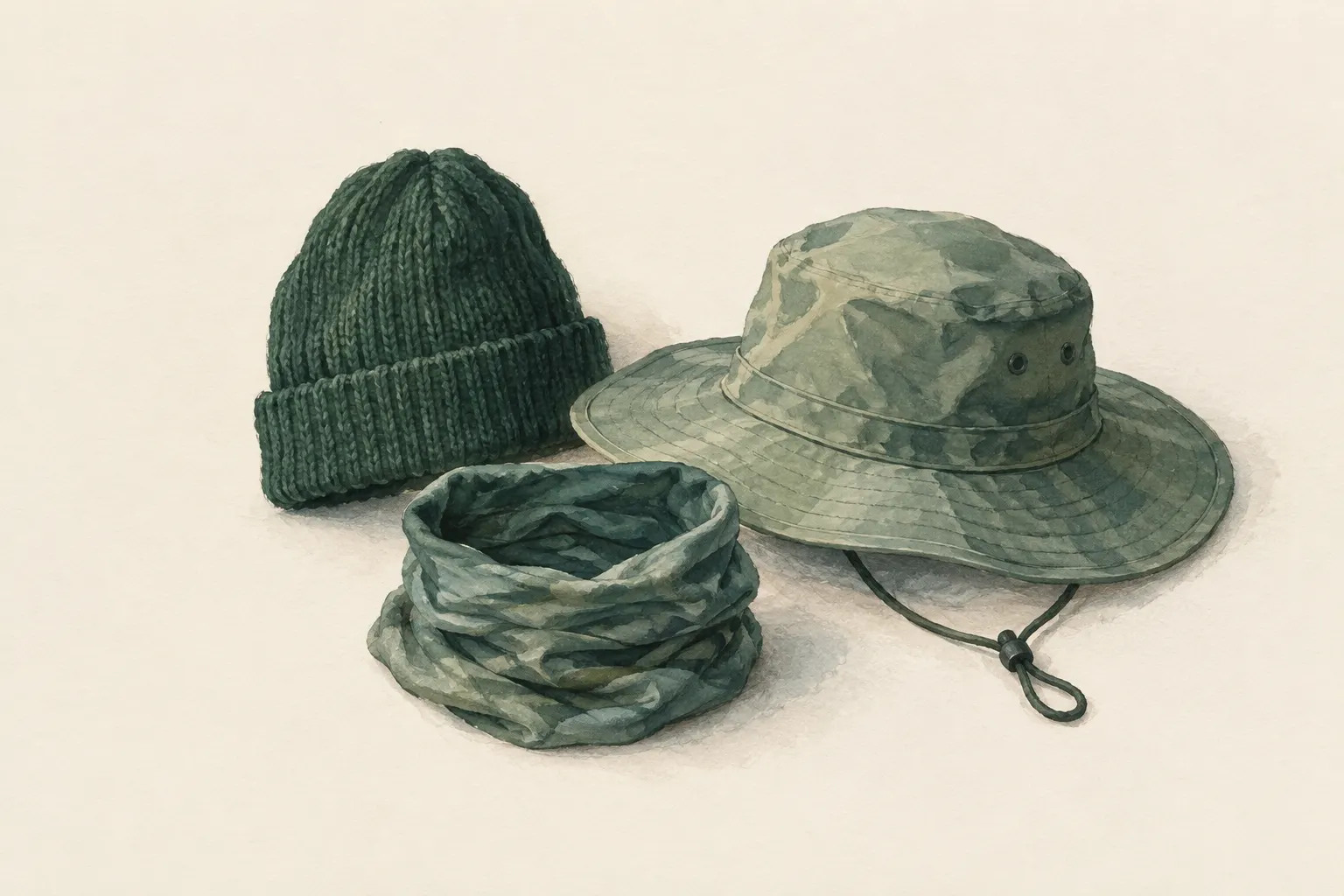
A warm hat, a wide-brimmed sun hat and a neck gaiter are among the lightest and most versatile pieces of gear. They protect head, ears and neck from cold, wind and sun and can be put on and taken off quickly to regulate body heat.
- 5 minutes reading
Explained simply
Your head is usually the only part of your body that is not covered. That is why you notice cold, wind and sun there especially early. Three light items help almost always: a warm hat, a sun hat with a wide brim and a neck gaiter – a tube of fabric you can wear around your neck, over your ears or as a hat.
The warm hat holds a layer of warm air against your head, like a little roof. The sun hat throws shade on your face, ears and neck, like a parasol. And because you can put both on and take them off quickly, they are also a kind of control knob: if you are too warm you take the hat off, if you get cold you put it back on.
Important: a hat only protects part of your face. In strong sun you also need sunscreen, sunglasses and shade around midday.
How it works
Head and neck have a good blood supply and are usually uncovered, while the rest of the body is in clothing. That is why you noticeably lose heat there when it is cold and windy, and easily get sunburnt there when the sun shines. A wool or synthetic hat holds a layer of still air that insulates. It is important that it covers the ears, because ears are thin and cool down quickly.
A sun hat works through shade instead. A wide brim all round protects face, ears and neck better than a cap that leaves the neck bare. A light-coloured, airy hat lets heat escape; a dark, close-fitting one traps it. A chin strap stops the wind from carrying the hat away.
The neck gaiter is an all-rounder between the two. You can wear it as a neck warmer, headband, thin hat or as a cloth over mouth and nose against wind and coarse dust. It weighs almost nothing and dries quickly.
What really matters: regulating warmth
Headwear is one of the fastest ways to control body warmth. When climbing you get warm – take the hat off before you start to sweat. As soon as you stop for a break, put it back on straight away, because the body then cools quickly. That way your clothing stays drier and you feel less cold.
A common mistake is leaving the hat at home because it is warm at the start. On the mountain, in the evening or when the weather changes it can quickly become much colder. A hat weighs so little that it really belongs on every trip. A wet hat, on the other hand, should not be kept on; swap it for a dry one or use the neck gaiter.
Make sure the hat fits under your hood and – if you wear one – under a helmet. A helmet protects against rockfall, when climbing or cycling; a hat can never replace it.
Safety: sun and heat
The World Health Organization (WHO) recommends a wide-brimmed hat when the UV index is raised – but together with shade, clothing, sunglasses and sunscreen. A hat alone is not enough, because UV radiation is also reflected by water, sand and especially snow and then reaches the face from below. In the mountains UV radiation is also stronger than in the lowlands.
Check the UV index in the weather forecast before your trip. Radiation is strongest around midday; that is when shade is especially valuable. Children need particularly good sun protection.
In heat an airy, light-coloured hat is better than a close-fitting cap. Headache, dizziness, nausea or great exhaustion can be signs of heat illness. Then get into the shade at once, rest, cool down and drink. If someone becomes confused or unconscious, call the local emergency number (112 in the EU).
Typical situations and improvising
On a summer hike in the mountains both kinds of headwear often belong in the pack: the sun hat for the day and the warm hat for the summit, the evening or a thunderstorm with cold wind. In winter the warm hat is a must, and the neck gaiter protects neck and face from icy wind.
If you have no sun hat, you can tuck a cloth under a cap so it hangs over your neck and ears. This is an old, proven solution from hot regions. More on this in the entry on improvised sun protection.
Headwear is easy to lose, especially in wind. A chin strap, a clip on the jacket or a fixed habit of where you stow the hat helps. A second thin hat or the neck gaiter make a good reserve.
Good to know: a common myth
You often hear that most body heat is lost through the head. That is not really true. The head loses roughly as much heat as its surface area suggests – not an unusually large amount. The reason a hat still helps so much is different: the head is often the only uncovered part of the body, and that is exactly where an extra layer helps immediately.
Mountaineering handbooks have therefore long listed a warm hat as basic gear, because it adds a great deal of comfort for very little weight. There are separate tests for how well a fabric protects against UV radiation; this entry gives no figures on that.
Step by step
Warm hat
Wool or synthetic, covering the ears. Fits under the hood or a helmet.
- 1
Warm hat
Wool or synthetic, covering the ears. Fits under the hood or a helmet.
- 2
Sun hat
Wide brim all round or a cap with neck flap. Light-coloured, airy, with a chin strap against wind.
- 3
Neck gaiter
As neck warmer, headband, hat or face cover against wind and dust. Light and quick-drying.
- 4
Regulate
Take the hat off when climbing to avoid sweating; put it back on immediately at breaks.
Common mistakes
- Forgetting the hat because it is warm at the start
- Cap without neck protection in strong sun
- Keeping a wet hat on
Quick view
Materials
Wide-brimmed sun hat
Suitable for
- Every trip
- Heat and strong sun
- Wind and cold
- Children
Not suitable for
- Replacement for a helmet against rockfall, climbing or cycling
Prerequisites
- Know the weather forecast and UV index for the area
Safety
- A hat only partly protects face and neck. At a high UV index also use sunscreen, sunglasses and shade around midday.
- In heat an airy, light-coloured hat is better than a close-fitting cap. Take signs of heat illness seriously and get help.
How it works
Head and neck have a good blood supply and are often uncovered, so heat loss and sun exposure are felt there early. A hat traps a layer of air, a wide-brimmed hat shades face, ears and neck. A neck gaiter is an in-between option that serves as a cap, neck warmer or sun protection as needed.
Advantages
- Light and cheap
- Very versatile
Disadvantages
- Easy to lose – a chin strap or clip helps
Deep knowledge
Background
The WHO guide to the UV index recommends, among other things, a wide-brimmed hat alongside shade, clothing, sunglasses and sunscreen when UV levels are raised.
Against cold, mountaineering handbooks list a warm hat as basic gear because it adds a lot of comfort for little weight.
Variants
- Improvised
- Without a sun hat a cloth can be tucked under a cap – see improvised sun protection.
Common mistakes
- Forgetting the hat because it is warm at the start
- Cap without neck protection in strong sun
- Keeping a wet hat on
Limits and risks
- No figures on UV protection factors of textiles
- No substitute for a safety helmet
Sources
World Health Organization (with WMO, UNEP and ICNIRP) (2002): Global Solar UV Index: A Practical Guide
Wide-brimmed hat as part of sun protection
The Mountaineers Books (2017): Mountaineering: The Freedom of the Hills, 9th edition
Warm hat as basic equipment