Gloves as a system: gloves, mittens, overmitts
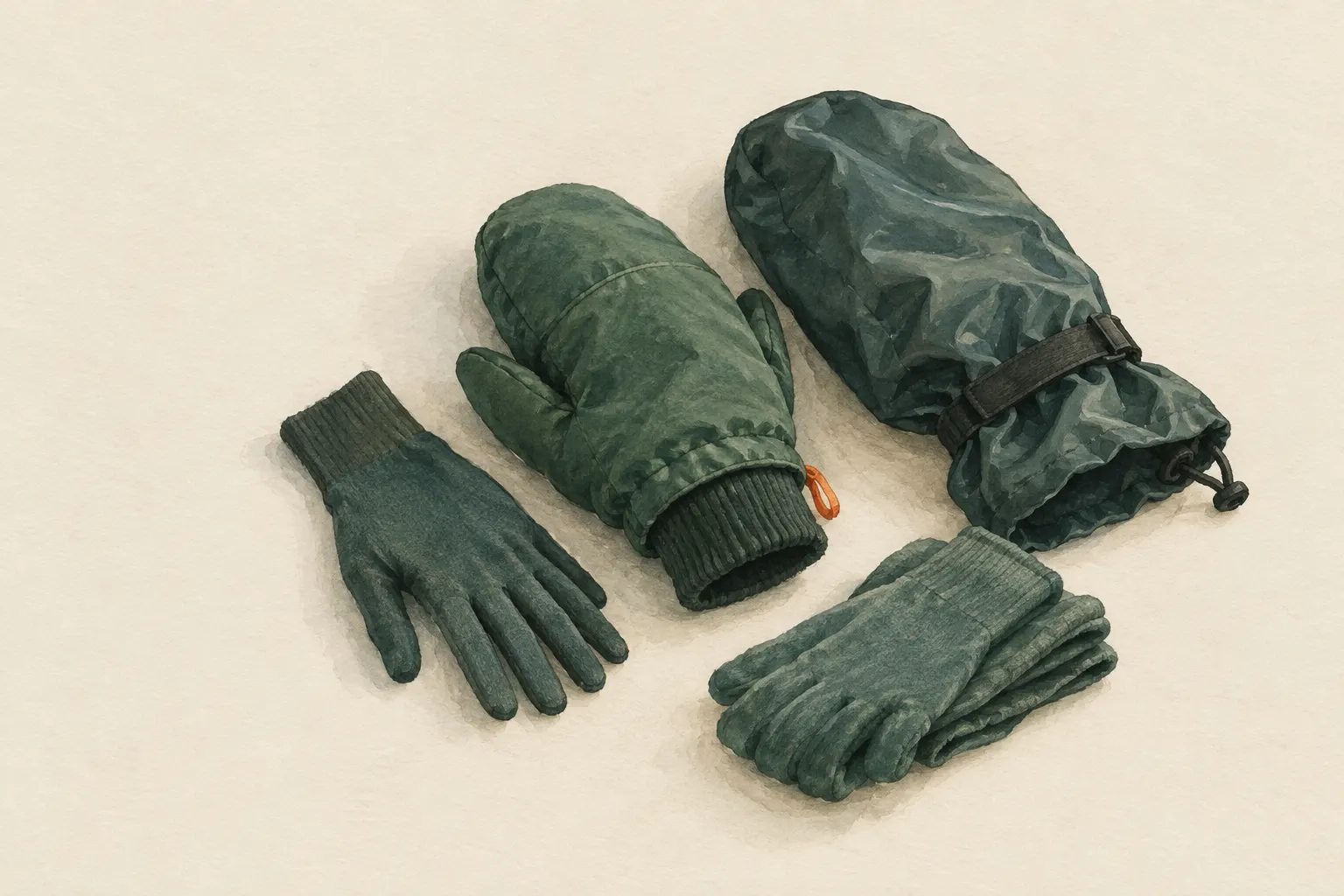
A single thick glove is rarely the best solution. A proven approach is a system of a thin liner glove for fine tasks, a warmer glove or mitten and a windproof, waterproof overmitt. Mittens are warmer than gloves because the fingers warm each other. A dry spare pair is essential in the cold.
- 5 minutes reading
Explained simply
Hands get cold quickly. That is because fingers are thin and have a lot of surface relative to their size, through which heat is lost. On top of that, in the cold the body sends less blood into the hands and feet to keep the inside of the body warm.
Instead of one single thick glove, a system of several parts helps, a bit like the layers of an onion: a thin glove for tasks that need nimble fingers, over it a warm glove or mitten, and on the very outside an overmitt against wind and wet. Mittens – gloves without separate fingers – are warmer because the fingers warm each other inside, like children huddling together in the cold.
Important: if fingers become numb, white or waxy, that is a warning sign. Get to shelter at once, warm up and get medical help.
How it works
A glove does not make heat itself. It holds a layer of still air around the hand, and still air conducts heat very poorly. The more air is trapped, the better the insulation. Wind blows this air away, and wet replaces it with water, which conducts heat far better. That is why hands in wet gloves get cold so quickly.
Mittens are warmer than gloves because all the fingers share one space. They warm each other, and there is less surface overall through which heat can escape. In exchange the fingers are less nimble. Gloves are more dexterous but colder. The layering system lets you switch between warmth and dexterity depending on what you are doing.
Gloves that are too tight are a common mistake. They squeeze the air layer flat and can also slow blood flow. A glove should leave enough room for you to move your fingers comfortably, even with a thin liner glove underneath.
The three layers
The liner glove is thin and made of wool or synthetic fibre. With it you can close a zip, operate a stove or fold a map without exposing bare skin to the cold. It simply stays on for such tasks.
The insulating layer is a warmer glove or mitten. How thick it needs to be depends on the expected cold and on how much you are moving. Walking uphill often makes you so warm that you take it off; at a break or while waiting you need it again at once.
The outer layer is a windproof, waterproof overmitt. It protects the two inner layers from snow, rain and wind. Wrist leashes stop the glove from blowing away or dropping into the snow when you take it off briefly. A lost glove can become a serious problem in hard cold.
What really matters: staying dry
The biggest problem for warm hands is moisture – from outside through snow and rain, but also from inside through sweat. Anyone who sweats in gloves that are too warm while climbing has wet, cold hands at the break. So it is worth taking layers off before you start to sweat.
A dry spare pair in a stuff sack is essential in the cold. Dry damp gloves at night inside the sleeping bag, or during the day under your jacket against your body. Don't put gloves down in the snow during a break – they get wet and cold, and in the worst case you can't find them again.
The system also helps at home. If the heating fails in winter, thin gloves are handy for tasks and warm mittens for sitting and reading.
Safety: what to watch out for
Numb, white or waxy-looking fingers are a warning sign of cold injury. Get to shelter at once, warm up and get medical help. If life is in danger, call the local emergency number (112 in the EU). How cold injuries are treated belongs in qualified hands – this entry only covers gear and prevention.
In hard frost bare skin can stick to very cold metal, and metal draws heat out of the skin quickly. So keep thin liner gloves on when handling metal parts, such as a stove or a buckle.
At running machinery, for example a snow blower or a chainsaw, gloves can be caught and the hand pulled in. There the manufacturer's rules for protective clothing apply, not this general system.
Good to know
How warm a glove really is can hardly be compared from manufacturer figures. Everyone feels cold differently, and movement, wind and moisture change a lot. The best yardstick is your own experience: try your system on short winter trips where you can turn back at any time.
Mountaineering handbooks describe layering for the hands just as for the body. The basic rules are the same: still air insulates, wind and wet destroy the insulation, and several thin layers are more flexible than one thick one.
Step by step
Liner
Thin, wool or synthetic, for tasks that need dexterity. Stays on when handling a stove or zips.
- 1
Liner
Thin, wool or synthetic, for tasks that need dexterity. Stays on when handling a stove or zips.
- 2
Insulation layer
A warmer glove or mitten suited to the expected cold. Not too tight – tight gloves compress the air layer.
- 3
Weather shell
A windproof, waterproof overmitt for snow, rain and wind. With leashes against loss.
- 4
Spares and drying
A dry spare pair in a stuff sack. Dry damp gloves at night inside the sleeping bag or under the jacket.
Common mistakes
- Only one pair
- Gloves too tight
- Putting gloves down in the snow during breaks
- Sweating in gloves that are too warm while climbing
Quick view
Materials
Gloves and mittens
Dry bag
Suitable for
- Winter trips
- Outdoor work in the cold
- Heating failure at home
Not suitable for
- Work at running machinery – gloves can be caught; follow manufacturer guidance
Prerequisites
- Basic understanding of layering
Safety
- Numb, white or waxy fingers are a warning sign of cold injury. Get to shelter at once, warm up and get medical help.
- In hard frost do not handle metal parts with bare hands – keep thin liner gloves on.
How it works
Hands lose heat quickly because they have a large surface relative to their mass and the body reduces blood flow to the extremities in the cold. Insulation works through trapped still air; wet and wind destroy that effect. Layers make it possible to trade warmth against dexterity depending on the task.
Advantages
- Flexible for different tasks
- A reserve when wet
Disadvantages
- More items to carry and manage
Deep knowledge
Background
Mountaineering handbooks describe layering for the hands as for the body. The physical basics – still air insulates, wet and wind carry heat away – apply to all clothing.
How warm a glove is can hardly be compared from manufacturer figures; your own experience on short trips is the best yardstick.
Variants
- Everyday and outages
- At home during a heating failure thin gloves help with tasks and mittens while sitting.
Common mistakes
- Only one pair
- Gloves too tight
- Putting gloves down in the snow during breaks
- Sweating in gloves that are too warm while climbing
Limits and risks
- No treatment of cold injuries
- No temperature ratings for products
Sources
The Mountaineers Books (2017): Mountaineering: The Freedom of the Hills, 9th edition
Layering for hands: liner, insulating and shell gloves