Gaiters: against snow, wet, grit and ticks
Gaiters close the gap between footwear and trousers. High gaiters keep out snow, dew and wet grass; short trail gaiters stop grit and sand getting into the shoe. They are light, quick to put on and protect the trousers from mud and crampon points.
- 1–2 minutes to put on
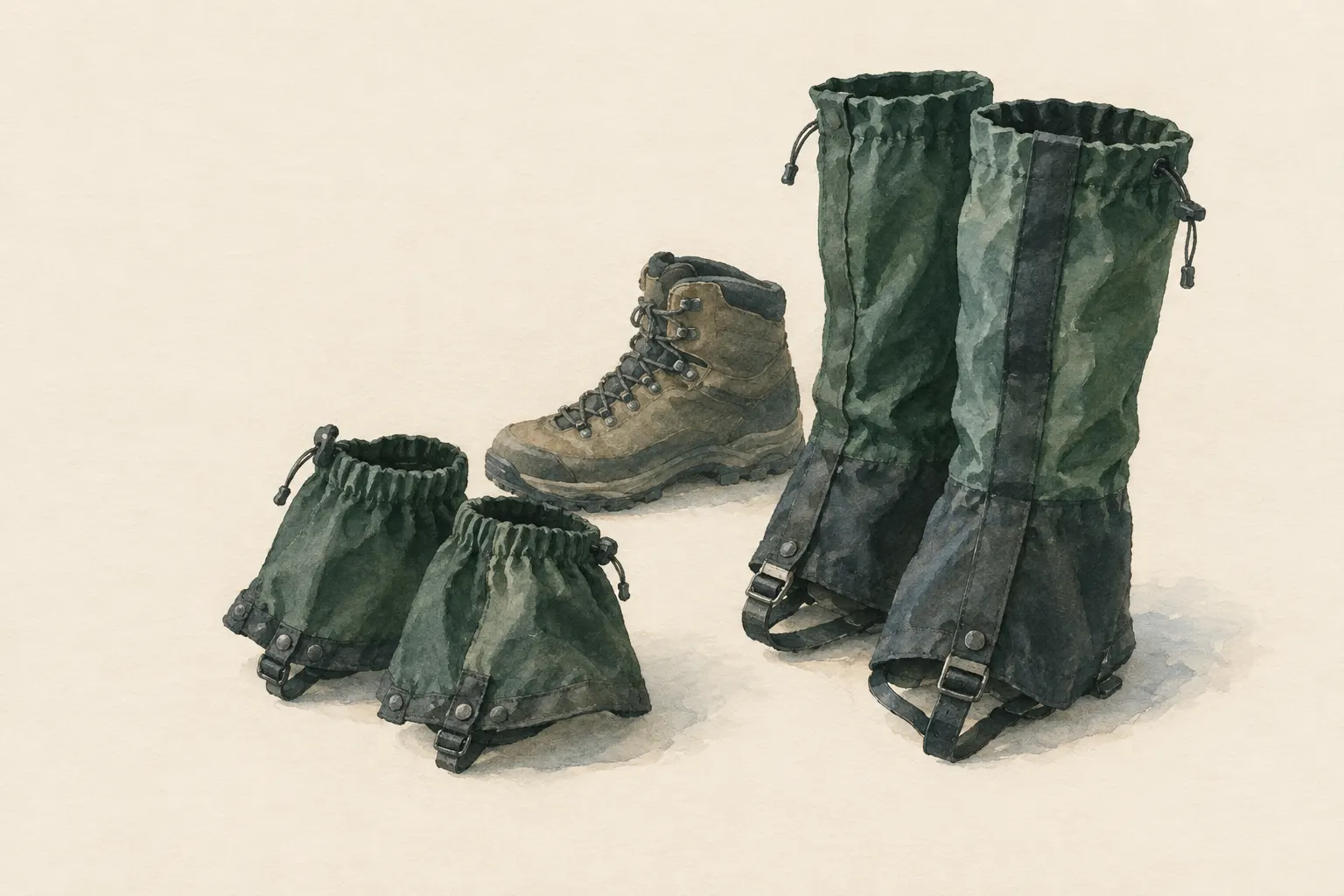
Explained simply
There is a small gap between shoe and trousers. Snow, grit and sand fall through it into the shoe, and wet grass makes your socks damp. Gaiters are like a roof over this gap: they go over shoe and trouser leg and deflect snow, water and dirt outwards.
There are high gaiters that reach below the knee – good for snow and dewy grass in the morning. And there are short gaiters that only cover the ankle – good against grit and sand. At the bottom, a strap under the sole and a hook on the laces hold them in place.
Good to know: gaiters make it harder for ticks to get onto your legs. Still, you should check yourself for ticks after every trip.
How it works
Snow, water and grit almost always get into the shoe from above, over the collar. When walking through deep snow, snow pushes into this opening, melts from body heat and soaks the socks. In wet grass every step wipes water onto the trousers, which then runs down into the shoe.
A gaiter overlaps shoe and trousers like roof tiles. Whatever comes from above runs down its outside and lands next to the shoe rather than in it. To stop the gaiter riding up, an under-foot strap – a band or cord under the sole – holds it down. At the front it hooks into the laces, and at the top it closes around the leg with a strap or elastic.
Along the way, gaiters protect the trousers from mud and, on winter trips, from the sharp points of crampons, which otherwise easily catch in the trouser fabric.
What really matters: height and fit
The height depends on the terrain. High gaiters to below the knee are meant for snow and wet vegetation. Short gaiters that reach just above the shoe are used for trail running, sand and scree. They keep out grit that would otherwise rub with every step and cause blisters.
When putting them on, the hook goes into the laces at the front. The strap goes under the sole in front of the heel, not under the heel – there it would scrape along the ground with every step and wear through quickly. The closure sits on the outside of the leg so it doesn't catch on the other leg. At the top the gaiter is snug, but not so tight that it constricts the leg.
In rain you pull your rain trousers over the gaiter, not under it. That way water runs from the trousers onto the outside of the gaiter and from there next to the shoe. If the trousers are tucked inside the gaiter, the water runs in.
When it makes sense – and when not
Gaiters are worthwhile in snow, in wet grass and morning dew, on sandy paths, in scree and on muddy trails. They weigh little, go on in one or two minutes and can make the difference between dry and wet feet.
When wading streams, however, gaiters don't help: if the water is higher than the shoe collar, it runs in at the top of the gaiter and then into the shoe. And in heat they are often unnecessary, because they make you warm and sweating is a bigger problem than a few bits of grit.
Whether you need gaiters depends strongly on terrain, season and footwear. Anyone hiking dry paths in summer rarely needs them. Anyone trudging through deep snow in winter will quickly appreciate them.
Ticks: what gaiters can and cannot do
Ticks often sit on grasses and low plants and cling to anything that brushes past. Gaiters and long trousers make it harder for them to reach the skin, because they close the gap at the ankle. That is an advantage, but not protection in a medical sense.
Ticks can still crawl up clothing. So after every trip in areas with ticks, check your whole body, including the backs of the knees, groin, armpits and hairline. Light-coloured clothing makes ticks easier to spot. If you have found a tick or notice symptoms later, get advice from a doctor or pharmacy.
If you have no gaiters, you can briefly tuck your trouser legs into your socks or tape them closed over the shoe. This helps against grit and also makes it harder for ticks.
Care
The under-foot strap is the part that wears out fastest, because it constantly rubs over stones and gravel. Check it before every trip. Spare straps or a piece of cord in the repair kit help if it breaks on the way.
After a muddy trip, rinse the dirt off with water and let the gaiters air-dry. Otherwise dried mud in hook-and-loop fasteners and zips stops them closing properly. Mountaineering handbooks list gaiters as a standard part of winter and mountain equipment; with a little care they last a long time.
Step by step
Choose a height
High (to below the knee) for snow and wet vegetation, short for trail running, sand and scree.
- 1
Choose a height
High (to below the knee) for snow and wet vegetation, short for trail running, sand and scree.
- 2
Put on
Hook into the laces at the front, strap under the sole in front of the heel, closure on the outside, snug at the top but not constricting.
- 3
Combine with trousers
In rain, pull the rain trousers over the gaiter so water runs off on the outside.
- 4
Care
Check the under-foot strap for wear, rinse off mud, dry. Carry spare straps or cord for repair.
Common mistakes
- Under-foot strap too far back under the heel – wears out quickly
- Closure on the inside – catches on the other leg
- Wearing gaiters in heat without need
Quick view
Materials
Gaiters
Sturdy closed shoes
Suitable for
- Snow
- Wet grass and morning dew
- Sand and scree
- Muddy paths
Not suitable for
- Wading streams – water runs in from the top
- Hot weather when sweating is the bigger problem
Prerequisites
- Footwear with a hook or laces for the gaiter to attach to
Safety
- Gaiters and long trousers make it harder for ticks, but do not replace checking the body after the trip.
How it works
Snow, water and grit usually enter the shoe from above over the collar. A gaiter overlaps shoe and trousers and deflects dirt and wet outwards. A strap under the sole and a hook on the laces hold it down.
Advantages
- Drier feet in snow and grass
- Light and cheap
Disadvantages
- Warm in heat
- Strap wears out
Deep knowledge
Background
Mountaineering handbooks list gaiters as part of winter and alpine equipment; light versions are common in trail running.
Whether you need gaiters depends strongly on terrain, season and footwear.
Variants
- Improvised
- Tucking trouser legs into socks or taping them over the shoe helps briefly against grit and ticks.
Common mistakes
- Under-foot strap too far back under the heel – wears out quickly
- Closure on the inside – catches on the other leg
- Wearing gaiters in heat without need
Limits and risks
- Not tick protection in a medical sense
- No product recommendations
Sources
The Mountaineers Books (2017): Mountaineering: The Freedom of the Hills, 9th edition
Gaiters as part of winter and mountain equipment